Last updated 2026-07-25
TL;DR
Non-emergency medical transportation (NEMT) is a Medicaid benefit that gets people to covered medical appointments when they have no other way to get there. States must offer it under federal rules, but each state runs it differently, often through a broker like Modivcare or MTM. Owner-operators enroll with the state Medicaid agency and credential separately with each broker.
What is non emergency medical transportation (NEMT)?
NEMT is transportation to and from Medicaid-covered medical services for people who have no other means of getting there and don't need an ambulance. Think wheelchair van rides to dialysis, sedan trips to a primary care visit, or a stretcher van to an outpatient procedure. It is not for emergencies. If someone needs immediate medical attention, that's a 911 call and an ambulance, a completely different benefit with different rules. The federal legal basis is old and specific. Federal regulation at 42 CFR 431.53 requires states to "ensure necessary transportation for beneficiaries to and from providers" and to describe in their state plan how they meet that requirement [1]. This is why NEMT exists in every state Medicaid program, even though most people have never heard of it unless they or a family member needed dialysis, chemo, or dozens of physical therapy visits and couldn't drive. Medicaid.gov describes NEMT as a benefit that "ensures Medicaid beneficiaries have access to necessary medical care by non-emergency methods of transport, like public transit, taxis, vans, and volunteer drivers" [2]. That phrasing matters for owner-operators: NEMT is a floor of "necessary transportation," not a taxi service. States get real latitude in how tightly they define eligibility, trip approval, and vehicle type. For a broader overview of how the benefit fits into the larger Medicaid transportation landscape, see medical transportation and nemt.
Does Medicaid cover ambulance rides, and how is that different from NEMT?
Yes, Medicaid covers ambulance transportation. But it's a separate benefit from NEMT with separate billing codes, separate provider enrollment, and a much higher bar for medical necessity. Ambulance transport is for emergencies or for non-emergency situations where the patient's condition requires medical monitoring or a stretcher level of care during transport, more than an inability to drive. CMS regulation at 42 CFR 410.40 sets the coverage conditions for ambulance services, tying payment to the beneficiary's medical condition at the time of transport rather than distance or convenience. It states that ambulance services are covered when "the beneficiary's medical condition at the time of the transport is such that transportation by any other means would endanger the beneficiary's health," language echoed on Medicare.gov's own ambulance coverage page [3] [4]. An NEMT wheelchair van cannot bill as an ambulance, and an ambulance company generally isn't running standard NEMT trip volume because the reimbursement and staffing model (EMTs, paramedics) is built around emergency response, not scheduled rides to a dialysis clinic three times a week. If you're buying a wheelchair van and building an owner-operator business, you almost certainly want to enroll as an NEMT provider, not an ambulance provider. Ambulance licensure requires state EMS certification, different vehicle specs, and clinical staff. NEMT wheelchair transport requires a properly equipped van, driver training (sometimes CPR/first aid, sometimes a passenger endorsement depending on the state), and Medicaid/broker enrollment. Confirm which category your state and broker consider your service to be before you build a business plan around it.
Does Medicare cover medical transportation?
Medicare's coverage of non-emergency transportation is much narrower than Medicaid's. Original Medicare Part B covers ambulance services when other transportation "could endanger your health" and the trip is medically necessary, per Medicare.gov [4]. Original Medicare generally does not cover routine non-emergency rides to a doctor's office the way Medicaid NEMT does. Where non-emergency rides for Medicare beneficiaries show up is mostly through Medicare Advantage (Part C) plans, many of which now offer a transportation supplemental benefit as a plan perk, not a guaranteed Medicare entitlement. Coverage, trip limits, and the vendor network vary by plan and change every year during enrollment season, so a Medicare Advantage member has to check their specific plan's Evidence of Coverage. For owner-operators, this means your steady, predictable non-emergency volume is going to come from Medicaid NEMT contracts and broker credentialing, not from Original Medicare. Some Medicare Advantage plans do contract with the same brokers (Modivcare, MTM, and others) that run state Medicaid NEMT, so credentialing with a broker can open both doors at once. Don't build a business plan assuming Medicare fee-for-service will pay for routine rides, because generally it won't.
How do you start a medical transportation business (the basic sequence)?
Starting a medical transportation business is really three parallel tracks: business formation, vehicle and insurance compliance, and payer enrollment. Owner-operators who skip ahead to buying a van before confirming state and broker rules often end up with a vehicle that doesn't meet spec or insurance that doesn't meet the certificate of insurance requirements brokers demand. The rough sequence most new operators follow: 1. Form your business entity (LLC is common) and get an EIN. 2. Get commercial auto insurance sized for NEMT/passenger-for-hire use, not personal auto or general commercial coverage. Brokers require specific liability minimums, often $1,000,000 combined single limit or more, confirm the exact number with your broker and state. 3. Buy or convert a wheelchair-accessible van that meets ADA/state accessibility specs and your state's vehicle inspection standards. 4. Enroll as a Medicaid transportation provider with your state Medicaid agency (this is separate from broker credentialing). 5. Apply for broker credentialing with whichever broker(s) manage NEMT in your service area (Modivcare, MTM, Access2Care, SafeRide, or a state-specific broker). 6. Complete driver requirements: background checks, driving record checks, drug testing where required, CPR/first aid, and any passenger endorsement or defensive driving course the state or broker mandates. 7. Get your vehicle inspected and pass any broker-required vehicle audit. Each of those steps has its own paperwork, and requirements differ by state and by broker, sometimes significantly. There's no single national checklist because NEMT is administered at the state level under federal minimums, per 42 CFR 431.53 [1].
How to start a NEMT business step by step
NEMT-specific startup adds credentialing layers on top of standard small business formation. Here's what's genuinely different about NEMT versus a general transportation startup. First, most states now run NEMT through a managed transportation broker rather than paying providers directly. That means you typically don't bill Medicaid directly for most trips; you bill (or get paid by) the broker, who has its own contract with the state. A minority of states still run some fee-for-service or county-based NEMT, so confirm with your state Medicaid agency whether your area uses a broker model, a county model, or a mix. Second, broker credentialing usually requires: - Proof of business registration and EIN
- Commercial auto insurance meeting the broker's stated minimums
- Vehicle registration and a vehicle inspection (sometimes broker-conducted, sometimes third-party)
- Driver files: background check, motor vehicle record, drug screening, and training certificates
- W-9 and banking information for payment setup
- In many states, Medicaid provider enrollment approval before the broker will even review your credentialing application Third, timelines run long. Provider enrollment plus broker credentialing commonly takes anywhere from a few weeks to a few months depending on how backed up the state's enrollment unit is and how complete your paperwork is on first submission. Confirm current processing times with your broker and state Medicaid agency directly, because these change and vary a lot by state. For state-specific breakdowns, see non emergency medical transportation and nemt transportation.
How do you start a medical transportation business with one van?
One van is a completely normal way to start, and plenty of owner-operators run profitably with a single wheelchair-accessible vehicle before scaling. The mechanics are the same as a multi-van fleet, just smaller: one entity, one insurance policy, one vehicle inspection, one driver (often the owner) getting credentialed. A few things matter more when you're a fleet of one. Backed-up coverage matters most. If your one van is in the shop, you have zero capacity. Some brokers ask about backup vehicle plans during credentialing, and it's smart to have a maintenance plan and maybe a relationship with another local operator for overflow, even informally. Which broker(s) to credential with first also matters. If your state has more than one broker operating in different regions, or one broker managing the whole state, credential with the one that actually covers your service area first before spreading thin across applications that won't generate trips. Vehicle choice is the third variable. A used, properly converted wheelchair van (many owner-operators buy from dealers specializing in mobility conversions) is usually the practical entry point rather than a brand-new stretcher van, which costs significantly more and may be overkill for basic wheelchair trip demand in your area. Confirm your state's minimum vehicle age, mileage, and inspection standards before buying, since some states reject vehicles past a certain age or mileage threshold for NEMT use. Insurance cost as a single owner-operator tends to be proportionally higher per vehicle than for larger fleets, since you don't get fleet discounts. Budget for that when doing your numbers, and get real quotes before you commit to a van purchase.
How to start a non-emergency medical transportation business (documents and approvals you'll actually need)
| Business license/LLC registration | State + broker | Sole proprietors also allowed in most states | |
|---|---|---|---|
| EIN | State + broker | Free from IRS, not a paid service | |
| Commercial auto insurance | State + broker | Minimum liability limits set by broker/state, often $1M CSL | |
| Medicaid provider enrollment | State Medicaid agency | Separate from broker credentialing | |
| NPI number | State Medicaid agency | Standard for most Medicaid provider types | |
| Vehicle inspection | Broker (sometimes state) | Annual or semi-annual re-inspection common | |
| Driver background check | Broker | Often includes sex offender registry and criminal history checks | |
| Motor vehicle record check | Broker | Recurring, not one-time | |
| Drug/alcohol testing program | Broker, sometimes state | DOT-style testing sometimes required for larger vehicles | |
| CPR/First Aid certification | Broker | Required for wheelchair/stretcher-level service in many states | |
| W-9 and direct deposit setup | Broker | For payment processing | Because requirements shift and differ so much by state, the honest approach is: confirm with your broker and state Medicaid agency directly before you spend money assuming a requirement applies. A checklist built for Texas Medicaid Transportation Program vendors won't match Ohio's or California's requirements exactly. |
Beyond the sequence already covered, here's the actual document list operators run into, gathered from Medicaid provider enrollment norms and broker credentialing packets. Exact requirements vary by state and broker, so treat this as the common core, not a guarantee. | Requirement | Typically required by | Notes |
What does Medicaid provider enrollment involve, separate from broker credentialing?
Medicaid provider enrollment is the state-level process of registering as a recognized Medicaid transportation provider, and it's a distinct step from broker credentialing even though both are usually required. States administer this through their Medicaid transportation unit or a designated managed care/broker oversight office, and the process typically includes an application, background checks, tax documentation, and sometimes a site or vehicle visit. Many states have moved to a brokered model where the state contracts with one or more transportation brokers (Modivcare, MTM, Access2Care, SafeRide, or others depending on region) who then handle day-to-day scheduling, dispatch, and provider credentialing on the state's behalf. In those states, you may need both: enrollment with the state Medicaid agency as a qualifying provider type, and separate credentialing paperwork with the broker before you get dispatched any trips. A smaller number of states run fee-for-service NEMT or county-level programs without a statewide broker, in which case the state Medicaid transportation unit itself handles enrollment and trip authorization. Either way, the starting point is your state's Medicaid transportation unit page, and Medicaid.gov's non-emergency medical transportation overview is a reasonable federal-level starting reference before you drill into your specific state [2]. Getting the state and broker paperwork organized correctly the first time saves real weeks of back-and-forth. Some owner-operators use a structured document package to keep state and broker requirements straight rather than piecing it together from scattered PDFs; RideCredential's $199 one-time Launch Kit is built for exactly that gap between "what does my state require" and "what does my broker require," though the underlying enrollment and credentialing decisions are always made by the state agency and broker, not by any kit.
What do NEMT brokers like Modivcare, MTM, Access2Care, and SafeRide actually check?
Brokers act as the gatekeeper between the state Medicaid program and individual transportation providers, and each broker runs its own credentialing review even when several brokers operate in the same state under different regional contracts. The specifics differ by broker and by state contract, so what follows is the general pattern, not a guarantee of what any specific broker requires in your area right now. Common broker credentialing checks include verifying your business registration and insurance certificate, reviewing driver background checks and motor vehicle records, confirming vehicle inspection results, and setting up your account for trip dispatch and payment. Brokers typically also run periodic re-credentialing, meaning your insurance, vehicle inspection, and driver files need to stay current, more than pass once at signup. Because brokers are private companies operating under state contracts, their credentialing portals, required forms, and turnaround times change over time and differ by state contract renewal. Always confirm current requirements directly with the broker's provider relations or credentialing department for your specific state and region rather than relying on outdated forum posts or a competitor's van decal listing old contact info. See non emergency medical transportation services for more on how broker networks are structured region by region.
What vehicle and driver rules apply specifically to wheelchair van NEMT?
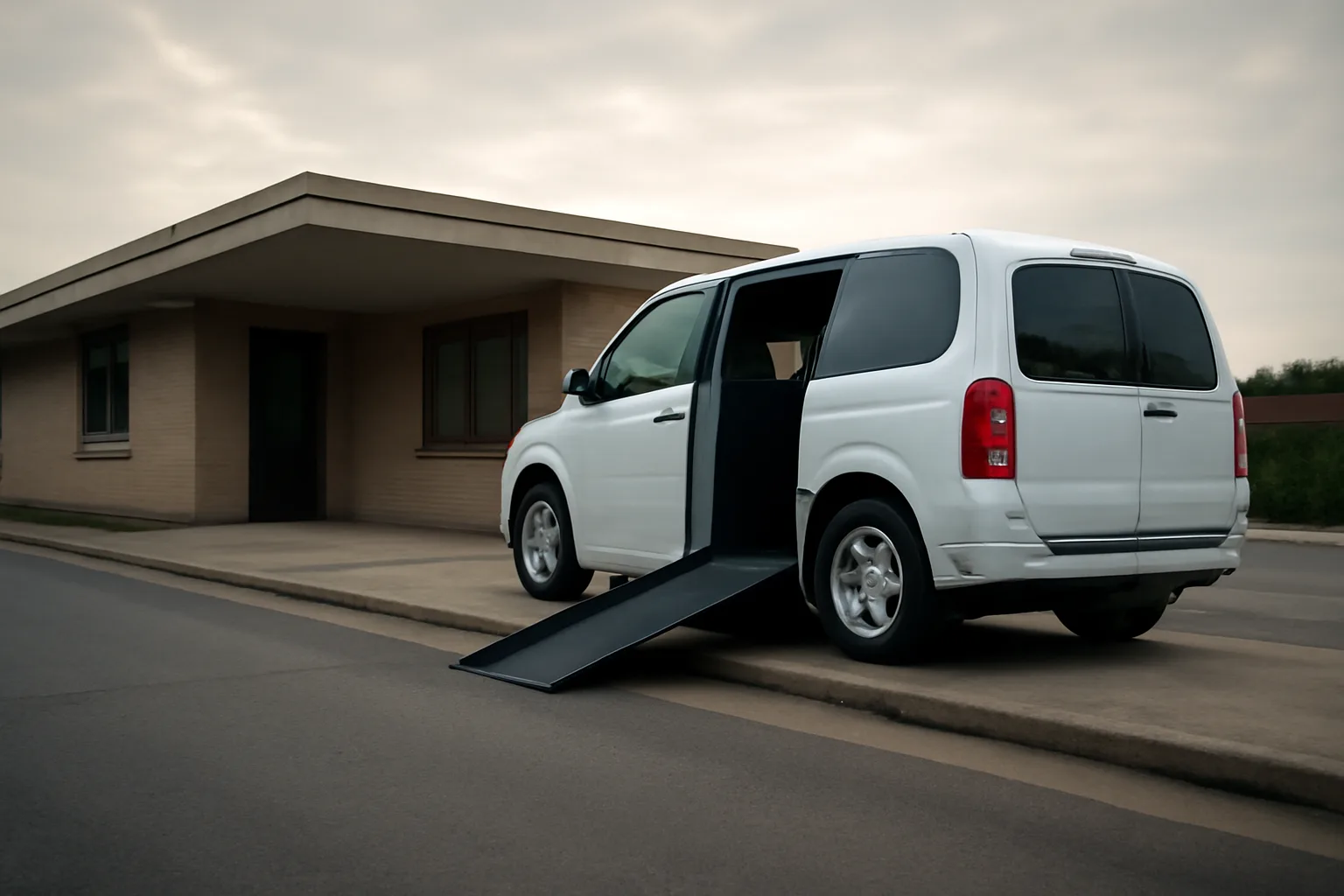
Wheelchair van NEMT sits under stricter vehicle and driver rules than ambulatory (sedan) NEMT because you're transporting a passenger who cannot transfer out of their mobility device. States and brokers commonly require wheelchair lock-down systems meeting SAE J2249 wheelchair tie-down standards, a functioning wheelchair lift or ramp, and passenger securement points, though the exact spec sheet is set by your state and broker, not a single national rule. Driver requirements for wheelchair-level NEMT usually go beyond a standard license: many states or brokers require passenger assistance training, proper wheelchair securement technique (an actual skills demonstration in some programs), and CPR/first aid certification. Some states also require a specific passenger endorsement on the driver's license once vehicle capacity crosses a certain passenger threshold, so check your state's motor vehicle department rules alongside Medicaid requirements. Vehicle age and mileage caps are common but vary widely. Some states reject vehicles past a set age (commonly somewhere in the 7 to 10 year range, though this really is state-specific) or past a certain odometer reading for new NEMT enrollment. Confirm your state's specific cutoff before buying a used van, because a great deal on an older conversion van can turn into a wasted purchase if it's automatically disqualified. For a broader look at emergency-level vehicle and staffing requirements by comparison, see emergency medical transport.
How long does NEMT enrollment and credentialing actually take?
There's no single national number, and anyone who quotes you an exact week count for every state is guessing. Processing time depends on your state Medicaid agency's enrollment unit workload, whether your paperwork is complete on first submission, and which broker(s) you're credentialing with. What operators consistently report is that incomplete applications are the single biggest delay driver, not the base processing time itself. Missing insurance documentation, an expired background check, or a vehicle inspection scheduled after the application deadline routinely pushes approval back by weeks. The practical move is to gather every document on the checklist before you submit anything, rather than submitting early and patching gaps as the state or broker flags them. Budget generous time. If you're targeting a specific start date (a broker contract renewal, a new service area opening up), start your paperwork at minimum two to three months ahead, and confirm actual current processing times directly with your state Medicaid transportation unit and broker, since these move around based on staffing and contract cycles.
Frequently asked questions
What is NEMT in simple terms?
NEMT stands for non-emergency medical transportation. It's a Medicaid benefit that pays for rides to medical appointments for people who have no other transportation and aren't having a medical emergency. It covers things like wheelchair van trips to dialysis or sedan rides to a doctor visit, not ambulance calls.
Does Medicaid cover ambulance rides?
Yes. Medicaid covers ambulance services when medically necessary, meaning the patient's condition requires monitoring or stretcher-level transport, more than an inability to drive, per 42 CFR 410.40 [3]. This is a separate benefit category from NEMT with its own provider enrollment, billing codes, and EMS licensure requirements.
Does Medicare cover medical transportation?
Original Medicare Part B covers ambulance transportation when other transport would endanger the patient's health, but it generally doesn't cover routine non-emergency rides to appointments [4]. Some Medicare Advantage plans offer non-emergency transportation as a supplemental benefit, but that varies by plan and isn't guaranteed by Original Medicare.
How do I start a NEMT business with just one van?
You register a business entity, get commercial auto insurance meeting broker minimums, buy or convert a wheelchair-accessible van meeting state specs, enroll with your state Medicaid agency, and credential with your area's broker (Modivcare, MTM, Access2Care, SafeRide, or others). One van is a normal, common starting point; just plan for backup coverage if your only vehicle needs repairs.
Do I enroll with Medicaid or with a broker first?
It depends on your state. Many states require Medicaid provider enrollment approval before a broker will process your credentialing application, but some run the processes in parallel. Confirm the order directly with your state Medicaid transportation unit and the broker covering your service area, since sequencing varies by state contract.
What insurance do I need for a Medicaid NEMT wheelchair van?
You need commercial auto insurance rated for passenger-for-hire or NEMT use, not personal or standard commercial coverage. Brokers commonly require liability minimums, often cited around $1,000,000 combined single limit, but exact figures depend on your broker's contract and your state, so get written confirmation before buying a policy.
How much does it cost to start a wheelchair van NEMT business?
Costs vary enormously by market and vehicle condition, driven mainly by the van purchase or conversion, commercial insurance premiums, and any state/broker fees. There's no single reliable national figure because insurance rates, vehicle prices, and state fees differ too much region to region; get local quotes before budgeting.
Can I run NEMT trips without going through a broker?
In states that still use fee-for-service or county-administered NEMT rather than a statewide broker model, yes. In brokered states, which is most states now, you generally need broker credentialing to receive dispatched trips and get paid, even after your Medicaid provider enrollment is approved. Confirm your state's model with its Medicaid transportation unit.
What's the difference between NEMT and emergency medical transport?
NEMT covers scheduled or as-needed rides for people who can't drive themselves to a covered medical service and aren't in a medical emergency. Emergency medical transport (ambulance) is for situations requiring immediate medical response or clinical monitoring during transit, requires EMS licensure, and is billed under a completely different Medicaid category.
Does every state Medicaid program have to offer NEMT?
Yes. Federal regulation 42 CFR 431.53 requires state Medicaid plans to ensure necessary transportation for beneficiaries to and from Medicaid providers [1]. How each state structures that (broker model, county model, fee-for-service) is up to the state, but the underlying obligation to provide it is federal.
How do I find out which broker covers my state or region?
Check your state Medicaid transportation unit's website, since it typically lists the contracted broker(s) by region along with provider enrollment instructions. Because contracts get rebid periodically, always confirm current broker assignments directly with the state agency rather than relying on older articles or forum posts.
What vehicle specs does a wheelchair van need for Medicaid NEMT?
Requirements are set by your state and broker, but commonly include a functioning wheelchair lift or ramp, compliant wheelchair tie-down and passenger securement systems, and passing a vehicle inspection, sometimes tied to age or mileage limits. There's no single national vehicle spec, so confirm exact requirements before buying or converting a van.
Can a felony background disqualify me from NEMT driving?
Possibly, depending on the offense, how long ago it occurred, and your state's and broker's specific background check standards. Background check criteria differ by state Medicaid rules and by broker policy, so there's no universal disqualifying list; ask the broker's credentialing department directly about how they evaluate criminal history.
Sources
- eCFR, 42 CFR 431.53: States must ensure necessary transportation for Medicaid beneficiaries to and from providers
- Medicaid.gov, Non-Emergency Medical Transportation: NEMT ensures beneficiaries have access to necessary medical care via non-emergency transport methods like vans, taxis, and volunteer drivers
- eCFR, 42 CFR 410.40: Ambulance services are covered when the beneficiary's medical condition makes other transportation unsafe
- Medicare.gov, Ambulance Services coverage: Medicare Part B covers ambulance services when other transportation could endanger the patient's health
- SAE International, J2249 Wheelchair Tiedown and Occupant Restraint Systems: Wheelchair securement systems in accessible vehicles are commonly built to the SAE J2249 standard