Last updated 2026-07-25
TL;DR
Verida is the statewide NEMT broker managing non-emergency Medicaid transportation for Georgia's Fee-for-Service and most CMO members. To haul Medicaid trips in Georgia, you generally enroll as a Georgia Medicaid transportation provider through GAMMIS, then separately credential as a transportation provider with Verida. Both steps have their own paperwork and insurance rules, so confirm specifics with Verida and DCH before buying a van.
Who is Verida and what does it do in Georgia?
Verida (formerly LogistiCare in some markets, now operating under the Verida name in several states) is a transportation broker contracted by state Medicaid agencies to manage non-emergency medical transportation (NEMT) trip scheduling, dispatch, and provider networks. In Georgia, the Department of Community Health (DCH) contracts with a broker to coordinate NEMT for Medicaid members who need rides to covered medical appointments and don't have other transportation available. Brokers like Verida don't pay you directly out of thin air. They receive a capitated or trip-based payment from the state or from Medicaid Care Management Organizations (CMOs), then subcontract the actual driving to a network of transportation providers, from large ambulette companies down to single-van owner-operators. Your contract is with the broker (or with a regional subcontractor the broker uses), not directly with Georgia Medicaid. Georgia's NEMT program covers members enrolled in Medicaid Fee-for-Service and, depending on current contracts, members in CMOs under Georgia Families and Georgia Families 360. Because broker contracts get rebid periodically, the specific broker name and coverage regions can change. Always confirm the current broker assignment and covered regions with the DCH transportation unit before assuming Verida covers your county.
What is NEMT and how is it different from an ambulance ride?
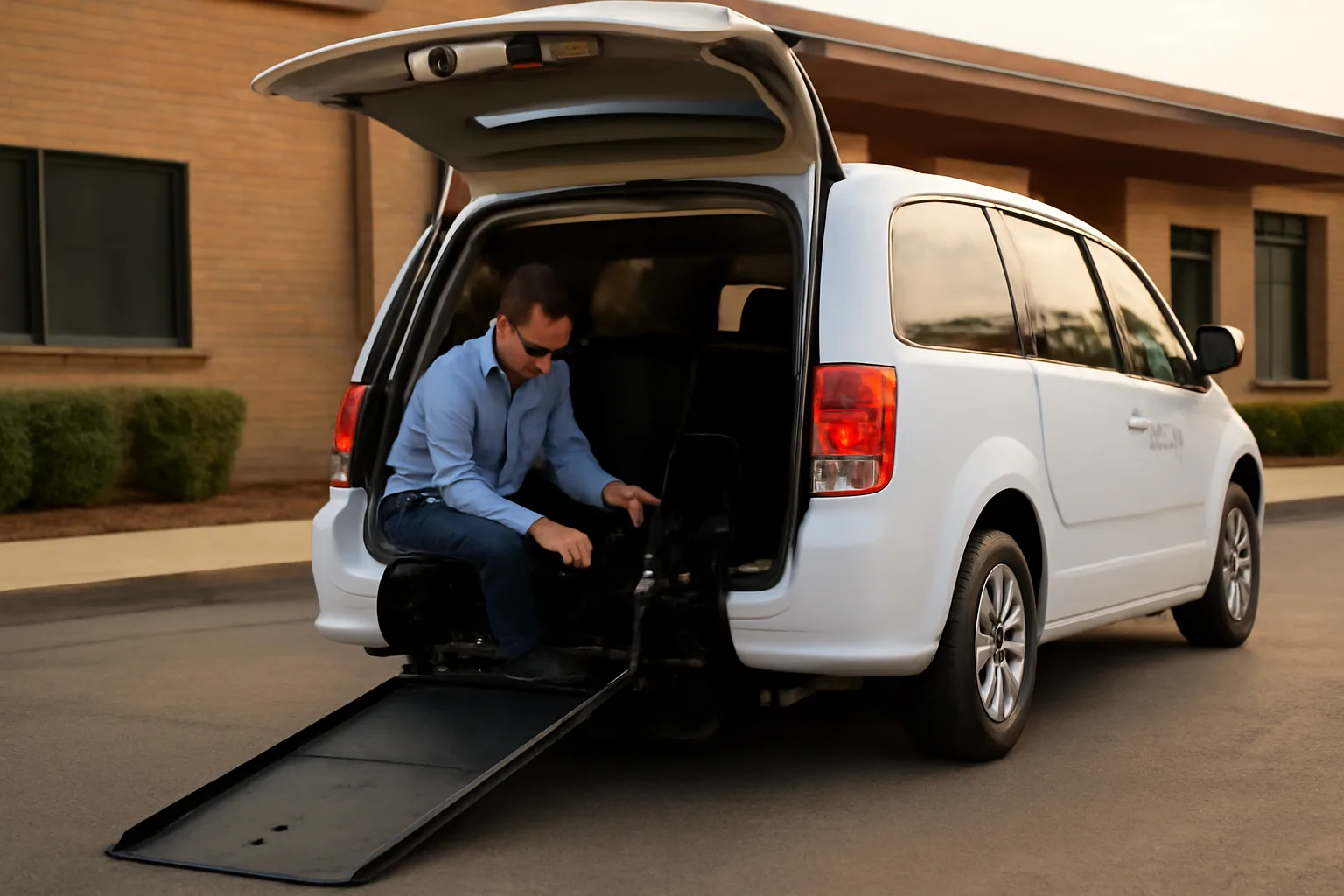
Non-emergency medical transportation (NEMT) is transportation to and from covered medical services for people who have no other way to get there, and whose condition doesn't require emergency (911) response. Federal Medicaid rules require states to "assure necessary transportation for beneficiaries to and from providers" and to describe how they meet that requirement in their state plan [1]. NEMT rides use wheelchair vans, ambulatory sedans, and sometimes stretcher vans. Nobody riding in an NEMT vehicle needs cardiac monitoring, oxygen titration, or a paramedic. That's the legal and practical line between NEMT and an ambulance. An ambulance responds to emergencies or transports patients who need medical monitoring during transport (a 911 call, an ER-to-ICU transfer, a person who could decompensate en route). NEMT is scheduled in advance (often 24 to 72 hours ahead, though many brokers, including Verida in various states, offer will-call or urgent same-day rides for things like dialysis or urgent care follow-ups). If you're buying a wheelchair van, you're building an NEMT business, not an ambulance service, and you generally don't need EMT or paramedic certification, though driver training requirements vary by state and broker. See our broader explainer on non emergency medical transportation for the full federal and operational picture.
Does Medicaid cover ambulance rides?
Yes, Medicaid covers emergency ambulance transportation in every state, and many states also cover non-emergency ambulance transport when a person's medical condition requires it (for example, a bed-bound patient who needs monitoring during a transfer). Coverage rules and prior authorization requirements for non-emergency ambulance rides vary by state [2]. The key distinction is medical necessity for monitoring, more than the vehicle type. A person who is ambulatory or can transfer into a wheelchair, but simply lacks a car, does not need an ambulance. They need NEMT. Georgia Medicaid, like most states, requires prior authorization for non-emergency ambulance transport and generally expects members to use NEMT (broker-arranged wheelchair van or ambulatory transport) whenever an ambulance level of care isn't clinically needed. If you're planning to run an ambulance company rather than a wheelchair-van NEMT business, that's a different licensing track entirely, usually through your state's EMS office rather than through Verida or the Medicaid transportation unit.
Does Medicare cover medical transportation?
Original Medicare covers emergency ambulance transportation and, in limited cases, non-emergency ambulance transport when a doctor certifies it's medically necessary and documents it in writing (a Certificate of Medical Necessity) [3]. Medicare generally does not cover routine non-emergency transportation like wheelchair van rides to a dialysis appointment or a doctor visit. Some Medicare Advantage plans do offer supplemental NEMT-type benefits as an added perk, but that's plan-specific and not a guaranteed Medicare benefit. If you're building a business plan around Medicare-funded rides, don't. The dependable payer base for wheelchair-van NEMT owner-operators is Medicaid, through broker networks like Verida, MTM, Modivcare, or Access2Care, not Medicare. This is one of the most common misunderstandings new owner-operators have: Medicaid and Medicare are not interchangeable, and their transportation benefits are very different.
How do you start a medical transportation business?
Starting a medical transportation (NEMT) business generally follows the same sequence in every state, Georgia included, even though the specific forms and agencies differ. 1. Form your business entity (LLC is common) and get an EIN from the IRS. 2. Get commercial auto insurance with the liability limits your state and broker require. Georgia's minimum financial responsibility for most vehicles is set by state law, but brokers typically require higher limits for NEMT, often $1,000,000 combined single limit; confirm the exact figure with Verida and your insurer. 3. Buy or convert a wheelchair-accessible van that meets ADA and state inspection standards. 4. Enroll as a Georgia Medicaid provider through GAMMIS, DCH's provider enrollment portal [4]. 5. Apply for network credentialing with the broker (Verida) covering your service region. 6. Complete any required driver background checks, drug testing, and defensive driving or passenger-assistance training. 7. Pass a vehicle inspection, sometimes done by the broker, sometimes by a third party they designate. Each of these steps has its own timeline and paperwork, and they don't always happen in a clean sequence. Some owner-operators get Medicaid enrolled before they've even bought a van; others buy the van first to have photos and VIN numbers ready for the broker application. There's no single right order, but you can't get paid until both the state enrollment and the broker credentialing are complete. For a step-by-step walkthrough across multiple states, see how to start a NEMT business and our medical transportation overview.
How do you enroll as a Georgia Medicaid NEMT provider?
Georgia Medicaid provider enrollment happens through GAMMIS, the state's Medicaid Management Information System portal, operated for DCH. You'll need to select the correct provider type for non-emergency transportation, submit your business formation documents, EIN, National Provider Identifier (NPI) if applicable, insurance certificates, and vehicle information [4]. Georgia Medicaid provider enrollment typically requires a fingerprint-based criminal background check for certain provider types under federal program integrity screening rules, which categorize providers into limited, moderate, or high risk levels with corresponding screening intensity [5]. Transportation providers are commonly screened at the "moderate" risk level, which can include unannounced site visits, though exact categorization is set by DCH and can change. Enrollment processing time varies. Some states process clean applications in a few weeks; others take two months or more if anything is missing or if fingerprint results are delayed. Build slack into your launch timeline. Don't sign a van purchase agreement assuming you'll be moving Medicaid members within 30 days; give yourself a real runway, and confirm current processing times directly with the DCH provider enrollment unit. Getting enrolled with GAMMIS is necessary but not sufficient. It makes you a recognized Georgia Medicaid provider. It does not automatically put you in Verida's network or send you trips. Those are two separate applications.
How do you get credentialed as a transportation provider with Verida?
Credentialing with Verida is a separate process from state Medicaid enrollment, and it's the step that actually gets you trip assignments. Broker credentialing generally asks for your GA Medicaid provider number, proof of commercial auto insurance meeting the broker's minimum limits, vehicle registration and inspection records, driver rosters with background check results, and sometimes a facility or vehicle photo set. Because broker credentialing requirements change and Verida's specific document checklist isn't something we can guarantee stays fixed on this page, confirm the current requirements directly with Verida's Georgia network management team before you finalize a van purchase or driver hires. Ask specifically about: minimum liability insurance limits, required driver certifications (defensive driving, passenger assistance, wheelchair securement), vehicle age and mileage caps, and whether they require a dedicated dispatch phone line or GPS/telematics reporting. Many new owner-operators get tripped up by the gap between "Medicaid enrolled" and "broker credentialed and receiving trips." You can be fully enrolled in GAMMIS and still be sitting with zero trip assignments because your broker application is incomplete, your insurance certificate lapsed, or your vehicle inspection expired. Track both processes on separate checklists, with separate renewal dates, because they rarely expire on the same schedule. For context on how broker credentialing works across the major national brokers, our NEMT transportation guide compares Modivcare, MTM, Access2Care, and SafeRide credentialing patterns side by side.
What insurance and vehicle requirements should you expect?
| Commercial auto liability | $500,000 to $1,500,000 combined single limit | Verida contract terms | |||||||||
|---|---|---|---|---|---|---|---|---|---|---|---|
| Wheelchair lift/ramp certification | ADA-compliant tie-down and securement systems | Vehicle manufacturer + broker inspection | |||||||||
| Vehicle age cap | Often 5 to 10 model years, varies widely | Broker vehicle policy | |||||||||
| Driver background check | State and federal criminal history, sex offender registry | GAMMIS provider enrollment + broker | Drug testing | Pre-employment and random panels common | Broker policy | Driver training | Passenger assistance, wheelchair securement, defensive driving | Broker onboarding checklist | A used wheelchair van (Dodge Grand Caravan or Ford Transit conversion) commonly runs somewhere between $25,000 and $55,000 depending on age, mileage, and conversion quality, though prices swing with the used vehicle market. New conversions from major manufacturers like BraunAbility or VMI often exceed $60,000 to $80,000. These are rough market observations, not fixed figures, so shop current listings and get your own insurance quote before committing. Don't buy the van before you've called Verida's provider relations line and asked what vehicle age and equipment standards they currently enforce. Buying first and asking questions later is how owner-operators end up with a van that fails broker inspection over something fixable, like a missing kneeling ramp sensor, that would've been a five-minute phone call to catch beforehand. |
Requirements vary by state and by broker contract, so treat the figures below as a starting range to budget against, not a guarantee, and confirm exact numbers with Verida and DCH. | Requirement | Typical range seen across NEMT broker contracts | Confirm with |
What does non-emergency medical transportation actually cover in Georgia?
Non-emergency medical transportation in Georgia's Medicaid program covers rides to and from Medicaid-covered services, like dialysis, physical therapy, behavioral health appointments, primary care visits, and prescription pickups, for members who attest they have no other means of transportation [1]. Federal Medicaid regulation at 42 CFR 431.53 requires states to "assure necessary transportation for beneficiaries to and from providers" and to describe those assurance methods in the state plan [1]. States implement this differently: some run it in-house, most contract with a broker like Verida, and the broker builds the day-to-day trip scheduling, driver network, and eligibility verification system on top of that federal requirement. Coverage doesn't extend to non-medical errands, and it doesn't cover trips to providers outside the member's home county or a defined mileage radius unless the needed service isn't available closer (this is usually called the "nearest appropriate provider" rule, and specifics vary by state). Members typically need to schedule rides in advance through the broker's call center or app, though urgent and standing-order trips (like three-times-weekly dialysis) have separate processes. For owner-operators, understanding the covered-service list matters because it shapes your business mix: dialysis and behavioral health tend to generate the most consistent recurring ride patterns, while one-off specialist visits are less predictable.
How is Verida different from Modivcare, MTM, or Access2Care?
Verida, Modivcare, MTM, and Access2Care are all NEMT brokers, but each operates under separate state contracts, and none of them is nationally uniform. A company might use Modivcare's credentialing portal in one state and a totally different onboarding process for the same brand in another state, because each state Medicaid contract is negotiated separately. What's consistent across all of them: they act as the middle layer between the state Medicaid agency (which pays for the benefit) and the driver/vehicle network (which delivers rides). You'll typically apply for state Medicaid enrollment once, then apply separately to whichever broker or brokers hold contracts in your service area, since some states split regions among multiple brokers or run competing broker networks by CMO plan. Georgia has used LogistiCare/Verida as a long-standing NEMT broker relationship, but broker contracts get rebid on multi-year cycles, and CMOs within Georgia Families may separately contract with different transportation vendors for their members. Don't assume the broker landscape you read about today will be identical in two years. Always verify current broker assignments with DCH before building a regional expansion plan around one company's network. Our emergency medical transport and NEMT hub pages track how these distinctions play out state by state.
How do you start a NEMT business with just one van?
Plenty of owner-operators start with a single wheelchair van, and it's a completely viable entry point, but you need to sequence the paperwork correctly since a one-van operation still has to clear the exact same enrollment and credentialing bars as a fleet. With one van, you are both the owner and, usually, the primary driver, so your own background check, drug test, and training records need to be ready alongside the vehicle's inspection and insurance documents. Broker credentialing doesn't have a minimum fleet size requirement in most states, but it does require you to demonstrate you can reliably cover the service area and hours you're claiming, so be realistic about the days and radius you list on your application. One practical tip: get your commercial auto insurance quote before you finalize the van purchase. Insurance underwriters price wheelchair-van NEMT coverage differently than personal auto or standard commercial auto, and premiums can vary a lot based on the conversion type, driver record, and coverage limits the broker requires. A surprise premium can change your math on which van you can actually afford. A single-van operator building a Georgia enrollment and Verida credentialing file from scratch is exactly the situation our $199 State + Broker NEMT Launch Kit is built around: a structured checklist for the GAMMIS enrollment paperwork and the broker credentialing documents side by side, so you're not discovering a missing insurance rider the week you expected your first trip assignment.
What paperwork and documents should you gather before applying?
Before you start either the GAMMIS Medicaid enrollment or the Verida broker application, gather these documents so you're not stalling mid-process: - Business formation documents (Articles of Organization, EIN confirmation letter)
- Owner and driver Social Security numbers and government-issued IDs for background checks
- Commercial auto insurance certificate naming required limits
- Vehicle title, registration, and current inspection or ADA compliance documentation
- Bank account information for EFT payments
- NPI number (if your provider type requires one)
- W-9 form
- Driver training and drug test records Having these ready before you start either application shortens the back-and-forth considerably. Missing documents are the single biggest cause of enrollment delays, more than any policy complexity. Agencies and brokers pause your file the moment something's incomplete, and it often sits until you notice and resubmit, so build a document checklist and confirm requirements directly with GAMMIS and Verida before submitting.
Frequently asked questions
What is NEMT?
NEMT stands for non-emergency medical transportation, meaning rides to and from covered medical appointments for people who have no other transportation and don't need emergency or medically monitored transport. It's typically funded by Medicaid and coordinated by state-contracted brokers like Verida, Modivcare, MTM, or Access2Care, who manage scheduling and driver networks on the state's behalf [1][2].
Does Medicaid cover ambulance rides?
Yes, Medicaid covers emergency ambulance transport nationwide, and covers non-emergency ambulance transport when a member's condition requires medical monitoring during the ride, subject to state-specific prior authorization rules [3]. If a person is ambulatory or can safely ride in a wheelchair van, Medicaid typically expects NEMT rather than an ambulance.
Does Medicare cover medical transportation?
Medicare covers emergency ambulance transport and non-emergency ambulance transport only when a doctor documents medical necessity in writing [4]. Medicare generally does not cover routine wheelchair-van or sedan NEMT rides; some Medicare Advantage plans offer limited supplemental transportation benefits, but that's plan-specific, not a standard Medicare guarantee.
How do I start a NEMT business in Georgia?
Form your business entity, get commercial auto insurance, buy an ADA-compliant wheelchair van, enroll as a Georgia Medicaid provider through GAMMIS, and separately apply for broker network credentialing with Verida or whichever broker currently holds your region's contract [5]. Confirm current requirements with DCH and Verida before finalizing any vehicle purchase.
Is enrolling with Georgia Medicaid the same as joining Verida's network?
No. GAMMIS enrollment makes you a recognized Georgia Medicaid provider, but it doesn't automatically send you trips. Verida (or your region's contracted broker) runs a separate credentialing process with its own insurance, vehicle, and driver requirements, and you need to complete both before you can be assigned Medicaid trips.
How long does Georgia Medicaid NEMT provider enrollment take?
Timelines vary based on application completeness and background check turnaround; clean applications can take a few weeks, while ones missing documents or awaiting fingerprint results can take two months or more. Confirm current processing estimates directly with the DCH provider enrollment unit before setting a launch date.
What insurance limits does Verida typically require?
Broker-required commercial auto liability limits for NEMT commonly range from $500,000 to $1,500,000 combined single limit, but exact figures depend on the specific broker contract and can change. Get a written insurance requirement sheet from Verida's Georgia provider relations team before buying a policy or a van.
Can I start a NEMT business with just one wheelchair van?
Yes. Most states, including Georgia, don't set a minimum fleet size for broker credentialing. A single-van operator needs the same enrollment documents, insurance, driver background checks, and vehicle inspection as a larger fleet, just scaled to one vehicle and one primary driver.
What's the difference between NEMT and an ambulance ride?
NEMT is scheduled, non-monitored transport for people who don't need medical care during the ride, using wheelchair vans or ambulatory vehicles. An ambulance responds to emergencies or transports patients who need clinical monitoring en route, requires licensed EMS personnel, and follows a completely separate state EMS licensing track.
Do NEMT drivers need EMT certification?
Generally no. NEMT drivers typically need a valid driver's license, a clean background check, drug testing, and broker-required training in passenger assistance and wheelchair securement, not EMT or paramedic certification. Requirements vary by broker and state, so confirm Verida's current driver training checklist directly.
What documents do I need before applying to GAMMIS and Verida?
Gather your business formation documents, EIN, owner and driver IDs for background checks, commercial auto insurance certificate, vehicle title and registration, bank information for EFT payment, NPI (if applicable), and a completed W-9. Having these ready before applying significantly shortens processing time.
Does non-emergency medical transportation cover trips outside my county?
Usually only when the needed medical service isn't available within a defined local radius, sometimes called the nearest appropriate provider rule. Specific mileage and cross-county rules vary by state and broker, so confirm Georgia's current policy with DCH's transportation unit before assuming out-of-county trips are covered.
How much does a wheelchair van cost for starting an NEMT business?
Used wheelchair van conversions commonly range from roughly $25,000 to $55,000 depending on age, mileage, and conversion quality, while new conversions from major manufacturers often run $60,000 to $80,000 or more. These are rough market ranges, so get current quotes and confirm the vehicle meets your broker's age and equipment standards before buying.
Sources
- 42 CFR 431.53, Assurance of transportation: Federal Medicaid regulation requires states to assure necessary transportation to and from providers and describe methods in the state plan
- Medicaid.gov, Medicaid Benefits: Non-Emergency Medical Transportation: States cover emergency ambulance transport and non-emergency ambulance transport rules vary by state with prior authorization common
- Medicare.gov, Ambulance Services coverage page: Medicare covers emergency ambulance transport and non-emergency ambulance transport only with a doctor's written certificate of medical necessity
- Georgia Department of Community Health, GAMMIS Provider Enrollment: Georgia Medicaid provider enrollment for transportation providers is processed through the GAMMIS portal
- 42 CFR 455.450, Screening levels for Medicaid providers: Federal rule sets limited, moderate, and high provider screening risk levels with corresponding background check intensity