Last updated 2026-07-25
TL;DR
Verida is a Medicaid NEMT broker that manages ride dispatch and transportation network credentialing for state Medicaid agencies in select states (Nebraska and others, confirm current footprint with your state Medicaid agency). To haul Medicaid trips under Verida, you enroll as a Medicaid provider first, then apply to Verida's transportation network, pass vehicle and driver checks, and sign a subcontractor agreement.
What is Verida and what does a NEMT broker actually do?
Verida is a transportation management company that some state Medicaid programs hire to run their non-emergency medical transportation (NEMT) benefit. Nebraska Medicaid, for example, contracts with a broker to manage trip requests, screen them for eligibility, and dispatch them to a network of contracted transportation providers, under the state's Medicaid managed care and NEMT program structure [1]. This is the same basic model as Modivcare, MTM, and Access2Care. The state doesn't pay individual drivers or van owners directly. It pays a broker a set amount to manage the whole ride network, and the broker in turn pays subcontracted providers per completed trip. If you want to carry Medicaid NEMT trips in a state where Verida holds the broker contract, Verida (not the state) is who reviews your application, checks your insurance, and cuts your checks. Broker contracts change hands. States rebid these contracts every few years, and the winning broker can shift from one company to another when a contract term ends. If you're researching Verida specifically, the single most important thing to do before you buy a van or print business cards is confirm with your state Medicaid agency which broker currently holds the NEMT contract in your area, because that answer can be different next year than it is today.
What is non-emergency medical transportation (NEMT)?
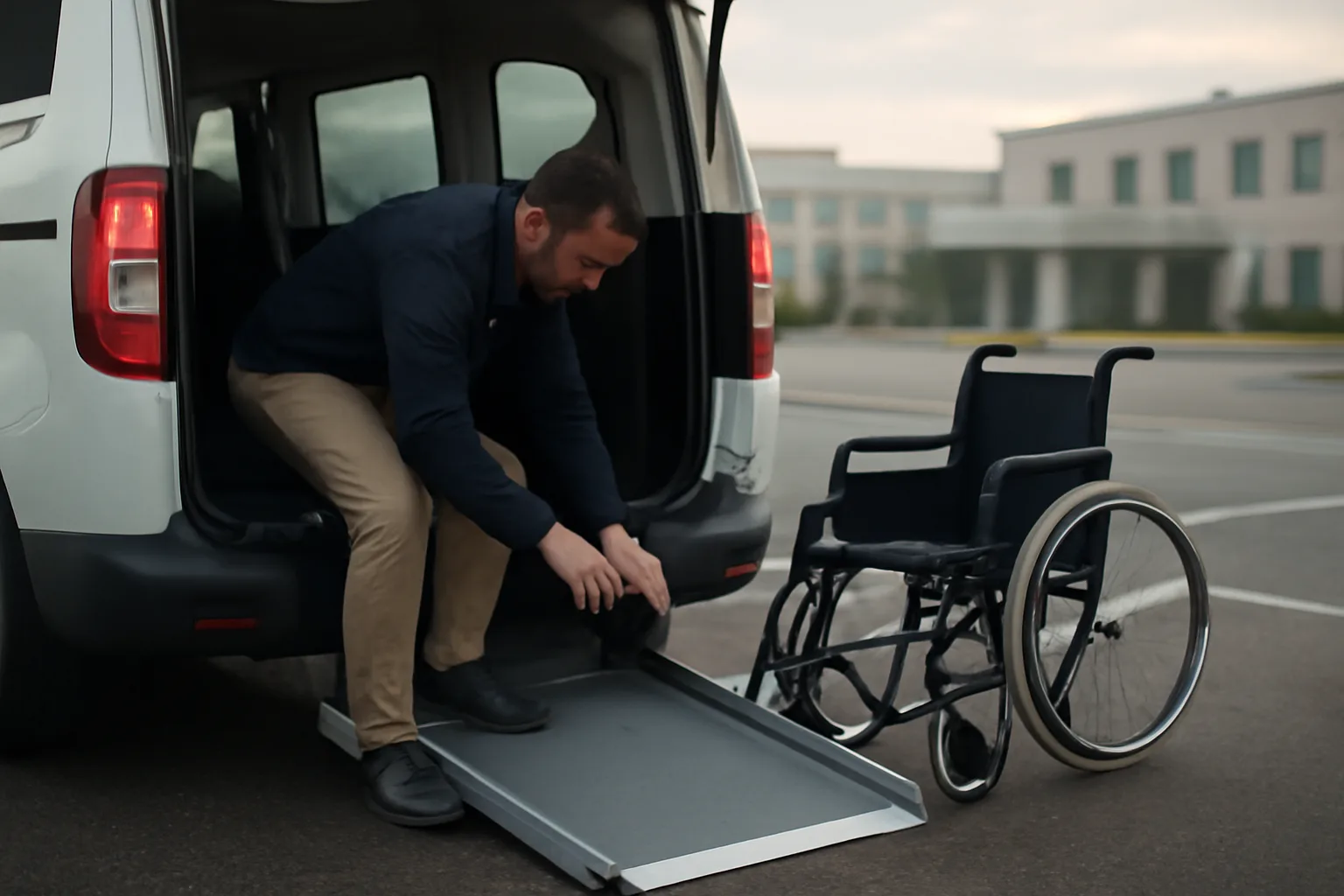
NEMT is scheduled, non-urgent transportation for Medicaid (and sometimes Medicare Advantage) enrollees who need a ride to a covered medical appointment but don't need an ambulance. Federal Medicaid regulations require states to ensure necessary transportation to and from providers, and to describe in their state plan how they meet that requirement. The regulation at 42 CFR 431.53 states that a state plan must "specify that the Medicaid agency will ensure necessary transportation for recipients to and from providers," which is why nearly every state contracts NEMT out to a broker or manages it through managed care plans [2]. Ride types include wheelchair van trips, ambulatory sedan or minivan trips for people who can walk with some assistance, and stretcher van trips for those who need to travel lying down but don't need medical monitoring. None of this is ambulance service. NEMT vehicles carry no oxygen tanks, no cardiac monitors, no EMTs. They carry a driver, sometimes an aide, and a properly secured passenger. Demand comes from dialysis, chemotherapy, physical therapy, methadone clinic visits, and routine primary care for people without a car or a working license. If your background is driving, not medicine, this is the corner of healthcare transportation built for you. For a broader look at how the field fits together, see nemt and non emergency medical transportation.
Does Medicaid cover ambulance rides?
Yes, Medicaid covers ambulance transportation when it's medically necessary, but that's a separate benefit from NEMT and it isn't run through brokers like Verida. Federal rule 42 CFR 440.170 covers transportation services broadly, and ambulance coverage under state Medicaid programs generally requires that transportation by any other means would endanger the person's health; it's typically billed by licensed ambulance providers directly to Medicaid or the managed care plan, not dispatched through a NEMT broker network [3]. NEMT brokers like Verida exist specifically for the non-emergency piece: getting someone to dialysis three times a week, or to a specialist forty miles away, when a wheelchair van or sedan is medically appropriate. If a Medicaid enrollee's condition requires ambulance-level monitoring during transport, that trip typically doesn't go through the NEMT broker at all. It goes to a licensed ambulance service billing Medicaid under a different benefit category. Confirm with your state Medicaid agency which trips route through the NEMT broker versus straight to ambulance billing, since the line can blur for stretcher-level transports in some states.
Does Medicare cover medical transportation?
Medicare's coverage of non-emergency transportation is much thinner than Medicaid's. Original Medicare (Parts A and B) generally covers ambulance transportation only when other transportation would endanger the person's health, and Medicare's own coverage page states plainly that Medicare Part B covers ground ambulance transportation when other transportation "could endanger your health," with no equivalent routine NEMT benefit built into original Medicare [4]. Some Medicare Advantage (Part C) plans offer non-emergency transportation as a supplemental benefit, but this varies plan by plan and is not guaranteed. If you're building a business plan around Medicare-funded rides, don't assume the coverage exists; call the specific Medicare Advantage plans in your service area and ask what NEMT benefit, if any, they include and who administers it. Many owner-operators end up doing a mix: some trips through a state Medicaid NEMT broker like Verida, some private-pay wheelchair transport, and occasionally a contracted Medicare Advantage transportation benefit administered by yet another broker.
How do you get credentialed with Verida as a transportation provider?
The general sequence is similar across every state Verida operates in, though exact forms and portals differ. First, you enroll as a Medicaid transportation provider with your state Medicaid agency, since brokers generally require this as a prerequisite, not a substitute, for network enrollment. Second, you apply directly to Verida's provider network, usually through an online portal where you submit business licensing, vehicle registration, insurance certificates, and driver credentials. Third, Verida (or a contracted vendor) inspects your vehicle and reviews driver records, including background checks and often drug screening. Fourth, if approved, you sign a subcontractor or transportation provider agreement that sets your per-trip rates, mileage reimbursement, cancellation policies, and performance standards like on-time pickup percentages. Expect to provide, at minimum: current commercial or livery vehicle insurance with limits Verida specifies, proof of wheelchair lift or ramp inspection where applicable, driver's license history for every driver on the account, and a signed W-9 or business tax ID. Some states also require a separate NEMT-specific state license or permit before a broker will even look at your application; confirm with your state Medicaid agency and the state's NEMT transportation unit whether such a license exists where you operate. The honest heads-up: none of this is fast. Between state Medicaid enrollment, broker application review, vehicle inspection scheduling, and contract signing, plan on the process taking weeks, not days, and build that lag into your cash flow planning before you commit to a van payment.
How to start a medical transportation business
Starting a medical transportation business follows a fairly fixed order, and skipping steps almost always costs more time later than it saves. 1. Pick your service type and vehicle. Wheelchair van, ambulatory sedan/minivan, or stretcher van each have different vehicle specs, insurance requirements, and driver training needs. A used, ADA-compliant wheelchair van typically runs somewhere in the $25,000 to $45,000 range depending on age and mileage; new conversion vans run considerably higher. Get exact current numbers from dealers in your area rather than relying on any fixed figure, since prices shift with the used vehicle market. 2. Form your business entity and get an EIN. An LLC is the common choice for liability separation, but talk to a local accountant or attorney about what fits your state. 3. Get commercial auto insurance with livery or NEMT-specific coverage. Personal auto policies exclude paid passenger transport, full stop. 4. Enroll as a Medicaid provider with your state Medicaid agency's transportation unit. This is a separate step from broker credentialing and usually has to happen first. 5. Apply to the NEMT broker(s) operating in your state (Verida, Modivcare, MTM, Access2Care, SafeRide, or a state-run alternative) for network credentialing. 6. Train and background-check every driver, including passenger assistance techniques, wheelchair securement, and any state-required NEMT driver certification. 7. Set up dispatch, whether that's broker-provided software, a third-party NEMT dispatch platform, or a manual system if you're a true one-van operation starting out. For a state-by-state look at how enrollment requirements differ, see medical transportation and nemt transportation.
How to start a NEMT business with just one van
A single-van operation is a completely legitimate way to start, and plenty of owner-operators run exactly that for years before adding a second vehicle. The steps don't change from the general path above, but a few things matter more at this scale. First, your own time becomes the bottleneck. If you're the only driver, you can only take trips that fit your schedule, and broker contracts often have on-time performance and trip acceptance rate standards that are harder to hit alone than with even one backup driver. Read the subcontractor agreement's performance clauses closely before you sign, because repeated missed pickups can get you suspended from the network. Second, insurance and vehicle costs don't scale down proportionally. A single wheelchair van still needs full livery insurance, which commonly costs more than a personal policy regardless of fleet size, so know that number before you commit. Third, don't try to enroll with every broker in your state on day one. Pick the broker with the largest Medicaid managed care membership or the state-designated statewide contract, get credentialed and running, then expand to additional brokers once you have bandwidth. Trying to onboard with three brokers simultaneously as a one-van shop usually means slow, incomplete applications everywhere instead of one solid, fast one.
How do you start a medical transportation business from scratch with no industry background?
Coming in cold is common, and it's workable, but a few gaps trip up first-timers more than anything else. The biggest one is underestimating how separate 'having a van' is from 'being credentialed to bill Medicaid for rides in that van.' Buying the vehicle is the easy, visible part. Getting through state Medicaid provider enrollment, broker network credentialing, and driver background checks is the slow, paperwork-heavy part, and it has to happen before you can legally bill for a single Medicaid trip. Second gap: assuming one application covers you everywhere. State Medicaid enrollment, broker credentialing (Verida or whichever broker holds your area), and any state-specific NEMT operating permit or Certificate of Need are usually three separate processes with three separate sets of paperwork. States that require a Certificate of Need for NEMT vehicles, for instance, add another layer beyond broker credentialing entirely; whether your state has this requirement is something to confirm directly with your state Medicaid transportation unit. Third gap: insurance minimums that surprise people. Brokers commonly require combined single limit auto liability well above personal auto minimums, plus non-owned/hired auto coverage if you use contract drivers. Get quotes early in the process, not after you've bought the van, since the insurance cost sometimes changes which vehicle makes financial sense.
What paperwork does Verida (or any broker) typically require during credentialing?
| Business registration | Articles of organization/incorporation, EIN letter | |
|---|---|---|
| Medicaid enrollment | State Medicaid provider number, confirmed active status | |
| Vehicle | Registration, VIN, current safety/lift inspection, ADA compliance proof for wheelchair vans | |
| Insurance | Commercial auto liability at broker-specified limits, workers' comp if you have employees | |
| Driver files | Valid license, MVR/driving record, background check, drug screen results | |
| Training | Passenger assistance/wheelchair securement training completion, CPR/first aid where required | |
| Tax | Signed W-9 | Confirm the exact current list with Verida's provider enrollment team and your state Medicaid agency, since brokers update requirements periodically and states differ on things like whether a Certificate of Need or separate state NEMT license applies. |
While exact document lists vary by state and change over time, owner-operators consistently report needing some combination of the following when applying to a Medicaid NEMT broker network: | Document category | Typical requirement |
How does Verida pay providers, and what should you expect in the contract?
Broker subcontractor agreements typically set a per-trip or per-mile rate schedule, sometimes tiered by vehicle type (ambulatory versus wheelchair versus stretcher), plus separate rules for no-shows, late cancellations, and wait time. Payment usually runs on a claims cycle, meaning you submit completed trip data through the broker's portal or dispatch system and get paid on a set schedule, often weekly or biweekly, after claims are verified. Before signing, read closely for: the actual per-trip and per-mile rates (get them in writing, not verbally quoted), how disputed or denied trips get resolved, what performance metrics can trigger suspension or termination (on-time percentage, complaint counts, no-show rates), and whether the agreement is exclusive or lets you also contract with other brokers or private-pay clients. Most broker agreements are non-exclusive, letting you run Medicaid broker trips alongside private-pay wheelchair transport, but confirm this explicitly rather than assuming it. Don't sign anything you haven't had a local attorney glance at if the contract length or exclusivity terms feel unusual. It's a modest cost against a multi-year commitment.
How do broker rebids and contract transitions affect owner-operators?
States rebid NEMT broker contracts on a cycle, often every three to five years, and the winning bidder can change. If your state switches from Verida to a different broker, or vice versa, your existing credentialing with the old broker doesn't automatically transfer. You'll typically need to reapply and recredential with the new broker, even though your Medicaid provider enrollment with the state itself usually stays intact. This is one of the more disruptive realities of the NEMT business model, and it's outside any operator's control. The practical defense is keeping your documentation (insurance certificates, driver records, vehicle inspection reports) current and organized at all times, so that when a transition happens, you can reapply fast instead of starting from zero. Watching your state Medicaid agency's public notices or procurement announcements is the only real way to get advance warning of an upcoming rebid. Getting your paperwork organized once and reusing it across state Medicaid enrollment and broker applications is exactly the gap a $199 State + Broker NEMT Launch Kit is built to close: the state-specific document checklist and broker application prep worksheets mean you're not rebuilding your file from scratch every time a contract changes hands.
What's the difference between Verida and brokers like Modivcare, MTM, and Access2Care?
Functionally, very little from an owner-operator's perspective. All of them are transportation management companies hired by state Medicaid agencies or managed care organizations to run NEMT dispatch and provider networks. The application process, the credentialing documents required, and the per-trip payment model are structurally similar across all of them. The real difference is which broker holds the contract in your specific state and region, and that's purely a function of state procurement decisions, not anything about broker quality you can research meaningfully in advance. A broker operating well in one state might hold a much smaller footprint in another. There's no public, standardized scorecard comparing broker performance across states that's kept current enough to be reliable, so the most useful research you can do is calling your state Medicaid transportation unit directly and asking who currently holds the contract, plus talking to other local NEMT operators already credentialed there about their actual experience getting paid and staying in the trip rotation.
What is NEMT, in plain terms, and who actually needs it?
NEMT stands for non-emergency medical transportation: scheduled rides to medical appointments for people who can't safely drive themselves or use regular public transit, but who don't need ambulance-level care during the ride. Medicaid enrollees are the largest funded population, since federal regulation at 42 CFR 431.53 obligates states to ensure necessary transportation to covered services is available [2]. Riders include dialysis patients needing three trips a week, people in wheelchairs going to physical therapy, kids with disabilities going to specialist appointments, seniors without a working car going to primary care, and people in addiction treatment going to daily or weekly clinic visits. It's steady, appointment-driven work, not emergency dispatch. That predictability is part of why it's an approachable business to start with one van, but it also means your income depends heavily on how reliably the broker routes trips to you and how well you perform on their metrics, more than on how many hours you're willing to drive.
Frequently asked questions
What is a NEMT broker like Verida?
A NEMT broker is a company a state Medicaid agency hires to manage non-emergency medical transportation for enrollees. Verida takes ride requests, checks eligibility and medical necessity, and dispatches trips to a network of contracted transportation providers, paying them per completed trip instead of the state paying drivers directly.
Does Medicaid cover ambulance rides?
Yes. Medicaid covers ambulance transportation when it's medically necessary, meaning any other transport method would endanger the person's health, but this is billed separately from NEMT and generally doesn't route through NEMT brokers like Verida. Check specific coverage rules with your state Medicaid agency, since criteria and billing paths vary by state.
Does Medicare cover medical transportation?
Original Medicare covers ambulance transportation only when medically necessary and doesn't cover routine non-emergency rides to appointments. Some Medicare Advantage plans offer NEMT as a supplemental benefit, but this varies by plan and isn't guaranteed, so check directly with specific Medicare Advantage plans in your area.
What is non-emergency medical transportation (NEMT)?
NEMT is scheduled transportation for people who need a ride to a covered medical appointment but don't need ambulance-level care. It includes wheelchair van, ambulatory sedan, and stretcher van trips, and is a required part of state Medicaid programs under federal transportation assurance rules at 42 CFR 431.53.
How do I start a NEMT business with just one van?
Form a business entity, get commercial livery insurance, enroll as a Medicaid provider with your state, apply to the broker holding the contract in your area (Verida or another), train and background-check yourself as driver, and set up basic dispatch. One van is workable, but broker performance standards can be harder to meet without backup capacity.
How do you start a medical transportation business?
Pick your vehicle type, form a business entity, secure commercial auto insurance, enroll as a Medicaid transportation provider with your state, apply for broker network credentialing, and complete required driver training and background checks. Order matters; broker applications typically require active state Medicaid enrollment first.
Is Verida the same in every state, or does it vary?
Verida's specific requirements, rates, and even its presence vary by state, since each state Medicaid agency separately contracts and rebids its NEMT broker. Confirm current footprint, application steps, and credentialing documents directly with your state Medicaid agency and Verida's provider enrollment contact.
What documents does Verida require for provider credentialing?
Typical requirements include business registration and EIN, active state Medicaid provider enrollment, vehicle registration and safety/lift inspection, commercial auto insurance at broker-specified limits, driver background checks and MVRs, passenger assistance training records, and a signed W-9. Confirm the exact current list with Verida and your state Medicaid agency.
What happens to my credentialing if my state switches brokers away from Verida?
Your state Medicaid provider enrollment usually stays intact, but broker-specific credentialing typically doesn't transfer automatically. You'll generally need to reapply with the new broker, so keeping insurance, driver, and vehicle documentation current and organized helps you reapply quickly when a contract transition happens.
How much does it cost to start a wheelchair van NEMT business?
Used ADA-compliant wheelchair vans commonly run roughly $25,000 to $45,000 depending on age and mileage, plus commercial livery insurance, business formation costs, and any state licensing fees. Get current vehicle pricing locally and insurance quotes early, since exact costs vary a lot by state and vehicle condition.
Can I work with Verida and another broker at the same time?
Often yes, since most broker subcontractor agreements are non-exclusive, but this must be confirmed in the specific contract language before assuming it. Read the agreement's exclusivity clause carefully, and ask Verida directly whether their standard contract restricts you from also contracting with other brokers.
Do I need a special license to start a NEMT business beyond Medicaid enrollment?
Some states require a separate state-level NEMT operating permit or Certificate of Need in addition to Medicaid provider enrollment and broker credentialing. Whether this applies to you depends entirely on your state, so confirm directly with your state Medicaid transportation unit before assuming Medicaid enrollment alone is sufficient.
Sources
- Nebraska Legislature, Medical Assistance Act transportation provisions, Neb. Rev. Stat. 68-911: Nebraska Medicaid statute addresses transportation services as part of the state's medical assistance program
- Electronic Code of Federal Regulations, 42 CFR 431.53: States must ensure necessary transportation to and from Medicaid providers is available to enrollees and describe how in the state plan
- Electronic Code of Federal Regulations, 42 CFR 440.170: Federal Medicaid regulation defines transportation services including ambulance as a distinct coverage category
- Medicare.gov, Ambulance Services coverage: Original Medicare covers ambulance transportation only when other transportation would endanger the person's health, and does not cover routine non-emergency rides
- 42 U.S.C. 1396a(a)(4), Social Security Act Section 1902(a)(4) (state plan requirements including transportation assurance): Federal Medicaid statute requires states to provide methods of administration necessary for proper and efficient operation of the plan, which CMS and courts have read to include transportation assurance