Last updated 2026-07-24
TL;DR
Non-emergency medical transportation (NEMT) in Wichita runs through KanCare, Kansas's Medicaid managed care program, and its contracted broker. To operate, you need a Kansas business entity, commercial auto insurance, a compliant wheelchair van, driver background checks, and enrollment as a Kansas Medicaid provider before you can bill for rides. Confirm current broker and state requirements before you buy a vehicle.
What is non-emergency medical transportation?
Non-emergency medical transportation (NEMT) is transportation to and from Medicaid-covered medical appointments for people who don't have another way to get there and don't need an ambulance. Think dialysis three times a week, chemo infusions, physical therapy, or a routine primary care visit. It's a Medicaid benefit, not a Medicare benefit in most cases, and states are required to provide it. Federal Medicaid regulation at 42 CFR 431.53 requires states to "ensure necessary transportation for beneficiaries to and from providers" [1]. Kansas meets that requirement through KanCare, its Medicaid managed care program, which contracts with managed care organizations (MCOs) that in turn contract with a transportation broker to schedule and pay for rides. NEMT is not the same business as ambulance service. Ambulances handle emergencies and medically necessary transport requiring clinical monitoring. NEMT vehicles range from ambulatory sedans to wheelchair vans to stretcher vans, and drivers generally aren't required to hold EMT certification, though some states and brokers do require CPR/first aid training. If you're picturing a wheelchair van business, you're in NEMT, not ambulance, territory. For a broader look at how the NEMT industry is structured across states, see medical transportation and what NEMT covers.
Does Medicaid cover ambulance rides?
Yes, Medicaid covers ambulance transportation, but it's billed and regulated separately from NEMT. Ambulance transport falls under emergency medical services and requires the vehicle and crew to meet state EMS licensing standards, plus medical necessity documentation showing the trip required ambulance-level care. NEMT, by contrast, covers non-emergency rides in vehicles like sedans, minivans, wheelchair vans, and non-emergency stretcher vans. If you're building a wheelchair van business, you'll enroll as an NEMT provider, not an ambulance provider, and you won't need EMT licensure for your drivers under most state rules. Confirm this distinction with the Kansas Department of Health and Environment (KDHE), which administers KanCare, since ambulance licensing in Kansas runs through a separate board (the Kansas Board of Emergency Medical Services) [2]. For more on how ambulance and NEMT differ operationally, see emergency medical transport.
Does Medicare cover medical transportation?
Medicare's coverage of non-emergency transportation is much narrower than Medicaid's. Original Medicare (Part B) covers emergency ambulance transportation when medically necessary, and it will cover non-emergency ambulance transportation only with a physician's written order stating it's medically necessary, under 42 CFR 410.40. Medicare does not have a standing NEMT benefit like Medicaid does. Some Medicare Advantage (Part C) plans offer non-emergency transportation as a supplemental benefit, but that varies plan by plan and isn't guaranteed. This is a big reason most new NEMT owner-operators build their business around Medicaid and Medicaid managed care contracts rather than Medicare, since that's where the recurring, structured non-emergency ride volume actually lives. If a chunk of your local market is dual-eligible (Medicare and Medicaid), the Medicaid side is usually what pays for the ride to dialysis or the wound care clinic, not Medicare.
How does NEMT work in Wichita and Sedgwick County specifically?
Wichita sits in Sedgwick County, and Medicaid-funded NEMT there runs through KanCare's structure like the rest of Kansas. KanCare beneficiaries are enrolled in one of the state's contracted managed care organizations, and each MCO arranges non-emergency transportation, often through a statewide transportation broker rather than handling scheduling in-house. As of this writing, Kansas has used a broker model for KanCare NEMT, similar to how most states now handle it. The identity of the specific broker (whether that's a national broker like Modivcare or a Kansas-specific arrangement) changes periodically as contracts are rebid, so don't assume the broker that was active last year is still the one holding the contract. Confirm the current broker directly with KDHE's KanCare transportation unit before you apply [3]. Wichita is Kansas's largest city, and it has real demand: dialysis clinics, oncology centers, and a large elderly and disabled Medicaid population needing regular rides. But demand alone doesn't get you paid. You need to be enrolled as a Kansas Medicaid provider and credentialed with the broker before you can bill a single trip.
How to start a medical transportation business
Starting a medical transportation business has a rough sequence that holds true in most states, Kansas included. Skipping steps or doing them out of order is the single most common reason new operators sit idle for months waiting on approvals they thought were automatic. 1. Form your business entity (LLC is typical) and get an EIN from the IRS. 2. Get a Kansas business license and check Wichita/Sedgwick County local licensing requirements for transportation businesses. 3. Buy or lease a compliant vehicle (see the vehicle section below) and get it inspected if required. 4. Get commercial auto insurance with liability limits that meet Kansas and broker minimums, more than personal auto coverage. 5. Run background checks and driving record checks on every driver, including yourself if you're driving. 6. Apply for enrollment as a Kansas Medicaid (KanCare) provider through KDHE. 7. Apply for credentialing with the KanCare MCOs' transportation broker (this is separate from Medicaid enrollment). 8. Get any required drug testing program and driver training documentation in place. 9. Wait for approval before you start accepting Medicaid-funded rides. Don't schedule Medicaid trips on a promise; wait for the actual enrollment and credentialing confirmation. This whole process commonly takes several weeks to a few months, and timelines depend heavily on how complete your paperwork is the first time you submit it. Confirm current processing times with KDHE and the broker directly, since they shift with staffing and application volume.
How to start a NEMT business with just one van
You can absolutely start with one van. Most owner-operators do. The mistake is treating a one-van operation like a hobby instead of a real Medicaid provider with real compliance obligations. With one vehicle, you still need everything a bigger fleet needs: a business entity, insurance that meets minimums, a background-checked driver (maybe just you), Medicaid enrollment, and broker credentialing. The paperwork burden doesn't shrink much just because your fleet is one van. What does shrink is your overhead, since you're not paying for a second driver, second insurance policy, or second maintenance schedule while you're building up trip volume and learning the broker's dispatch system. A realistic one-van plan: pick your vehicle type based on the ride type you can realistically fill in your area (ambulatory sedan work is different from wheelchair van work), get insured and enrolled before you buy anything expensive if you can, and plan for slow ramp-up as brokers route trips to you. Don't buy a $60,000 wheelchair van before you've confirmed you can get credentialed with the broker in your area. That's the step that trips people up, not the vehicle purchase.
What does a wheelchair van need to meet Kansas requirements?
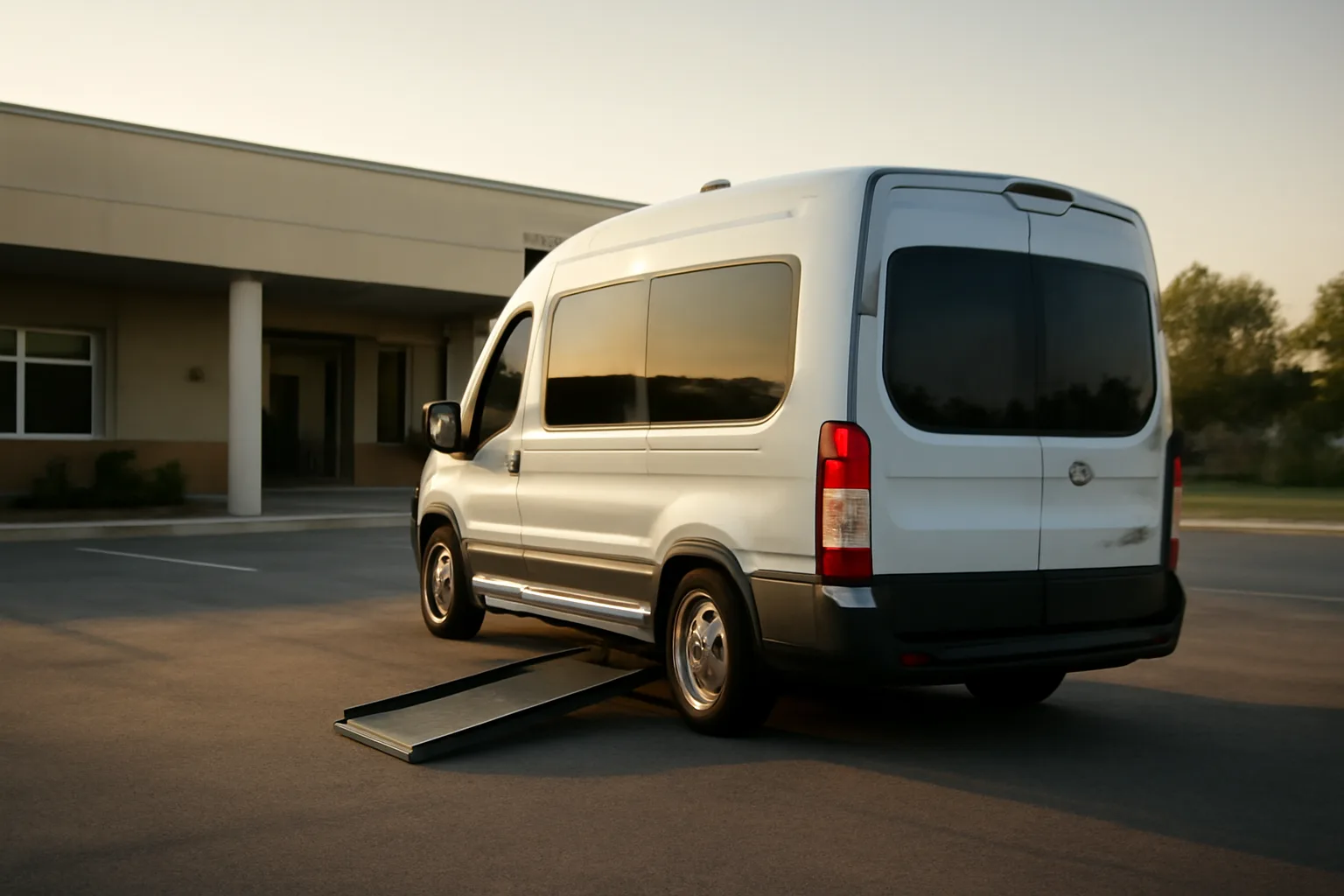
A wheelchair-accessible NEMT vehicle needs a working wheelchair lift or ramp, secure four-point tie-down systems for the wheelchair, and a securement system for the passenger themselves, more than the chair. Most brokers and states require these systems to meet standards referenced from SAE J2249 (wheelchair tie-down and occupant restraint systems) or equivalent, though exact citation language varies by broker contract. Vehicle age and mileage limits are common broker requirements, more than state rules. It's common to see brokers cap vehicle age (often 5 to 10 years) and require annual or semi-annual safety inspections beyond the standard state vehicle inspection. Kansas doesn't run a blanket annual vehicle safety inspection program for passenger vehicles the way some states do, so much of your inspection obligation will come from the broker contract itself, not from KDHE. Confirm exact wheelchair van specs, age limits, and inspection frequency with your specific broker before purchase, since these details change contract to contract and aren't standardized nationally. Also budget for lift maintenance. A failed lift on inspection day, or worse, during a pickup, is one of the most common reasons a vehicle gets pulled from active service.
How do you get credentialed with a NEMT broker in Kansas?
Broker credentialing is separate from Medicaid enrollment, and it's the step new operators most often underestimate. Being an enrolled Kansas Medicaid provider doesn't automatically mean a broker will dispatch trips to you. You have to apply to the broker directly, submit vehicle and driver documentation, and pass their own inspection and background check process. Typical broker credentialing packets ask for: proof of Medicaid enrollment, vehicle registration and insurance, vehicle inspection results, driver license and MVR (motor vehicle record) checks, driver background checks (often including a check against state and federal exclusion lists), and sometimes proof of driver training in passenger assistance and wheelchair securement. Kansas Medicaid providers, like providers in every state, must also be checked against federal exclusion lists. The HHS Office of Inspector General maintains the List of Excluded Individuals/Entities (LEIE), and providers or owners on that list can't bill Medicaid or Medicare [4]. Brokers routinely check this list themselves during credentialing, and states check it too, so don't assume this is a formality you can skip. Because broker contracts and specific document requirements change, and because Kansas has moved between broker arrangements over time, the honest answer is: confirm with your broker and the KanCare transportation unit what their current credentialing packet requires before you start gathering documents.
How to start a NEMT business: state Medicaid enrollment specifics
To bill KanCare directly for NEMT trips, you need to enroll as a Kansas Medical Assistance Program provider. Kansas Medicaid provider enrollment is handled through KDHE's Medicaid program, and provider types have specific enrollment applications, so make sure you're applying under the correct NEMT or transportation provider category rather than a generic provider type. Medicaid.gov's own guidance on NEMT confirms that states are required to make sure Medicaid enrollees "have transportation to and from providers," and it directs states to define specifics like vehicle standards and driver qualifications themselves [5]. That means Kansas-specific rules, not a national standard, govern most of what you'll actually need to document. Expect the enrollment application to ask for your business entity documents, EIN, National Provider Identifier (NPI) if applicable to your provider type, insurance certificates, and ownership disclosure information. Some provider types are also subject to a Medicaid provider screening risk level (limited, moderate, or high) under federal rule 42 CFR 455.450, which can affect whether you need a site visit or fingerprint-based background check before enrollment . Confirm which screening level applies to NEMT transportation providers in Kansas directly with KDHE, since this affects your timeline.
How much does it cost to start, realistically?
| Used wheelchair van (converted) | $20,000-$45,000 | Price depends heavily on age, mileage, and lift condition | |
|---|---|---|---|
| New wheelchair van (converted) | $50,000-$70,000+ | Varies by conversion company and lift type | |
| Commercial auto insurance (annual, per vehicle) | Varies widely by state and driving record | Get quotes early; this is a common budget surprise | |
| Business formation and licensing | A few hundred dollars | LLC filing fees, EIN is free from the IRS | |
| Driver background checks | Two to three figures per driver | Cost depends on the vendor and scope required | The honest gap in most people's budget isn't the vehicle. It's underestimating insurance costs, or not budgeting for the weeks or months of no trip volume while enrollment and credentialing are pending. Don't spend your entire startup budget on the van and have nothing left to cover insurance premiums and slow ramp-up. |
Costs vary widely based on whether you buy new or used, and whether you're building a wheelchair-accessible fleet or an ambulatory sedan fleet. Here's a rough breakdown of common cost categories, not a guaranteed budget. | Cost category | Rough range | Notes |
What driver requirements does Kansas NEMT typically involve?
Driver requirements come from two places at once: state Medicaid rules and broker contract requirements, and they don't always overlap perfectly. Expect to need a valid Kansas driver's license, a clean or explainable motor vehicle record, a background check that includes a check against the federal exclusion list [4], and often a specific number of years of driving experience required by the broker (commonly two to five years, though this varies). Many brokers also require passenger assistance and sensitivity training, sometimes documented through a specific training program the broker names in its contract, and CPR/first aid certification. Some require drug and alcohol testing programs, especially for drivers operating wheelchair lifts or larger vehicles. If you're a solo owner-operator planning to drive your own van, you still go through this same screening process. There's no owner exemption from background checks or driving record review. For more detail on driver qualification standards across NEMT generally, see nemt transportation and non emergency medical transportation services.
What's the realistic timeline from decision to first paid trip?
There's no single official number for Kansas, and anyone who quotes you an exact week count is guessing. What's realistic is thinking in phases, each with its own dependencies. Phase one is business setup: entity formation, EIN, licensing. This usually takes one to a few weeks if you're not waiting on anything external. Phase two is vehicle and insurance: buying or converting a van, getting it inspected, and binding commercial insurance. This can take a few weeks to a couple of months depending on vehicle availability and underwriting. Phase three is Medicaid enrollment, which runs through KDHE's application and review process. Processing times fluctuate with application volume and completeness of your submission; confirm current turnaround directly with KDHE's KanCare provider enrollment unit. Phase four is broker credentialing, which typically can't fully start until your Medicaid enrollment is confirmed, though some brokers will accept applications in parallel. This adds its own review period, often several weeks. Add it up, and a realistic range for many owner-operators is two to four months from decision to first paid Medicaid trip, sometimes longer if paperwork gets kicked back for corrections. Building in a financial cushion for that runway matters more than almost any other planning decision you'll make.
Where the paperwork burden actually is (and how to cut through it)
Most first-time NEMT owner-operators expect the vehicle purchase to be the hard part. It usually isn't. The hard part is assembling a clean, complete application package for two separate reviewers (the state Medicaid agency and the broker) who each want slightly different documents in slightly different formats. A state Medicaid enrollment application and a broker credentialing packet ask for overlapping but not identical information: business formation documents, insurance certificates, vehicle documentation, driver background checks, and ownership disclosures show up in both, but the forms, portals, and required attachments differ. Missing one attachment or submitting an outdated insurance certificate is the single most common reason applications bounce back for correction, adding weeks to your timeline. This is the specific gap the $199 State + Broker NEMT Launch Kit is built around: a structured way to assemble the documents both your state Medicaid agency and your broker will ask for, so you're not discovering missing pieces one rejection letter at a time. It doesn't replace confirming current requirements with KDHE and your broker directly, and it doesn't guarantee approval, but it's built to cut down the back-and-forth that eats most people's launch timeline.
What should you check before buying a wheelchair van, not after?
Buy the paperwork clarity before you buy the van, not the other way around. Confirm three things first: which broker currently holds the KanCare NEMT contract in your service area, what that broker's vehicle age and equipment specs actually require, and what your Kansas Medicaid provider enrollment category and screening level will be. A van that meets one broker's specs might fail another's inspection checklist over age limits or securement system details. Since Kansas has changed broker arrangements before and will likely do so again over time, buying a vehicle based on last year's broker requirements is a real risk. Call KDHE's KanCare transportation unit and ask directly which broker is active and what their current vehicle standards are before you sign a purchase agreement. This single phone call, made early, prevents the most expensive mistake in this business: owning a van that doesn't pass credentialing.
Frequently asked questions
How to start a medical transportation business in Wichita, Kansas?
Form a business entity, get commercial auto insurance, buy a compliant vehicle, run driver background checks, then enroll as a Kansas Medicaid (KanCare) provider through KDHE and get credentialed with the current KanCare transportation broker. Confirm the active broker and exact requirements with KDHE before buying a vehicle, since broker contracts and specs change over time.
Does Medicaid cover ambulance rides?
Yes. Medicaid covers medically necessary ambulance transportation, but it's regulated separately from non-emergency transportation (NEMT) and requires documentation showing ambulance-level care was needed. Ambulance providers are licensed through state EMS boards, not through the Medicaid NEMT provider enrollment process most wheelchair van businesses use.
What is non-emergency medical transportation?
Non-emergency medical transportation (NEMT) is Medicaid-funded transportation to and from medical appointments for people without another way to get there who don't need ambulance-level care. It covers rides in sedans, wheelchair vans, and non-emergency stretcher vans, and federal rule 42 CFR 431.53 requires states to provide it to Medicaid enrollees.
Does Medicare cover medical transportation?
Medicare mainly covers emergency ambulance transportation, and non-emergency ambulance transport only with a doctor's written order under 42 CFR 410.40. Original Medicare doesn't have a standing non-emergency transportation benefit like Medicaid does; some Medicare Advantage plans offer limited non-emergency transportation as a supplemental benefit, but this varies by plan.
How do you start a NEMT business with just one van?
You need the same core requirements as a larger fleet: a business entity, compliant insurance, a background-checked driver, Medicaid enrollment, and broker credentialing. The main difference is lower overhead. Get insured and confirm enrollment/credentialing steps before making a large vehicle purchase, so you're not carrying an expensive van through a long approval wait.
What is NEMT and how is it different from ambulance service?
NEMT stands for non-emergency medical transportation, covering rides to Medicaid-covered appointments for people who don't need emergency or clinical care during transport. Ambulance service covers emergencies and medically necessary transport requiring monitoring or clinical intervention, and it's licensed and billed through a separate state EMS and Medicaid pathway.
How much does it cost to start a wheelchair van NEMT business?
Costs vary widely: a used wheelchair-accessible van typically runs $20,000 to $45,000, new conversions often exceed $50,000. Add business formation fees, commercial insurance premiums, and driver background check costs. Many new operators underestimate insurance costs and the financial runway needed during the weeks or months enrollment and credentialing take.
Who is the NEMT broker for KanCare in Wichita?
Kansas administers NEMT through KanCare's managed care organizations, which contract with a transportation broker; the specific broker changes periodically as contracts are rebid. Confirm the current broker directly with KDHE's KanCare transportation unit before applying, since operating on outdated broker information can cost you time and a failed credentialing attempt.
Do NEMT drivers need EMT certification in Kansas?
Generally no. NEMT drivers typically aren't required to hold EMT certification, unlike ambulance crews. Most brokers do require a valid driver's license, a clean or explainable driving record, background checks against federal exclusion lists, and often passenger assistance or wheelchair securement training, but not clinical EMT credentialing.
How long does Kansas Medicaid provider enrollment take for NEMT?
There's no fixed statewide number, and it depends on application completeness and current KDHE processing volume. Realistically, budget several weeks for Medicaid enrollment alone, plus additional weeks for separate broker credentialing, which often can't fully start until enrollment is confirmed. Confirm current timelines directly with KDHE.
What insurance does a Kansas NEMT wheelchair van need?
You need commercial auto insurance meeting state minimums and often higher liability limits required by your broker contract, not personal auto coverage. Exact minimum limits vary by broker, so get the current required limits from your broker before binding a policy, and confirm whether wheelchair lift equipment needs separate coverage riders.
Can I get NEMT trips without going through a broker?
In states using a managed care broker model, including Kansas's KanCare structure, most Medicaid-funded NEMT trips are scheduled and paid through the broker, not billed directly to the state. Some private-pay or non-Medicaid rides (hospital discharge transport, private insurance cases) may not require broker credentialing, but Medicaid trip volume generally does.
What documents does NEMT broker credentialing require?
Typical packets include proof of Medicaid enrollment, vehicle registration and insurance, vehicle inspection results, driver license and motor vehicle records, background check results, and sometimes passenger assistance training documentation. Exact requirements vary by broker and change over time, so confirm the current packet with your specific broker before applying.
Sources
- 42 CFR 431.53, eCFR: States must ensure necessary transportation for Medicaid beneficiaries to and from providers
- 42 CFR 410.40, eCFR: Medicare covers non-emergency ambulance transportation only with physician certification of medical necessity
- HHS Office of Inspector General, List of Excluded Individuals/Entities (LEIE): Providers and owners on the LEIE cannot bill Medicaid or Medicare
- Medicaid.gov, Non-Emergency Medical Transportation: States must ensure enrollees have transportation to and from providers and define vehicle and driver standards themselves
- 42 CFR 455.450, eCFR: Medicaid provider screening levels (limited, moderate, high) can require site visits or background checks before enrollment