Last updated 2026-07-23
TL;DR
Non medical transportation (NEMT) moves people who don't need an ambulance to medical appointments, using wheelchair vans, ambulatory sedans, or stretcher vehicles. Medicaid covers it as a required benefit in most states; Medicare mostly doesn't, outside narrow cases. Starting a business means an LLC, the right vehicle, insurance, a state Medicaid provider number, and broker credentialing with companies like Modivcare or MTM.
What is non emergency medical transportation (NEMT)?
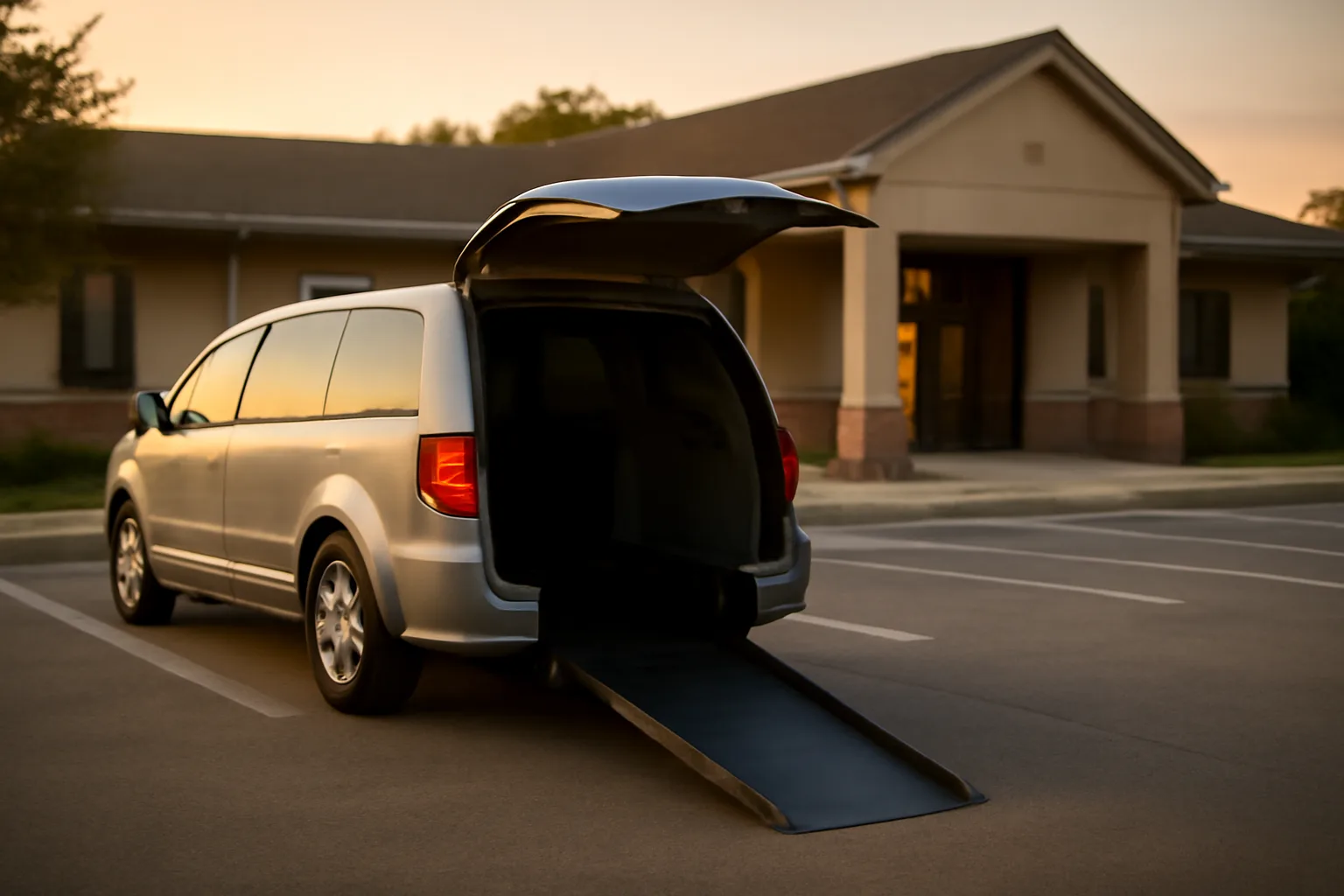
Non emergency medical transportation, almost always shortened to NEMT, is transport for people who need to get to a medical appointment, dialysis, or pharmacy pickup but don't need an ambulance or emergency care. Think dialysis three times a week, a wheelchair user going to physical therapy, or someone with no car getting to a primary care visit. It's not glamorous work and it's not emergency work. No lights, no sirens, no EMTs (usually). It's driving, patient assistance, and paperwork, in roughly that order of daily time spent. Federal Medicaid rules require states to provide NEMT to eligible beneficiaries who have no other way to get to a covered service. The Centers for Medicare & Medicaid Services (CMS) describes this as an assurance states must give: transportation to and from providers is a condition of getting federal Medicaid matching funds [1]. States run the actual programs, usually through regional or statewide brokers rather than paying drivers directly. Vehicles range from a standard ambulatory sedan or minivan up to wheelchair-accessible vans with lifts or ramps, and in some markets stretcher vans for non-emergency bed-bound patients. This article focuses mostly on the ambulatory and wheelchair-van tiers, since that's where most new owner-operators start. For state-specific mechanics, see medical transportation and nemt.
Does Medicaid cover ambulance rides?
Yes, but ambulance transport is a separate benefit category from NEMT, governed by different medical necessity rules. Medicaid covers ambulance transportation when a beneficiary's condition requires it (emergency response, or non-emergency ambulance for someone who can't safely be transported by van or car, like a bed-confined patient needing medical monitoring in transit). The distinction matters a lot for a new operator: if you're running wheelchair vans, you are not doing ambulance-level transport, and you shouldn't market yourself as an ambulance alternative. Ambulance providers are typically licensed separately under state EMS agencies, not through the same broker network you'll be credentialing with as an NEMT provider. Medicaid ambulance coverage and NEMT coverage are billed and authorized through completely different channels in most states. Confirm the specific split with your state Medicaid agency, since some states fold non-emergency ambulance authorization into the same broker portal used for van and sedan trips, and some don't.
Does Medicare cover medical transportation?
Original Medicare (Part A/B) does not cover routine non-emergency medical transportation the way Medicaid does. Medicare Part B covers emergency ambulance transportation when medically necessary, and in limited cases covers non-emergency ambulance transport if a doctor certifies it's medically necessary (for example, a bed-confined patient needing ambulance-level care to get dialysis) [2]. Medicare does not generally pay for a ride in a wheelchair van, sedan, or volunteer driver program under standard Part A/B rules. Some Medicare Advantage (Part C) plans offer transportation as a supplemental benefit, but that's plan-specific, not a guarantee, and benefits vary year to year and plan to plan [3]. This is the single most common confusion new operators run into. If your target market is Medicare-only beneficiaries expecting routine ride coverage, you'll likely be disappointed. Most sustainable NEMT business comes from state Medicaid contracts and broker referrals, occasionally supplemented by Medicare Advantage transportation benefit contracts, private pay, or Area Agency on Aging contracts.
How do you start a medical transportation business? (the real steps, in order)
There's no single national license for NEMT. It's a state-by-state, sometimes county-by-county, patchwork. Here's the order that actually works, based on how state Medicaid transportation units and brokers structure enrollment. 1. Form your business entity (LLC is standard) and get an EIN from the IRS. 2. Check your state's specific NEMT requirements: many states require a state-level transportation permit or certificate of authority before Medicaid enrollment, issued by the state Department of Transportation or Public Utilities Commission, not Medicaid itself. 3. Buy or lease your vehicle(s) and get them inspected/permitted per state requirements (wheelchair lift certifications, annual vehicle inspections, decals). 4. Get commercial auto insurance with the right limits (most states and brokers require higher liability minimums than personal auto, often $1 million combined single limit for wheelchair-accessible vehicles, though this varies by state). 5. Enroll as a Medicaid provider with your state Medicaid agency (separate from broker credentialing). 6. Credential with the regional NEMT broker(s) your state contracts with (Modivcare, MTM, Access2Care, SafeRide, or a state-specific broker). 7. Get driver background checks, drug screens, and required training (defensive driving, passenger assistance, sometimes CPR/first aid) done for every driver. 8. Set up dispatch, GPS tracking, and trip documentation systems, since brokers audit these closely. Each of those steps has its own paperwork trail, and steps 5 and 6 alone can take weeks to a few months depending on the state and broker backlog. Confirm current timelines with your broker and state Medicaid agency, since they change often and vary widely.
How to start a NEMT business with just one van
One van is enough to start, and plenty of owner-operators do exactly this. The mechanics don't change based on fleet size; you still need the entity, insurance, state enrollment, and broker credentialing. What changes is your capacity and how brokers assign you trips. With one wheelchair van, you're realistically a part-time or single-shift operation from the broker's perspective. Some brokers set minimum trip-acceptance expectations or service-area coverage requirements that a single vehicle can struggle to meet consistently, so ask directly during credentialing what the volume expectations are before you commit. A used wheelchair-accessible van (Dodge Grand Caravan, Honda Odyssey, or Ford Transit conversions are common) typically runs anywhere from the high teens to mid-$30,000s depending on age, mileage, and lift condition; new units cost significantly more. Get a pre-purchase inspection focused on the lift/ramp mechanism, since that's the single most expensive thing to repair or replace and the part most likely to fail an inspection. Don't skip insurance shopping. Wheelchair-van commercial auto policies price very differently across carriers, and not every commercial auto insurer even writes NEMT risk. Get quotes before you finalize the vehicle purchase, not after.
How do you get Medicaid provider enrollment as an NEMT operator?
Medicaid provider enrollment is separate from broker credentialing, and states handle it differently. Some states enroll NEMT providers directly through their Medicaid Management Information System (MMIS) portal; others route everything through the broker and skip direct state enrollment for smaller operators; a few require both. General requirements across most states include: a National Provider Identifier (NPI) from the National Plan and Provider Enumeration System, business licensing documents, proof of insurance, vehicle registration and inspection records, and background check clearances for owners and drivers. CMS maintains the federal framework states build their programs on, but each state Medicaid agency publishes its own provider enrollment manual [4]. Expect to submit: articles of organization, EIN letter, certificate of insurance, vehicle titles/registrations, driver rosters with background check results, and sometimes a surety bond. Processing time varies by state, sometimes a few weeks, sometimes several months if the state agency has a backlog. Confirm current requirements and timelines directly with your state Medicaid transportation unit, since these details are exactly the kind that change without much notice.
How does broker credentialing work (Modivcare, MTM, Access2Care, SafeRide)?
Most states contract NEMT management to a regional or national broker instead of running trip dispatch themselves. The broker verifies your credentials, assigns trips, handles billing to the state, and audits your compliance on an ongoing basis. Modivcare, MTM, Access2Care, and SafeRide are the largest names, but exact broker-per-state assignments change on a contract cycle, sometimes every few years when states rebid. Credentialing typically asks for: proof of Medicaid enrollment (or application in process), vehicle inspection certificates, insurance certificates naming the broker as certificate holder or additional insured, driver files (license, MVR, background check, drug screen), and a signed provider agreement outlining rates and service expectations. Don't assume rates or requirements are the same across brokers or across states for the same broker. MTM's Ohio contract terms and MTM's Texas contract terms can differ. Confirm current rates, required documentation, and re-credentialing cycles directly with the broker you're applying to, and re-check annually since most brokers require periodic re-verification of insurance and vehicle inspections. For a broader look at how broker relationships work across states, see nemt transportation and non emergency medical transportation services.
What insurance and vehicle requirements should I expect?
Insurance minimums vary sharply by state and by vehicle type. Wheelchair-accessible vehicles generally carry higher liability minimums than ambulatory sedans, because the risk profile (loading, securing, transporting a wheelchair passenger) is higher. Common requirements new operators run into: commercial auto liability (often $1 million combined single limit, though some states or brokers accept less for ambulatory-only fleets), workers' compensation if you have employees, general liability, and sometimes a bond. Vehicles typically need annual state inspection, wheelchair lift/ramp certification, and functioning securement systems (four-point tie-downs at minimum) that meet state Department of Transportation standards. None of this is uniform nationally. A state that requires ADA-compliant lift certification annually might sit next to a state that only requires it every two years. Get the specific list in writing from both your state Medicaid transportation unit and your target broker before you buy insurance, because buying the wrong coverage tier and having to upgrade mid-year is expensive and avoidable.
How long does it take to get up and running?
Realistically, plan for a few months from decision to first paid trip, not a few weeks. Entity formation and EIN can happen in days. Vehicle purchase and inspection, a week or two if you're not waiting on financing. Insurance binding, same. The slow parts are state Medicaid enrollment and broker credentialing, which involve document review queues on the agency and broker side that you don't control. Some operators report being credentialed within 30 to 60 days; others wait several months, especially if paperwork gets kicked back for corrections (a very common reason for delay: mismatched business names between your LLC filing, EIN letter, and insurance certificate). Build slack into your timeline and don't quit a day job or sign a vehicle lease assuming a specific start date, because nobody, including the broker, can guarantee an approval date.
What does it cost to get started, roughly?
| Used wheelchair van | $18,000 to $38,000 | Depends heavily on lift condition, mileage, conversion brand | |
|---|---|---|---|
| New wheelchair van/conversion | $45,000 to $70,000+ | Financing terms vary widely | |
| Commercial auto insurance (annual) | Varies widely by state | Wheelchair-accessible vehicles cost more to insure than sedans | |
| State business licensing/permits | Often a few hundred dollars | Varies by state, some require separate transportation authority filings | |
| Background checks/drug screens per driver | Roughly $50 to $150 | Varies by vendor and state requirements | |
| Bond (if required) | Varies by state | Not all states require one | These are directional ranges, not quotes. Confirm current numbers with vendors and your state Medicaid agency before you budget, since insurance pricing especially has moved a lot in recent years. |
Costs vary enormously by state, vehicle condition, and whether you're buying new or used, but here's a rough shape of the categories you're paying into, not a promise of your total. | Cost category | Rough range | Notes |
What ongoing compliance should I expect after I'm approved?
Getting credentialed is the start, not the finish line. Brokers and state Medicaid agencies both run periodic audits: insurance re-verification, vehicle re-inspection, driver file updates, and trip documentation review (GPS logs, signed trip logs, on-time performance). Most brokers track on-time pickup rates, no-show/cancellation rates, and complaint volume, and can suspend or terminate a provider agreement for repeated failures. Keep every driver file current (license renewal, MVR pulls, drug screens on whatever cycle your state or broker requires) and don't let insurance certificates lapse even for a day, since a coverage gap is one of the fastest ways to get suspended from a broker network. Re-credentialing cycles (annual, in most networks) will ask for updated insurance certificates, vehicle inspection records, and sometimes refreshed background checks. Calendar these dates the same way you'd calendar tax deadlines.
Where do the paperwork pieces (state enrollment + broker credentialing) actually overlap and duplicate?
A lot of new operators are surprised at how much the state Medicaid enrollment packet and the broker credentialing packet ask for the same documents, twice, in slightly different formats. Insurance certificates, vehicle registration, driver rosters, and background check results usually get submitted to both the state and the broker separately, because they're technically different relationships (you're a Medicaid-enrolled provider AND a broker network provider). This duplication is exactly the kind of thing that eats a founder's first month. Building a single organized document set (a folder with current versions of every certificate, roster, and inspection record) before you start either application saves real time, since you'll be asked for the same five documents by two different portals within days of each other. This is the gap RideCredential's $199 one-time State + Broker NEMT Launch Kit is built around: a single organized packet and checklist mapped to state Medicaid enrollment and broker credentialing side by side, so you're not rebuilding the same document set twice from scratch. Check the current state and broker checklist at /launch-kit-builder.
Frequently asked questions
What is non emergency medical transportation (NEMT)?
NEMT is transportation for Medicaid or other beneficiaries who need to get to medical appointments, dialysis, or pharmacies but don't require ambulance-level care. It covers wheelchair vans, ambulatory sedans, and sometimes stretcher vans. States are required to provide it to eligible Medicaid beneficiaries with no other transportation option, per CMS guidance [1].
How do you start a medical transportation business?
Form an LLC, get an EIN, secure a state transportation permit if required, buy an appropriately equipped vehicle, get commercial auto insurance, enroll as a Medicaid provider with your state, and credential with the regional broker (Modivcare, MTM, Access2Care, SafeRide, or a state-specific broker). Each step has separate paperwork; expect a few months total, not weeks.
How do you start a NEMT business specifically?
NEMT businesses follow the same steps as general medical transportation startups: entity formation, vehicle acquisition, insurance, state Medicaid enrollment, and broker credentialing. NEMT-specific wrinkles include wheelchair lift certification requirements, passenger assistance training for drivers, and broker-specific trip volume expectations you should ask about before committing.
Does Medicaid cover ambulance rides?
Yes. Medicaid covers ambulance transportation, both emergency and non-emergency, when medically necessary, but it's a separate benefit category from NEMT with its own medical necessity standards and often a separate licensing and billing pathway through state EMS agencies rather than the NEMT broker network.
Does Medicare cover medical transportation?
Original Medicare Part B covers emergency ambulance transport and limited non-emergency ambulance transport when a doctor certifies medical necessity [2]. It generally does not cover routine wheelchair van or sedan rides. Some Medicare Advantage plans offer transportation as a supplemental benefit, but this varies by plan and year [3].
What's the difference between NEMT and ambulance transport?
NEMT serves people who can safely travel by van, sedan, or wheelchair-accessible vehicle without medical monitoring in transit. Ambulance transport is for people whose condition requires medical care or monitoring during the ride. They're licensed, billed, and often regulated through completely different state agencies.
How much does it cost to start a wheelchair van NEMT business with one van?
Costs vary by state and vehicle condition, but a used wheelchair van commonly runs $18,000 to $38,000, plus commercial auto insurance, licensing fees, and background check costs per driver. There's no fixed national number; get local quotes for insurance and check your state's specific licensing fees before budgeting.
How long does NEMT credentialing take?
It varies widely. Some operators report 30 to 60 days from application to approval; others wait several months, often due to document mismatches or agency backlogs. Both state Medicaid enrollment and broker credentialing run on their own timelines, and neither guarantees a specific approval date.
Do I need a special license to drive for NEMT?
Requirements vary by state. Most states require a valid driver's license (sometimes a specific class), a clean motor vehicle record, background check clearance, and drug screening. Some states or brokers require passenger assistance training, CPR/first aid certification, or defensive driving courses. Confirm specifics with your state Medicaid transportation unit.
Can I run NEMT with just one van?
Yes, many owner-operators start with a single wheelchair van. The state enrollment and broker credentialing steps are identical regardless of fleet size, though some brokers set minimum coverage or trip-acceptance expectations that a one-vehicle operation should clarify before signing a provider agreement.
Which brokers manage NEMT in most states?
Modivcare, MTM, Access2Care, and SafeRide are the largest national or regional NEMT brokers, but which broker holds the contract in your state changes on a rebid cycle, sometimes every few years. Confirm your state's current broker assignment with your state Medicaid transportation unit.
What insurance do I need for an NEMT wheelchair van?
Requirements vary by state and broker, but wheelchair-accessible vehicles typically need higher commercial auto liability limits than ambulatory sedans, often around $1 million combined single limit, plus general liability and workers' compensation if you have employees. Get the exact figure in writing from your state and broker before buying a policy.
Is NEMT the same thing as medical transportation?
Medical transportation is the broader category, including NEMT, ambulance transport, and air medical transport. NEMT specifically refers to the non-emergency portion, covering wheelchair vans, ambulatory sedans, and stretcher vans for people who don't need ambulance-level care.
Sources
- Medicaid.gov, Non-Emergency Medical Transportation: States must assure transportation to and from Medicaid providers as a condition of federal matching funds
- Medicare.gov, Ambulance Services coverage: Medicare Part B covers emergency ambulance transport and limited non-emergency ambulance transport with medical necessity certification
- CMS, Medicare Advantage supplemental benefits guidance: Medicare Advantage plans may offer transportation as a supplemental benefit, varying by plan
- Medicaid.gov, Provider Enrollment: States manage their own Medicaid provider enrollment processes and requirements under federal framework
- Medicaid.gov, Medicaid Benefits: NEMT is categorized as a required benefit tied to access to other covered Medicaid services