Last updated 2026-07-25
TL;DR
Starting a medical transportation business means picking a lane (NEMT, not ambulance service), getting your state operating authority and business licenses, buying a compliant wheelchair van, carrying commercial auto insurance, then enrolling as a state Medicaid provider and credentialing with brokers like Modivcare or MTM. Expect months, not weeks, and real upfront cash for the vehicle and insurance before your first paid trip.
How do you start a medical transportation business?
You start by deciding what kind of medical transportation you're actually running, because "medical transportation" covers everything from 911 ambulances to a Toyota Sienna taking a dialysis patient to a Tuesday appointment. Most new owner-operators reading this are looking at non-emergency medical transportation (NEMT), which is the wheelchair van and ambulatory sedan side of the business, not ambulances. The rough sequence looks like this: form your business entity, get your state's transportation operating authority if your state requires one, buy or lease a compliant vehicle, get commercial insurance in place, hire and train drivers if you're not a one-van solo operation, then apply for Medicaid provider enrollment in your state and credential with the Medicaid brokers that manage trips there (Modivcare, MTM, Access2Care, SafeRide, or a state-specific broker). None of these steps is optional if you want Medicaid trips, and none of them happens overnight. Medicaid provider enrollment alone can run 30 to 90 days depending on the state's backlog, and broker credentialing is usually a separate process that starts only after your Medicaid enrollment is approved. Budget real time, not a weekend. A lot of people searching this term actually mean "how do I get my first van on the road doing paid Medicaid trips," which is really two businesses stacked together: a licensed passenger transport company, and a Medicaid billing relationship. Skipping either half means you're driving people around for cash, which is legal in some places but isn't the NEMT business most people are trying to build.
What is NEMT and how is it different from ambulance service?
Non-emergency medical transportation, or NEMT, is transportation for Medicaid (and sometimes Medicare Advantage or private-pay) members who can't get to medical appointments on their own but don't need emergency ambulance care. Think dialysis, chemo, physical therapy, and routine doctor visits, not 911 calls. Federal Medicaid regulation requires states to make sure eligible people can get to and from providers. The rule sits in 42 CFR 431.53, which says states must "specify that the Medicaid agency will ensure necessary transportation for recipients to and from providers" [1]. States meet that requirement either by paying providers directly, running it in-house, or (far more commonly today) contracting with a transportation broker who dispatches rides across a network of contracted NEMT companies. Ambulance service is a completely different regulatory animal. Ambulances need EMS licensure through your state's EMS office, staff certified as EMTs or paramedics, and equipment meeting emergency medical standards. NEMT wheelchair vans and ambulatory vehicles don't carry that clinical staffing requirement; drivers typically need CPR/first aid certification, a clean driving record, and sometimes a specific passenger endorsement, but not paramedic licensure. If your business plan involves lights, sirens, or 911 dispatch, you're in the ambulance world and this article isn't your roadmap; check with your state EMS office instead.
Does Medicaid cover ambulance rides and non-emergency transportation?
Yes to both, but they're covered under different rules and often billed differently. Medicaid covers emergency ambulance transportation as a mandatory benefit tied to medical necessity, and it covers non-emergency transportation to and from covered services under the assurance-of-transportation rule in 42 CFR 431.53 [1]. The catch for owner-operators: coverage existing doesn't mean any driver with a van gets paid. Your business has to be an enrolled Medicaid provider (or a subcontractor under one) in the state where you're operating, and in most states today that means going through the state's NEMT broker rather than billing Medicaid directly. Medicaid.gov's non-emergency medical transportation page describes NEMT as helping "individuals... get to and from medical services when they have no other way of getting there" and notes it is often managed through broker arrangements [2]. Ambulance rides are typically billed fee-for-service directly to Medicaid or through a managed care plan, using ambulance-specific procedure codes, and that market has its own licensing and billing rules distinct from NEMT. If your business plan is "buy a wheelchair van and bill Medicaid for ambulance runs," that's the wrong lane entirely; wheelchair vans bill NEMT codes, not ambulance codes.
Does Medicare cover medical transportation?
Medicare's coverage of medical transportation is much narrower than Medicaid's. Original Medicare Part B covers ambulance services when other transportation could endanger your health, and CMS's own ambulance services page states coverage applies when you need transport to a hospital, critical access hospital, or skilled nursing facility and other transportation "could endanger your health" [3]. Routine non-emergency rides to a doctor's appointment are generally not covered by Original Medicare. Some Medicare Advantage plans do offer NEMT-type benefits as a supplemental benefit, and that market has grown, but it's plan-specific and not guaranteed the way Medicaid's transportation assurance is. If you want to build a business serving Medicare Advantage members, you'd contract directly with the specific MA plans in your area or with the brokers those plans use, which is a separate credentialing track from state Medicaid NEMT. This distinction matters for business planning because most new NEMT owner-operators are chasing Medicaid volume, not Medicare volume, and conflating the two leads to wasted time applying to the wrong programs.
How do you start a NEMT business step by step?
Here's the order that avoids the most expensive mistakes, roughly: 1. Pick your state and confirm licensing requirements with the state Medicaid transportation unit and your state's Department of Transportation or equivalent motor carrier authority (requirements vary widely by state). 2. Register your business entity (LLC is standard) and get an EIN. 3. Confirm vehicle standards with your state Medicaid agency (wheelchair lift/ramp specs, ADA compliance, vehicle age limits, inspection requirements). 4. Buy or finance the van, and get it inspected/certified per state rules before you count on it for Medicaid trips. 5. Get commercial auto insurance with the liability limits your state or broker requires; general liability alone won't cut it. 6. Set up driver requirements: background checks, driving record pulls, CPR/first aid cards, drug testing program if your state mandates one. 7. Apply for Medicaid provider enrollment through your state's Medicaid agency (this is separate from broker credentialing). 8. Apply for broker credentialing with whichever brokers manage NEMT trips in your state (Modivcare, MTM, Access2Care, SafeRide, or a state-run alternative). 9. Set up a dispatch and billing workflow before your first trip, not after. Each of those steps has its own paperwork trail, and states are not uniform: some require a Certificate of Public Convenience and Necessity for passenger transport, others require nothing beyond standard business licensing. Confirm with your broker and state Medicaid agency before you assume anything carries over from a neighboring state. For a state-by-state breakdown of what's actually required, see medical transportation and non emergency medical transportation.
How much does it cost to start a medical transportation business with one van?
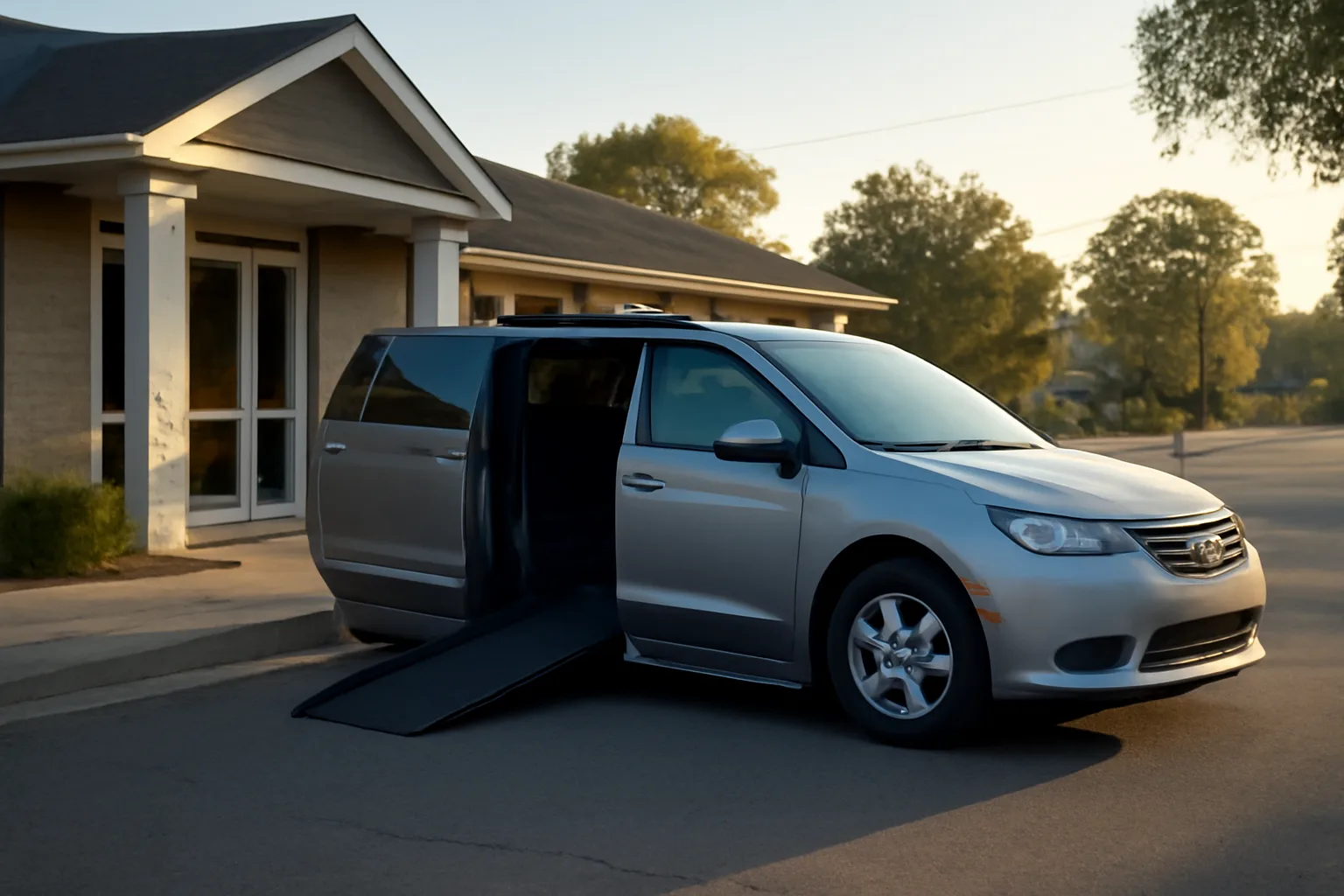
The honest answer is: more than most first-timers budget, mostly because of the vehicle and insurance, not the paperwork fees. A new or lightly used wheelchair-accessible van (a converted minivan with a ramp or lift) commonly runs somewhere in the $35,000 to $65,000 range depending on age, mileage, and conversion quality, though used conversions can be found cheaper and full-size cutaway vans cost more. Commercial auto insurance for a wheelchair van, given the passenger liability exposure, is meaningfully more expensive than a personal auto policy; owner-operators should expect to shop several carriers that specifically write NEMT or paratransit risk, because plenty of standard commercial auto carriers won't touch it at all. On top of the vehicle and insurance, budget for: business registration and any required operating authority fees (often a few hundred dollars, state-dependent), driver background checks and drug screening setup, a two-way communication/dispatch tool, and whatever your state charges for Medicaid provider enrollment (some states charge an application fee in the low hundreds of dollars, others don't charge at all; confirm with your state Medicaid agency). None of these numbers are guarantees; they vary enough by state and by your specific insurance risk profile that any single total figure would be misleading. Get real quotes before you sign a vehicle purchase agreement, not after.
What licenses and permits does a NEMT business actually need?
There's no single federal NEMT license; this is entirely state and sometimes county-level. That's the single most common surprise for new operators who assume there's a national standard. At minimum, expect to need: a registered business entity, an EIN, a commercial driver's license only if your vehicle's weight class requires one (most wheelchair vans built on a minivan or cutaway chassis under 26,001 lbs GVWR do not require a CDL), state or local passenger-transport operating authority if your state requires it, vehicle inspection/certification specific to wheelchair lift or ramp equipment, and driver-level requirements like background checks and CPR certification. Some states also require a separate NEMT-specific provider license or certificate distinct from general business licensing, issued by the state Medicaid agency or department of health. Others fold it into general for-hire vehicle permitting through a state DOT or public utilities commission. There is genuinely no substitute for calling your specific state Medicaid transportation unit and asking exactly what's required before you spend money, because rules here change and vary enough that any general list risks being wrong for your state.
How do you get Medicaid provider enrollment for NEMT?
Medicaid provider enrollment is the process of getting your business officially recognized as an approved Medicaid provider in your state, separate from and usually prior to broker credentialing. Every state Medicaid agency runs its own provider enrollment system (many now use a centralized online portal), and you'll typically submit business licensing documents, insurance certificates, vehicle documentation, and ownership/background disclosures. CMS requires state Medicaid programs to screen providers by risk category under 42 CFR 455.450, and transportation providers are commonly screened at a "moderate" or higher risk level depending on the state, which can mean fingerprint-based background checks for owners with a 5% or greater ownership stake [4]. That's not a rubber stamp process; expect it to take real weeks, and expect requests for additional documentation. Once you're enrolled as a Medicaid provider, you're eligible to bill Medicaid, but in states where a broker manages NEMT dispatch, actually getting trip volume requires a second, separate credentialing step with that broker. Provider enrollment and broker credentialing are not the same application, and being approved for one doesn't automatically get you approved for the other. Confirm your state's specific sequence and required forms with your state Medicaid transportation unit before assuming the process mirrors what you've heard from operators in other states.
What is broker credentialing and why is it a separate step?
Most states don't pay NEMT providers directly anymore. Instead they contract with a transportation broker (Modivcare, MTM, Access2Care, SafeRide, or a smaller state-specific broker) who manages the whole network: scheduling, dispatch, member complaints, and payment to contracted transportation providers. Broker credentialing means applying to become part of that broker's approved provider network in your specific service area (brokers run region by region, so approval in one region of a state doesn't guarantee approval in another). Each broker has its own application, its own insurance minimums, its own vehicle inspection standards, and its own timeline, and none of that is standardized across brokers even within the same state. Because brokers control trip volume in most states, credentialing with them (more than Medicaid provider enrollment) is usually the real bottleneck for a new owner-operator. Expect document requirements around commercial auto insurance limits, vehicle age and inspection certificates, driver qualification files, and sometimes a minimum fleet size or service area coverage commitment. Some brokers periodically pause new provider applications in oversaturated regions, so timing matters; call ahead and ask whether the broker is currently accepting new provider applications in your county before you invest in vehicles assuming approval is guaranteed. See nemt and nemt transportation for broker-specific breakdowns.
What insurance does a medical transportation business need?
Commercial auto liability insurance is the non-negotiable core, and it needs to be written for passenger-for-hire transportation, not a standard commercial auto policy meant for delivery vans or contractor trucks. Brokers and state Medicaid agencies typically set minimum liability limits, and those numbers vary by state and by broker; confirm the exact figure required before buying a policy, because underinsuring by even one tier can get an application rejected outright. Beyond auto liability, expect to need general liability coverage, and many brokers require workers' compensation coverage once you have employees (and sometimes even for certain owner-operator structures, depending on state labor law). If you're transporting wheelchair-bound passengers, ask specifically whether your policy covers passenger accident/medical payments coverage and whether the wheelchair lift or ramp equipment itself is covered as part of the vehicle or needs a separate equipment rider. Shop insurance early in the process, not after you've bought the van. Plenty of new operators find out during the insurance-shopping stage that a vehicle they already purchased doesn't qualify for the coverage type they need, which is an expensive lesson to learn after the fact.
How long does it take to launch a NEMT business from scratch?
Realistically, three to six months from "I've decided to do this" to "first paid Medicaid trip," and that's for someone who moves efficiently and doesn't hit major delays. Vehicle sourcing alone can take weeks if you want a properly converted wheelchair van rather than converting one yourself. Insurance underwriting for passenger-for-hire commercial policies can take one to several weeks depending on the carrier. Medicaid provider enrollment commonly runs 30 to 90 days depending on the state's current processing backlog and whether your application comes back with deficiencies. Broker credentialing then adds its own timeline on top, often another few weeks to a couple months. Running several of these steps in parallel (shopping insurance while your Medicaid enrollment is under review, for instance) is the realistic way to compress the timeline, and it's exactly why a lot of new operators use a structured checklist rather than doing everything sequentially and discovering each new requirement only after the prior step clears. RideCredential's $199 State + Broker NEMT Launch Kit (see the launch kit builder) exists specifically to lay out the state-by-state and broker-by-broker requirements side by side so you're not discovering a missing document three weeks into a broker's review queue.
Can you run a NEMT business with just one van?
Yes, plenty of owner-operators start and stay with a single wheelchair van, and it's a legitimate way to enter the industry rather than a compromise. The core requirements (business registration, vehicle compliance, insurance, Medicaid enrollment, broker credentialing) apply whether you have one van or twenty; the process isn't easier because your fleet is small. What does change with a single vehicle is your practical ceiling on volume and your vulnerability to downtime. One van means one mechanical breakdown can take your entire business offline for however long the repair takes, and it means you personally are probably the driver, which caps how many trips you can physically run in a day. Some brokers also set minimum fleet size or service-area coverage expectations as part of credentialing, so it's worth confirming directly with the specific broker whether a one-van operation meets their network requirements before you assume you'll be approved. A one-van start is a sound way to prove out the business model, learn the compliance requirements firsthand, and build a track record before deciding whether to add a second vehicle and your first employee driver.
What ongoing compliance keeps a NEMT business Medicaid-eligible?
Getting approved is the beginning, not the finish line. Medicaid provider enrollment and broker credentialing both come with revalidation and ongoing compliance requirements, and states can require periodic revalidation on a set schedule (federal rule requires revalidation at least every five years under 42 CFR 455.414, though some states set shorter cycles) [5]. Ongoing obligations typically include maintaining current insurance certificates on file with both the state and the broker, keeping vehicle inspections current, re-running driver background checks on the schedule your state or broker sets, and reporting any change in ownership, address, or insurance carrier promptly. Missing a renewal deadline on any of these is a common, entirely avoidable reason operators get suspended from a broker's network. Brokers also typically monitor on-time performance, complaint rates, and trip completion rates, and can suspend or terminate a provider agreement for repeated service failures, separate from any Medicaid compliance issue. Build a simple recurring calendar for insurance renewal dates, inspection dates, and revalidation deadlines from day one; it's the least glamorous part of the business and the part most likely to quietly end it if ignored.
Frequently asked questions
How do I start a medical transportation business?
Register your business, confirm state licensing and vehicle standards with your state Medicaid transportation unit, buy a compliant wheelchair van, get commercial passenger-for-hire insurance, then apply for Medicaid provider enrollment and credential with the NEMT broker(s) operating in your state (Modivcare, MTM, Access2Care, SafeRide, or a state alternative). Expect three to six months end to end.
Does Medicaid cover ambulance rides?
Yes, Medicaid covers medically necessary ambulance transportation, billed separately from non-emergency transportation. States meet federal transportation obligations under 42 CFR 431.53, which requires ensuring necessary transportation to covered services; ambulance and NEMT use different billing codes and different provider enrollment tracks.
What is NEMT?
NEMT stands for non-emergency medical transportation: rides for Medicaid (and some Medicare Advantage) members to routine medical appointments like dialysis, therapy, or checkups, using wheelchair vans, ambulatory vehicles, or stretcher vans, not ambulances. It's typically dispatched through a state-contracted transportation broker rather than billed directly by the driver.
Does Medicare cover medical transportation?
Original Medicare Part B covers ambulance transportation when other transport would endanger your health, per CMS guidance, but generally doesn't cover routine non-emergency rides to appointments. Some Medicare Advantage plans offer NEMT as a supplemental benefit, contracted separately from state Medicaid NEMT programs.
How do I start a NEMT business?
Same core path as any medical transportation startup: entity formation, state licensing check, compliant vehicle, commercial insurance, Medicaid provider enrollment, then broker credentialing. The broker credentialing step (with Modivcare, MTM, Access2Care, SafeRide, etc.) is usually the longest and most document-heavy part, and it's separate from Medicaid enrollment.
What is non-emergency medical transportation?
It's transportation for people who need to get to medical care but don't need ambulance-level emergency response, covering wheelchair van, stretcher, and ambulatory sedan trips for Medicaid members and some Medicare Advantage or private-pay riders. States are required to assure this transportation exists for Medicaid recipients under 42 CFR 431.53.
How much does it cost to start a NEMT business with one van?
Expect the wheelchair van itself to run roughly $35,000 to $65,000 depending on condition and conversion quality, plus commercial passenger-for-hire insurance (often costlier than standard commercial auto due to passenger liability), plus state licensing fees and Medicaid enrollment costs that vary by state. Get actual insurance quotes before buying the vehicle.
Can I start a medical transportation business with just one van?
Yes, a single wheelchair van is a legitimate way to start. The licensing, insurance, and credentialing requirements are the same regardless of fleet size, but check with your target broker whether they set any minimum fleet or coverage-area expectations, since some do.
Do I need a special license to drive a wheelchair van for NEMT?
Most wheelchair vans built on a minivan or cutaway chassis under 26,001 lbs GVWR don't require a commercial driver's license, but drivers typically need a clean driving record, background check, and CPR/first aid certification. Some states add passenger-endorsement or NEMT-specific driver requirements; confirm with your state Medicaid agency.
What's the difference between Medicaid provider enrollment and broker credentialing?
Provider enrollment is your state Medicaid agency officially recognizing your business as an approved Medicaid provider. Broker credentialing is a separate application to join a specific broker's (Modivcare, MTM, Access2Care, SafeRide) contracted network in your service area, required in most states because brokers, not the state directly, dispatch and pay for most NEMT trips.
How long does NEMT Medicaid enrollment usually take?
Medicaid provider enrollment commonly takes 30 to 90 days depending on your state's processing volume and whether your application needs additional documentation. Broker credentialing is a separate timeline on top of that, often adding several more weeks. Total time from application to first paid trip is commonly three to six months.
Does Medicaid cover ambulance rides for non-emergency situations?
Generally, no. Non-emergency ambulance use isn't typically what Medicaid's ambulance benefit covers; non-emergency rides fall under the separate NEMT benefit instead, dispatched through a broker or the state's transportation program rather than billed as ambulance transport.
Sources
- eCFR, 42 CFR 431.53: States must assure necessary transportation for Medicaid recipients to and from providers
- Medicaid.gov, Non-Emergency Medical Transportation: Definition and broker-managed structure of NEMT under Medicaid
- Medicare.gov, Ambulance Services: Medicare Part B covers ambulance transport when other transportation would endanger health
- eCFR, 42 CFR 455.450: Medicaid provider screening risk categories including fingerprint-based checks for high-risk providers
- eCFR, 42 CFR 455.414: Medicaid providers must be revalidated at least every five years
- eCFR, 49 CFR 383.5 (definition of commercial motor vehicle): A commercial driver's license is generally required for vehicles with a GVWR of 26,001 lbs or more