Last updated 2026-07-25
TL;DR
A medical transportation provider is any business licensed to move patients to medical care, split into emergency (ambulance) and non-emergency (NEMT) services. Medicaid covers both under federal rule, but NEMT usually runs through a broker like Modivcare or MTM. Starting one van requires state Medicaid enrollment, broker credentialing, vehicle and driver compliance, and commercial auto insurance before your first trip.
What is a medical transportation provider?
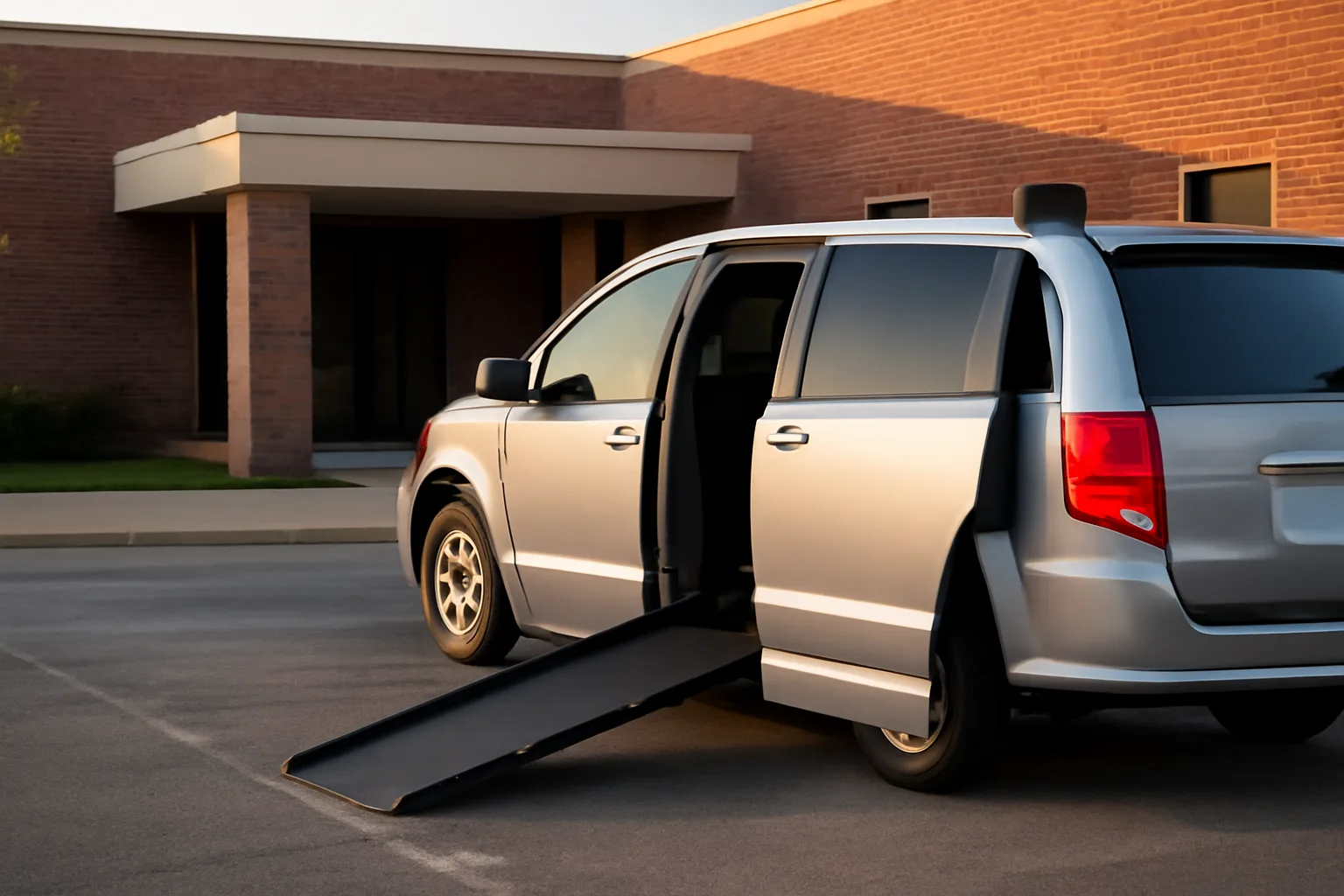
A medical transportation provider is any licensed business that transports patients to and from medical care. That's a broad umbrella. It covers 911 ambulance companies, hospital-based transfer services, and the much larger world of non-emergency medical transportation (NEMT), which moves people to dialysis, chemo, physical therapy, and routine doctor visits in wheelchair vans, ambulatory sedans, and stretcher vehicles. Most new operators in this space aren't running ambulances. They're running wheelchair vans or sedans under NEMT, which doesn't require paramedics or emergency lights. The distinction matters because the regulatory path is completely different: ambulance services are typically licensed by a state EMS office and billed through Medicare Part B or Medicaid as emergency/medical necessity transport, while NEMT providers enroll separately with state Medicaid and usually contract with a regional broker instead of billing Medicaid directly. Federal Medicaid rule requires states to ensure beneficiaries have transportation to and from providers. The regulation at 42 CFR 431.53 states that a state plan must "specify that the Medicaid agency will ensure necessary transportation for recipients to and from providers" [1]. That single rule is why NEMT exists as a distinct, funded service line in every state Medicaid program, and it's why this business exists at all.
What is NEMT (non-emergency medical transportation)?
NEMT is transportation for people who need to get to medical appointments but don't need an ambulance or emergency care during the ride. Think dialysis three times a week, a wheelchair user going to a specialist, or someone recovering from surgery who can't drive. CMS describes NEMT as a service states must provide to make sure eligible beneficiaries have a way to get to and from covered Medicaid services when they have no other means of transportation [2]. It's not optional coverage; it's an assurance the state has to make to keep its Medicaid plan approved by CMS. In practice, most states don't run NEMT trip-by-trip out of the state Medicaid office. They contract with a broker (Modivcare, MTM, Access2Care, SafeRide, or a state-specific vendor) who screens eligibility, dispatches trips, and pays providers per completed ride. As an owner-operator, your Medicaid enrollment gets you into the state's provider system. Broker credentialing is what actually gets you trips. You typically need both, and they're separate applications with separate timelines. For background on how brokers structure these contracts, see nemt and nemt transportation.
Does Medicaid cover ambulance rides?
Yes. Medicaid covers ambulance transportation when it's medically necessary, meaning the patient's condition requires transport by ambulance and any other method would be medically contraindicated. Coverage rules and payment rates are set state by state within federal guidelines, so what counts as "medically necessary" and how much the ambulance company gets paid varies. CMS's Medicaid transportation guidance confirms ambulance and non-emergency transport are both coverable service categories under the state's assurance of transportation access [2]. But ambulance billing is a different business model entirely from NEMT: it usually involves per-mile plus base-rate reimbursement, EMS licensure, and often a certificate of need in states that regulate ambulance service supply. If you're buying a wheelchair van, you are not entering the ambulance business, and you shouldn't expect ambulance reimbursement rates. Confirm ambulance-specific coverage rules with your state Medicaid agency's transportation unit if that's the line of business you're actually pursuing.
Does Medicare cover medical transportation?
Medicare's coverage of transportation is narrower than Medicaid's. Medicare Part B covers ambulance services when other transportation would endanger the patient's health, per CMS's ambulance services coverage rules [3]. Medicare generally does not cover routine non-emergency transportation like a ride to a dialysis appointment or a checkup, the way Medicaid does. There's a narrow exception. Medicare Advantage plans can offer supplemental NEMT benefits, and some do, but that's a plan-level decision, not a Medicare Part A/B entitlement. If your business plan assumes Medicare will pay for routine wheelchair van trips the way Medicaid does, that assumption is wrong for most beneficiaries. Your revenue base for NEMT is almost always state Medicaid (through a broker) plus, in some markets, Medicare Advantage plan contracts, private pay, and workers' comp trips, not traditional Medicare fee-for-service.
How to start a medical transportation business (the real sequence)
Here's the order that actually works, based on how state Medicaid enrollment and broker credentialing are structured almost everywhere: 1. Decide your lane. Ambulatory sedan, wheelchair van, or stretcher van. Each has different vehicle specs, driver certification needs, and broker trip mixes. 2. Form your business entity and get an EIN. You'll need this for Medicaid enrollment, broker applications, and insurance. 3. Get commercial auto insurance for a for-hire wheelchair-accessible vehicle. This is not personal auto insurance and not standard livery insurance; wheelchair lift/ramp coverage and passenger liability limits matter here. 4. Buy or convert a wheelchair van that meets state accessibility and ADA-adjacent standards (tie-downs, ramp/lift certification, wheelchair securement points). 5. Enroll as a Medicaid transportation provider with your state Medicaid agency. This is separate from broker credentialing. 6. Apply for broker network credentialing with whichever broker(s) hold the contract in your state (Modivcare, MTM, Access2Care, SafeRide, or a regional one). 7. Complete driver background checks, defensive driving certification, and any state-required passenger assistance or wheelchair securement training. 8. Pass vehicle inspection (state DOT and/or broker-required annual inspection). 9. Get your NPI (National Provider Identifier) if your state requires it for Medicaid transportation billing. 10. Start taking dispatched trips once both state and broker credentialing are active. Expect this whole sequence to take weeks, not days. And expect state and broker paperwork to overlap and sometimes contradict each other on required documents. Call both offices directly rather than assuming one application covers you for the other.
How to start a NEMT business (state Medicaid enrollment specifics)
State Medicaid provider enrollment for NEMT is where new operators lose the most time, mostly because every state runs it differently. Some states enroll NEMT providers directly through the same Medicaid Management Information System (MMIS) portal used for medical providers. Others route enrollment entirely through the broker and don't require a separate state Medicaid provider number at all. CMS maintains a general Medicaid provider enrollment framework, but the specific NEMT application, required documents, and fee (if any) live with each state Medicaid transportation unit [4]. You should confirm with your state Medicaid agency whether: (a) you need a standalone Medicaid provider enrollment before broker credentialing, (b) there's an enrollment fee (some states charge an application fee under the CMS provider screening rules at 42 CFR 455.460, which allows states to collect a fee from institutional providers), and (c) revalidation is required on a fixed cycle. Many states require Medicaid provider revalidation every 5 years, consistent with the federal revalidation cycle CMS sets under 42 CFR 424.515 for other provider types [5]. Don't skip this step even if your broker says they'll "handle it." In most states the broker credentials you into their network, but the state Medicaid agency is the one that determines you're an eligible provider type in the first place. See non emergency medical transportation for how this splits by state.
How to start a medical transportation business with one van
One van is a completely normal and common way to start. You don't need a fleet to get credentialed; brokers credential owner-operators with a single vehicle all the time, especially in rural or under-served ZIP codes where trip demand outstrips available wheelchair vans. What one-van operators underestimate: the fixed costs that don't scale down just because you have one vehicle. You still need full commercial insurance, still need the same background check and driver certification per driver, still need the same vehicle inspection, and still need to pass the same credentialing checklist as a 20-van company. The paperwork burden per vehicle is actually higher for a solo operator because there's no back-office staff splitting the work across a fleet. Practical one-van considerations: you (or your one driver) can't be sick, and you can't be double-booked. Brokers track no-show and late-trip rates closely, and a single van has zero redundancy when the vehicle is in the shop. Build a maintenance and backup plan before you take your first dispatch, not after your ramp motor fails on a dialysis run.
How do you start a medical transportation business (entity, insurance, and vehicle basics)
Beyond the enrollment sequence, three foundational pieces determine whether you can even apply: business entity, insurance, and vehicle compliance. Entity: Most states require an LLC or corporation (not a sole proprietorship) for Medicaid provider enrollment, though this varies. Get your EIN from the IRS before you start any state or broker application; nearly every form asks for it on page one. Insurance: You need commercial auto liability coverage sized for a for-hire wheelchair-accessible vehicle, not personal auto or standard rideshare coverage. Brokers set their own minimum liability limits (commonly cited in the $1,000,000 combined single limit range in broker contracts, though this varies by broker and state, so confirm with your broker), and many require you to name the broker as an additional insured on your policy. Get quotes from insurers who specifically write NEMT or paratransit policies; a generic commercial auto agent may not know what wheelchair lift coverage or passenger assist liability means. Vehicle: Your wheelchair van needs a certified lift or ramp, functioning wheelchair securement (tie-down) points meeting the vehicle's manufacturer specs, and it needs to pass whatever inspection your state DOT or broker requires, often annually. Buying a used van that's already been converted for wheelchair transport is usually cheaper than converting one yourself, but get the conversion documentation (who did it, to what standard) before you buy, because brokers and state inspectors will ask for it.
How to start a non-emergency medical transportation business (broker credentialing specifics)
Broker credentialing is the second gate, and it's where Modivcare, MTM, Access2Care, and SafeRide each run their own process, their own document checklist, and their own timeline. There is no universal broker application; each one has separate onboarding portals and separate driver/vehicle file requirements. Common elements across most broker credentialing packets: proof of state Medicaid enrollment (or pending application), certificate of insurance naming the broker as additional insured, vehicle registration and inspection records, driver background check results (often required to be clean for a defined lookback period, commonly 3 to 7 years depending on the broker and state), driver's license history/MVR check, and completion of the broker's own orientation or training module. A thing new operators don't expect: brokers periodically re-open and close their provider networks by region based on current trip capacity. Being credentialed with the broker doesn't guarantee steady dispatch volume in your ZIP code, and some brokers put wait-listed applicants on hold if their network in that county is already saturated. Ask directly, before you finish your application, whether the broker's network in your specific service area is open or closed. Confirm current network status and document requirements directly with your broker and your state Medicaid transportation unit, since both change without much public notice.
What documents and costs should I budget for before my first trip?
| Business entity formation | State filing fee, varies by state | Secretary of State | |
|---|---|---|---|
| EIN | Free (IRS.gov) | IRS | |
| Commercial auto/NEMT insurance | Varies by fleet size, vehicle type, coverage limits | Your insurer + broker | |
| Wheelchair van (used, converted) | Wide range depending on age, mileage, conversion | Mobility dealer | |
| Medicaid provider enrollment fee | Some states charge a fee under 42 CFR 455.460; others don't | State Medicaid agency | |
| Driver background check | Per-driver fee, varies by vendor and state | State/broker-approved vendor | |
| Vehicle inspection | Annual, fee varies by state DOT | State DOT | |
| Broker credentialing | Usually no direct fee, but time cost is significant | Broker onboarding team | The biggest hidden cost isn't any single line item. It's the time between finishing your application and getting your first dispatched trip. That gap can run from a few weeks to a few months depending on how backed up the state Medicaid enrollment queue and the broker's credentialing team both are. Budget your cash runway assuming the slow end of that range. |
Here's a realistic budget checklist, with the caveat that exact figures vary heavily by state and broker (confirm current fees directly): | Item | Typical range or requirement | Confirm with |
NEMT vs. ambulance vs. emergency medical transport: how do they differ?
People use these terms loosely, but they're distinct regulatory categories with different licensing, staffing, and billing paths. Emergency medical transport (ambulance/911 response) requires state EMS licensure, certified EMTs or paramedics on board, and is billed as a medical necessity service, often at higher per-trip reimbursement than NEMT. See emergency medical transport for how that licensing track works. NEMT (wheelchair van, ambulatory sedan, stretcher van without EMT staffing) doesn't require EMS certification for drivers, though many states and brokers require passenger assistance and wheelchair securement training. It's credentialed through state Medicaid plus a broker, not an EMS office. The practical takeaway: if you're buying a wheelchair van and not staffing paramedics, you're building an NEMT business, and your entire regulatory path (state Medicaid enrollment, broker credentialing, DOT vehicle inspection) is different from what an ambulance company goes through. Don't let a broker or state form that uses "medical transportation" loosely confuse which track you're actually on; ask directly which provider type you're enrolling as. General background on how NEMT and medical transportation categories overlap is at medical transportation and non emergency medical transportation services.
What's the fastest way to get through state and broker paperwork without wasting money?
Do the state Medicaid enrollment and broker credentialing applications in parallel, not sequentially, once your entity, insurance, and vehicle are locked in. Waiting for one to finish before starting the other is the single biggest unforced delay new operators create for themselves. Get your insurance certificate language right the first time. A huge share of rejected broker applications come down to insurance paperwork that doesn't name the broker correctly as additional insured, or that doesn't meet the broker's minimum limits. Call the broker's credentialing line and ask for their exact required insurance language before you bind a policy. If you want a structured starting point instead of assembling every state form and broker checklist yourself from scratch, the $199 State + Broker NEMT Launch Kit organizes the state Medicaid enrollment documents and broker credentialing checklists by state and broker, so you're not guessing which of the ten things on a broker's portal actually applies to a one-van operator. It doesn't replace direct confirmation with your state Medicaid agency and broker, but it cuts down the research time considerably.
Frequently asked questions
What is a medical transportation provider?
A medical transportation provider is a licensed business that transports patients to medical care, covering both emergency ambulance services and non-emergency medical transportation (NEMT) like wheelchair vans and ambulatory sedans. NEMT providers enroll with state Medicaid and typically credential with a regional broker; ambulance providers license through a state EMS office instead.
What is non-emergency medical transportation (NEMT)?
NEMT is transportation to medical appointments for people who don't need an ambulance or emergency care during the ride, such as dialysis, chemo, or specialist visits. Federal rule (42 CFR 431.53) requires state Medicaid programs to ensure this transportation is available to eligible beneficiaries with no other way to get there.
Does Medicaid cover ambulance rides?
Yes, Medicaid covers medically necessary ambulance transportation, with coverage details and reimbursement rates set by each state within federal guidelines. This is separate from NEMT coverage; ambulance transport requires EMS licensure and staffing that wheelchair van NEMT businesses don't need.
Does Medicare cover medical transportation?
Medicare Part B covers ambulance transportation when other transport would endanger the patient's health, but generally doesn't cover routine non-emergency rides like dialysis trips. Some Medicare Advantage plans offer supplemental NEMT benefits, but that's a plan-level add-on, not standard Medicare coverage.
How do I start a NEMT business?
Form a business entity, get commercial auto insurance for a wheelchair-accessible vehicle, buy a compliant wheelchair van, enroll with your state Medicaid agency as a transportation provider, then apply for broker credentialing (Modivcare, MTM, Access2Care, SafeRide, or your state's contracted broker). Both state and broker steps are usually required and run on separate timelines.
Can I start a medical transportation business with one van?
Yes, brokers regularly credential single-vehicle owner-operators, especially in areas with limited wheelchair van coverage. You'll still need the same insurance, background checks, and vehicle inspection as a larger fleet; build a backup or maintenance plan since one van has no redundancy if it breaks down.
What's the difference between NEMT and an ambulance service?
NEMT (wheelchair vans, ambulatory sedans, stretcher vans without EMT staffing) is credentialed through state Medicaid and a broker, with no EMS licensure required for drivers. Ambulance service requires state EMS licensure and certified EMTs or paramedics on board, and is billed as emergency or medically necessary transport.
Do I need a Medicaid provider number to run NEMT trips?
In most states, yes, though some route enrollment entirely through the broker without a separate state Medicaid provider number. Confirm directly with your state Medicaid transportation unit whether standalone state enrollment is required before or alongside broker credentialing.
How long does it take to get credentialed with a broker like Modivcare or MTM?
There's no fixed national timeline; it depends on the broker's current application volume, your documentation completeness, and whether their network in your service area is open. Expect weeks at minimum, and confirm current processing times directly with the broker's credentialing team.
What insurance do I need for a wheelchair van NEMT business?
You need commercial auto insurance specifically written for a for-hire wheelchair-accessible vehicle, not personal auto or standard rideshare coverage. Most brokers require you to name them as additional insured and to carry minimum liability limits they specify in your contract; confirm exact limits with your broker.
Does Medicaid cover ambulance rides differently than NEMT?
Yes. Ambulance coverage under Medicaid applies when transport requires EMS staffing and equipment for a medically necessary emergency or urgent transfer, billed at rates set by the state. NEMT covers routine, non-emergency rides to covered Medicaid services and is usually managed through a regional broker instead of direct state billing.
What documents does state Medicaid enrollment usually require for NEMT providers?
Common requirements include business entity documents, EIN, proof of commercial insurance, vehicle registration and inspection records, and sometimes a Medicaid provider enrollment fee under 42 CFR 455.460. Exact document lists vary by state, so confirm the current checklist with your state Medicaid transportation unit before applying.
Is a Medicaid provider number the same as broker credentialing?
No. Medicaid provider enrollment is done through the state Medicaid agency and establishes you as an eligible provider type under the state plan. Broker credentialing is a separate application with a private company (like Modivcare or MTM) that actually dispatches trips to you; most operators need both.
Sources
- 42 CFR 431.53, Assurance of transportation: Federal Medicaid rule requiring states to ensure necessary transportation to and from providers
- Medicaid.gov, Non-Emergency Medical Transportation: NEMT is a required Medicaid service ensuring beneficiaries can get to covered services when they have no other transportation
- Medicare.gov, Ambulance Services coverage: Medicare Part B covers ambulance services when other transportation would endanger health, but not routine non-emergency transport
- CMS, Medicaid Provider Enrollment Compendium (MPEC): Provider enrollment requirements and screening standards are set at the state level within federal framework
- 42 CFR 424.515, Requirement for reporting and revalidation: Federal rule setting the reporting and revalidation cycle for enrolled Medicare and Medicaid providers
- 42 CFR 455.460, Disclosure of ownership and control: States may collect an application fee from institutional providers as part of Medicaid provider screening