Last updated 2026-07-25
TL;DR
Starting an Ohio NEMT business means forming your company, getting the right commercial auto and wheelchair-van coverage, enrolling as an Ohio Medicaid provider through ODM/PNM, then credentialing with the regional broker (often Modivcare or a county-managed care contractor). Most first-time operators can launch one wheelchair van in roughly 60 to 120 days if paperwork is clean and inspections pass on the first try.
How do you start a medical transportation business in Ohio?
You start by picking a business structure, getting your vehicle and driver requirements squared away, then enrolling with Ohio Medicaid before you ever touch a broker application. Skipping steps in this order is the single biggest reason new operators lose months. Ohio Medicaid runs its provider enrollment through the Provider Network Management (PNM) module, which replaced the old MITS system. You'll need a National Provider Identifier (NPI), an Ohio Secretary of State business filing, and (for most NEMT provider types) a Medicaid Transportation Provider Agreement before a broker will even open your credentialing file [1]. Here's the realistic order of operations for a one-van startup: 1. Form your LLC or corporation with the Ohio Secretary of State. 2. Get an EIN from the IRS and open a business bank account. 3. Buy or lease your wheelchair van and get it inspected to meet ADA and state vehicle standards. 4. Secure commercial auto insurance with the liability limits Ohio Medicaid and your target broker require (confirm exact limits with your broker and state Medicaid agency, since they vary by county and contract). 5. Enroll as an Ohio Medicaid provider through PNM. 6. Apply for credentialing with the transportation broker covering your service area (Modivcare handles Ohio's statewide non-emergency transportation brokerage in most regions under contract with ODM). 7. Pass the vehicle and driver file audit before you get your first trip assignment. None of this happens in a week. Budget two to four months minimum, and don't buy a van before you've confirmed the wheelchair lift, tie-down, and interior specs your broker will actually inspect.
What is NEMT and how is it different from an ambulance ride?
NEMT stands for non-emergency medical transportation. It moves Medicaid or Medicare Advantage members to and from medical appointments, dialysis, therapy, and pharmacy visits when the person doesn't need ambulance-level medical care during transit [2]. An ambulance responds to emergencies or transports patients who need continuous medical monitoring, oxygen, or a licensed EMT/paramedic on board. NEMT vehicles, by contrast, are typically ambulettes, wheelchair vans, or sedans, and the driver is not required to be a licensed medical provider, though many states and brokers require basic first aid or CPR certification. Federal Medicaid regulation requires states to "ensure necessary transportation for recipients to and from providers" and to describe that assurance in the state Medicaid plan [3]. That's the legal backbone that makes NEMT a covered Medicaid benefit nationwide, more than an Ohio quirk. If you want the broader landscape of what counts as non emergency medical transportation across states, that's a useful next read before you commit to Ohio specifics.
Does Medicaid cover ambulance rides?
Yes, Medicaid covers medically necessary ambulance transportation, but it's billed and regulated differently from NEMT. Ambulance transport falls under emergency medical services and is typically reimbursed based on mileage and level of service (basic life support vs. advanced life support), not through the same broker credentialing pipeline NEMT uses. If you're planning to run wheelchair vans or ambulettes, you are not in the ambulance business, and you won't enroll the same way an ambulance company does. Ohio Medicaid separates emergency ambulance providers from non-emergency transportation providers in its provider type structure, and the broker credentialing process described here applies to the NEMT side only. If your long-term plan includes both, expect two entirely separate enrollment tracks; see emergency medical transport for how that track differs.
Does Medicare cover medical transportation?
Medicare Part B covers ambulance transportation when it's medically necessary and other transportation would endanger the patient's health, but Original Medicare generally does not cover routine non-emergency transportation to a doctor's office [4]. That's a common point of confusion for new operators who assume Medicare works like Medicaid here. It doesn't. Some Medicare Advantage (Part C) plans do offer supplemental NEMT benefits, and CMS allows Medicare Advantage plans to include transportation as a supplemental benefit if it's medically related [1]. If you want that revenue stream, you'd credential separately with the Medicare Advantage plan's transportation vendor, which is often the same broker (Modivcare, MTM) but a different contract and a different rate sheet than your Ohio Medicaid agreement. Don't assume one credentialing file covers both; brokers treat Medicaid and Medicare Advantage lines as separate networks even when the phone number is the same.
What licenses and permits does Ohio require for a NEMT business?
| Business entity registration | Ohio Secretary of State | LLC or corp filing before anything else | |
|---|---|---|---|
| EIN | IRS | Required for payroll, banking, provider enrollment | |
| Vehicle registration/inspection | Ohio BMV / local authority | Wheelchair van must meet accessibility and safety specs | |
| Commercial auto/livery insurance | Private insurer | Limits set by broker contract and county rules | |
| Medicaid Transportation Provider Agreement | Ohio Department of Medicaid (ODM) via PNM | Required before broker credentialing in most counties [1] | |
| Broker credentialing | Modivcare or regional broker | Vehicle inspection, driver background check, insurance certificate | |
| Driver background check / BCI-FBI check | Ohio BCI, driver | Often required by broker and by ODM provider rules | Some Ohio counties layer on local vehicle-for-hire or livery permits, especially in larger metro areas. Confirm with your broker and state Medicaid agency exactly which local permits apply in your county before you finalize your business address, because a permit that's optional in a rural county can be mandatory in a metro one. |
Ohio doesn't have one single "NEMT license." Instead you're stacking several separate approvals, and missing any one of them stalls your launch. | Requirement | Who issues it | Typical need |
How do you enroll with Ohio Medicaid (ODM) as a transportation provider?
You enroll through the PNM (Provider Network Management) portal, which is Ohio Medicaid's centralized provider enrollment and management system. ODM's provider enrollment guidance walks through the required documentation, and transportation providers are one of the listed provider types in the system [1]. Expect to submit your NPI, business formation documents, insurance certificates, vehicle information, and ownership disclosure. ODM, like every state Medicaid agency, also runs background screening against federal exclusion lists; providers with certain criminal history or federal program exclusions can be denied enrollment outright, a screening standard required nationally under 42 CFR 455.436 [5]. One thing new operators get wrong: enrolling with ODM does not automatically get you trip assignments. ODM enrollment makes you eligible to bill Medicaid; the broker relationship is what actually routes you rides. You need both, and they're separate applications with separate timelines.
How do you get credentialed with Ohio's NEMT broker (Modivcare)?
Ohio's statewide NEMT brokerage has operated under Medicaid managed care and fee-for-service contracts with Modivcare (formerly LogistiCare) in most regions, though managed care plans can also contract transportation separately by county. Confirm your specific broker assignment with the state Medicaid agency, since Ohio's managed care structure means the broker covering your county can differ from the one covering a neighboring county. Broker credentialing typically requires: - A completed provider application with owner and driver rosters
- Proof of commercial auto insurance meeting the broker's minimum liability limits
- Vehicle inspection reports confirming ADA-compliant lifts, tie-downs, and interior clearance
- Driver background checks, often including motor vehicle record pulls going back several years
- Proof of driver training (defensive driving, passenger assistance, sometimes CPR/first aid)
- W-9 and banking information for claims payment setup Brokers re-verify most of this annually, and a lapsed insurance certificate or an expired background check is the most common reason an otherwise-approved provider gets suspended from dispatch. Set calendar reminders 60 days before every expiration date; brokers don't always send a warning before deactivating you. If you're weighing multiple broker relationships or want to understand how credentialing differs by state before you scale beyond Ohio, nemt and nemt transportation cover the broader multi-state landscape.
How do you start a NEMT business with just one wheelchair van?
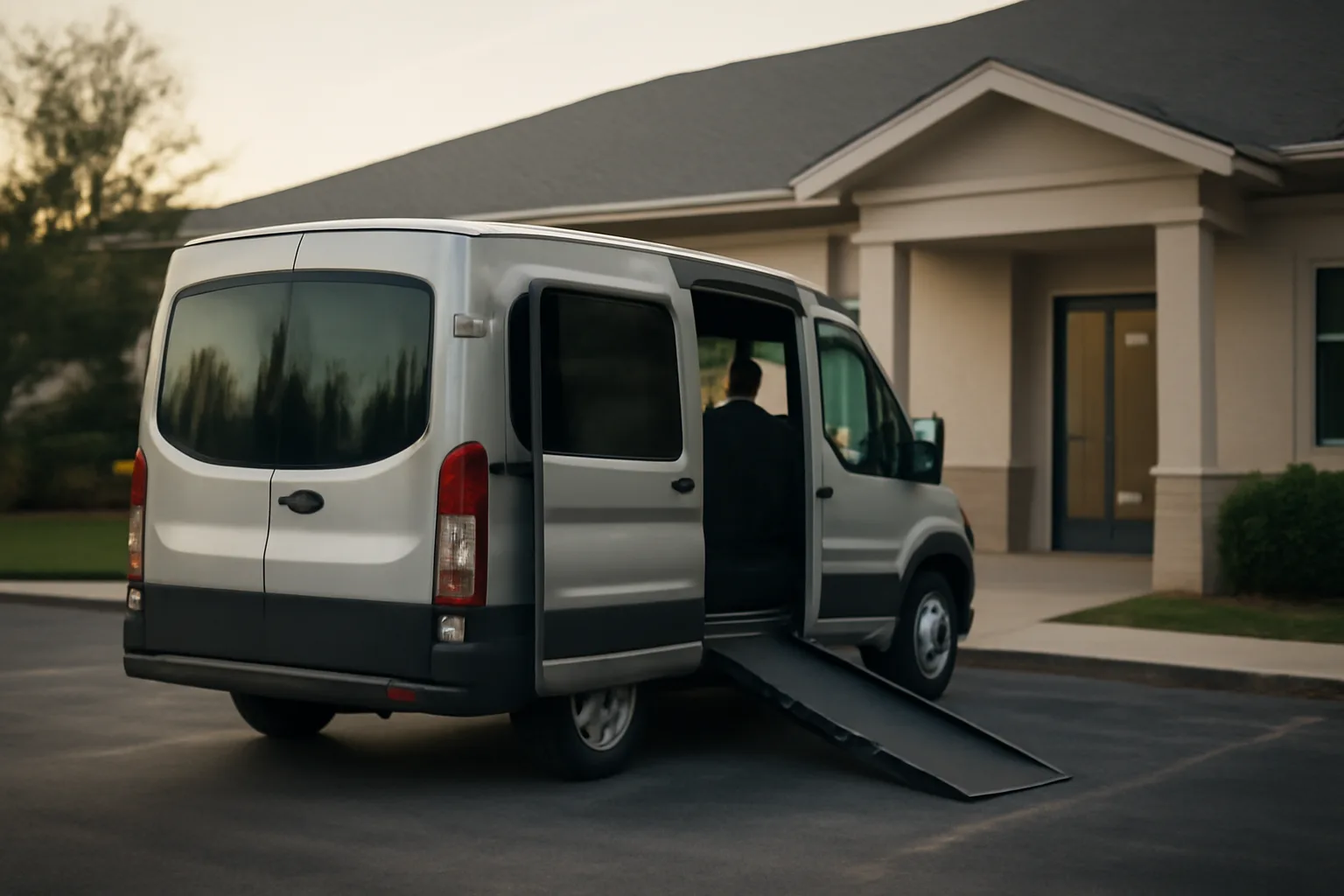
One van is a completely viable way to start, and plenty of Ohio operators run exactly this way for their first year or two. The math you need to run first isn't revenue, it's whether one vehicle can cover the fixed costs of insurance, enrollment, and driver wages before you add a second. With a single van, prioritize in this order: get the vehicle broker-inspection-ready before you spend money on marketing or a second driver, get your own CDL or chauffeur-appropriate license and background check clean (you'll likely drive it yourself at first), and don't over-insure or under-insure; ask your agent specifically about NEMT/wheelchair-van commercial policies, since standard livery insurance sometimes excludes wheelchair lift liability unless you name it. A one-van operation also means you have zero redundancy. If your van is in the shop, you have no trips that day, and brokers track no-show and cancellation rates closely; too many broker-side cancellations from vehicle downtime can affect your standing on future assignments. Build a maintenance reserve before you build a driver roster. One practical note on paperwork: a single-vehicle enrollment file is actually simpler to keep current than a fleet file, since you're only tracking one insurance certificate and one inspection date instead of five. Some owner-operators use a packaged document set to keep the Medicaid provider agreement and broker credentialing paperwork aligned from day one; RideCredential's $199 State + Broker NEMT Launch Kit (/launch-kit-builder) was built around exactly this one-van-first scenario, though you can absolutely assemble the same documents yourself directly from ODM and your broker's provider manual.
What insurance and vehicle requirements apply to Ohio wheelchair vans?
Your wheelchair van needs to meet accessibility standards (working lift or ramp, secure four-point tie-down system, functioning interior lighting and climate control) and pass both a state vehicle inspection and a separate broker inspection, which are not the same checklist. Passing the BMV inspection does not mean you'll automatically pass Modivcare's or another broker's vehicle audit. Commercial auto insurance for NEMT typically needs higher liability limits than a personal policy, and many brokers specify minimums in their provider manuals (commonly in the $1,000,000 combined single limit range for livery/NEMT operations, though this varies by broker and by whether you're carrying wheelchair passengers). Confirm exact limits with your broker and state Medicaid agency before binding a policy, since asking for the wrong limit and re-doing the certificate costs you real calendar time during credentialing. Also ask your insurer directly whether the policy covers wheelchair lift operation liability and passenger assistance (helping a rider transfer from wheelchair to seat). Some standard commercial auto policies exclude this unless it's specifically endorsed, and that gap only shows up after an incident, which is the worst possible time to discover it.
What does non-emergency medical transportation actually cover for riders?
NEMT covers rides to Medicaid-covered medical services: doctor visits, dialysis, physical therapy, mental health appointments, and pharmacy pickups tied to a covered treatment, among others. It does not typically cover transportation to non-medical errands, and most state Medicaid programs require the ride to be tied to a covered Medicaid service and, in many cases, pre-authorized or scheduled through the broker in advance. Federal Medicaid guidance frames this as an assurance obligation on the state: transportation has to be "provided or arranged" so beneficiaries can get to and from providers, and states have flexibility in how they structure that (in-house transportation, brokers, or mileage reimbursement to the rider) [3] . Ohio uses the broker model for the large majority of its Medicaid NEMT volume, which is why credentialing with the broker, more than ODM, is the step that actually gets you trips. For a broader look at what counts as a covered ride across states, non emergency medical transportation services breaks down covered trip types state by state.
How long does it take to launch, and what does it cost?
For a single wheelchair van, plan on 60 to 120 days from LLC formation to your first dispatched trip, assuming no red flags in background checks and no rejected paperwork. The slowest steps are usually broker credentialing review and insurance certificate corrections, not the ODM enrollment itself. Costs vary enormously by market and are not something to project revenue against here, but the fixed-cost categories you're budgeting for include: business formation and EIN (usually under $200 combined through the Ohio Secretary of State), commercial insurance premiums (highly variable, get multiple quotes), the wheelchair van itself (new or used, this is usually your largest single expense), driver background checks and any required certifications, and the time cost of paperwork corrections if your first submission has errors. The single biggest time-waster reported by new operators isn't any one form, it's submitting insurance certificates with the wrong liability limits or missing endorsements, which bounces the whole credentialing file back to you. Get your insurance agent on a call with your broker's provider relations contact before you bind the policy, not after.
What ongoing compliance keeps your NEMT authority active in Ohio?
Once you're enrolled and credentialed, the work shifts from paperwork submission to paperwork maintenance. Insurance certificates, vehicle inspections, and driver background checks all expire, and both ODM and your broker will deactivate you if any of them lapse. ODM periodically re-validates Medicaid provider enrollment, consistent with the federal revalidation cycle requirement under 42 CFR 455.414, which requires state Medicaid agencies to revalidate enrollment of all providers at least every five years . Brokers typically run their own annual or semi-annual re-credentialing cycle independent of that federal clock, so don't assume ODM's five-year window means you're safe from a broker audit next year. Keep a simple compliance calendar: insurance renewal date, vehicle inspection date, each driver's license and background check expiration, and ODM revalidation date. Missing any single one of these can suspend your ability to bill or receive dispatched trips, sometimes with no grace period.
Should you go independent or contract under an existing NEMT provider first?
Some new operators skip standalone credentialing entirely in year one and instead run as a subcontracted driver or vehicle under an already-credentialed NEMT company. This gets you trips faster since you're riding on someone else's broker agreement, but you're also giving up a cut of every trip's reimbursement and you have no direct broker relationship if that arrangement ends. Going independent from day one means slower ramp-up (that 60-120 day window) but you own the Medicaid provider agreement and broker credential outright. There isn't a universally right answer here; it depends on your cash runway and how quickly you need the van earning against its loan payment. If you do go independent, treat the medical transportation enrollment and broker steps as sequential, not parallel, since broker applications commonly require proof of active Medicaid enrollment as a prerequisite document.
Frequently asked questions
How do I start a medical transportation business?
Form a business entity, secure the right commercial insurance, buy or lease a compliant wheelchair van, enroll as a state Medicaid provider, and then credential with the regional NEMT broker covering your service area. Order matters: most brokers require proof of active Medicaid provider enrollment before they'll process your credentialing application, so enroll with the state first.
Does Medicaid cover ambulance rides?
Yes. Medicaid covers medically necessary ambulance transportation, but it's a separate benefit and billing category from non-emergency medical transportation (NEMT). Ambulance providers enroll and bill differently, based on mileage and service level (basic vs. advanced life support), and don't go through the same broker credentialing process NEMT wheelchair-van and ambulette operators do.
What is NEMT?
NEMT stands for non-emergency medical transportation: rides for Medicaid or Medicare Advantage members getting to medical appointments who don't need ambulance-level care in transit. Federal Medicaid rules require states to ensure this transportation is available, and most states, including Ohio, contract with private brokers like Modivcare to manage scheduling, credentialing, and dispatch.
Does Medicare cover medical transportation?
Original Medicare (Part A/B) covers ambulance transportation when medically necessary but generally does not cover routine non-emergency rides to appointments. Some Medicare Advantage plans do offer NEMT as a supplemental benefit under CMS rules allowing medically related extra benefits, but you'd need a separate credentialing agreement with that plan's transportation vendor to serve those riders.
How do I start a NEMT business in Ohio specifically?
Form your LLC, get compliant insurance and a wheelchair van, enroll through Ohio Medicaid's PNM portal for a Medicaid Transportation Provider Agreement, then credential with the broker covering your county (often Modivcare). Confirm current broker assignments and insurance minimums directly with ODM, since managed care contracts can vary by county.
What is non-emergency medical transportation?
It's transportation for Medicaid or Medicare Advantage beneficiaries to and from covered medical services when the rider doesn't need ambulance-level monitoring. It typically covers doctor visits, dialysis, therapy, and pharmacy trips tied to covered treatment, arranged through a state-contracted broker rather than billed like an emergency ambulance run.
Can I start a NEMT business with just one wheelchair van?
Yes, and many Ohio operators start exactly this way. Prioritize getting the van broker-inspection-ready, securing wheelchair-lift-appropriate commercial insurance, and keeping your own driver background check clean, since you'll likely drive it yourself initially. Build a maintenance reserve, since a single van means zero redundancy if it needs repair.
How long does Ohio Medicaid provider enrollment take for NEMT?
There's no fixed universal timeline; it depends on how complete your PNM submission is and current ODM processing volume. Realistically, budget several weeks for ODM enrollment alone, then additional weeks for broker credentialing on top of that. Most single-van operators report 60 to 120 days total from business formation to first dispatched trip.
Do I need a special license to drive a wheelchair van for Medicaid transport in Ohio?
Requirements vary by broker and vehicle type; some brokers require only a valid Ohio driver's license plus a clean motor vehicle record and background check, while others require a CDL or chauffeur endorsement depending on vehicle size and passenger capacity. Confirm exact licensing requirements with your specific broker before buying a vehicle sized for a particular passenger capacity.
How much insurance do I need for an Ohio NEMT wheelchair van?
Requirements vary by broker, but many require commercial auto liability limits well above personal auto minimums, often in the $1,000,000 combined single limit range for NEMT/livery vehicles. Confirm exact limits with your broker and state Medicaid agency before binding a policy, and specifically ask whether wheelchair lift and passenger assistance liability is included or needs a separate endorsement.
What's the difference between enrolling with Ohio Medicaid and credentialing with a broker?
Medicaid enrollment through ODM's PNM system makes you eligible to bill Ohio Medicaid as a provider. Broker credentialing (with Modivcare or your regional broker) is a separate process that actually gets you dispatched trips. You need both; enrollment alone does not generate ride assignments.
Do NEMT providers need to renew their Medicaid enrollment periodically?
Yes. Federal rule 42 CFR 455.414 requires state Medicaid agencies to revalidate provider enrollment at least every five years, and Ohio's ODM follows this cycle. Separately, most brokers run their own more frequent (often annual) re-credentialing process for insurance, vehicle inspection, and driver background checks, independent of the federal revalidation clock.
Is a wheelchair van required, or can I start NEMT with a regular sedan?
Both are viable NEMT vehicle types depending on your target rider population. A sedan can serve ambulatory Medicaid riders who don't need a wheelchair lift, while a wheelchair van (ambulette) is required for riders using mobility devices. Many brokers credential these as separate vehicle categories with different inspection standards, so decide your target rider base before buying.
Sources
- Medicaid.gov, Non-Emergency Medical Transportation: Definition and federal framing of NEMT as a Medicaid benefit for non-emergency rides to covered services
- 42 CFR 431.53, Assurance of Transportation: Federal requirement that states ensure necessary transportation for Medicaid recipients to and from providers
- Medicare.gov, Ambulance Services coverage: Medicare Part B covers medically necessary ambulance transportation but not routine non-emergency rides
- 42 CFR 455.436, Federal Database Checks: States must screen Medicaid provider applicants against federal exclusion databases
- 42 CFR 455.414, Revalidation of Enrollment: State Medicaid agencies must revalidate enrollment of all providers at least every five years