Last updated 2026-07-25
TL;DR
Starting a medical transportation business in New Jersey means choosing NEMT (non-emergency) versus ambulance service, registering the business, getting a wheelchair van or sedan that meets NJ Medicaid standards, enrolling as a NJ Medicaid transportation provider through NJ MMIS, and credentialing with the state's contracted broker, currently Modivcare. Confirm current requirements with NJ Medicaid and Modivcare directly, since fees and forms change.
How do you start a medical transportation business in New Jersey?
You start by picking a lane. New Jersey Medicaid pays for two very different services: emergency ambulance transport and non-emergency medical transportation (NEMT). Most new owner-operators buying a wheelchair van are going after NEMT, not ambulance work, because ambulance service requires state licensure as a mobile intensive care unit or basic life support provider through the NJ Department of Health, plus EMT or paramedic staffing. NEMT is the on-ramp most people mean when they say they want to "start a medical transportation business." The rough sequence looks like this: form your business entity, get your commercial auto and general liability insurance lined up, buy or lease a vehicle that meets accessibility and safety standards, get your drivers licensed and background-checked, enroll with NJ Medicaid as a transportation provider through NJ MMIS, and then credential with the broker New Jersey uses to manage non-emergency trips, which is Modivcare (formerly LogistiCare) [1]. You'll also want a Medicaid Provider Agreement on file and, depending on county, local livery or Transportation Network Company-adjacent permitting. Don't skip the sequencing. Brokers generally won't credential you until your NJ Medicaid enrollment is active, and NJ Medicaid won't approve enrollment without a legitimate business entity, insurance, and vehicle documentation already in hand. Doing these out of order is the single biggest reason new operators lose two or three months. If you're building this as a side business with one van, the process is identical, just smaller. See how to start a medical transportation business with one van below for what actually changes and what doesn't.
What is NEMT and how is it different from ambulance transport?
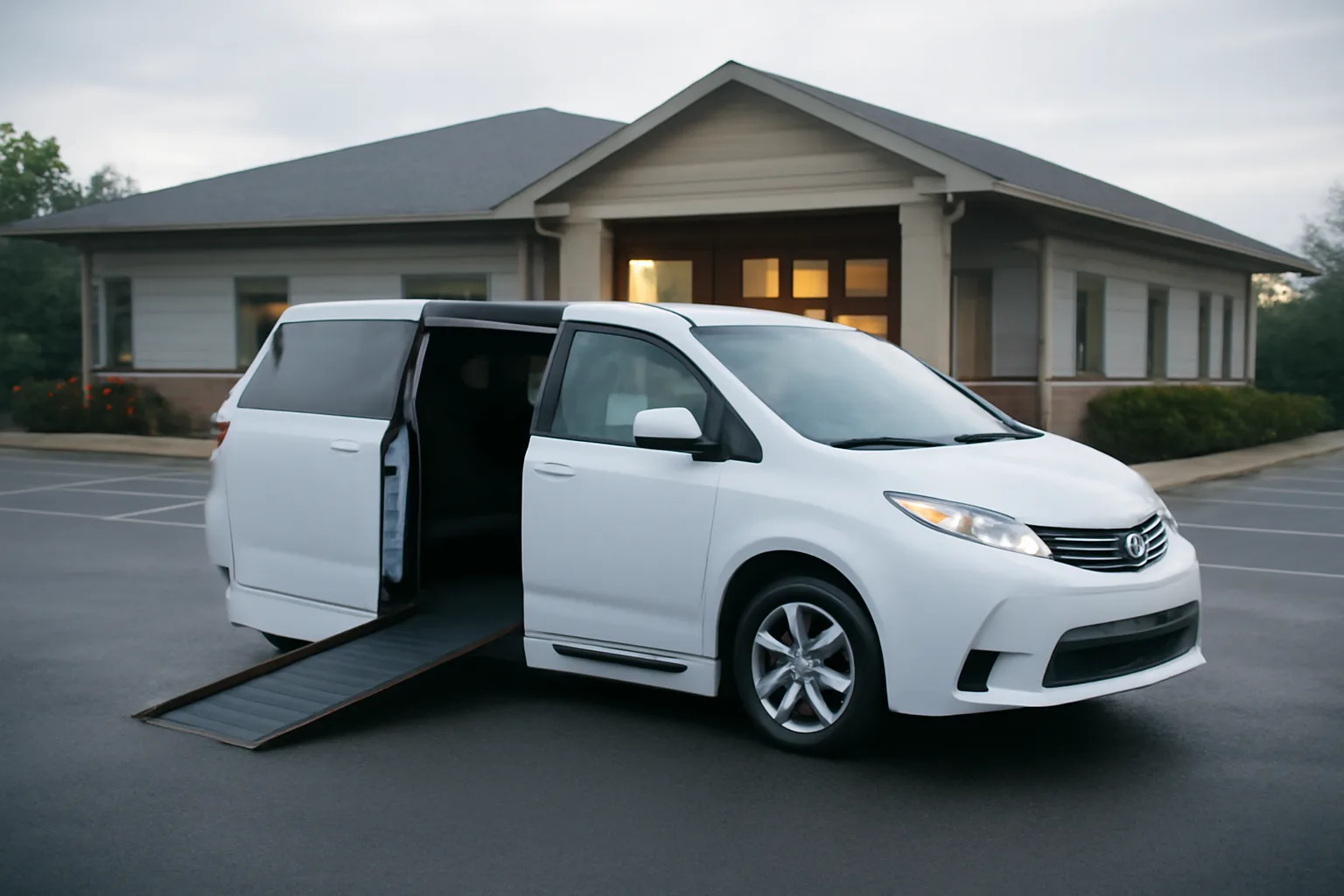
NEMT stands for non-emergency medical transportation. It covers rides to and from Medicaid-covered services, dialysis, physical therapy, chemotherapy, and routine doctor visits, for members who don't need emergency care but can't drive themselves or use public transit because of a disability, illness, or lack of access. Federal Medicaid rules require states to make sure eligible members "have necessary transportation to and from providers" under 42 CFR 431.53 [2]. Ambulance transport is different. It handles emergencies and medically necessary transport requiring en route monitoring or intervention, and it's regulated separately in New Jersey through the Department of Health's Office of Emergency Medical Services, with licensing tiers for Basic Life Support and Mobile Intensive Care Units. If your plan is a wheelchair van, you are almost certainly in the NEMT category, not the ambulance category, and you do not need EMT certification to operate. NEMT itself splits into modes: ambulatory sedan service for members who can walk and transfer themselves, and wheelchair van (WAV) service for members who use a wheelchair and need a lift or ramp. Some states and brokers also cover stretcher van transport for non-ambulatory members who don't need medical monitoring. Confirm with Modivcare and NJ Medicaid which service levels they're currently authorizing new providers for, since capacity varies by region and broker network needs change.
Does Medicaid cover ambulance rides?
Yes. Medicaid covers ambulance transportation when it's medically necessary, meaning the member's condition requires transport by ambulance and any other means would endanger their health, per the federal Medicaid transportation service definition at 42 CFR 440.170 [3]. Coverage typically requires prior authorization or a physician certification statement for non-emergency ambulance transport, and reimbursement rates are set by each state Medicaid agency. In New Jersey specifically, ambulance providers bill NJ Medicaid directly (not through the NEMT broker) using the state's fee schedule, and they must hold current DOH EMS licensure. If your business plan includes both ambulance and NEMT service lines eventually, treat them as two separate enrollment and licensing tracks with different regulators: DOH for ambulance licensure, NJ Medicaid/Division of Medical Assistance and Health Services (DMAHS) for provider enrollment, and Modivcare for broker credentialing on the NEMT side. Most owner-operators starting with a single wheelchair van stay in NEMT only. Ambulance requires a much bigger capital and staffing commitment (licensed EMTs, medical equipment, DOH inspections) that doesn't make sense for a first vehicle.
Does Medicare cover medical transportation?
Medicare's transportation coverage is narrower than Medicaid's. Medicare Part B covers emergency ambulance transport when other transportation would endanger your health, and it covers non-emergency ambulance transport only in limited situations, such as when a doctor certifies it's medically necessary for a bedridden patient or one requiring services only ambulance staff can provide [4]. Medicare generally does not cover routine non-emergency rides to a doctor's office or dialysis in a wheelchair van or sedan. That gap is exactly why NEMT businesses target Medicaid and Medicaid managed care plans, not traditional Medicare, as their core payer. Some Medicare Advantage plans do offer supplemental transportation benefits as an extra (not standard Medicare), and those are typically also managed through brokers like Modivcare, MTM, or other vendors depending on the plan. If you want Medicare Advantage trip volume, you'd credential separately with whichever broker each MA plan in your area uses; confirm current MA transportation vendors directly with the plans operating in your county. So the honest answer for a new operator: your bread-and-butter payer is NJ Medicaid NEMT through Modivcare, with Medicare Advantage supplemental transport as a possible secondary revenue source you'd add later, not day one.
How do you enroll as an NJ Medicaid transportation provider?
New Jersey Medicaid providers, including NEMT transportation providers, enroll through NJ MMIS (Medicaid Management Information System), the state's provider enrollment system operated for the Division of Medical Assistance and Health Services (DMAHS), consistent with the federal enrollment requirement at 42 CFR 455.410 that state Medicaid agencies enroll all providers before they can bill [5]. You'll need your NPI (National Provider Identifier), business formation documents, EIN, proof of insurance, vehicle registration and inspection records, and driver credentialing on file before submitting. NJ Medicaid enrollment typically requires: - A completed provider enrollment application through NJ MMIS
- National Provider Identifier (NPI) from NPPES
- Business entity documents (LLC or corporation formation, EIN letter)
- Certificate of insurance meeting state minimums
- Vehicle documentation (registration, inspection, accessibility equipment specs for WAV units)
- Driver background check and licensing records Processing time varies. Provider enrollment applications generally take several weeks to a few months depending on application completeness and current DMAHS workload; confirm current turnaround directly with NJ Medicaid's provider enrollment unit, since backlogs shift. Applications with missing documentation get kicked back, which resets the clock, so it pays to over-prepare before you submit. Once NJ Medicaid enrollment is active, that alone doesn't put you on the road. You still need to credential with the broker managing trip dispatch, which for New Jersey NEMT is Modivcare.
How does broker credentialing with Modivcare work in New Jersey?
New Jersey contracts with Modivcare to manage non-emergency medical transportation for Medicaid members statewide, handling trip scheduling, dispatch, and provider network management [1]. Being an enrolled NJ Medicaid provider gets you eligible to bill; being credentialed with Modivcare gets you actual trips. Modivcare credentialing generally requires: - Active NJ Medicaid provider enrollment
- Business licensing and insurance documentation (often higher liability limits than the state Medicaid minimum; Modivcare sets its own network requirements)
- Vehicle inspection records meeting Modivcare's safety and accessibility standards
- Driver files: license, background check, drug test, defensive driving or passenger assistance training records
- Signed broker service agreement Modivcare's specific documentation checklist, inspection frequency, and insurance minimums change periodically and vary by region within the state, so confirm the current list directly with your local Modivcare network management contact rather than relying on an old PDF. New operators should also ask directly whether the network is currently open in their county, since brokers sometimes cap provider counts in saturated service areas and put new applicants on a waitlist. This two-step structure (state enrollment, then broker credentialing) is standard across most states, not unique to New Jersey. If you're comparing how other states handle it, see non emergency medical transportation for the general pattern and nemt for a broader look at how brokers operate.
What vehicle and insurance requirements apply to a wheelchair van in NJ?
Your wheelchair van needs to meet accessibility, safety, and insurance standards set jointly by NJ Motor Vehicle Commission registration/inspection rules, NJ Medicaid, and Modivcare's own network requirements, and these three layers don't always match exactly, so you need to satisfy all three. At minimum, expect to need: - Current NJ vehicle registration and passed state inspection
- A wheelchair lift or ramp meeting ADA-adjacent structural standards, with functional tie-downs and occupant restraints
- Commercial auto liability insurance at limits meeting or exceeding both NJ Medicaid and Modivcare minimums (confirm exact figures, as these are set by the agency/broker and change)
- Regular vehicle maintenance and safety inspection records you can produce on demand A used wheelchair van conversion (Dodge Grand Caravan, Ford Transit, or similar) typically runs somewhere in the $25,000 to $55,000 range depending on age, mileage, and lift type, though exact market pricing shifts and you should get current quotes from mobility dealers rather than relying on any fixed number. Insurance for a single-vehicle NEMT operation commonly costs more than a standard commercial auto policy because of the passenger vulnerability factor; get quotes from carriers that specifically write NEMT or paratransit coverage, since general commercial auto underwriters sometimes decline or overprice this class. For a general orientation on vehicle types and specs across the industry, see nemt-transportation.
What driver requirements does New Jersey NEMT typically require?
Drivers need a valid New Jersey driver's license (commercial license generally not required for standard wheelchair vans and sedans, though this depends on vehicle weight and passenger count under NJ MVC rules), a clean driving record, and a passed criminal background check. Modivcare and NJ Medicaid both typically require documented drug and alcohol screening and defensive driving or passenger assistance training, though the exact training curriculum and renewal schedule is set by the broker and can change. Most owner-operators driving their own single van serve as their own first driver, which simplifies credentialing since you're not managing a separate employee file. If you plan to add drivers as you scale, budget time for background check turnaround (often one to three weeks depending on the vendor) and don't schedule trips assuming a new hire is cleared until you have the paperwork in hand. Some NJ counties or municipalities layer on local livery licensing or municipal permits for for-hire vehicles. Confirm with your municipal clerk's office whether local permitting applies in addition to state and broker requirements, since this varies block by block in dense parts of the state like Hudson and Essex counties.
How to start a NEMT business with just one van?
One van is a completely legitimate way to start, and it's how most owner-operators actually do it. The core requirements don't shrink because you're small: you still need the business entity, insurance, NJ Medicaid enrollment, and Modivcare credentialing. What changes is scale and risk exposure, not the checklist. With one van, you are your own dispatcher, driver, and back-office. That's manageable, but it means you need airtight processes for scheduling, because a single vehicle down for maintenance means zero trip capacity that day. Build slack into your maintenance schedule and keep a relationship with a local mobility vehicle shop that can turn around repairs fast, since your income (whatever it turns out to be) depends entirely on that one vehicle staying on the road. A realistic sequencing for a one-van operator: 1. Form the LLC and get an EIN 2. Buy insurance and the vehicle (or finalize your wheelchair van purchase/conversion) 3. Set up driver files (yourself, plus any additional drivers) 4. Submit NJ MMIS provider enrollment 5. Once approved, submit Modivcare credentialing application 6. Confirm go-live trip volume expectations directly with Modivcare's network team for your county Don't assume being small means faster approval. Enrollment and credentialing timelines are largely paperwork-driven, not fleet-size-driven, so a one-van applicant with clean documentation often moves faster than a five-van applicant with gaps in driver files.
What does it cost to start a wheelchair van NEMT business in New Jersey?
| Wheelchair van (used conversion) | $25,000-$55,000 | Varies by age, mileage, lift type; get current dealer quotes | |
|---|---|---|---|
| New wheelchair van conversion | $60,000-$90,000+ | Rare for first-time owner-operators | |
| Commercial auto/NEMT liability insurance | Varies widely by carrier and limits | Get quotes from NEMT-specific carriers, not generic commercial auto | |
| LLC formation (NJ) | ~$125 filing fee | NJ Division of Revenue and Enterprise Services [6] | |
| Background checks per driver | Roughly $30-$75 per check | Varies by vendor and depth of check | |
| Working capital cushion | Highly variable | Cover 2-3 months of expenses before first reimbursement cycle | New Jersey's LLC Certificate of Formation filing fee is $125, filed under N.J. Stat. Ann. 42:2C-19 through the Division of Revenue and Enterprise Services [6]. That's a fixed, verifiable number; almost everything else in your budget (insurance premiums, vehicle price, exact broker fees if any) is market-rate and shifts, so get live quotes rather than trusting any number you read online, including this one, as gospel six months from now. Don't underestimate the cash gap. Medicaid and broker reimbursement cycles aren't instant, and you'll be paying for fuel, insurance, and maintenance well before your first payment clears. Plan for a real cushion, more than enough to cover the down payment on the van. |
Costs break into four buckets: vehicle, insurance, business formation/licensing, and working capital to cover the gap before trips (and reimbursement) start flowing. | Cost category | Typical range | Notes |
What paperwork actually trips people up during enrollment?
The single most common delay is incomplete or mismatched documentation, business name on the insurance certificate doesn't match the NJ MMIS application, vehicle registration is under a personal name instead of the business entity, or the NPI record has outdated address information from NPPES. DMAHS and Modivcare both bounce applications back for cleanup rather than approving with caveats, so a small mismatch can cost you two or three weeks of resubmission cycles. Second most common: insurance limits that meet NJ Medicaid's minimum but fall short of what Modivcare requires for its network (or vice versa). Because these are two separate reviewing entities with their own standards, get your insurance broker to confirm both sets of minimums before you bind the policy, not after. Third: driver files missing one piece, usually the drug screening result or the passenger assistance training certificate. Build a checklist per driver and don't submit until every line item has a document attached, dated, and signed.
Where do you go for the official rules, and when should you use the RideCredential Launch Kit?
For anything involving actual thresholds, fees, or forms, go to the primary source. NJ Medicaid provider enrollment questions go through NJ MMIS and DMAHS [5]. Federal Medicaid transportation rules live in 42 CFR 431.53 [2]. Broker-specific credentialing requirements come from Modivcare's own network management team for New Jersey [1]. Nobody should be building a compliance file off a blog post, including this one; use it to understand the sequence, then verify every number and form with the agency or broker directly. If you want the enrollment and credentialing paperwork organized into one build-it-yourself packet instead of hunting across four different websites, RideCredential's $199 one-time State + Broker NEMT Launch Kit walks through the NJ Medicaid and Modivcare document checklists together so you're not guessing which form goes where. It's a paperwork organizer, not a guarantee of approval; DMAHS and Modivcare make the actual credentialing decisions. Start at /launch-kit-builder if that's useful to you. For more general background on how NEMT businesses operate across states, medical transportation and non emergency medical transportation services cover the broader landscape, and emergency medical transport explains how ambulance licensing differs if you ever expand into that line.
Frequently asked questions
How do I start a medical transportation business in New Jersey?
Form a business entity, secure insurance and a compliant vehicle, get drivers licensed and background-checked, enroll as an NJ Medicaid provider through NJ MMIS, and credential with Modivcare, the state's NEMT broker. Complete state enrollment before applying for broker credentialing, since Modivcare generally requires active Medicaid enrollment first. Confirm exact current requirements with NJ Medicaid and Modivcare directly.
What is NEMT?
NEMT stands for non-emergency medical transportation, rides to and from Medicaid-covered medical appointments for members who can't drive themselves or use public transit due to disability or illness. It covers ambulatory sedan trips and wheelchair van trips, and is distinct from ambulance transport, which handles emergencies and requires separate DOH licensing in New Jersey.
Does Medicaid cover ambulance rides?
Yes, Medicaid covers medically necessary ambulance transportation, including emergency and, with prior authorization or physician certification, some non-emergency ambulance trips. Coverage rules and reimbursement rates are set by each state Medicaid agency; in New Jersey, ambulance providers bill DMAHS directly using the state fee schedule, separate from the NEMT broker system.
Does Medicare cover medical transportation?
Medicare Part B covers emergency ambulance transport and limited non-emergency ambulance transport when medically necessary and certified by a doctor. It generally does not cover routine non-emergency rides in a wheelchair van or sedan. Some Medicare Advantage plans offer supplemental transportation benefits as an extra, managed through separate broker arrangements you'd confirm with each plan.
How do you start a NEMT business with one van?
The requirements are the same as for a larger fleet: business entity, insurance, NJ Medicaid enrollment via NJ MMIS, and Modivcare broker credentialing. What changes with one van is your risk exposure, since a single vehicle down for repairs means zero capacity, so build maintenance slack and a fast-turnaround repair relationship into your plan from day one.
How long does NJ Medicaid provider enrollment take?
Timelines vary based on application completeness and current DMAHS workload, often running several weeks to a few months. Incomplete documentation is the most common cause of delay, since applications with mismatches or missing items get returned rather than conditionally approved. Confirm current processing times directly with NJ Medicaid's provider enrollment unit.
Do I need a commercial driver's license to drive a wheelchair van in NJ?
Generally no for standard wheelchair vans and sedans, though this depends on vehicle weight and passenger capacity under NJ Motor Vehicle Commission rules. Larger vehicles (certain multi-passenger vans or buses) may trigger CDL requirements. Confirm your specific vehicle's classification with NJ MVC before assuming a standard license is sufficient.
What insurance do I need for an NJ NEMT wheelchair van?
You need commercial auto liability insurance meeting both NJ Medicaid's minimums and Modivcare's broker-specific network requirements, which can differ from each other. Get quotes from carriers experienced in NEMT or paratransit coverage rather than generic commercial auto insurers, since passenger vulnerability factors often affect underwriting and pricing.
How much does it cost to start a wheelchair van NEMT business?
A used wheelchair van conversion typically runs $25,000 to $55,000, plus insurance, a $125 NJ LLC filing fee, driver background checks (roughly $30-$75 each), and a working capital cushion to cover expenses before reimbursement cycles begin. Get current quotes for insurance and vehicle pricing rather than relying on fixed figures, since markets shift.
What's the difference between NJ Medicaid enrollment and Modivcare credentialing?
NJ Medicaid enrollment through NJ MMIS makes you an eligible billing provider with the state. Modivcare credentialing is a separate step with the broker that actually dispatches trips to providers. You generally need active Medicaid enrollment before Modivcare will process your credentialing application, and each has its own document requirements.
Can I run ambulance and NEMT service under the same business in NJ?
You can, but they're regulated separately. Ambulance service requires DOH Office of Emergency Medical Services licensure and EMT or paramedic staffing, while NEMT requires NJ Medicaid provider enrollment and broker credentialing with Modivcare. Most new owner-operators with a single wheelchair van start with NEMT only, given the much higher staffing and equipment bar for ambulance licensure.
Does NJ Medicaid cover wheelchair van transportation?
Yes, wheelchair van transport is a standard NEMT service mode under NJ Medicaid, dispatched through the state's contracted broker, currently Modivcare, for members who use a wheelchair and need lift or ramp-equipped vehicles to reach Medicaid-covered appointments.
Sources
- New Jersey Department of Human Services press release, DMAHS transportation broker contract: New Jersey contracts with Modivcare (formerly LogistiCare) as its NEMT broker managing trip scheduling and dispatch for Medicaid members
- 42 CFR 431.53, Cornell Legal Information Institute: Federal Medicaid rule requiring states to ensure necessary transportation to and from Medicaid providers
- Medicare.gov, Ambulance Services coverage: Medicare Part B covers emergency ambulance transport and limited medically necessary non-emergency ambulance transport
- 42 CFR 455.410, Cornell Legal Information Institute: State Medicaid agencies, including New Jersey, must enroll all providers, including transportation providers, before they can bill Medicaid
- New Jersey Revised Uniform Limited Liability Company Act, N.J. Stat. Ann. 42:2C-19: New Jersey LLC Certificate of Formation is filed under the state's Revised Uniform Limited Liability Company Act
- 42 CFR 440.170, Cornell Legal Information Institute: Federal definition of transportation as a covered Medicaid service, including the distinction relevant to NEMT versus other medical services