Last updated 2026-07-25
TL;DR
Starting a medical transportation business in NJ means registering your entity, titling and inspecting your wheelchair van through NJ MVC, getting commercial auto and general liability coverage, then enrolling as a transportation provider with LogistiCare/Modivcare or the current NJ FamilyCare broker. Most solo operators can launch with one van if they clear vehicle inspection and broker credentialing.
How do you start a medical transportation business in NJ, step by step?
You need five things lined up before you ever carry a Medicaid rider: a legal business entity, a properly equipped and inspected vehicle, commercial insurance, a driver who meets state and broker standards, and an active enrollment with whoever manages NJ FamilyCare transportation in your county. None of these happen overnight, and none of them happen in the order most new owners assume. First, form your business with the NJ Division of Revenue and Enterprise Services (an LLC is the common choice for a one-van operator, mostly for liability separation). Get your EIN from the IRS, then register for NJ tax purposes. Second, buy or convert your vehicle and get it titled commercially through the New Jersey Motor Vehicle Commission. If it's wheelchair-accessible, it likely needs to meet ADA lift/ramp specs and pass a NJ MVC safety inspection before you can use it commercially [1]. Third, line up commercial auto liability and general liability insurance. Brokers typically require minimum limits well above a personal auto policy, and NJ FamilyCare's transportation broker sets its own floor, so confirm exact limits with the broker before you bind a policy. Fourth, get your driver(s) cleared: a valid NJ driver's license with a clean-enough record, often a specific endorsement or background check tier depending on the broker, and CPR/first aid where required. Fifth, apply to become a registered transportation provider through NJ Medicaid's managed transportation vendor. As of recent years that's been LogistiCare (operating as Modivcare), though NJ FamilyCare periodically rebids the contract, so confirm the current broker name and application portal with the state Medicaid transportation unit before you start the paperwork [2]. Budget three to six months from entity formation to your first paid trip. That's not a guarantee, just the realistic range once you stack vehicle inspection, insurance underwriting, and broker credentialing review times back to back.
What is NEMT, and how is it different from an ambulance?
NEMT stands for non-emergency medical transportation. It's scheduled transport for people who can't drive themselves to a medical appointment, dialysis, or therapy but don't need ambulance-level clinical care during the ride [3]. An ambulance is for emergencies or for patients who need medical monitoring en route. Most wheelchair van and sedan trips fall under NEMT, meaning no siren, no paramedic, no IV lines. You're moving a person and their mobility equipment safely, on a schedule, usually booked a day or more in advance through a broker's dispatch system. The federal Medicaid rule that created this whole industry is 42 CFR 431.53, which requires state Medicaid programs to "ensure necessary transportation for beneficiaries to and from providers" [4]. States implement that requirement differently, and New Jersey does it through a managed transportation broker model rather than paying individual providers directly for most trips. If you're picturing an ambulance business instead of a wheelchair van business, the licensing path is different and heavier: NJ requires ambulance and mobile intensive care services to be licensed through the NJ Department of Health, more than NJ MVC and Medicaid broker credentialing [5]. Don't confuse the two paths when you're budgeting startup costs.
Does Medicaid cover ambulance rides and NEMT trips in NJ?
Yes, both, but through different mechanisms. NJ FamilyCare (New Jersey's Medicaid program) covers emergency ambulance transport as a medical benefit, billed directly by the ambulance provider. NEMT trips, the kind wheelchair van owner-operators run, are coordinated through the state's contracted transportation broker rather than billed fee-for-service by each driver [2]. Federal Medicaid rules require states to cover both, stating that transportation is a required program feature so that eligible people can actually get to covered care [4]. But "covered" doesn't mean any driver can bill NJ FamilyCare directly. In the broker model, you enroll as a subcontracted transportation provider, the broker schedules and assigns trips, and you invoice the broker rather than the state. Medicare, separately, only covers ambulance transportation under narrow medical-necessity rules, and it generally does not cover routine NEMT wheelchair van trips the way Medicaid does [6]. If most of your target riders are Medicare-only with no Medicaid overlap, NEMT is a much thinner revenue path since Medicare Advantage plans sometimes offer transportation as a supplemental benefit, but traditional Medicare largely does not. Bottom line for a new operator: your business model is built on NJ FamilyCare NEMT trips routed through the broker, plus any private-pay, Medicare Advantage supplemental, or contracted work with adult day programs, dialysis centers, and senior living facilities you line up yourself.
How do you get NJ Medicaid broker credentialing as a transportation provider?
You apply directly to the transportation management company NJ FamilyCare contracts with, not to the state Medicaid office itself, since the state delegates trip scheduling and provider network management to that broker. The general application sequence brokers use nationally, and that NJ's contracted broker is likely to mirror, includes: submit a provider application with your business license, vehicle registration and insurance documents, and driver credentials; pass a vehicle inspection (sometimes broker-run, sometimes accepting your NJ MVC inspection); complete driver background checks and any required training modules; sign a subcontractor or network provider agreement with defined rates and service area; and get listed as active in the broker's dispatch system before you receive your first trip assignment. Rates are set by the broker's contract with the state, not negotiated trip-by-trip by you, and per-trip and per-mile rates vary by vehicle type (ambulatory sedan vs. wheelchair van vs. stretcher van) and by region. Confirm exact current rates, required documentation list, and the credentialing timeline with the broker directly, since these details change when the state rebids the transportation contract. Expect the credentialing review itself, once your file is complete, to take several weeks. The bigger time sink for most new owners is gathering documents and passing inspection the first time, not the broker's internal review clock.
What does a wheelchair-accessible van need to pass inspection in NJ?
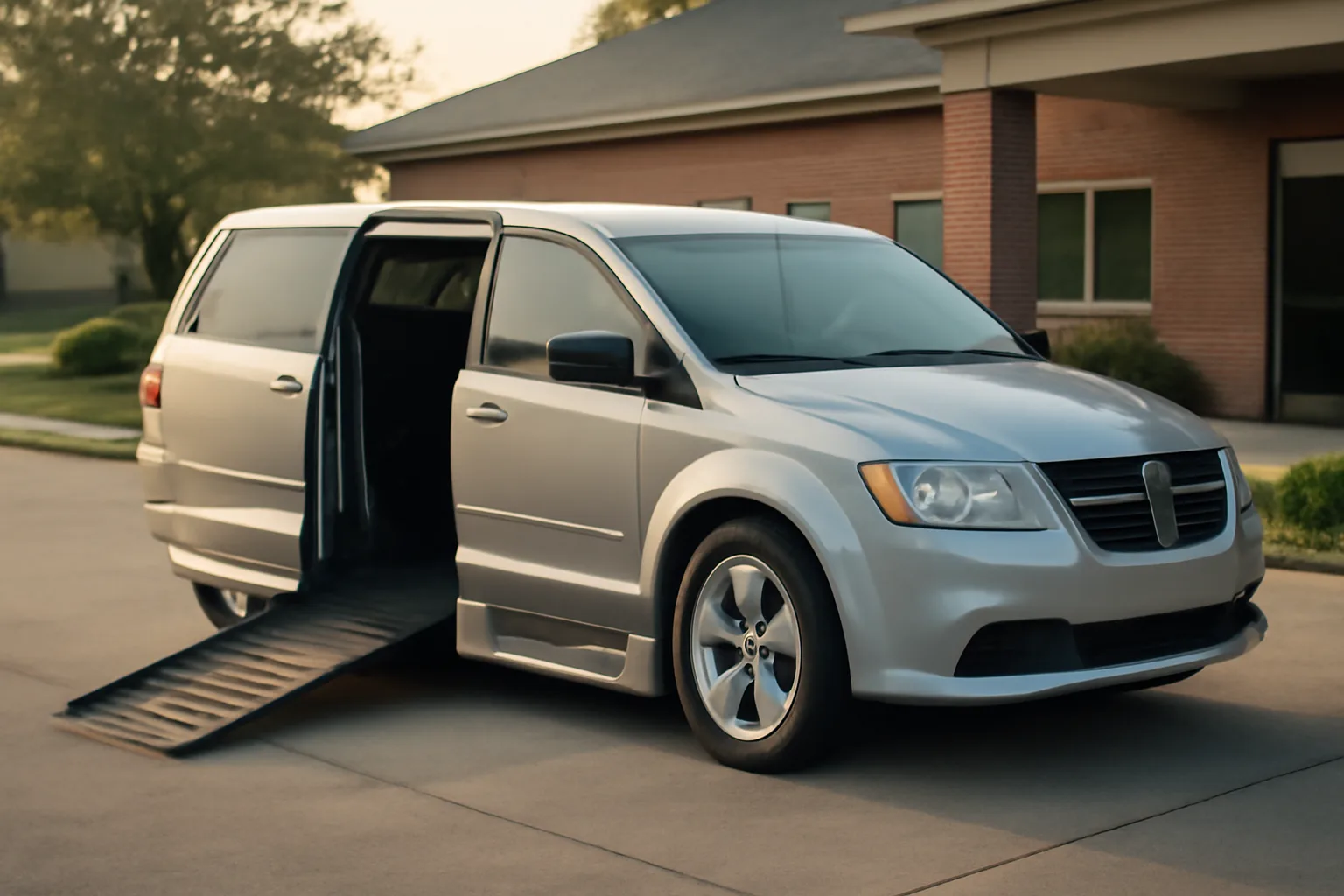
Your van needs a NJ MVC commercial vehicle inspection, working wheelchair lift or ramp hardware, secure wheelchair tie-down/restraint systems, and current registration and insurance matching commercial (not personal) use classification [1]. Specific equipment brokers commonly check includes: four-point wheelchair securement straps rated for the chair's weight, a working lift or fold-out ramp with anti-slip surface, interior grab bars, and a functioning wheelchair lift maintenance log. Some brokers also want proof the lift has been serviced or certified within the past 12 months, separate from the state inspection. Don't assume a used van from a dealer is broker-ready as-is. Many owner-operators buy a used Ford Transit or Dodge Grand Caravan with an aftermarket wheelchair conversion, and conversions vary a lot in quality and documentation. Ask the seller for the conversion company's certification paperwork (a Recreation Vehicle Industry Association or National Mobility Equipment Dealers Association compliance plate is a good sign) before you buy, because retrofitting a poorly documented conversion to pass broker inspection can cost more than the price difference between a cheap van and a properly documented one. If you're weighing new versus used, a new accessible conversion van commonly runs well into five figures above the base vehicle price, while a solid used one can be found for meaningfully less, but get an independent mechanical inspection before you commit either way. There's no single official NJ price ceiling or floor here, this is a market cost, so treat any number you see quoted online as a rough range, not a fixed fee.
How much does it cost to start a NEMT business with one van in NJ?
Costs stack up across five categories: entity formation, the vehicle, insurance, driver credentialing, and working capital while you wait for your first broker payments to arrive. None of these are set by a single agency, so treat every figure here as a planning range, not a quote. Entity formation and state registration fees in NJ are relatively small, typically under a few hundred dollars for LLC filing through the NJ Division of Revenue and Enterprise Services. The vehicle is your biggest variable, whether you buy used and retrofit or buy a factory-converted van outright. Commercial insurance for a single wheelchair van, with liability limits high enough to satisfy a broker, is a recurring monthly cost, not a one-time fee, and it will run higher than a personal auto policy because of the passenger and mobility-equipment exposure. Don't forget the gap between when you start incurring costs and when broker trip payments start arriving. Most brokers pay on a delay after invoicing, often two to four weeks or longer depending on their billing cycle, so plan working capital to cover fuel, insurance premiums, and driver pay for at least one full billing cycle before revenue catches up. We won't give you a total dollar figure here because it swings enormously based on whether you already own a van, whether you're financing it, and what your specific broker requires for coverage limits. Anyone who tells you an exact all-in startup number without asking those questions first is guessing.
What licenses and registrations does NJ require before you can operate?
You need a NJ business entity registration, an EIN, NJ MVC commercial vehicle titling and inspection, NJ tax registration if you'll have employees, and broker-specific provider enrollment. Some counties or municipalities may also require a local business license, so check with your municipal clerk. Here's the honest sequencing problem: brokers usually won't fully activate you until your insurance certificate and vehicle inspection are done, but insurance underwriters sometimes want to see your broker agreement or provider number before finalizing a quote. Work all three tracks (entity/registration, vehicle/insurance, broker application) in parallel rather than waiting for one to finish before starting the next, or you'll add months to your launch timeline. If you plan to hire drivers rather than drive solo, you'll also need workers' compensation insurance (required in NJ for anyone with employees) and to register as an employer with the NJ Department of Labor and Workforce Development. One more registration people forget: if your vehicle will cross state lines regularly (say, NJ to Philadelphia hospitals), check whether you need interstate motor carrier registration through FMCSA in addition to your NJ MVC paperwork.
What insurance coverage do NJ NEMT operators actually need?
You need commercial auto liability, general liability, and usually workers' compensation if you have any employees, at limits your broker specifies in the provider agreement, more than NJ's state minimum auto insurance requirements. NJ's baseline auto insurance minimums (liability limits under the state's mandatory insurance law) are far below what any Medicaid transportation broker will accept for a commercial passenger vehicle carrying medically vulnerable riders. Brokers commonly require six-figure combined single limits or split limits well above personal auto minimums, plus proof of commercial use classification on the policy itself, not a personal policy with a rider carrying passengers for hire. General liability protects you against non-auto claims, a fall while transferring a passenger from wheelchair to van seat, for example. Some brokers require it as a separate line item from auto coverage, so read your provider agreement's insurance exhibit carefully rather than assuming your auto policy covers everything. Get quotes from insurers who specifically write NEMT or paratransit policies, more than a generalist commercial auto shop, since the underwriting for wheelchair lift equipment and vulnerable passengers is a specialty niche and generalist agents sometimes miss required endorsements.
How do you find and apply to the right broker in NJ?
Contact the NJ FamilyCare transportation unit directly to confirm which broker currently holds the statewide or regional contract, since this has changed over time and any name you find in an old blog post might be outdated [2]. Historically, LogistiCare (rebranded as Modivcare) has managed NJ Medicaid non-emergency transportation, but broker contracts get rebid on multi-year cycles and coverage sometimes splits by region or by managed care organization. Don't assume the broker name from a search result two years old is still accurate; call the state Medicaid transportation unit or check the current NJ FamilyCare provider resources page before you submit an application packet. When you do reach the right broker, ask for their current provider network application, their specific vehicle and insurance requirements sheet, their credentialing timeline, and their payment/invoicing schedule in writing. Get names and direct contact info for your regional network manager, since broker call centers are often not equipped to answer detailed credentialing questions. If NJ FamilyCare uses managed care organizations (MCOs) that separately administer transportation for their own members, you may need to enroll with more than one broker or MCO transportation vendor to access the full range of NJ Medicaid NEMT trips in your area. Confirm this structure directly with the state, since MCO-administered transportation adds a layer beyond the single statewide broker model.
Can you really start a NEMT business with just one van?
Yes. A huge share of NEMT owner-operators start with exactly one wheelchair van and drive it themselves while building broker trip volume, then add a second vehicle and hire a driver once volume and cash flow justify it. The advantage of starting solo is lower fixed cost and a shorter credentialing list, since you're only insuring and licensing one vehicle and one driver (yourself). The disadvantage is capacity: you can't take overlapping trips, so a broker that wants guaranteed same-day availability across a wide service area may cap how many trips they route to a single-van provider. Most brokers don't formally require a minimum fleet size to enroll, but some regional contracts prioritize providers who can demonstrate broader coverage hours or multiple vehicle types (ambulatory sedan plus wheelchair van, for example). Ask your target broker directly whether solo, one-van providers are eligible for full network enrollment or whether you'll be capped to backup/overflow status until you expand. If you're planning to stay a one-van operation long-term, be realistic about the built-in ceiling: your income is limited by the hours you personally can drive, and you'll need a plan for who covers vehicle maintenance downtime or your own sick days without leaving scheduled Medicaid riders stranded, since brokers do track no-show and reliability metrics per provider [2].
Where can new NJ operators get help pulling this together?
State Medicaid transportation rules, broker application packets, and NJ MVC vehicle requirements each live on separate agency websites written for different audiences, which is exactly why so many new owner-operators lose weeks just tracking down the right form. Start with the primary sources: the medicaid.gov benefits overview for the federal transportation mandate, then NJ FamilyCare's own transportation guidance for the current broker contact, then NJ MVC's commercial vehicle inspection page for your van's requirements. Read the broker's provider manual cover to cover before you submit anything, since incomplete applications are the single biggest cause of credentialing delays. If you want a structured starting point instead of stitching all this together yourself, RideCredential's $199 one-time State + Broker NEMT Launch Kit organizes the state-specific and broker-specific document checklists into one packet, so you're not hunting across a dozen government and broker websites for the same forms. It's a reference tool, not a guarantee of approval; every application still goes through NJ FamilyCare's actual credentialing review on its own timeline. Whatever path you take, build in real slack. Vehicle sourcing, insurance underwriting, and broker review rarely finish on the same week, and a new business that budgets for a tight overlap almost always ends up waiting longer than planned.
Frequently asked questions
How do I start a medical transportation business in NJ?
Form a business entity, get a wheelchair-accessible van titled and inspected through NJ MVC, secure commercial auto and general liability insurance at broker-required limits, get your driver credentialed, then apply to become a registered NEMT provider with NJ FamilyCare's contracted transportation broker. Confirm the current broker name and application steps directly with the state Medicaid transportation unit before applying.
Does Medicaid cover ambulance rides in NJ?
Yes. NJ FamilyCare covers medically necessary emergency ambulance transport as a direct medical benefit, billed by the ambulance provider. This is separate from NEMT wheelchair van trips, which route through the state's contracted transportation broker rather than direct fee-for-service billing.
What is NEMT?
NEMT stands for non-emergency medical transportation: scheduled rides to medical appointments, dialysis, or therapy for people who can't drive themselves but don't need ambulance-level clinical monitoring. It's typically booked in advance and coordinated through a state Medicaid transportation broker rather than dispatched as an emergency response.
Does Medicare cover medical transportation?
Traditional Medicare covers ambulance transportation only when medically necessary under specific coverage rules, and generally does not cover routine NEMT wheelchair van rides. Some Medicare Advantage plans offer non-emergency transportation as a supplemental benefit, so check the specific plan rather than assuming standard Medicare coverage applies.
How do I start a NEMT business in New Jersey specifically?
The NJ-specific steps are: register your entity with the NJ Division of Revenue and Enterprise Services, title and inspect your vehicle through NJ MVC, get commercial insurance meeting broker limits, and enroll with NJ FamilyCare's current transportation broker (historically LogistiCare/Modivcare, subject to change on rebid). Confirm the active broker with the state before applying.
Can I start a medical transportation business with just one van?
Yes, many NEMT owner-operators start solo with a single wheelchair van and drive it themselves. The tradeoff is a capacity ceiling on trip volume and possibly reduced priority for full network status with some brokers, so ask your target broker directly whether one-van providers get full enrollment or overflow-only status.
What is non-emergency medical transportation, exactly?
It's transportation for people who need help getting to medical care but don't require ambulance-level treatment during the ride, covering wheelchair vans, accessible sedans, and stretcher vans. It's a required Medicaid benefit under federal rule 42 CFR 431.53, which mandates states ensure necessary transportation for beneficiaries to reach covered providers.
What insurance do I need for a NEMT wheelchair van in NJ?
You need commercial auto liability at limits your broker specifies (well above NJ's personal auto minimums), general liability coverage, and workers' compensation if you have employees. Insure the vehicle under a commercial-use policy, not a personal auto policy, since brokers require proof of commercial classification before credentialing.
How long does it take to get credentialed with a NEMT broker in NJ?
Plan for three to six months from business formation to your first paid trip, factoring in vehicle sourcing and inspection, insurance underwriting, and broker application review. The broker's internal review, once your file is complete, often takes a few weeks, but gathering documents and passing vehicle inspection the first time usually takes longer.
Do I need a special license to drive NEMT passengers in NJ?
You generally need a valid NJ driver's license in good standing, though specific endorsement or background check requirements vary by broker and by whether you're transporting wheelchair users versus ambulatory passengers. Confirm exact license class, background check tier, and any CPR/first aid requirement directly with your target broker before hiring or self-certifying as a driver.
What does a wheelchair van need to pass NJ inspection for NEMT use?
It needs a working lift or ramp, four-point wheelchair securement straps, interior grab bars, and current commercial registration, insurance, and a passed NJ MVC safety inspection. Brokers often add their own equipment checklist on top of the state inspection, including recent lift maintenance documentation, so ask for the broker's specific vehicle standards sheet.
Which broker manages NJ Medicaid NEMT transportation?
LogistiCare (now operating as Modivcare) has historically managed NJ FamilyCare's non-emergency transportation, but state broker contracts get rebid periodically and coverage can vary by region or managed care organization. Confirm the current broker directly with the NJ FamilyCare transportation unit before submitting a provider application.
Sources
- New Jersey Administrative Code 10:49-8.2, Transportation Services: NJ Medicaid regulations govern non-emergency medical transportation services and provider requirements under the NJ Medicaid program
- Medicaid.gov, Non-Emergency Medical Transportation: Non-emergency medical transportation is a required Medicaid benefit to help beneficiaries reach covered medical care
- 42 CFR 431.53, Assurance of Transportation: Federal Medicaid regulation requires state Medicaid agencies to ensure necessary transportation for beneficiaries to and from providers
- New Jersey Statutes Annotated 26:2K-7, Licensure of Mobile Intensive Care and Ambulance Services: Ambulance and mobile intensive care services in NJ require licensing through the NJ Department of Health, separate from NEMT broker credentialing
- Medicare.gov, Ambulance Services Coverage: Traditional Medicare covers ambulance transportation only under specific medical necessity conditions and does not broadly cover routine non-emergency transportation
- New Jersey Statutes Annotated 39:6A-3, Required Automobile Liability Insurance Coverage: NJ sets minimum mandatory auto insurance liability limits that are lower than the commercial limits Medicaid transportation brokers typically require