Last updated 2026-07-25
TL;DR
NEMT (non-emergency medical transportation) moves Medicaid and Medicare Advantage members to medical appointments when they have no other way to get there and don't need an ambulance. States run it through Medicaid, usually via brokers like Modivcare or MTM. Owner-operators enroll with the state and credential with the broker separately; both are required before you can bill a trip.
what is non-emergency medical transportation (NEMT)?
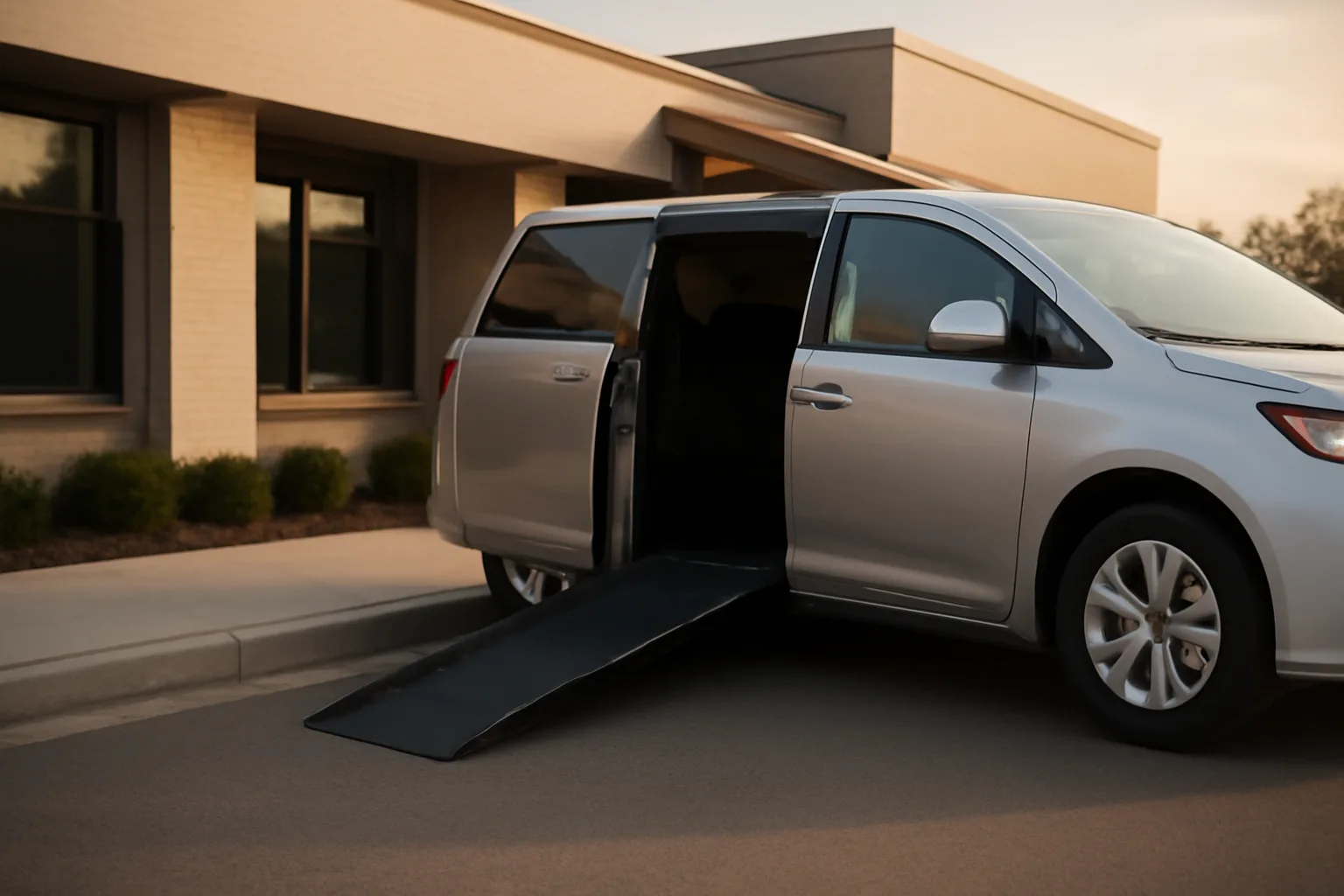
NEMT is transportation to and from medical appointments for people who have no emergency condition but also have no other way to get to care. Think dialysis three times a week, chemo infusions, physical therapy, or a routine primary care visit for someone who doesn't drive and has no family nearby. No siren, no paramedic, no IV in the back. Just a ride, sometimes in a regular sedan, sometimes in a wheelchair-accessible van. Federal Medicaid rules require states to make sure eligible people can get to and from providers. The regulation at 42 CFR 431.53 says states must "ensure necessary transportation for beneficiaries to and from providers" [1]. That single rule is the reason NEMT exists as a distinct, funded service in every state Medicaid program, more than a nice-to-have some states offer. Most states don't run NEMT directly anymore. They contract with a transportation broker (Modivcare, MTM, Access2Care, SafeRide Health, and others depending on the state) who schedules trips and pays the actual drivers and van companies. You, as an owner-operator, typically deal with the broker for day-to-day trip assignments and with the state Medicaid agency for the underlying provider enrollment. Both matter. Skipping either one means you can't legally bill for rides. For a broader look at how state programs structure this, see our guide to medical transportation and the NEMT overview.
what does NEMT stand for and how is it different from an ambulance?
NEMT stands for non-emergency medical transportation. The "non-emergency" part is the whole point: it's legally and functionally separate from ambulance transport, which is emergency medical transportation (EMT) and requires licensed medical staff and specific vehicle equipment. An ambulance responds to 911 calls or transfers patients whose condition could change en route. NEMT does not. Your driver isn't trained to treat a medical emergency, and your van isn't equipped like an ambulance. If a passenger has a medical event during a ride, the standard protocol is to call 911, not to attempt treatment. This distinction drives everything downstream: vehicle requirements, driver training, insurance, and reimbursement rates. A wheelchair van with a lift and tie-downs is common NEMT equipment. A cardiac monitor and a stretcher belong to an ambulance company, and that's a different license entirely (usually through the state health department or EMS office, not Medicaid transportation enrollment). If you're researching that line more directly, our emergency medical transport page breaks down where EMS licensing diverges from NEMT provider enrollment.
does Medicaid cover ambulance rides?
Yes, Medicaid covers ambulance rides when they're medically necessary, but that's billed and regulated completely separately from NEMT. Emergency ambulance transport falls under each state's Medicaid ambulance fee schedule, tied to national Ambulance Fee Schedule methodology that CMS also uses for Medicare [2]. The practical difference for you as a new operator: if you're buying a wheelchair van and planning to run scheduled, non-emergency rides, you are not in the ambulance business and you don't need EMS certification. Don't let a broker or a competitor confuse you on this. NEMT enrollment and ambulance licensure are different applications, different agencies in most states, and different reimbursement structures entirely.
does Medicare cover medical transportation?
Original Medicare (Part A/B) covers ambulance transportation when medically necessary and covers very limited non-emergency ambulance transport under specific conditions, like repetitive scheduled trips for dialysis, but it generally does not cover routine non-emergency rides in a wheelchair van or sedan the way Medicaid does [3]. Where NEMT shows up under Medicare is through Medicare Advantage (Part C) plans. Many MA plans now offer transportation as a supplemental benefit, and CMS has allowed increasing flexibility here since 2019 rule changes let plans offer non-medical supplemental benefits including transportation to plan enrollees with chronic conditions. If you want that Medicare Advantage transportation work, you'll credential directly with the MA plan or through a broker network the plan uses, which is a separate contract from your state Medicaid NEMT enrollment. So the honest short answer: traditional Medicare, mostly no for routine NEMT. Medicaid, yes, it's a required covered service in every state. Medicare Advantage, sometimes, depending on the specific plan's supplemental benefits.
how does the NEMT program actually work state to state?
| Broker vs. state-run | Most states use brokers (Modivcare, MTM, Access2Care, SafeRide, LogistiCare-legacy contracts); a few run trips directly | |
|---|---|---|
| Provider enrollment | Separate Medicaid provider number required in nearly all states, on top of broker credentialing | |
| Vehicle inspection | Annual or biennial state DOT/Medicaid inspection requirements vary in frequency and standard | |
| Driver background check | State-specific look-back periods and disqualifying offense lists differ | |
| Rate setting | Per-mile, per-trip, or a base-plus-mileage model, set by the state or negotiated with the broker | Because the details shift by state and even change year to year, don't rely on secondhand forum posts for your specific requirements. Confirm current rules with your broker and your state Medicaid agency's transportation unit before you buy equipment or sign a contract. Our non emergency medical transportation and non emergency medical transportation services pages track state-by-state specifics as we confirm them. |
Every state Medicaid program runs NEMT a little differently, which is exactly why new owner-operators get confused fast. Some states run NEMT in-house through the Medicaid agency. Most contract it out to one or more regional brokers. A handful use a mixed model where counties or managed care organizations each pick their own broker. Here's a rough shape of what varies: | Element | What varies by state |
how to start a medical transportation business (the real sequence)
Most people get the order backwards. They buy the van first and figure out enrollment later. Flip that. First, confirm demand and rules in your specific county or region before spending a dollar. Call your state Medicaid transportation unit and ask directly: are they accepting new NEMT provider applications right now, what broker (or brokers) covers your service area, and what's the current vehicle age limit. Some states and some broker regions have closed or capped enrollment at times; you need current information, not what a Facebook group said six months ago. Second, set up your business entity. An LLC is standard for liability separation, though talk to a real accountant or attorney about your specific state, not a blog post, for the exact formation and tax mechanics. Third, get the state Medicaid provider enrollment done. This is separate from broker credentialing and usually involves an NPI number (National Provider Identifier, obtained free through the National Plan and Provider Enumeration System at nppes.cms.hhs.gov [4]), a state provider application, and often a site visit or vehicle inspection. Fourth, apply for broker credentialing with whichever broker or brokers operate in your area. This typically means submitting insurance certificates, vehicle documentation, driver background checks, and sometimes completing broker-specific driver training modules. Fifth, get commercial auto insurance with the right limits (this is not a personal auto policy, and standard personal coverage will not cover a paid NEMT trip). Confirm minimum liability limits with your state and the broker, since these numbers vary and change. Only after all of that is locked in should you finalize your vehicle purchase, because vehicle age, mileage caps, and required equipment (wheelchair lift specs, tie-down systems, ADA compliance features) differ by state and by broker contract.
how to start a NEMT business with one van (is it realistic)?
Yes, plenty of owner-operators start with exactly one wheelchair van, and it's a completely normal entry point into NEMT. The math and paperwork burden don't scale down much just because you have one vehicle, though, so go in with clear eyes. With a single van, you're the driver, the dispatcher, the compliance officer, and the maintenance scheduler. That's a lot of hats. Most brokers don't care how many vehicles you run; they care that the one vehicle and one driver you do have meet every documentation requirement completely. A single clean, compliant van with airtight paperwork beats three vans with gaps in insurance or inspection history every time. The practical one-van checklist looks like this: business entity formed, EIN obtained, state Medicaid NEMT provider enrollment approved, broker credentialing approved for at least one broker in your region, commercial auto and general liability insurance in force, driver background check and any required training completed, and the van itself passing whatever state or broker vehicle inspection applies. Skip none of these steps because you're small. Brokers audit small operators just as often as large ones, sometimes more, because a single point of failure (one van breaking down, one driver's background check lapsing) can shut down 100% of your capacity instantly.
how do you start a medical transportation business step by step?
Boil the whole process down and it's five real steps, each with its own timeline that's largely out of your control: 1. Research state Medicaid transportation rules and identify which broker(s) serve your area. This takes days if you're organized, longer if the state's information is scattered across multiple pages. 2. Form your business entity and get your EIN and NPI. Usually a week or two. 3. Submit state Medicaid provider enrollment. This can take anywhere from a few weeks to a few months depending on the state's backlog and whether they require a site visit. 4. Submit broker credentialing paperwork in parallel where the broker allows it, since some brokers won't fully process your application until state enrollment is confirmed. 5. Finalize insurance, pass vehicle inspection, and get assigned a broker start date. Nobody can promise a single timeline that applies everywhere, because state processing speed alone varies enormously and nobody publishes a universal average. Ask your state Medicaid transportation unit for their current processing time when you submit, and get it in writing or email if you can, so you have something to reference if it drags.
what paperwork do brokers like Modivcare and MTM actually require?
Broker credentialing packets look similar across companies even though the exact forms differ. Expect to provide: proof of commercial auto insurance meeting the broker's minimum limits, vehicle registration and inspection records, driver's license and driving record for every driver, a background check (often required to cover a specific look-back period, commonly 5 to 10 years depending on the state and broker), proof of any required driver training (defensive driving, passenger assistance, sometimes CPR/First Aid), and your state Medicaid provider number once issued. Because broker requirements are contractual and change without much public notice, treat any specific number you read (insurance minimums, background check years, required certifications) as a starting point to verify, not a final answer. Confirm current credentialing requirements directly with the broker's provider relations department and cross check against your state Medicaid agency's transportation contract page before you submit anything.
what vehicle requirements apply to a wheelchair van in NEMT?
Wheelchair vans used for NEMT generally need a certified lift or ramp, working tie-down and occupant restraint systems for the wheelchair, and to pass a state or broker-required annual (sometimes more frequent) safety inspection. Vehicle age limits are common too; some states or brokers won't approve a van past a certain model year or odometer threshold, though the specific cutoff varies widely and changes. Before buying a used wheelchair van, get the exact current specs from your state Medicaid transportation unit and your target broker in writing. A van that qualified in one state or under one broker's contract two years ago may not qualify today, and buying first, asking questions second, is how new operators end up with a van sitting in a driveway instead of on the road.
how much does it cost to get NEMT credentialed and enrolled?
Costs vary by state and broker, and nobody publishes a single national number because the fee schedule differs so much across roughly 50 separate state Medicaid programs plus multiple broker contracts within some states. What you can count on paying for, roughly: state Medicaid provider enrollment application fees (some states charge a fee under the CMS-mandated Medicaid provider screening rules, others don't [5]), commercial auto insurance premiums (typically higher than personal auto due to commercial use and passenger transport risk), background check fees per driver, vehicle inspection fees, and any required training course fees. On top of the direct fees, budget real time. Gathering the right documents, filling out state and broker applications correctly the first time, and tracking down insurance certificates in the right format takes hours most new operators underestimate. That's the exact gap a resource like our $199 one-time Launch Kit is built to close: state-specific and broker-specific document checklists so you're not guessing at formats or re-submitting because you missed a line item. It doesn't replace your own state Medicaid agency confirmation, but it saves you from the most common paperwork rejections.
NEMT enrollment costs and timelines at a glance
| Step | Typical cost driver | Typical wait | |
|---|---|---|---|
| Business entity (LLC) formation | State filing fee, varies by state | Days to 2 weeks | |
| EIN | Free (IRS.gov) | Same day | |
| NPI (NPPES) | Free | Same day to a few days | |
| State Medicaid provider enrollment | Varies; some states charge a screening fee | Weeks to a few months | |
| Broker credentialing | Insurance, background check, training fees | Weeks, often parallel with state enrollment | |
| Vehicle inspection | State/broker inspection fee | Scheduled, days to weeks out | These are typical ranges pulled from how the process generally works, not guarantees. Confirm exact fees and current wait times with your state Medicaid agency's transportation unit and your target broker before you budget. |
Frequently asked questions
what is NEMT in simple terms?
NEMT (non-emergency medical transportation) is a Medicaid-covered ride to and from medical appointments for people who have no emergency but also have no other way to get there. It covers things like dialysis, chemo, and routine doctor visits, using vans, wheelchair-accessible vehicles, or sedans instead of ambulances.
does Medicaid cover ambulance rides?
Yes. Medicaid covers medically necessary ambulance transport under each state's ambulance fee schedule, separate from NEMT. Ambulance transport requires licensed EMS staff and equipment; NEMT does not. If you're planning to run a wheelchair van business, you're in the NEMT category, not the ambulance category, and the licensing paths differ.
does Medicare cover medical transportation?
Traditional Medicare covers ambulance transport when medically necessary and has narrow non-emergency ambulance coverage (like repetitive dialysis trips) but generally doesn't cover routine wheelchair-van or sedan NEMT rides. Medicare Advantage plans, however, increasingly offer transportation as a supplemental benefit under CMS flexibility rules adopted starting in 2019.
how to start a NEMT business from scratch?
Confirm your state's current NEMT enrollment rules and broker coverage first, form your business entity, get an NPI, complete state Medicaid provider enrollment, get broker credentialing (insurance, background checks, vehicle inspection), and only then finalize your vehicle purchase. Doing it in this order avoids buying a van that doesn't meet requirements you didn't yet know about.
how to start a medical transportation business with one van?
One van is a normal starting point. You still need full state Medicaid enrollment, broker credentialing, commercial insurance, a clean driver background check, and a van that passes inspection. With one vehicle, any single compliance gap can shut down all your capacity, so treat the paperwork with the same seriousness a five-van fleet would.
what's the difference between NEMT provider enrollment and broker credentialing?
State Medicaid provider enrollment is your legal authorization to bill Medicaid for transportation services, tied to an NPI and state provider number. Broker credentialing is a separate contractual process with companies like Modivcare or MTM who actually assign you trips. You typically need both, and they're not interchangeable.
which brokers manage NEMT in most states?
Modivcare, MTM, Access2Care, and SafeRide Health are among the largest national NEMT brokers, though coverage varies by state and sometimes by region within a state. Some states run NEMT directly through the Medicaid agency instead of a broker. Confirm which broker (if any) covers your specific service area with your state Medicaid transportation unit.
do I need a special license to drive NEMT?
Requirements vary by state and vehicle type. Many states require a standard driver's license plus a passed background check and sometimes specific passenger assistance or defensive driving training; larger vehicles may require a different license class. Confirm exact driver requirements with your state's Medicaid transportation unit and your target broker before hiring or driving.
how long does NEMT provider enrollment take?
There's no single national timeline. Depending on the state's backlog and whether a site visit is required, state Medicaid provider enrollment can take anywhere from a few weeks to a few months. Broker credentialing often runs in parallel. Ask your state Medicaid transportation unit for their current processing estimate when you submit.
what vehicle do I need to start a wheelchair van NEMT business?
You'll need a van with a certified wheelchair lift or ramp, working tie-down and occupant restraint systems, and it must pass whatever state or broker vehicle inspection applies in your area. Age and mileage limits vary by state and broker contract, so confirm current specs before buying, not after.
is NEMT the same as ambulance transportation?
No. NEMT is non-emergency transport for people with no urgent medical need, using standard or wheelchair-accessible vehicles and drivers without EMS certification. Ambulance transportation is emergency or medically monitored transport requiring licensed EMS staff and specialized equipment, regulated separately from NEMT provider enrollment.
can I run NEMT for Medicare Advantage plans instead of Medicaid?
Yes, if a Medicare Advantage plan in your area offers transportation as a supplemental benefit. You'd credential directly with that plan or through the broker network it uses, which is a separate process from state Medicaid NEMT enrollment. Not all MA plans offer this benefit, so confirm with the specific plan.
Sources
- eCFR, 42 CFR 431.53: States must ensure necessary transportation for Medicaid beneficiaries to and from providers
- CMS, Ambulance Fee Schedule: Ambulance transport is reimbursed under a distinct fee schedule methodology used by Medicare and referenced by state Medicaid ambulance billing
- Medicare.gov, Ambulance Services Coverage: Medicare covers medically necessary ambulance transport and limited non-emergency ambulance transport such as repetitive scheduled dialysis trips
- CMS, Medicaid Provider Enrollment Compendium: CMS sets provider screening requirements that inform state Medicaid provider enrollment fees and procedures
- Medicaid.gov, Non-Emergency Medical Transportation: NEMT is a federally required Medicaid benefit ensuring access to covered medical services