Last updated 2026-07-25
TL;DR
You need a legal business entity, a compliant wheelchair van, commercial auto and general liability insurance, driver background checks and training records, and separate enrollment with your state Medicaid agency plus credentialing with any broker (Modivcare, MTM, Access2Care) operating in your area. Most states require Medicaid enrollment before broker credentialing even starts.
What is NEMT and who actually needs it?
NEMT stands for non-emergency medical transportation. It moves people to and from medical appointments, dialysis, physical therapy, and pharmacy pickups when they have no emergency need for an ambulance but also can't drive themselves or use a regular bus or rideshare. Think dialysis patients three times a week. Think wheelchair users going to oncology. Think elderly Medicaid enrollees who can't manage stairs or a car door alone. The federal rule behind this is old and specific. Medicaid has to make sure enrollees can get to and from covered services, and NEMT is how states meet that obligation. The Code of Federal Regulations at 42 CFR 431.53 requires states to "ensure necessary transportation for beneficiaries to and from providers" [1]. States can run this themselves, contract with a broker, or let counties handle it, which is why the ground rules differ so much depending on where you operate. Most NEMT trips are not emergencies and not ambulance trips. They're sedan trips, wheelchair van trips, and stretcher van trips. If you're buying a wheelchair van, you're aiming at the biggest and steadiest slice of that mix: people who can't transfer into a regular car seat.
How do you start a medical transportation business, step by step?
Here's the order that actually works, based on how state Medicaid agencies and brokers structure their requirements. Skipping steps just means redoing paperwork later. 1. Pick a business structure (LLC is the common choice for liability reasons) and register it with your state. 2. Get an EIN from the IRS, open a business bank account, and get your business auto and general liability insurance quotes lined up early because they take time. 3. Buy or lease a wheelchair-accessible vehicle that meets your state's specific ADA and lift/tie-down standards. 4. Get commercial auto insurance with livery or NEMT-specific coverage, not a personal or rideshare policy. 5. Set up driver files: MVR check, background check, drug screening, and any state-mandated defensive driving or passenger assistance training. 6. Apply for a state operating authority or NEMT permit if your state requires one separate from Medicaid enrollment (confirm with your state Medicaid agency, since some states fold this into the same application and others don't). 7. Enroll as a Medicaid transportation provider with your state Medicaid agency. 8. Apply for broker credentialing with whichever broker manages NEMT trips in your region (confirm current broker assignments with your state Medicaid agency, since broker contracts get rebid). 9. Wait for both approvals, then start scheduling through the broker's dispatch system. The part people underestimate is step 8. Medicaid enrollment gets you on the state's provider list. It does not automatically get you trips. In almost every state now, an outside broker like Modivcare or MTM actually assigns and pays for rides, and their credentialing process is separate, with its own insurance minimums, vehicle inspection, and background check rules layered on top of the state's.
What's the minimum you need with just one van?
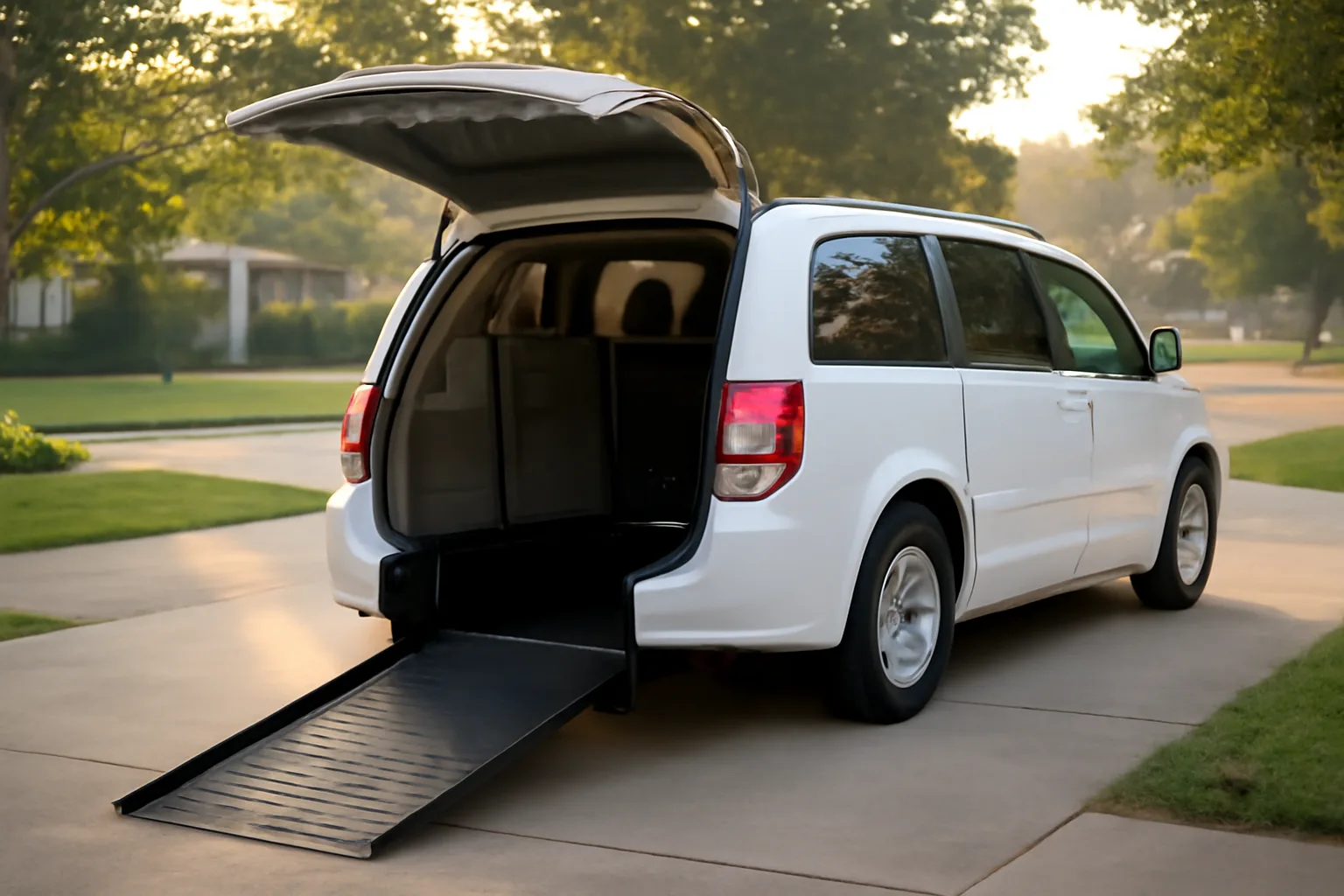
You can legally start with a single wheelchair van in most states, and plenty of owner-operators do exactly that. The floor requirements don't shrink much just because you have one vehicle, though. You still need the same insurance categories, the same driver file, and the same two-track enrollment (state plus broker). What does shrink is your ability to take every trip type. A one-van operation usually can't cover overlapping pickup windows, so you'll want to be upfront with the broker about your capacity limits during credentialing rather than overcommitting and getting flagged for missed trips. Some states have a minimum fleet size or minimum driver count for certain contract tiers, particularly for stretcher or bariatric transport. If you're running one wheelchair van, ask your state Medicaid transportation unit directly whether there's a floor before you spend money on vehicle upfits. A used, retrofitted minivan with a compliant ramp typically costs less than a purpose-built van with a power lift, but both have to meet the same accessibility and tie-down standards your state inspector checks at credentialing. For a broader look at how the vehicle side works, see medical transportation.
Does Medicaid cover ambulance rides?
Yes, but ambulance coverage is a completely different Medicaid benefit category from NEMT, and it's worth knowing the difference before you build a business plan. Medicaid covers ambulance transportation when it's medically necessary, meaning the patient's condition requires the equipment or medical monitoring an ambulance provides, and NEMT is described by CMS as covering trips for enrollees who have no other way to get to a covered service [2]. That's for emergencies or situations where a lower level of transport would risk the patient's health. NEMT is not ambulance service. It's specifically for people who need a ride but don't need emergency medical equipment or an EMT on board. Wheelchair van operators, sedan operators, and non-emergency stretcher van operators fall under NEMT, not ambulance billing codes, and they enroll through a different provider category with the state. If you're picturing an ambulance business, you're looking at a different license path entirely, usually through your state's EMS office rather than the Medicaid transportation unit, plus EMT or paramedic staffing requirements that don't apply to standard NEMT wheelchair van work.
Does Medicare cover medical transportation?
Medicare's NEMT coverage is much narrower than Medicaid's, and this trips up a lot of new owner-operators who assume the programs work the same way. Original Medicare Part B covers ambulance transportation when medically necessary, but it generally does not cover routine non-emergency van or wheelchair transport to doctor visits [3]. Where Medicare NEMT coverage shows up is mostly through Medicare Advantage (Part C) plans, some of which offer NEMT as a supplemental benefit. Coverage varies a lot by plan and by year, so if you want Medicare Advantage business, you'd be contracting with individual Medicare Advantage plans or their transportation vendors, not enrolling through Medicaid. Bottom line for a new owner-operator: your steady, dependable revenue base is Medicaid NEMT through your state agency and its broker, not Medicare. Medicare Advantage NEMT contracts are worth pursuing later once you have Medicaid enrollment and a track record, not as a starting point.
What licenses and permits does a NEMT business need?
Requirements stack in layers, and almost no state uses just one. Here's the typical stack, though you should confirm the exact list with your state Medicaid agency because naming and structure differ state to state: - Business registration (LLC or corporation) with your Secretary of State
- EIN from the IRS
- State or local business license
- Vehicle registration and, in many states, a specific NEMT or livery vehicle permit or decal
- A Certificate of Insurance meeting state-set minimums for commercial auto and general liability
- State Medicaid provider enrollment, usually through an online portal
- Broker credentialing paperwork on top of state enrollment, since brokers run their own onboarding independent of the state's provider file Some states also require a separate Certificate of Need or a transportation network permit through the state Department of Transportation, particularly for wheelchair and stretcher vans. This is one of the most state-specific parts of the whole process, so treat any generic checklist, including this one, as a starting point and verify the specifics for your state before you spend money.
What insurance does a wheelchair van NEMT business need?
Commercial auto insurance is the non-negotiable one. A personal auto policy or a rideshare endorsement will not cover you for NEMT work, and brokers check for this specifically during credentialing. You need a commercial policy written for livery, paratransit, or NEMT use, with liability limits that meet or exceed your state's minimum and typically also whatever the broker requires (broker minimums are often higher than the state's own bar; confirm current limits with your broker). General liability insurance covers incidents that happen outside the vehicle itself, like a fall during a wheelchair transfer. Many brokers require this as a separate policy from your auto coverage, not bundled in. Workers' compensation is required in most states once you have employees, and some brokers ask for proof of coverage even for owner-operators with just one or two drivers. Bonding requirements show up in some state contracts too, particularly for stretcher-level service. Get quotes early. NEMT-specific commercial auto coverage is a specialty line, not something every insurer writes, and pricing and availability shift depending on your state and your driving history. If you want the fuller picture on how insurance ties into vehicle specs, see nemt transportation.
How do you enroll as a state Medicaid NEMT provider?
Every state runs its Medicaid NEMT enrollment a little differently, but the shape is consistent. You apply through the state Medicaid agency's provider enrollment portal or paper application, submit your business documents, insurance certificates, vehicle inspection results, and driver background check clearances, and wait for the state to issue a Medicaid provider number. CMS requires states to screen providers according to a risk level (limited, moderate, or high) under 42 CFR 455.450, and NEMT providers are generally classified in the moderate category, which typically means a site visit in addition to the paperwork [4]. That regulation states that the moderate category applies to providers CMS has identified as "moderate" risk, which in practice triggers unannounced or scheduled site visits beyond document review. That site visit is where an inspector actually looks at your van's lift, tie-downs, and interior condition, so don't schedule it before your vehicle is fully upfit and clean. Processing time varies enormously by state and by how backed up the enrollment unit is that month. Nobody publishes a reliable national average, and any number you see quoted online for "typical NEMT enrollment time" is not backed by CMS data. Call your state Medicaid transportation unit directly and ask what their current turnaround looks like before you plan your launch date around it. Once you have your state Medicaid provider number, you're not done. That number gets you into the state's system as an approved NEMT provider type. It does not automatically enroll you with the broker who dispatches most of the actual trips in your region.
How does broker credentialing work once you're Medicaid enrolled?
This is the step that catches new owner-operators off guard the most. In states where a broker like Modivcare, MTM, Access2Care, or SafeRide manages NEMT under contract to Medicaid, you have to apply directly to that broker separately from your state enrollment, and their credentialing standards are their own, not simply a copy of the state's. Broker applications typically ask for your Medicaid provider number as a prerequisite, then layer on their own insurance minimums, vehicle inspection form, driver qualification file review, and sometimes a capacity questionnaire asking how many vehicles and drivers you have and what hours you can cover. Some brokers also require completion of their own driver orientation or portal training before you go live in the dispatch system. Because broker contracts get rebid on a schedule set by each state (often every few years), which broker covers your county can change. Always confirm current broker assignments and application links with your state Medicaid transportation unit rather than relying on a broker name you saw somewhere online, since it may be out of date for your specific region. For details on how broker-side rules differ from state rules, nemt walks through that split in more depth, and non emergency medical transportation covers the service category itself.
What does the whole state-plus-broker process typically cost and take?
There's no honest single number here, because state Medicaid enrollment fees, broker application fees, insurance premiums, and vehicle costs vary too much by state and by your existing assets. What's fair to say: expect two parallel applications (state Medicaid, then broker), each with its own document checklist, and expect the total timeline to run from a few weeks to a few months depending on how fast your state's enrollment unit and your assigned broker move. Budget for these buckets separately: legal entity setup and licensing, vehicle purchase or lease plus any accessibility upfit, commercial insurance premiums, driver background checks and drug screening, and the time cost of assembling two separate application packets correctly the first time. Rejected applications for missing documents are the single biggest cause of delay that owner-operators report to state agencies, more than any actual denial on the merits. If you want a structured way to organize both the state and broker paperwork instead of building your own checklist from scratch, that's exactly the gap the $199 State + Broker NEMT Launch Kit is built to close: a one-time reference package mapping out state enrollment and broker credentialing steps side by side. It's a paperwork organizer, not a guarantee of approval from any state or broker. Check it out at /launch-kit-builder once you know which state and broker you're targeting.
What should you double check before you submit anything?
Run this list before you hit submit on either application: - Vehicle meets your state's specific wheelchair lift, ramp angle, and tie-down standards, more than general ADA guidance
- Commercial auto policy explicitly lists NEMT or livery use, not personal or rideshare use
- General liability policy is active and separate from auto, if your broker requires it
- Every driver has a current MVR pull, background check, and drug screen on file, dated within whatever window your state or broker sets
- Your Medicaid provider number is issued and active before you submit the broker application, if your state requires that order
- You've confirmed which broker currently holds the NEMT contract in your specific county, more than your state
- Your business entity, EIN, and insurance certificates all list the same legal business name with no mismatches That last one sounds trivial and causes more rejected applications than anything else. A mismatched business name between your LLC filing, your insurance certificate, and your Medicaid application is an easy, avoidable delay. For a broader look at how these services get categorized and billed, non emergency medical transportation services and emergency medical transport are useful comparison reading if you're trying to understand where NEMT ends and ambulance billing begins.
Frequently asked questions
How to start a medical transportation business?
Register a business entity, get commercial auto and general liability insurance, buy a compliant vehicle, set up driver background check files, then complete two separate applications: state Medicaid provider enrollment and broker credentialing (Modivcare, MTM, or whoever holds your state's contract). Confirm exact requirements with your state Medicaid transportation unit since the order and paperwork vary by state.
Does Medicaid cover ambulance rides?
Yes, Medicaid covers medically necessary ambulance transportation as a distinct benefit category from NEMT. Ambulance service applies when a patient's condition requires emergency equipment or monitoring during transport. Non-emergency wheelchair van and sedan trips fall under the separate NEMT benefit, with different enrollment and billing rules.
What is NEMT?
NEMT stands for non-emergency medical transportation: rides to and from covered medical services for people who don't need ambulance-level care but can't drive themselves or use standard public transit. Federal rule 42 CFR 431.53 requires state Medicaid agencies to ensure this transportation exists for enrollees who need it.
Does Medicare cover medical transportation?
Original Medicare Part B covers medically necessary ambulance transportation but generally not routine non-emergency van rides. Some Medicare Advantage (Part C) plans offer NEMT as a supplemental benefit, with coverage varying by plan and year. Medicaid, not Medicare, is the primary payer most NEMT owner-operators build their business around.
How to start a NEMT business with just one van?
You can start with one wheelchair van in most states, but you still need the full insurance package, driver file, and both state Medicaid enrollment and broker credentialing. Be upfront with your broker about single-vehicle capacity limits, and check whether your state sets a minimum fleet size for certain contract tiers before you buy.
How do you start a medical transportation business as an owner-operator?
Start with entity registration and insurance, buy a vehicle that meets your state's accessibility specs, build compliant driver files, then apply to your state Medicaid agency for provider enrollment before applying to the broker that manages dispatch in your area. Both approvals are required before you can accept Medicaid-funded trips.
What is non-emergency medical transportation exactly?
It's transportation to and from Medicaid-covered medical appointments for people who don't need emergency care but do need help getting there, commonly wheelchair users, dialysis patients, and people without reliable transportation. It's billed and regulated separately from ambulance service and typically dispatched through a state-contracted broker.
How to start a non-emergency medical transportation business from scratch with no industry experience?
Treat it as two parallel licensing tracks: general business setup (LLC, insurance, vehicle, driver files) and healthcare enrollment (state Medicaid provider number, then broker credentialing). Call your state Medicaid transportation unit directly early on; their published requirements are more reliable than generic online checklists, including this one.
Do I need a Medicaid provider number before I apply to a broker?
In most states, yes, brokers require an active state Medicaid provider number as a prerequisite for their credentialing application. Some states integrate the two processes more tightly than others, so confirm the required order directly with your state Medicaid agency and your target broker before submitting either application.
What insurance minimums do NEMT brokers require?
Minimums vary by broker and state, and brokers often set limits higher than the state Medicaid minimum. You'll typically need commercial auto coverage specifically written for livery or NEMT use, plus general liability, and sometimes workers' compensation proof even for a one- or two-driver operation. Confirm current figures with your specific broker.
How long does NEMT broker credentialing take?
There's no reliable published national average; timelines depend on the broker, your state, and how complete your application is on first submission. Missing or mismatched documents (business name inconsistencies are common) cause more delay than actual review time. Ask your assigned broker directly for their current processing estimate.
Can I do NEMT with a personal vehicle and rideshare insurance?
No. NEMT requires commercial auto insurance written for livery or medical transportation use. A personal auto policy or a standard rideshare endorsement will not satisfy state Medicaid or broker insurance requirements, and using one anyway risks denied claims and credentialing rejection.
Is ambulance transport the same license as NEMT wheelchair van service?
No. Ambulance service typically requires licensing through your state's EMS office and EMT or paramedic staffing. NEMT wheelchair van service enrolls through the state Medicaid transportation unit under a separate provider category and does not require emergency medical staffing, though driver training standards still apply.
Sources
- Electronic Code of Federal Regulations, 42 CFR 431.53: States must ensure necessary transportation for Medicaid beneficiaries to and from providers
- Medicaid.gov, Non-Emergency Medical Transportation: NEMT covers trips for enrollees who have no other means of transportation to covered Medicaid services, distinct from ambulance benefits
- Medicare.gov, Ambulance Services coverage: Medicare Part B covers medically necessary ambulance transportation but not routine non-emergency transport
- Electronic Code of Federal Regulations, 42 CFR 455.450: States must screen Medicaid providers according to risk level, with moderate-risk categories subject to site visits
- Social Security Act Section 1902(a)(70), NEMT broker provision: States may use a broker under contract to arrange NEMT for Medicaid beneficiaries
- CMS Medicaid NEMT State Health Official Letter: CMS guidance addresses how states may structure non-emergency medical transportation, including through brokerage arrangements