Last updated 2026-07-25
TL;DR
Texas Medicaid NEMT (managed through MTP/MTM in most regions) doesn't have a special "non-resident driver" category. If you're operating vehicles and picking up Medicaid members inside Texas, you need a valid driver's license (Texas or your home state, depending on residency rules), background checks, and vehicle compliance through TxDMV. Confirm specifics with the Texas Health and Human Services Commission and your regional broker before you buy a van.
What is NEMT and why does Texas run it through brokers?
Non-emergency medical transportation (NEMT) is the Medicaid benefit that gets members to and from covered medical appointments when they have no other way to get there. It covers things like dialysis, chemotherapy, physical therapy, and routine primary care visits. It does not cover emergencies; that's a separate benefit (more on ambulance coverage below). Federal Medicaid rules require states to make sure eligible people can get to and from providers. The regulation is specific: "The agency must ensure necessary transportation for recipients to and from providers" under 42 CFR 431.53 [1]. States get to decide how they meet that requirement, and most, including Texas, contract with regional brokers instead of running the program directly. In Texas, the benefit is called the Medical Transportation Program (MTP). The Texas Health and Human Services Commission (HHSC) oversees MTP and currently uses a managed transportation organization (MTM, Inc.) to broker most trips outside of certain managed care carve-outs [2]. If you want the full rundown on how brokered NEMT works across states, see medical transportation and nemt for background before you dig into Texas specifics. Worth saying up front: none of this is legal advice. Broker credentialing packets change, HHSC updates provider manuals, and regional requirements shift. Treat every number and rule below as a starting point to confirm, not a guarantee.
What is non-emergency medical transportation, exactly?
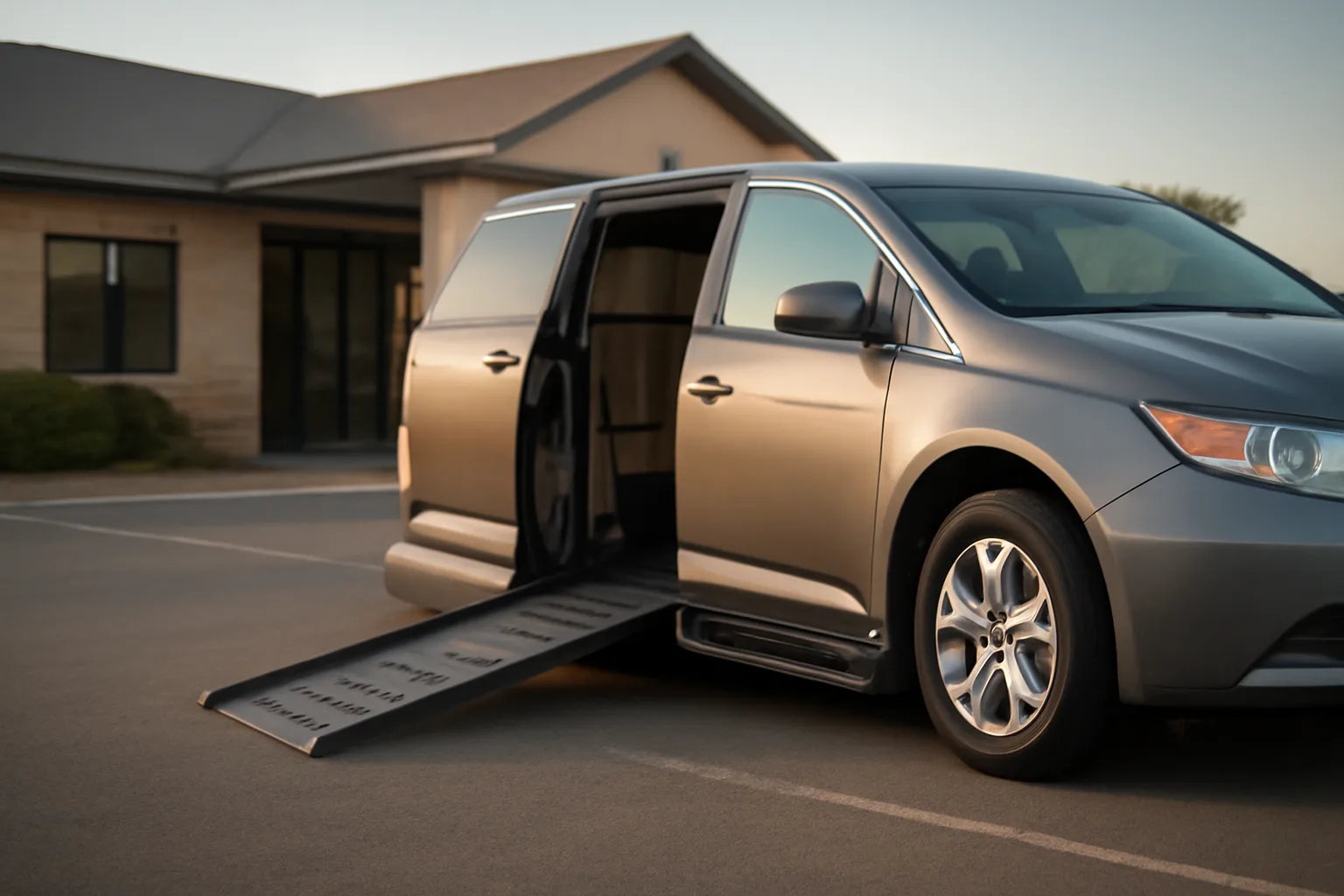
Non-emergency medical transportation means scheduled rides to Medicaid-covered services for people who don't need an ambulance but also can't get there on their own. It ranges from a neighbor being reimbursed mileage to drive a family member, up to wheelchair-accessible van service for someone who uses a power chair full time. Texas MTP breaks this into a few service types: individual transportation participants (mileage reimbursement for a friend or relative who drives), demand-response (the wheelchair van and sedan trips brokers dispatch), and public transit passes in areas where that's practical [2]. Owner-operators buying a wheelchair van are almost always going after the demand-response contract, meaning you're one of the vetted drivers/vehicles MTM dispatches trips to. This is different from medical transport in an ambulance, which is a 911 or inter-facility emergency service billed separately and regulated by EMS rules, not the NEMT broker network.
Does Medicaid cover ambulance rides?
Yes, but as a distinct benefit from NEMT. Medicaid covers ambulance transportation when it's medically necessary and other transportation would endanger the person's health, per federal guidance under 42 CFR 440.170 [3]. States set their own coverage and payment rules for ambulance services, and in Texas that runs through the Texas Medicaid & Healthcare Partnership (TMHP), not MTM or the NEMT broker network. So if you're picturing your wheelchair van business somehow overlapping with ambulance runs, it doesn't. Ambulance providers need separate state EMS licensure (through the Texas Department of State Health Services) and a different Medicaid enrollment track entirely. NEMT wheelchair vans are non-ambulatory but non-emergency: the passenger needs the wheelchair lift, not a paramedic. Most new owner-operators start with NEMT because the barrier to entry is lower and the vehicle (a converted minivan or full-size van) costs far less than an ambulance chassis. If you're weighing whether to pursue ambulance certification instead of or alongside NEMT, that's a much bigger regulatory and cost lift, and it's a different business.
Does Medicare cover medical transportation?
Medicare's NEMT coverage is much thinner than Medicaid's. Original Medicare (Part A/B) generally does not cover routine non-emergency transportation to medical appointments. It does cover emergency ambulance transportation when medically necessary, and in limited cases non-emergency ambulance transportation with a physician's written order, per CMS guidance on ambulance services [4]. Some Medicare Advantage plans have started adding non-emergency transportation as a supplemental benefit, but that's plan-specific, not a standard Medicare entitlement. CMS has described this expansion in its own guidance on Medicare Advantage supplemental benefits for chronically ill enrollees [5]. If a prospective client tells you "Medicare will pay for my rides," don't assume it. Ask which specific MA plan and confirm the benefit and any authorization requirements directly with that plan. This matters for owner-operators because it shapes who your paying customer actually is. Most wheelchair-van NEMT revenue in Texas comes from Medicaid MTP trips brokered through MTM, not Medicare fee-for-service.
Do non-resident drivers need a Texas driver's license for Texas Medicaid NEMT?
This is the core question, and the honest answer is: it depends on where you actually live and operate. There's no single "NEMT non-resident driver license" carve-out in Texas Medicaid rules. Texas Transportation Code Section 521.029 addresses licensing for new residents, and Texas requires a person who becomes a resident and intends to drive in the state to get a Texas driver's license under the timelines set out in that chapter [6]. If you move to Texas to run your NEMT business, you're expected to get a Texas license. If you remain a legal resident of another state (say you live near the Texas border and drive routes that cross into Texas, or you're weighing whether to base an LLC in Texas while living elsewhere), you may be able to keep your home-state license. But you'd need to confirm that specific arrangement with the Texas Department of Public Safety (DPS) and with your broker's credentialing team. Brokers like MTM typically want the driver's license to match the state where the vehicle is registered and where trips are dispatched, because it simplifies background checks and insurance verification. Practically, almost every wheelchair-van owner-operator running Texas Medicaid trips ends up needing: - A valid, unrestricted Class C Texas driver's license (or CDL if the vehicle's weight or seating capacity requires it) if you're a Texas resident
- A clean driving record, since brokers pull motor vehicle records (MVR) as part of credentialing
- Compliance with any medical certification the broker requires for drivers transporting wheelchair passengers If you're not sure whether your situation counts as Texas residency for licensing purposes, Texas Transportation Code Chapter 521 is the document to check line by line [6], not a broker FAQ page.
Does a wheelchair van driver need a commercial driver's license (CDL) in Texas?
Usually no, but it depends on the vehicle. Texas follows the federal CDL threshold: a CDL is required to operate a vehicle with a gross vehicle weight rating (GVWR) of 26,001 pounds or more, or a vehicle designed to transport 16 or more passengers including the driver. This standard comes from federal commercial motor vehicle definitions at 49 CFR 383.5, which Texas Transportation Code Chapter 522 adopts for state CDL licensing [7]. Most wheelchair vans (converted Ford Transits, Dodge Grand Caravans, Chrysler Pacificas) fall well under both thresholds. A single-wheelchair conversion van typically seats fewer than 15 passengers and has a GVWR far below 26,000 lbs, so a standard Class C license covers it. Where this changes: if you scale up to a larger cutaway van or small bus configuration seating 16+ people, or a heavier chassis, you cross into CDL territory. You'd need to test through DPS for the appropriate CDL class and possibly a passenger (P) endorsement [7]. Most owner-operators buying their first van never hit this threshold, but it's worth checking your specific vehicle's GVWR sticker before you assume you're fine.
What other driver requirements does Texas Medicaid NEMT credentialing typically include?
Beyond the license itself, brokers and HHSC layer on additional checks. None of these are unique to non-residents, but they trip up new owner-operators regardless of where they're from. Expect some combination of: - Criminal background check, often including a check against state and federal sex offender and abuse registries
- Motor vehicle record (MVR) pull, usually requiring a clean record over a defined lookback period (brokers vary, commonly 3 years)
- Drug testing, sometimes including a DOT-style panel even though NEMT drivers usually aren't DOT-regulated
- Defensive driving or passenger assistance training specific to wheelchair securement
- CPR/First Aid certification in some regions or for some broker contracts
- Vehicle inspection sign-off tied to Texas Department of Motor Vehicles (TxDMV) registration and safety inspection rules HHSC's provider manual and the specific broker contract (MTM in most Texas regions) spell out which of these apply in your area, and requirements can differ by MTP service region. Confirm the current list directly with HHSC's Medical Transportation Program page and with MTM's Texas credentialing team before you assume last year's checklist still applies [2].
How to start a medical transportation business in Texas
Starting a Texas NEMT business is really four parallel tracks: business formation, vehicle acquisition, state Medicaid enrollment, and broker credentialing. Skipping ahead on any one of them is how new operators end up with a van sitting idle for months. 1. Form your business entity (LLC is common) and get an EIN from the IRS. 2. Get general liability and commercial auto insurance quotes early, since insurers price wheelchair-accessible vehicles differently than standard sedans, and you'll need proof of insurance for both TxDMV registration and broker credentialing. 3. Buy or convert your wheelchair van, making sure it meets ADA-style securement standards the broker will inspect. 4. Enroll as a Texas Medicaid provider through TMHP, which is the enrollment portal HHSC uses for Medicaid providers generally . 5. Apply for broker network credentialing (MTM in most Texas MTP regions), which is a separate application layered on top of Medicaid enrollment, not a substitute for it. 6. Pass driver and vehicle inspections before you get scheduled trips. The order matters. Brokers generally won't credential a vehicle or driver until the business itself is Medicaid-enrolled, and Medicaid enrollment can take weeks, so start that paperwork before you finalize the van purchase if you can.
How do you start a NEMT business with just one van?
One van is a completely normal way to start, and plenty of Texas owner-operators run exactly that for the first year or two. The requirements don't scale down much just because you're small, but the workload obviously does. With one van, you still need the same Medicaid enrollment, broker credentialing, insurance, and driver qualification steps as a larger fleet. What changes is capacity planning: a single-vehicle operation means you (or one employee) are the only driver, so if you're sick or the van is in the shop, you have zero backup for scheduled trips. Some brokers factor this into how many trips they'll route to a one-vehicle provider, since missed trips affect their own performance metrics with the state. A realistic one-van plan: get the vehicle inspected and credentialed, get yourself licensed and background-checked as the primary driver, and be upfront with your broker contact about your capacity limits so they don't overbook you. Growing to a second van later is usually just repeating the vehicle and driver credentialing steps, not restarting the whole business enrollment.
How to start a non-emergency medical transportation business, step by step
| Step | What it involves | Where to confirm | |
|---|---|---|---|
| Business setup | LLC/entity formation, EIN, business bank account | Texas Secretary of State, IRS | |
| Insurance | Commercial auto + general liability, sized for wheelchair vans | Your insurer; broker may set minimums | |
| Vehicle | Purchase/convert van, ADA-style wheelchair securement, TxDMV registration and inspection | TxDMV | |
| Driver credentials | Valid TX driver's license (or applicable non-resident license), MVR check, background check | Texas DPS, broker | |
| Medicaid enrollment | Provider enrollment through TMHP | TMHP / HHSC | |
| Broker credentialing | Separate application to join MTM's (or other regional broker's) network | Broker directly | |
| Ongoing compliance | Reinspections, insurance renewal, driver recheck cycles | Broker contract terms | This table is a starting checklist, not a legal sequence mandated by statute. Regions and broker contracts vary enough that your actual order of operations should come from a direct conversation with HHSC's MTP unit and your regional broker. If you want a broader multi-state comparison of how this process differs outside Texas, nemt transportation and non emergency medical transportation services cover other states' enrollment quirks side by side. |
What does it cost to get set up, and where do the fees actually go?
Costs break into a few buckets, and it's worth knowing which ones are state fees versus business costs you control. TxDMV vehicle registration fees are set by state schedule and are relatively small compared to everything else. Base annual registration for most passenger vehicles runs in the range of roughly $50 to $75 depending on county fees layered on top, though you should check the current numbers directly since these are adjusted periodically . Texas driver's license fees are set by DPS, and CDL testing/endorsement fees are separate line items if you cross that threshold [7]. The much bigger cost driver is the van itself: a new wheelchair-accessible conversion van commonly runs well into five figures, and a used one still requires the conversion and lift to be inspection-ready. Insurance for a commercial wheelchair van is also meaningfully higher than a personal vehicle policy, and you should get at least two quotes before committing. Medicaid provider enrollment through TMHP doesn't carry a state application fee in the way some other provider types do, but confirm current fee status directly with HHSC, since Texas Medicaid periodically updates provider enrollment fee requirements under federal screening rules tied to 42 CFR 455.460 . Broker credentialing (MTM) is typically free to apply but can require paid third-party services like background checks or drug screens that you pay out of pocket. If you'd rather not piece together the state and broker paperwork from scratch, this is exactly the gap the $199 State + Broker NEMT Launch Kit is built to close: a single packet mapping Texas MTP enrollment and MTM credentialing steps side by side. Check the launch-kit-builder if you want that shortcut instead of building your own tracker.
What's the difference between state Medicaid enrollment and broker credentialing in Texas?
These are two separate approvals, and mixing them up is the single most common mistake new owner-operators make. Medicaid enrollment (through TMHP) is your legal authorization to bill Texas Medicaid at all. Broker credentialing (through MTM in most MTP regions) is your admission into the network that actually dispatches trips to you. You generally need both. Being Medicaid-enrolled without broker credentialing means you're an approved provider type with no trips coming your way. Being broker-credentialed without Medicaid enrollment isn't really possible, since brokers verify Medicaid enrollment status as part of their own onboarding. HHSC's Medical Transportation Program page is the authoritative source for how Texas structures this relationship regionally, and it's worth reading directly rather than relying on a broker's marketing page, since the state, not the broker, sets the underlying coverage rules [2]. For a broader look at how broker credentialing works across different companies (more than MTM), see nemt and non-emergency-medical-transportation.
Frequently asked questions
Can I drive Texas Medicaid NEMT trips with an out-of-state driver's license?
Only if you remain a legal resident of that other state. Texas Transportation Code Chapter 521 governs new-resident licensing requirements. If you live in Texas full-time and run your business there, plan on getting a Texas Class C license rather than assuming your home-state license will satisfy broker credentialing.
What is NEMT?
NEMT stands for non-emergency medical transportation, the Medicaid benefit covering scheduled rides to and from covered medical appointments for people who don't need an ambulance but lack other transportation. It's required under 42 CFR 431.53, and in Texas it's run as the Medical Transportation Program (MTP), currently brokered largely through MTM, Inc.
Does Medicaid cover ambulance rides?
Yes. Federal rule 42 CFR 440.170 allows Medicaid coverage of ambulance transportation when medically necessary and safer than other means. This is a separate benefit from NEMT, billed through different channels (TMHP for Texas ambulance claims), and requires EMS licensure, not NEMT broker credentialing.
Does Medicare cover medical transportation?
Original Medicare doesn't cover routine non-emergency rides to appointments. It covers emergency ambulance transport, and limited non-emergency ambulance transport with a physician's order. Some Medicare Advantage plans add non-emergency transportation as a supplemental benefit, but that varies by plan and isn't a standard Medicare entitlement.
How do I start a medical transportation business in Texas?
Form a business entity, secure commercial insurance, buy or convert a wheelchair-accessible van, enroll as a Texas Medicaid provider through TMHP, and apply for broker network credentialing (commonly MTM) in your MTP region. Confirm current requirements directly with HHSC and your broker, since regional rules and forms change.
Can I start a NEMT business with just one van?
Yes, and it's a common way to start. You'll go through the same Medicaid enrollment and broker credentialing steps as a larger fleet, but with no backup vehicle if yours needs repair. Be upfront with your broker about single-vehicle capacity so they don't overbook trips you can't cover.
Do I need a CDL to drive a Medicaid wheelchair van in Texas?
Usually not. A CDL is required only if the vehicle's GVWR is 26,001 lbs or more, or it's designed to carry 16 or more passengers, per federal CDL definitions at 49 CFR 383.5 adopted through Texas Transportation Code Chapter 522. Most single-wheelchair conversion vans fall under both thresholds and only need a standard Class C license.
What background checks does Texas NEMT credentialing require?
Expect a criminal background check, a motor vehicle record (MVR) pull, and often drug testing, plus registry checks against state and federal abuse/exclusion lists. Exact requirements depend on your broker contract (commonly MTM in Texas) and can vary by MTP service region, so confirm the current list before applying.
What's the difference between Texas Medicaid enrollment and broker credentialing?
Medicaid enrollment through TMHP is your legal authorization to bill Texas Medicaid. Broker credentialing (typically through MTM) is separate admission into the network that dispatches trips. You need both: enrollment without credentialing gets you no trips, and credentialing isn't possible without active Medicaid enrollment.
What is non-emergency medical transportation, in plain terms?
It's scheduled transportation to Medicaid-covered medical services for people who can't get there on their own but don't need an ambulance. It ranges from mileage reimbursement for a relative's ride, up to wheelchair-accessible van service dispatched by a state-contracted broker like MTM in Texas.
Does non-resident status affect Texas Medicaid NEMT broker credentialing?
There's no special "non-resident driver" category in Texas Medicaid NEMT rules. What matters is whether you're legally a Texas resident (triggering the new-resident licensing rules under Chapter 521) and whether your license, vehicle registration, and insurance line up with where the broker dispatches trips. Confirm your specific situation with DPS and the broker directly.
How much does it cost to get a wheelchair van NEMT business credentialed in Texas?
State fees (TxDMV registration, DPS license fees) are relatively small line items you can check on each agency's current fee schedule. The bigger costs are the van itself, commercial insurance, and any paid background check or drug screening services required during broker onboarding.
Where do I find the official Texas Medicaid NEMT rules instead of a broker's summary?
Start with HHSC's Medical Transportation Program page for state-level policy, and TMHP for provider enrollment specifics. Broker pages (MTM's Texas site) cover their own credentialing process but don't set the underlying Medicaid coverage rules, so treat HHSC as the primary source.
Sources
- eCFR, 42 CFR 431.53: States must ensure necessary transportation for Medicaid recipients to and from providers
- Texas Health and Human Services, Medical Transportation Program: Texas runs NEMT as the Medical Transportation Program (MTP), currently brokered largely through MTM
- eCFR, 42 CFR 440.170: Medicaid covers ambulance services when medically necessary and other transport would endanger health
- Medicare.gov, Ambulance Services coverage: Medicare covers emergency ambulance transport and limited non-emergency ambulance transport with a physician's order
- Texas Transportation Code, Chapter 521 (Driver's Licenses): Texas Transportation Code Chapter 521 governs driver's license requirements including for new residents
- Texas Transportation Code, Chapter 522 (Commercial Driver's Licenses): CDL is required for vehicles at or above 26,001 lbs GVWR or designed to carry 16+ passengers
- eCFR, 42 CFR 455.460: Federal rule governs Medicaid provider application fees and screening requirements