Last updated 2026-07-25
TL;DR
Oklahoma runs Medicaid NEMT through a broker system (SoonerRide, managed by Modivcare in most of the state) rather than direct billing. To operate in Oklahoma City you need a business entity, commercial auto/livery insurance, a compliant wheelchair van, driver background checks, and separate enrollment with SoonerCare (Oklahoma Medicaid) plus broker credentialing. Medicare almost never covers routine NEMT; Medicaid does, but only through the broker.
What is non-emergency medical transportation (NEMT)?
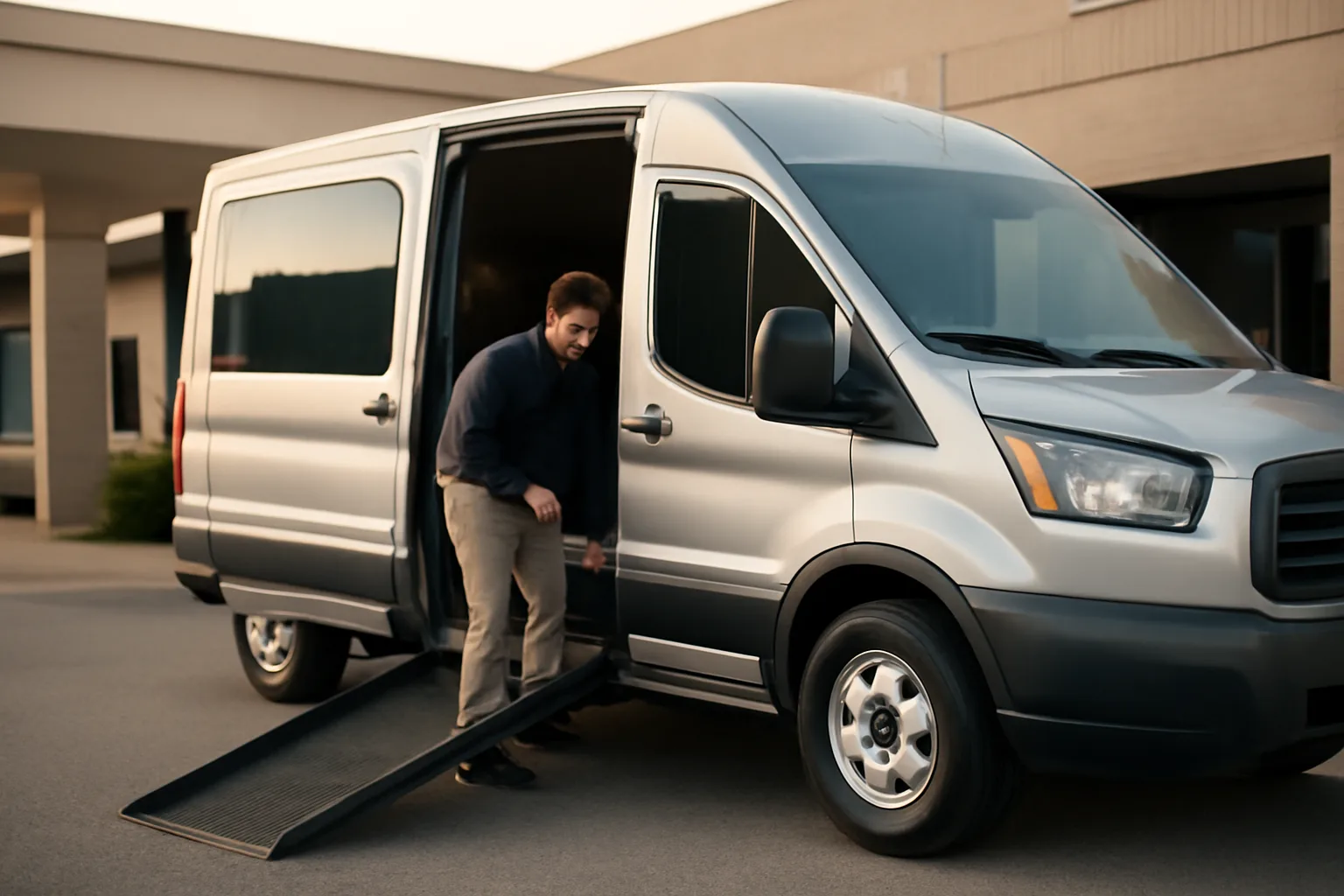
Non-emergency medical transportation is scheduled transport to and from covered medical care for people who don't need an ambulance but can't drive themselves or use a bus. Think dialysis three times a week, chemotherapy, physical therapy, or a routine SoonerCare (Oklahoma's Medicaid program) checkup. The vehicle might be a sedan, but a large share of the demand, and most of the margin for a new operator, is in wheelchair-accessible vans. Federal Medicaid rules actually require this. States must "assure necessary transportation for the recipient to and from providers" under 42 CFR 431.53, and CMS guidance confirms NEMT is a required part of state Medicaid programs [1] . That's different from an ambulance, which handles emergencies or medically necessary stretcher transport with clinical monitoring. NEMT is the ride, not the treatment. In Oklahoma City specifically, most Medicaid members don't call a transportation company directly. They call the state's broker, and the broker dispatches to a contracted provider. That's the system you're trying to get inside, not around.
How does NEMT work in Oklahoma City? (SoonerRide and the broker model)
Oklahoma manages non-emergency Medicaid transportation through a program called SoonerRide, administered for the Oklahoma Health Care Authority (OHCA), which runs SoonerCare [1]. Like most states, Oklahoma doesn't let individual transportation companies bill Medicaid directly for routine rides. Instead, a contracted broker manages scheduling, dispatch, and provider networks, and you enroll as a transportation provider under that broker's network. Modivcare (formerly LogistiCare) has held NEMT broker contracts in Oklahoma; broker assignments do shift over time and by region, so before you build a business plan around a specific company, confirm the current SoonerRide broker and its Oklahoma City service area directly with the Oklahoma Health Care Authority. Brokers rebid contracts, and the company running SoonerRide today may not be the one running it in three years. The practical upshot: you need two separate approvals. First, provider enrollment with SoonerCare/OHCA as a Medicaid transportation provider. Second, credentialing with whichever broker holds the SoonerRide contract for the Oklahoma City metro. Passing one doesn't mean you've passed the other, and most operators get this backwards, they get excited about a broker's onboarding portal before they've confirmed their OHCA enrollment status.
Does Medicaid cover ambulance rides?
Yes, but ambulance and NEMT are governed by different rules and usually different payers within the same Medicaid umbrella. Medicaid covers ambulance transportation when it is medically necessary, meaning the beneficiary's condition requires the vehicle itself and the medical care furnished during transport, more than a ride [1]. That's a clinical determination, often tied to emergency response or a documented need for monitoring en route. Routine wheelchair-van trips to a dialysis appointment are not ambulance claims. They fall under the state's NEMT benefit, which OHCA administers through SoonerRide rather than through ambulance billing codes. If you're setting up a wheelchair-van company, you are almost never trying to bill as an ambulance provider, and doing so without EMS licensure would be a serious compliance problem, not a shortcut. Confirm with SoonerCare's provider manual which trip types fall under NEMT versus ambulance billing before you assume either category applies to your service.
Does Medicare cover medical transportation?
Original Medicare's NEMT coverage is narrow. Medicare Part B covers ambulance services when other transportation could endanger the person's health, and it covers limited non-emergency ambulance transport for certain repetitive scheduled trips (like dialysis) with prior authorization in some cases, but it does not generally cover a wheelchair van, taxi, or livery ride to a routine appointment [2]. Some Medicare Advantage plans have added supplemental transportation benefits, often a set number of one-way trips per year, but this varies enormously by plan and by insurer, and CMS does not standardize it the way Medicaid states standardize SoonerRide-type benefits [3]. If you want Medicare Advantage transportation contracts, you'll be negotiating directly with each plan sponsor, not through OHCA, and the rules, rates, and paperwork are separate from your SoonerCare/broker credentialing entirely. Bottom line for a new operator: budget your first year around Medicaid NEMT through the broker. Treat Medicare Advantage transportation contracts as a possible add-on once you're established, not your starting revenue plan.
How to start a non-emergency medical transportation business (the general sequence)
Every state does this a little differently, but the sequence for starting a NEMT business is fairly consistent across the country, and Oklahoma follows the common pattern. 1. Form a legal business entity (LLC is common) and get an EIN. 2. Get commercial auto insurance with livery or for-hire coverage; personal auto policies exclude paid passenger transport. 3. Buy or convert a wheelchair-accessible van that meets ADA and state vehicle inspection standards. 4. Register the vehicle for commercial/livery use with Oklahoma's Service Oklahoma (formerly the Tax Commission's Motor Vehicle Division). 5. Run driver background checks, MVR pulls, and drug screening consistent with what OHCA and your broker require. 6. Enroll as a Medicaid provider with OHCA/SoonerCare. 7. Complete credentialing with the SoonerRide broker serving Oklahoma City. 8. Get any required city business license or permit from the City of Oklahoma City. The two steps people underestimate are 6 and 7. Medicaid provider enrollment can take weeks; broker credentialing (background checks, vehicle inspections, insurance verification, sometimes a driver ride-along test) can take additional weeks on top of that. Plan for a lag between "I have a van" and "I have my first paid trip," and don't sign a van lease assuming next-month revenue.
How to start a medical transportation business with one van
You can absolutely start with a single wheelchair van in Oklahoma City. Most of the required steps don't scale with fleet size, meaning a one-van operator faces roughly the same paperwork burden per vehicle as a ten-van company, just without the overhead of hiring a dispatcher or an ops manager. With one van, you are the driver, the biller, and the compliance officer. That's fine for the first year, but be honest with yourself about capacity: if your van is in the shop, you have zero trips, zero revenue, and a broker who may reassign your standing runs to someone else. A lot of experienced single-van operators keep a backup driver arrangement or a relationship with another small operator for overflow, specifically so one mechanical problem doesn't wipe out a week. One van also limits which broker contract types make sense. Standing weekly dialysis runs are attractive because they're predictable, but a broker may want assurance you can cover multiple weekly slots reliably before assigning you a full panel of recurring riders. Some new one-van operators start with will-call or ad hoc trips through the broker's on-demand queue while building a reliability record, then request standing routes once they've shown up consistently for a few months. See our guide on nemt transportation for a broader look at fleet and route planning once you're past the single-van stage.
How to start a NEMT business step by step in Oklahoma
Here's the Oklahoma-specific version of the sequence, with the agencies you'll actually deal with. Business and vehicle setup. File your LLC with the Oklahoma Secretary of State, get your EIN from the IRS, and title/register your van as a commercial vehicle through Service Oklahoma. Confirm with Service Oklahoma whether your van needs a specific commercial classification or livery plate given its GVWR and passenger capacity. Insurance. Get commercial auto liability with limits that meet or exceed what OHCA and the broker require; confirm current minimums directly with the broker, since required limits for wheelchair-van NEMT (often higher than standard commercial auto because of the vulnerable-passenger population) can exceed baseline Oklahoma financial responsibility limits. Medicaid enrollment. Apply for Oklahoma Medicaid (SoonerCare) provider enrollment through OHCA as a transportation provider. OHCA's provider enrollment materials outline required documentation, which typically includes your business license, insurance certificates, vehicle registration, and driver credentialing files [1]. Broker credentialing. Separately apply to the current SoonerRide broker's transportation network. This usually involves a vehicle inspection, driver background checks (including exclusion list screening against the OIG List of Excluded Individuals/Entities), and a service agreement outlining trip rates and cancellation policies. City requirements. Check with the City of Oklahoma City on any local business license, and confirm whether your NEMT vehicles need any additional local inspection beyond the state's. Because broker contracts and specific dollar thresholds change, treat every dollar figure or document list above as a starting checklist, then confirm current requirements directly with OHCA and the broker before you spend money on a vehicle. Our medical transportation overview walks through how this same sequence plays out differently state to state, which is useful if you're deciding whether to also operate across the state line.
What does a wheelchair van need to meet Oklahoma NEMT standards?
Brokers and OHCA generally require wheelchair-accessible vehicles to have a working, code-compliant lift or ramp, secured wheelchair tie-down systems, and current state vehicle inspection. Beyond the hardware, most credentialing checklists also expect a working two-way communication device (radio or the driver's dispatch app phone), first-aid kit, and fire extinguisher on board. Age and mileage limits on vehicles are common broker requirements (some brokers cap vehicle age at 5 to 10 years, though this varies by contract and can change at rebid). Confirm the current SoonerRide broker's specific vehicle age, mileage, and inspection frequency requirements before you buy a used van, since a vehicle that would pass in one state's broker network might fail another's age cutoff. Our [vehicles-and-equipment] hub content and our non emergency medical transportation guide go deeper on ADA lift specifications and tie-down standards if you're still shopping for your first van.
How much does NEMT credentialing and enrollment cost in Oklahoma City?
There's no single published fee schedule that covers every cost, because Medicaid provider enrollment fees, broker application costs, insurance premiums, and vehicle inspection fees come from different sources and change over time. What's true almost everywhere: Medicaid provider enrollment application fees for institutional providers are set annually by CMS under 42 CFR 455.460, and the fee was $709 for calendar year 2024, though many individual and small transportation providers qualify for a hardship exception or fall under a different provider type that isn't subject to the full fee, so confirm your specific fee obligation with OHCA rather than assuming the institutional rate applies. Beyond that federal fee, budget separately for commercial insurance premiums (highly variable based on driving history, vehicle count, and coverage limits), state vehicle registration and inspection fees through Service Oklahoma, background check costs per driver, and any local business license fee from the City of Oklahoma City. None of these numbers are fixed nationally, so get current quotes rather than budgeting off a generic figure you found online. This is exactly the kind of scattered, agency-by-agency paperwork that makes new operators lose weeks. If you'd rather have the state-specific and broker-specific checklists assembled in one place instead of chasing them across five agency websites, that's the whole point of our $199 one-time Launch Kit builder, it's a paperwork and requirements tool, not a guarantee of approval from OHCA or any broker.
What paperwork do drivers need for Oklahoma City NEMT work?
Every driver on your roster typically needs a valid Oklahoma driver's license appropriate to the vehicle class, a clean or explainable motor vehicle record, a background check clear of disqualifying offenses, and a check against the federal OIG List of Excluded Individuals/Entities and the System for Award Management exclusion list, since Medicaid providers cannot employ excluded individuals in any capacity tied to federally funded services [4]. Most brokers also require CPR/first-aid certification, defensive driving or passenger-assistance training, and drug screening. Some require a TB test or other health screening given the vulnerable rider population. None of these are unique to Oklahoma, they're standard across most state NEMT broker networks, but the specific combination and renewal timeline is set by whichever broker holds the SoonerRide contract, so get the current list in writing from the broker rather than assuming last year's requirements still apply. Our [drivers-and-training] resources cover the credentialing paperwork drivers need in more detail if you're hiring beyond yourself.
NEMT provider enrollment vs. broker credentialing: what's the difference?
| Medicaid provider enrollment | Oklahoma Health Care Authority (OHCA) | You're a legitimate, background-checked Medicaid provider entity | Weeks, varies by application completeness | |
|---|---|---|---|---|
| Broker credentialing | SoonerRide broker (confirm current contractor with OHCA) | You meet the broker's vehicle, driver, and insurance standards for dispatch | Additional weeks, on top of enrollment | OHCA enrollment makes you eligible to bill Oklahoma Medicaid at all. Broker credentialing is what actually gets you trips, because the broker is the dispatcher standing between the Medicaid member and your van. You need both, in roughly that order, and neither one substitutes for the other. A common and costly mistake is buying a van and hiring drivers before confirming OHCA enrollment timelines, then sitting on an idle vehicle for a month waiting on paperwork that could have started earlier. |
This trips up nearly every new operator, so it's worth stating plainly. | Step | Who approves it | What it proves | Typical timeline |
Comparisons and neighboring options
How is NEMT different from ambulance and emergency medical transport?
NEMT and emergency medical transport sit on opposite ends of the acuity spectrum, and mixing them up in your business plan is a fast way to run into licensure problems. NEMT is scheduled, non-emergency transport, no clinical care is delivered en route beyond basic passenger assistance, and drivers don't need EMT or paramedic licensure in most states. Emergency medical transport, by contrast, is dispatched for acute medical need, staffed by licensed EMS personnel, and billed under an entirely different Medicaid and Medicare framework built around medical necessity documentation [1]. If you're starting a wheelchair-van company, you're building a NEMT business, not an ambulance company, and you should not represent your service as ambulance-capable or use ambulance-style branding, lights, or terminology. Confirm with your state EMS office if you're ever unsure which category a specific trip type falls under.
Frequently asked questions
What is non-emergency medical transportation?
Non-emergency medical transportation (NEMT) is scheduled transport to and from covered medical appointments for people who don't need an ambulance but can't get there on their own, whether due to a disability, a wheelchair, or lack of another ride option. Medicaid programs, including Oklahoma's SoonerCare, are federally required to ensure this transportation exists for eligible members [1].
Does Medicaid cover ambulance rides?
Yes, when the transport is medically necessary and requires the equipment or trained personnel an ambulance provides, more than a ride. Routine trips to appointments, even for wheelchair users, fall under the separate NEMT benefit rather than ambulance billing. Confirm which category applies to a specific trip with SoonerCare's provider manual, since misclassifying trips can cause billing denials.
Does Medicare cover medical transportation?
Original Medicare covers ambulance transport when medically necessary, plus limited scheduled non-emergency ambulance trips for conditions like dialysis under specific rules, but it generally does not cover wheelchair-van or livery rides to routine appointments [3]. Some Medicare Advantage plans offer supplemental transportation benefits, but coverage and trip limits vary by plan and aren't standardized like Medicaid NEMT.
How do I start a NEMT business in Oklahoma City?
Form a business entity, get commercial auto insurance, buy a compliant wheelchair van, register it for commercial use through Service Oklahoma, enroll as a Medicaid provider with OHCA, then separately complete credentialing with the current SoonerRide broker serving the Oklahoma City area. Both the OHCA enrollment and broker credentialing are required before you can bill Medicaid trips.
Can I start a medical transportation business with just one van?
Yes. Most licensing, insurance, and credentialing steps apply per vehicle rather than per fleet size, so a single-van operator faces the same paperwork as a larger company, just without extra overhead. Plan for a backup driver or vehicle arrangement, since one breakdown can otherwise wipe out your entire trip capacity for the week.
Who is the NEMT broker in Oklahoma City right now?
Oklahoma manages Medicaid NEMT through a program called SoonerRide under the Oklahoma Health Care Authority. Broker contracts are periodically rebid, so confirm the current broker for the Oklahoma City service area directly with OHCA before building your business plan around any specific company name.
How long does Oklahoma Medicaid provider enrollment take for a transportation company?
Timelines vary by application completeness and current OHCA processing volume; there's no fixed guaranteed window published for transportation providers specifically. Budget at least several weeks for enrollment alone, separate from and typically before broker credentialing, which adds its own review period on top.
Do NEMT drivers need a special license in Oklahoma?
Most NEMT drivers need a standard Oklahoma driver's license appropriate for the vehicle, not a commercial driver's license (CDL), unless the vehicle's weight class or passenger capacity triggers CDL requirements. Brokers typically layer on their own requirements: background checks, MVR review, drug screening, and passenger-assistance or CPR training. Confirm CDL thresholds with Service Oklahoma based on your specific van's GVWR.
What's the difference between Medicaid provider enrollment and broker credentialing?
Medicaid provider enrollment through OHCA makes your business eligible to bill Oklahoma Medicaid at all. Broker credentialing is a separate process with the company running SoonerRide dispatch, and it's what actually gets your van assigned trips. You need both, and passing one does not automatically mean you've passed the other.
Does Oklahoma Medicaid cover wheelchair van transportation?
Yes, wheelchair-accessible NEMT is a covered service under SoonerCare when the trip is to a Medicaid-covered service and the member meets the program's transportation eligibility criteria, arranged through the SoonerRide broker rather than billed directly by the transportation company.
How much does it cost to get NEMT credentialed in Oklahoma City?
Costs vary widely: Medicaid provider enrollment fees are federally set and adjusted yearly (institutional rate was $709 in 2024, though many small transportation providers may not owe the full institutional fee) [5], plus separate costs for commercial insurance, vehicle registration, driver background checks, and any city business license. Get current quotes from each agency rather than budgeting off a single number.
Can I run NEMT trips for Medicare Advantage members in Oklahoma City?
Possibly, but that's a separate arrangement from SoonerCare/SoonerRide. Medicare Advantage plans that offer supplemental transportation benefits contract directly with transportation providers or their own broker networks, with their own rates and credentialing, so you'd need to approach each plan sponsor individually rather than going through OHCA.
What happens if my driver is on the OIG exclusion list?
You cannot employ or contract with an individual on the OIG List of Excluded Individuals/Entities in any role connected to federally funded health care services, including NEMT driving, without risking civil monetary penalties for the provider entity [6]. Screen every driver against this list, and the SAM.gov exclusion list, before hiring and on an ongoing basis.
Sources
- CMS, Medicaid Non-Emergency Medical Transportation (NEMT): States are required to ensure necessary transportation for Medicaid beneficiaries to and from providers, and NEMT is a required part of state Medicaid programs; Oklahoma administers this through SoonerRide under OHCA
- Medicare.gov, Ambulance Services coverage: Medicare Part B covers ambulance services when other transportation could endanger health, including limited scheduled non-emergency ambulance transport, but does not generally cover routine wheelchair-van or livery rides
- Federal Register, Medicare Program; Contract Year 2024 Policy and Technical Changes to the Medicare Advantage Program (CMS-4201-F): Medicare Advantage plans may offer supplemental benefits such as transportation that vary by plan and are not standardized across Medicare
- 42 CFR 455.460, Application fee: The Medicaid institutional provider enrollment application fee is set annually by CMS and was $709 for 2024
- 42 CFR 431.53, Assurance of transportation: Federal Medicaid regulation requires states to assure necessary transportation for beneficiaries to and from Medicaid providers