Last updated 2026-07-24
TL;DR
Ohio Medicaid NEMT runs through managed care plans and their contracted brokers (Modivcare handles much of the state), not a single ODM enrollment portal. To operate, you need a business entity, commercial auto/livery insurance, a wheelchair-accessible van meeting ADA specs, driver background checks, and separate credentialing with each broker whose network you want to join. Confirm current requirements with your broker and the Ohio Department of Medicaid.
What is non-emergency medical transportation?
Non-emergency medical transportation (NEMT) is transportation to and from medical appointments for people who don't need an ambulance but can't drive themselves or use regular transit. Think dialysis three times a week, physical therapy, a follow-up with a specialist forty minutes away. The rider isn't in crisis. They just need a reliable, safe ride, sometimes in a wheelchair van, sometimes in a regular sedan. Federal Medicaid law treats NEMT as a required benefit, not a nice-to-have. The regulation at 42 CFR 431.53 requires states to "ensure necessary transportation for beneficiaries to and from providers" [1]. States have wide latitude in how they deliver that benefit, and Ohio, like most states now, does it through managed care organizations (MCOs) that in turn contract with transportation brokers. NEMT is different from ambulance transport in one basic way: ambulances handle emergencies or medically necessary transport that requires clinical monitoring en route. NEMT vehicles (sedans, vans, wheelchair vans, and in rural cases sometimes stretcher vans) move people who are stable but mobility-limited or without another way to get to care.
How does Medicaid NEMT work in Ohio specifically?
Ohio Medicaid is administered by the Ohio Department of Medicaid (ODM), but almost all Medicaid recipients are enrolled in one of the state's managed care plans. Each managed care plan is required to cover non-emergency transportation for its members, and most plans in Ohio contract that work out to a broker rather than running it in-house. Modivcare has historically held large NEMT broker contracts across multiple Ohio MCOs, though which broker covers which plan and which counties can change when contracts turn over. This is the single most important thing for a new operator to understand: there is no one "Ohio NEMT program" to enroll in. You enroll with ODM as a Medicaid provider, and separately you credential with each broker or plan whose trip network you want to drive for. Confirm with the Ohio Department of Medicaid transportation unit and with each broker directly which entity currently manages transportation for which plan, because these contracts get rebid and coverage areas shift. ODM's provider enrollment system is the starting point for anything official.
Does Medicaid cover ambulance rides?
Yes. Medicaid covers ambulance transportation when it's medically necessary, but it's a separate benefit category from NEMT and reimbursed differently. Medicaid.gov describes ambulance services as covered when other transportation would endanger the person's health, and states set their own medical necessity criteria and rates [2]. Ohio Medicaid pays ambulance providers (ground and air) under its own fee schedule administered through ODM, and ambulance companies enroll as a distinct provider type from NEMT operators. If you're buying a wheelchair van, you are not entering the ambulance business, and you generally don't need EMT certification or an ambulance license. Wheelchair van NEMT is a livery/passenger transport service with accessibility equipment, not an emergency medical service.
Does Medicare cover medical transportation?
Original Medicare covers ambulance transportation under Part B when medically necessary and generally does not cover routine non-emergency transportation like rides to a doctor's office. Medicare.gov states Part B covers ground ambulance transportation "when you need it because other transportation could endanger your health" and covers air transportation only in limited situations [3]. Some Medicare Advantage plans have started adding limited NEMT as a supplemental benefit, often a fixed number of one-way trips per year. If you want to build relationships with Medicare Advantage plans in Ohio, that's a separate contracting conversation from Medicaid broker credentialing, and the trip volume is typically much smaller than Medicaid NEMT work. Don't build a business plan around Medicare trips. Treat any Medicare Advantage transportation contract as a bonus, not the core of your revenue.
How do you start a non-emergency medical transportation business in Ohio?
Start with the business and legal structure before you buy anything. Form an LLC or corporation with the Ohio Secretary of State, get an EIN from the IRS, and register for Ohio commercial activity tax if your gross receipts will cross the threshold. Ohio does not require a special state "NEMT license" separate from general business registration in most cases, but check with your county and any city you'll operate in for local livery or passenger-vehicle-for-hire ordinances, since some Ohio cities regulate for-hire passenger vehicles at the municipal level. Next comes insurance. NEMT vehicles typically need commercial auto liability well above personal auto minimums; brokers commonly require $1,000,000 combined single limit coverage, though the exact figure varies by broker and by state Medicaid contract. Confirm required limits with your broker and with ODM before you buy a policy, because buying the wrong coverage level is an expensive mistake to fix later. Then the vehicle. A used minivan converted with a ramp or lift runs roughly $25,000 to $45,000 depending on age, mileage, and conversion quality, while a new wheelchair-accessible van from a mobility dealer often runs $55,000 to $80,000+. Whatever you buy has to meet ADA accessibility standards and pass the vehicle inspection each broker requires (tie-downs, ramp function, interior lighting, first aid kit, fire extinguisher, and so on). Finally, drivers. Ohio requires background checks that typically include criminal record checks through the Ohio Bureau of Criminal Investigation (BCI), plus a valid Ohio driver's license, and, depending on vehicle size and broker rules, a CDL or passenger endorsement isn't required for most wheelchair vans under a certain seating capacity. Brokers will also want proof of a clean driving record and defensive driving or passenger assistance training, often delivered through the broker's own training program or a third-party course like CPR/First Aid certification.
How to start a medical transportation business with one van
One van is how almost everyone starts, and it's a reasonable way to test the work before scaling. The sequencing matters more than the money here. First, get your business entity, EIN, and insurance in place, because brokers won't even look at your application without proof of active commercial insurance naming the required coverage types. Second, buy or convert the van and get it inspected, since some brokers require the vehicle to pass inspection before they'll finish credentialing you. Third, apply for Ohio Medicaid provider enrollment through ODM's provider portal, which is a prerequisite for billing Medicaid-funded trips even when the trip itself is dispatched by a broker. Fourth, apply separately to each broker's network (see the credentialing section below), because ODM enrollment alone doesn't put trips on your phone; the broker's dispatch system does. With one van, plan for a driver to be available during the hours brokers actually dispatch trips in your county, which for many rural and suburban Ohio counties skews heavily toward weekday mornings for dialysis and dialysis-adjacent appointments. A single-van operator who can reliably cover early mornings and has a backup driver for sick days tends to do better in broker trip allocation than one who can only run afternoons.
What do you need to credential with Ohio's NEMT brokers?
Broker credentialing is a separate process from Medicaid enrollment, and it happens broker by broker. Each broker (commonly Modivcare in Ohio, and potentially others depending on the MCO and county) runs its own vendor application, document checklist, and vehicle/driver inspection before activating you in its dispatch system. Typical documents a broker will ask for: - Certificate of insurance showing commercial auto liability at the broker's required limit
- Vehicle registration and current safety/accessibility inspection
- Proof of Ohio Medicaid provider enrollment (your ODM provider number)
- Driver's license, BCI background check results, and driving record for every driver
- W-9 and business formation documents
- Vehicle photos, sometimes including interior wheelchair securement points Processing time varies a lot by broker and by how backed up their credentialing team is. Anecdotally operators report anywhere from two to eight weeks from complete application to active dispatch status, but that is not an official figure and you should ask the broker directly for their current turnaround estimate. Nothing here comes with an approval you can count on before the review happens. Brokers can and do reject applications for insurance gaps, vehicle age limits, or capacity in your service area, and no broker or state agency promises approval to anyone who applies.
What vehicle requirements apply to Ohio wheelchair vans?
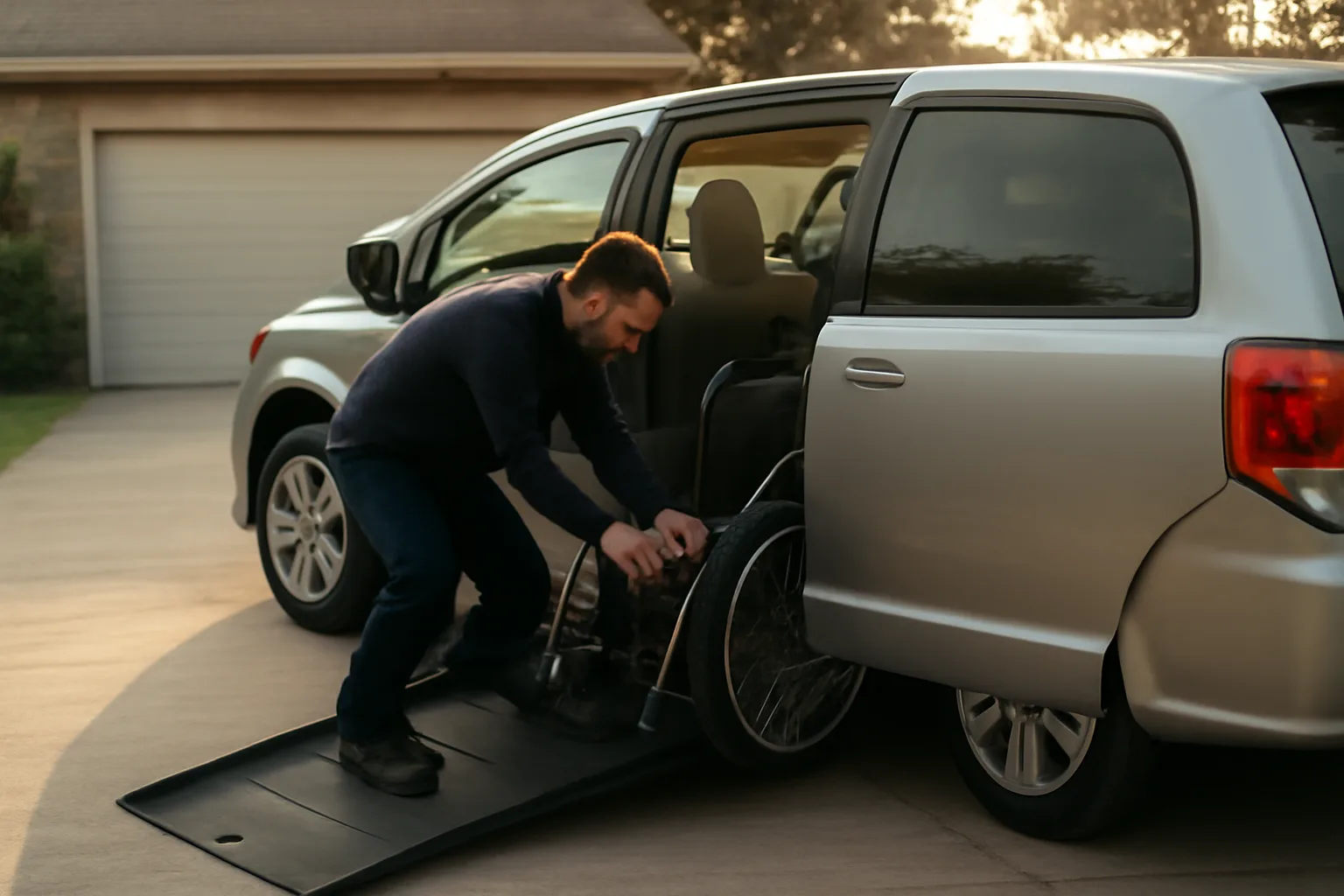
Wheelchair vans used for Medicaid NEMT need working ramps or lifts, functional wheelchair securement (tie-down) systems, and interior clearance that meets ADA accessibility guidance. The Department of Justice's ADA Title III regulations at 28 CFR Part 36 set baseline accessibility requirements for vehicles used in transportation services, and brokers layer their own inspection checklists on top of that [4]. Most brokers also set a maximum vehicle age (commonly 5 to 8 years, though this varies) and require annual or semiannual safety inspections beyond the state's standard vehicle inspection. Ohio doesn't require periodic state vehicle safety inspections for most passenger vehicles the way some states do, so the broker's own inspection schedule often becomes the real compliance driver. Budget for ongoing maintenance on the ramp/lift mechanism specifically. These systems take more wear than a standard van. A failed lift on inspection day is one of the most common reasons operators get temporarily suspended from a broker's active roster.
How much does it cost to start a wheelchair van NEMT business in Ohio?
| Cost item | Typical range | |
|---|---|---|
| Used wheelchair van conversion | $25,000 to $45,000 | |
| New wheelchair van (mobility dealer) | $55,000 to $80,000+ | |
| Commercial auto insurance (annual) | $6,000 to $15,000+ per vehicle, highly variable | |
| Business formation (LLC filing, Ohio) | $99 filing fee with Ohio Secretary of State | |
| Driver background checks (BCI, per driver) | roughly $22 to $60 depending on check type | |
| Broker credentialing application fees | usually $0, but confirm with each broker | These are broad ranges, not quotes. Insurance in particular swings a lot based on your driving history, county, and the broker's minimum coverage requirement. The Ohio Secretary of State's $99 LLC filing fee is a fixed, official number you can rely on. Everything else needs a quote specific to your situation before you commit money. |
How long does Ohio Medicaid provider enrollment take?
ODM's provider enrollment process runs through its online provider portal, and the agency's published guidance recommends applying well before you plan to start billing, since incomplete applications get kicked back and restart the clock. There is no single published turnaround guarantee for NEMT provider types specifically, and timelines shift based on application volume and document completeness. A realistic way to plan: assume Medicaid provider enrollment and broker credentialing running in parallel will take somewhere between one and three months total from a complete, error-free application, and build your launch timeline (van purchase, insurance start date, driver hiring) around that window rather than around a specific week. If you get denied or asked for more documentation, that resets your timeline, so it pays to over-prepare the paperwork the first time. A launch kit builder that walks through state-specific and broker-specific document checklists (we built one, it's a $199 one-time tool, and it does not promise approval) can shorten the number of back-and-forth rounds, but the agency and broker still control the actual decision and timeline.
Do you need a CDL or special license to drive a wheelchair van in Ohio?
Most wheelchair vans used in NEMT seat fewer than 16 passengers including the driver, which keeps them under Ohio's commercial driver's license (CDL) threshold in most cases. Ohio's CDL requirements generally track federal thresholds tied to vehicle weight and passenger capacity rather than the fact that you're transporting medical patients specifically. What you do need, regardless of CDL status: a valid Ohio driver's license in good standing, a clean enough driving record to satisfy the broker's insurance underwriter, and passage of the background check required by both ODM and the broker. Some brokers also require passenger assistance training and CPR/First Aid certification before a driver goes active, even though Ohio itself doesn't mandate that training for standard passenger vehicle operation.
What's the difference between NEMT, medical transportation, and emergency medical transport?
People use these terms loosely, and the differences matter for licensing. Medical transportation is the broad umbrella covering everything from ambulances to wheelchair vans to simple mileage reimbursement for a family member's car. Medical transportation as a category includes both emergency and non-emergency services. NEMT, or non emergency medical transportation, specifically means transport for stable patients who don't need clinical care during the ride. That's the wheelchair van business this article covers. Emergency medical transport means ambulances, staffed by EMTs or paramedics, responding to 911 calls or handling inter-facility transfers that require monitoring. Different licensing body, different training requirements, different insurance category. If you're buying a used minivan and converting it with a ramp, you are firmly in NEMT territory, not emergency transport, and you don't need to chase EMT certification for this business.
How do NEMT brokers assign trips once you're credentialed?
Once active, brokers dispatch trips through their own software, usually a mobile app or a phone-based system, and payment terms vary by broker (some pay per completed trip on a set schedule, others use more complex mileage/wait-time formulas). None of this is standardized nationally, and Ohio brokers set their own rate schedules subject to their contract with the MCO. New operators are often placed on a probationary or lower-priority tier until they build a completion-rate track record. Missed pickups and late cancellations get tracked and can affect how many trips you're offered going forward. Ask your broker directly, before you sign anything, how trip volume gets allocated to new vendors in your specific county, since this varies a lot between a dense urban county like Franklin or Cuyahoga and a rural county with far fewer active vans.
Frequently asked questions
What is non-emergency medical transportation?
Non-emergency medical transportation (NEMT) is transportation to medical appointments for people who are medically stable but can't drive themselves or use regular public transit. It covers rides for dialysis, physical therapy, and specialist visits using sedans, wheelchair vans, or occasionally stretcher vans. Federal Medicaid rules require states to ensure this transportation is available to beneficiaries under 42 CFR 431.53.
Does Medicaid cover ambulance rides?
Yes, Medicaid covers medically necessary ambulance transportation as a distinct benefit from NEMT, with states setting their own medical necessity rules and payment rates. Ohio Medicaid pays ambulance providers under its own fee schedule, separate from the NEMT/wheelchair van broker system. Confirm current criteria with the Ohio Department of Medicaid.
Does Medicare cover medical transportation?
Original Medicare Part B covers ambulance transportation when medically necessary but generally doesn't cover routine non-emergency rides like trips to a doctor's office. Some Medicare Advantage plans offer limited NEMT trips as a supplemental benefit, but this is a much smaller and separate market from Medicaid NEMT contracting.
How do you start a medical transportation business in Ohio?
Form a business entity, get commercial auto insurance meeting broker minimums, buy an accessible vehicle that passes inspection, get drivers background-checked through Ohio BCI, enroll as an Ohio Medicaid provider through ODM's portal, and separately credential with each broker whose network you want to join. Each step has its own timeline, and none of them are decided in advance.
How much does it cost to start an NEMT business with one van in Ohio?
A used wheelchair van conversion typically runs $25,000 to $45,000, with new vehicles from mobility dealers running $55,000 to $80,000 or more. Add commercial insurance ($6,000 to $15,000+ annually), a $99 Ohio LLC filing fee, and per-driver background check costs. These are broad ranges; get specific quotes before committing.
Do I need EMT certification to drive a wheelchair van in Ohio?
No. NEMT wheelchair van driving is not an emergency medical service, so EMT or paramedic certification isn't required. You do need a valid driver's license, a clean enough record to pass insurance underwriting, and background checks required by Ohio Medicaid and your broker. Some brokers require CPR/First Aid or passenger assistance training.
Which broker manages Ohio Medicaid NEMT?
Ohio Medicaid delivers most services through managed care plans, and those plans contract transportation out to brokers, historically including Modivcare in large parts of the state. Broker assignments change when contracts are rebid, so confirm current broker coverage for your county with the Ohio Department of Medicaid and the specific managed care plan.
How long does it take to get credentialed as an Ohio NEMT provider?
There's no official published timeline. Ohio Medicaid provider enrollment plus broker credentialing running together often takes one to three months for a complete application, though this varies by broker workload and how error-free your paperwork is on the first submission. Incomplete applications restart the clock.
What insurance do I need for an NEMT wheelchair van in Ohio?
Brokers commonly require commercial auto liability coverage well above personal auto minimums, often around $1,000,000 combined single limit, though exact figures vary by broker and contract. Confirm required coverage types and limits directly with each broker and with your insurance agent before purchasing a policy.
Do I need a CDL to drive an NEMT van in Ohio?
Most wheelchair vans seat fewer than 16 people including the driver, which keeps them under Ohio's commercial driver's license threshold. You still need a valid Ohio driver's license, a clean driving record acceptable to the broker's insurer, and background checks required by ODM and the broker.
What's the difference between NEMT and ambulance transport?
NEMT serves medically stable patients who need a ride but no clinical care en route, using vehicles like wheelchair vans. Ambulance transport is for emergencies or cases requiring monitoring by EMTs or paramedics during the ride. They're licensed, insured, and reimbursed through entirely separate systems.
Can I start an NEMT business in Ohio with just one van?
Yes, most operators start with one van. Get your business entity, insurance, and vehicle inspection done first, then apply for Ohio Medicaid provider enrollment and separately credential with each broker. Being reliably available during peak dispatch hours (often weekday mornings) matters more than fleet size when brokers allocate early trips.
Are Ohio NEMT broker credentialing fees required?
Most brokers don't charge an application fee to credential as a vendor, but this isn't universal and can change. Confirm directly with each broker whether any credentialing, background check, or inspection fees apply before you submit an application.
Sources
- eCFR, 42 CFR 431.53 (Assurance of transportation): Federal Medicaid regulation requires states to ensure necessary transportation for beneficiaries
- Medicaid.gov, Non-Emergency Medical Transportation: Medicaid covers ambulance services when other transportation would endanger the person's health
- Medicare.gov, Ambulance services: Medicare Part B covers ground ambulance transportation when other transportation could endanger health
- eCFR, 28 CFR Part 36 (ADA Title III regulations): ADA Title III regulations set accessibility requirements for vehicles used in transportation services
- Medicaid.gov, Medical Transportation benefits overview: Medicaid benefits categories include medical transportation as a required service