Last updated 2026-07-25
TL;DR
NEMT is non-emergency medical transportation, driving Medicaid members to routine medical appointments (dialysis, therapy, checkups) in a car, wheelchair van, or stretcher vehicle. Medicaid covers it in every state as a required benefit; Medicare covers it only in narrow cases. Starting a business means an LLC, commercial auto/livery insurance, a compliant vehicle, state Medicaid enrollment, and broker credentialing with companies like Modivcare or MTM.
What is non-emergency medical transportation (NEMT)?
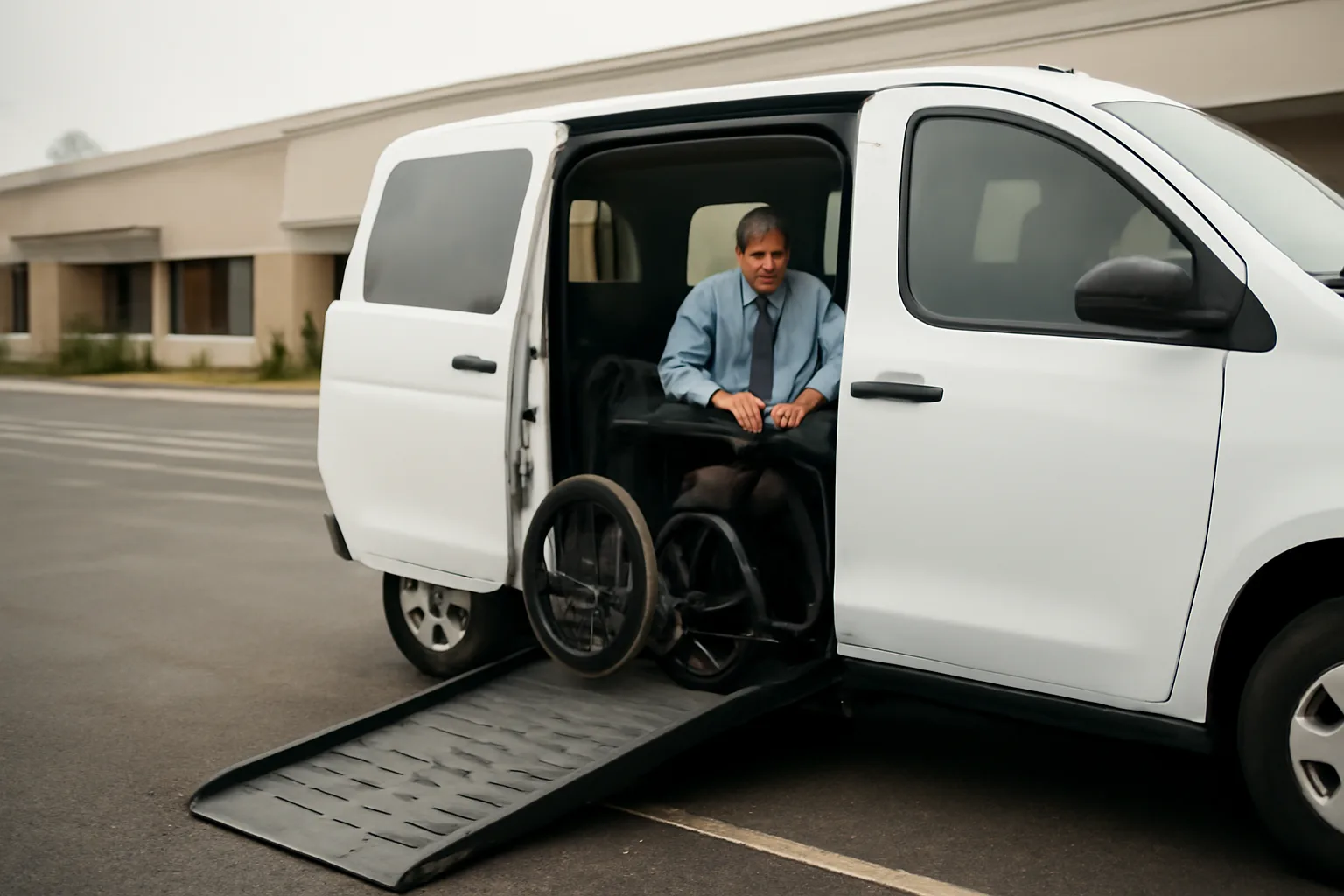
Non-emergency medical transportation, or NEMT, is transportation for people who need to get to a medical appointment but don't need an ambulance or emergency response. Think dialysis three times a week, physical therapy, prenatal visits, chemo, or a routine specialist appointment. The rider isn't in crisis. They just don't have a reliable, safe way to get there on their own. Federal Medicaid rules require every state to make sure eligible members "have necessary transportation to and from providers" and to "describe in its State plan the methods that it will use to meet this requirement," per 42 CFR 431.53 [1]. That's the legal backbone of the entire industry. It's not a nice-to-have benefit some states offer. It's a federal condition of running a Medicaid program at all. Most states run this benefit through a broker model. The state (or its managed care organizations) contracts with a transportation broker like Modivcare, MTM, Access2Care, or SafeRide Health, and that broker dispatches trips out to a network of local transportation companies, including owner-operators with wheelchair vans, sedans, and stretcher vehicles. You, as the provider, don't usually bill Medicaid directly. You get credentialed with the broker, get dispatched trips, and get paid by the broker at a rate set in your contract. NEMT covers a wide mix of vehicle types: ambulatory sedans and minivans for people who can walk and transfer on their own, wheelchair-accessible vans for people who use a wheelchair or scooter, and stretcher vans for people who must travel lying down but don't need medical monitoring. Some states also cover public transit passes, mileage reimbursement for a friend or family member who drives, and volunteer driver programs.
Does Medicaid cover ambulance rides?
Yes, but that's a different benefit than NEMT. Ambulance transportation (emergency and some non-emergency ambulance trips ordered by a physician) is covered under a separate Medicaid benefit category from routine NEMT, and it's billed and regulated differently, often requiring a licensed EMS/ambulance provider rather than an NEMT credential [2]. NEMT, in contrast, is for members who need a ride but not medical care during the ride. If a rider needs oxygen monitoring, an IV, or clinical staff in the vehicle, that trip usually falls to an ambulance provider, not an NEMT company. Wheelchair van and stretcher-van companies transport people who are medically stable; they are not ambulances and can't bill as one. The practical line CMS draws: NEMT is for members who have no other way to get to a covered Medicaid service and don't need emergency or medically necessary in-transit care, while ambulance benefits cover emergency response and medically necessary non-emergency ambulance transport ordered by a provider [2]. If you're planning a wheelchair-van or stretcher-van company, you're in the NEMT lane, not the ambulance lane, and your state licensing, vehicle equipment rules, and driver training requirements will reflect that difference. Confirm the specific dividing line with your state Medicaid agency, since some states define "stretcher van" services with more overlap toward ambulance rules than others.
Does Medicare cover medical transportation?
Mostly no. Original Medicare covers ambulance transportation when it's medically necessary (for example, you need care during transport or moving you any other way could endanger your health), but it does not generally pay for routine, non-emergency rides to a doctor's office or dialysis in a wheelchair van or car [3]. Medicare Part B ambulance coverage requires that transportation in any other vehicle "could endanger your health," per CMS's Medicare Benefit Policy Manual guidance on ambulance services [3]. That's a much higher bar than Medicaid's NEMT standard, which just requires that the member has no other way to get to a covered appointment. Some Medicare Advantage (Part C) plans have started offering limited non-emergency transportation as a supplemental benefit, since CMS loosened the rules in 2019 to let MA plans cover non-primarily-health-related supplemental benefits, including rides to appointments, for certain chronically ill enrollees [4]. Coverage varies enormously by plan and by year. If a caller says "my Medicare covers this," the honest answer is: maybe, if it's a Medicare Advantage plan with a transportation supplemental benefit, but not under traditional Medicare for a routine appointment. For business planning, treat Medicaid, not Medicare, as your real base of paying work, and confirm any Medicare Advantage transportation contracts directly with the plan, since these are not standardized nationally.
How to start a non-emergency medical transportation business, step by step
There's no single national license for NEMT. You're dealing with a state licensing process, a Medicaid provider enrollment process, and separate broker credentialing, and the order and paperwork differ by state. Here's the general sequence most owner-operators follow. 1. Form your business entity. Most owner-operators set up an LLC for liability separation and open a dedicated business bank account before doing anything else, since brokers and state Medicaid portals will ask for an EIN and business documentation, not a personal SSN. 2. Check state-specific NEMT licensing. Some states require a standalone NEMT operating permit or Public Utility Commission (PUC) certificate before you can even apply for Medicaid enrollment; others fold it into the Medicaid enrollment itself. This step varies more than any other part of the process, so confirm directly with your state's Medicaid transportation unit or department of transportation. 3. Buy or lease a compliant vehicle. A wheelchair-accessible van typically needs a ramp or lift, tie-down/securement points meeting a recognized standard (many states reference SAE J2249 wheelchair tie-down and occupant restraint standards or similar), and sometimes a state vehicle inspection specific to NEMT use. 4. Get commercial auto and livery insurance. Personal auto policies exclude for-hire transportation. You need a commercial policy, and many brokers require specific minimum liability limits (commonly $1 million combined single limit, though this varies by broker and vehicle type) plus additional insured endorsements naming the broker. 5. Enroll as a Medicaid transportation provider with your state. This is usually a separate application from broker credentialing and includes background checks, driver qualification files, vehicle registration, and often a site visit. 6. Apply for broker credentialing. If your state uses a broker model, you'll separately apply to Modivcare, MTM, Access2Care, SafeRide, or whichever broker holds the contract in your region, submitting insurance certificates, vehicle photos, driver records, and often completing broker-specific training modules. 7. Get your NPI number if required. Many states and brokers require an National Provider Identifier from the National Plan and Provider Enumeration System even for transportation-only providers, since Medicaid claims systems are built around that identifier. Expect this whole sequence to take weeks to a few months, depending heavily on how fast your state processes Medicaid enrollment and how backed up the broker's credentialing team is. Nobody publishes a reliable national average timeline, and it swings a lot by state, so build slack into your plan rather than assuming a fixed number of weeks.
How do you start a medical transportation business with one van?
Plenty of owner-operators start with exactly one wheelchair van, and it's a completely viable way to enter the industry, as long as you're realistic about what one vehicle can and can't do. With one van, you can typically only serve one trip at a time, so your schedule fills around dialysis and standing appointments that recur on set days and times, plus whatever ad hoc trips a broker dispatches to you. Many one-van operators specifically target dialysis riders because those trips are recurring three days a week, predictable, and let you build a stable weekly schedule instead of chasing scattered one-off rides. The core requirements don't shrink just because you have one vehicle. You still need the LLC, the commercial insurance, the state Medicaid enrollment, and the broker credentialing. What does shrink is your negotiating room on rates and your ability to accept back-to-back trips, since one no-show or one long wait at a dialysis center can knock out your whole day's capacity. A lot of one-van operators drive the van themselves rather than hiring a driver right away, which keeps payroll off the books during the credentialing and ramp-up period. That's a reasonable way to start, but plan for how you'll cover trips when you're sick, when the van needs service, or when a rider's appointment runs long and conflicts with a second pickup you already committed to.
How to start a NEMT business: what documents and setup do brokers actually check?
Broker credentialing checklists are fairly consistent across Modivcare, MTM, Access2Care, and SafeRide, even though each company runs its own portal and paperwork. Expect to submit most or all of the following, and confirm the exact list with each broker directly since requirements change: - Certificate of insurance showing commercial auto/livery coverage at the broker's required limits, with the broker listed as additional insured
- Vehicle registration, current inspection, and often photos of the interior showing wheelchair securement equipment
- Driver's license, driving record (MVR) pull, and in many states a background check through a state-designated agency
- Drug and alcohol testing program enrollment, especially for drivers operating vehicles designed to carry more than a small number of passengers
- W-9 and business formation documents (articles of organization, EIN letter)
- State Medicaid provider enrollment confirmation or provider number
- Driver training completion, sometimes including passenger assistance, wheelchair securement, and defensive driving modules the broker or state specifies Brokers periodically re-verify insurance, vehicle inspections, and driver records, more than at initial enrollment. Missing a renewal deadline is one of the most common reasons an active provider suddenly gets suspended from dispatch, so build a calendar for every expiration date the day you get approved.
What vehicle do you need, and what does it cost to get started?
For wheelchair-van NEMT specifically, you need a van with a ramp or lift and floor-mounted tie-down anchors rated for wheelchair securement, more than a minivan with the back seats removed. Used wheelchair-accessible vans (often converted Dodge Grand Caravans, Toyota Siennas, or Ford Transits) commonly run in the low-to-mid five figures on the used market, while new conversions from a mobility dealer cost substantially more; exact pricing depends heavily on mileage, conversion quality, and your local market, so get quotes rather than relying on a rule of thumb. Beyond the van itself, budget for commercial insurance (routinely a bigger line item than most new operators expect, since livery/NEMT auto coverage is priced differently than personal or standard commercial auto), state licensing or permit fees, background check fees for each driver, GPS/dispatch software if your broker requires electronic trip verification, and a cushion for the gap between when you start incurring costs and when your first broker payments actually arrive. This overview deliberately avoids projecting what you'll earn per trip or per month, because broker rates, trip volume, and payer mix vary too much by state and by broker contract to responsibly generalize. Anyone promising you a specific income number before you've seen a real broker rate sheet for your region is guessing.
NEMT vs. ambulance vs. rideshare medical: what's the difference?
| Service type | Who provides it | Typical payer | Medical care during ride | |
|---|---|---|---|---|
| NEMT (sedan, wheelchair van, stretcher van) | Licensed NEMT transportation companies, often broker-credentialed | Medicaid (primary), some Medicare Advantage supplemental benefits | None; driver only, no clinical staff | |
| Ambulance (BLS/ALS) | Licensed EMS agencies | Medicare Part B, Medicaid ambulance benefit, private insurance | Yes; EMT or paramedic on board | |
| Rideshare medical programs (e.g., some Uber Health/Lyft partnerships) | Standard rideshare drivers, no wheelchair securement in most cases | Health plans, hospitals, some Medicaid managed care pilots | None | The practical difference for a new business owner: ambulance work requires EMS licensure and a totally different regulatory track than NEMT, and rideshare-medical partnerships generally aren't a fit for wheelchair or stretcher transport since standard rideshare vehicles don't have securement equipment. If you're buying a wheelchair van, you're building an NEMT business, not an ambulance company, and your path runs through state Medicaid enrollment and broker credentialing, covered in more depth in medical transportation and nemt transportation. |
How does state Medicaid enrollment differ from broker credentialing?
These are two separate approvals, and mixing them up is one of the most common early mistakes. State Medicaid enrollment is your legal authorization to be a Medicaid transportation provider in that state at all; broker credentialing is your business relationship with the specific company (Modivcare, MTM, Access2Care, SafeRide, or others) that actually dispatches trips to you. In most states, you cannot skip straight to broker credentialing without state enrollment first, because the broker will ask for your state Medicaid provider number as part of its own application. Some states enroll transportation providers directly through their Medicaid Management Information System (MMIS) portal; others route enrollment through the same broker that handles dispatch, blurring the line somewhat. Confirm which model your state uses directly with your state Medicaid agency's transportation unit, since this is exactly the kind of detail that changes state to state and year to year. Once you're enrolled with the state and credentialed with the broker, don't assume you're done. States periodically revalidate Medicaid providers (federal rule requires revalidation at least every five years under 42 CFR 455.414 [5]), and brokers run their own periodic re-credentialing on insurance, vehicle inspections, and driver files. Miss either one and you can lose active status even after years of good service.
What licenses, permits, and insurance does a wheelchair van business need?
Requirements vary by state, but the common thread across nearly every state is: business entity formation, commercial auto/livery insurance, a state-specific transportation or PUC permit (in states that require one), Medicaid provider enrollment, and broker credentialing. Some states add vehicle inspection stickers specific to NEMT, wheelchair securement certification for drivers, and drug and alcohol testing program enrollment for any driver operating a vehicle designed to carry a certain passenger threshold, which brings federal DOT drug testing rules into play depending on vehicle size and configuration. Don't assume your state's requirements match a neighboring state's. Some states run NEMT almost entirely through managed care organizations rather than a single statewide broker, which changes who you apply to and what the credentialing packet looks like. Others still contract through a single statewide broker for the whole Medicaid population. This is precisely the kind of state-by-state variation that trips up new operators who read a general guide and assume it applies everywhere; always confirm current requirements directly with your state Medicaid agency's transportation unit and with the broker holding the active contract in your service area. For a breakdown of what NEMT actually covers and how the benefit is structured federally, see non emergency medical transportation and non emergency medical transportation services.
How long does it take to get approved, and what usually causes delays?
There's no single national timeline, and anyone quoting you an exact number of days for every state is oversimplifying. What's known is that the process has multiple sequential steps (entity formation, insurance binding, vehicle prep, state Medicaid enrollment, background checks, broker credentialing), and each one can stall independently. The most common delays owner-operators report: insurance certificates that don't list the broker correctly as additional insured, background check turnaround times that vary by which state agency runs them, vehicle inspection scheduling backlogs, and incomplete driver files missing a single required document. Brokers generally won't approve a partial file, so one missing signature can hold up the entire application while it sits in a queue. The practical fix is to build your document file completely before you submit anything, rather than submitting early and patching gaps later. A well-organized state and broker application packaged in one shot tends to move faster than one that gets kicked back for missing items, because you avoid getting stuck at the back of the review queue a second and third time. Tools like RideCredential's Launch Kit Builder, which walks through state Medicaid and broker document checklists for a flat $199, exist specifically because this document-assembly step is where most owner-operators lose weeks, not because the underlying rules are unusually complicated once you see them laid out.
What's the realistic first-year outlook for a new NEMT operator?
This overview won't give you an income estimate, a trips-per-week guess, or a break-even timeline, because broker rate sheets, trip volume, payer mix, and local Medicaid population size vary too much by state and even by county to responsibly generalize. Anyone offering a specific income promise before you've seen a real rate sheet for your service area is selling you something, not informing you. What is realistic to expect: a multi-step approval process with state and broker components running in parallel or sequentially depending on your state, real upfront costs for the vehicle and insurance before your first payment arrives, and an ongoing compliance calendar (insurance renewals, vehicle inspections, driver re-certifications, Medicaid revalidation at least every five years [5]) that doesn't stop once you're approved. The operators who do well tend to treat credentialing as an ongoing administrative function, not a one-time hurdle. Read nemt and emergency medical transport for how NEMT sits relative to emergency transport rules, and build your compliance calendar before your first trip, not after your first suspension notice.
Frequently asked questions
What is NEMT?
NEMT stands for non-emergency medical transportation: rides for Medicaid (and some Medicare Advantage) members to routine medical appointments like dialysis, therapy, or checkups, using a car, wheelchair van, or stretcher vehicle, without the medical staff or equipment an ambulance carries.
Does Medicaid cover ambulance rides?
Yes. Medicaid covers ambulance transportation as a separate benefit from NEMT, typically for emergencies or non-emergency ambulance trips a physician certifies as medically necessary. NEMT covers members who need a ride but aren't medically unstable during transport. The two benefits are regulated and billed differently within each state's Medicaid program.
Does Medicare cover medical transportation?
Original Medicare covers ambulance transportation only when medically necessary, meaning transport any other way could endanger your health. It generally does not cover routine non-emergency rides to appointments. Some Medicare Advantage plans offer limited transportation as a supplemental benefit, but this varies by plan and isn't standard under traditional Medicare.
How do I start a NEMT business?
Form an LLC, get commercial auto/livery insurance, buy a compliant wheelchair van or sedan, check your state's NEMT licensing requirements, enroll as a Medicaid transportation provider, and separately apply for broker credentialing with whichever company (Modivcare, MTM, Access2Care, SafeRide) holds your state's contract. Order and exact requirements vary by state.
How do I start a medical transportation business with one van?
Start with the same core requirements as any NEMT business (LLC, insurance, state Medicaid enrollment, broker credentialing), but plan your schedule around recurring trips like dialysis, since one van can only handle one trip at a time. Many owner-operators drive the van themselves initially to reduce costs during the ramp-up period.
What's the difference between state Medicaid enrollment and broker credentialing?
State Medicaid enrollment is your legal authorization to be a Medicaid transportation provider in that state. Broker credentialing is a separate business approval from the specific company (Modivcare, MTM, Access2Care, SafeRide, etc.) that dispatches trips to you. Most states require Medicaid enrollment before or alongside broker credentialing.
Do I need a special license to drive a wheelchair van for NEMT?
Requirements vary by state, but many states require a background check, a clean driving record, wheelchair securement training, and sometimes drug and alcohol testing enrollment for drivers, especially in larger passenger vehicles. Some states also require a specific NEMT operating permit for the business itself. Confirm exact requirements with your state Medicaid transportation unit.
How much does it cost to start an NEMT business?
Costs vary widely by state and vehicle condition, but expect a used wheelchair-accessible van, commercial livery insurance (often pricier than standard commercial auto), state licensing fees, background check fees per driver, and a cash buffer for the gap between startup costs and first broker payments. No fixed national number is reliable here.
What insurance does an NEMT wheelchair van business need?
You need commercial auto or livery insurance, not a personal auto policy, since personal policies exclude for-hire transportation. Brokers commonly require specific minimum liability limits and an additional insured endorsement naming the broker. Exact limits vary by broker and by state, so confirm directly with each broker you plan to work with.
Can I get NEMT trips without going through a broker like Modivcare or MTM?
In some states, yes, if the state contracts directly with providers or through managed care organizations rather than a single statewide broker. In most states with a broker model, though, broker credentialing is the main path to dispatched Medicaid trips, alongside any direct contracts with managed care plans or hospitals.
How long does NEMT broker credentialing take?
There's no fixed national timeline; it depends on your state's Medicaid enrollment speed, background check turnaround, and how complete your document file is when you submit it. Missing paperwork, like an incorrect insurance certificate, is the most common cause of delay. Submitting a fully complete packet the first time tends to move faster than patching gaps later.
Is NEMT the same as an ambulance service?
No. NEMT transports medically stable members who need a ride but not clinical care in transit, using a driver only. Ambulance services require EMS licensure and carry EMTs or paramedics for medically necessary transport, including emergencies. They're regulated, licensed, and billed as separate categories under Medicaid and Medicare.
What vehicle do I need to start a wheelchair van NEMT business?
You need a van with a ramp or lift and floor-mounted securement anchors rated for wheelchair tie-down, not a standard minivan with seats removed. Many operators use converted Dodge Grand Caravans, Toyota Siennas, or Ford Transits. States often require a specific inspection or certification confirming the securement system meets recognized safety standards.
Sources
- Code of Federal Regulations, 42 CFR 431.53: States must ensure necessary transportation to and from Medicaid providers and describe the methods used in the state plan.
- Medicaid.gov, Non-Emergency Medical Transportation: NEMT is a required Medicaid benefit distinct from ambulance transportation, covering members who lack other means to reach covered services.
- CMS, Medicare Benefit Policy Manual, Chapter 10 (Ambulance Services): Medicare covers ambulance transportation only when transportation by other means could endanger the beneficiary's health.
- Federal Register, Medicare Program; Contract Year 2019 Policy and Technical Changes to the Medicare Advantage Program (83 FR 16440): CMS finalized changes allowing Medicare Advantage plans to offer expanded supplemental benefits, including non-primarily health-related benefits like transportation, for enrollees with certain conditions.
- Code of Federal Regulations, 42 CFR 455.414: Medicaid providers must be revalidated at least every five years under federal program integrity rules.