Last updated 2026-07-25
TL;DR
There is no reliable, sourced national average for NEMT revenue or profit margins. No federal or state agency publishes one, and most figures circulating online are unsourced guesses. What you can verify: per-trip Medicaid reimbursement rates (set state by state), vehicle and fuel costs, and general small-business overhead ratios. This article shows you how to build your own realistic margin estimate instead of trusting a made-up percentage.
Is there a real, sourced average profit margin for NEMT businesses?
No. Search around and you'll find blog posts claiming NEMT companies run 15% to 40% net margins. None of them cite a source, because none exists. There's no federal survey, no IRS industry benchmark report, and no state Medicaid agency that publishes profit margin data for NEMT providers. The federal government doesn't track NEMT as its own line item in a way that produces a margin figure at all. What does exist is fragmented cost data: state-set per-mile and per-trip reimbursement rates, vehicle purchase and upfit costs, insurance premium ranges, and general Bureau of Labor Statistics data on for-hire passenger transportation as a broader category, tracked under NAICS code 485991 for special needs transportation [1]. None of that adds up to "the average NEMT business nets X%." Anyone who tells you a specific percentage without naming where it came from is guessing, or repeating someone else's guess. The honest answer: your margin depends entirely on your state's reimbursement rate, your broker's per-trip rate (which is often lower than what Medicaid pays the broker), your vehicle financing terms, your fuel costs, and how many billable trips you can actually run in a day given wait times and cancellations. Two operators in the same state with the same van can post very different numbers.
What is NEMT and why does its business model differ from other transportation?
Non-emergency medical transportation (NEMT) is scheduled transport for Medicaid (and sometimes Medicare Advantage or private-pay) enrollees who need a ride to a medical appointment but don't need an ambulance. Federal Medicaid regulation requires states to "ensure necessary transportation for beneficiaries to and from providers" as part of administrative requirements, per 42 CFR 431.53 [2]. States can run this in-house, contract it out fee-for-service, or hire a transportation broker to manage the network. Most large states now use brokers like Modivcare, MTM, or others under state contract. The business model differs from Uber-style ride-hailing or taxi work in one big way: you don't set your own price. If you're credentialed with a broker, the broker (operating under a state contract) sets the per-trip or per-mile rate you're paid, and you either accept trip assignments at that rate or you don't get dispatched. That means your margin lever isn't pricing power, it's cost control and utilization (how many paid trips you complete per vehicle per day). This is fundamentally different from a general medical transportation company that might also do private-pay stretcher transport or long-distance discharge runs, where you can negotiate your own rate. Learn more about how medical transportation programs are structured at the state level, and how nemt fits inside broader Medicaid transportation policy.
How do you start a NEMT business, step by step?
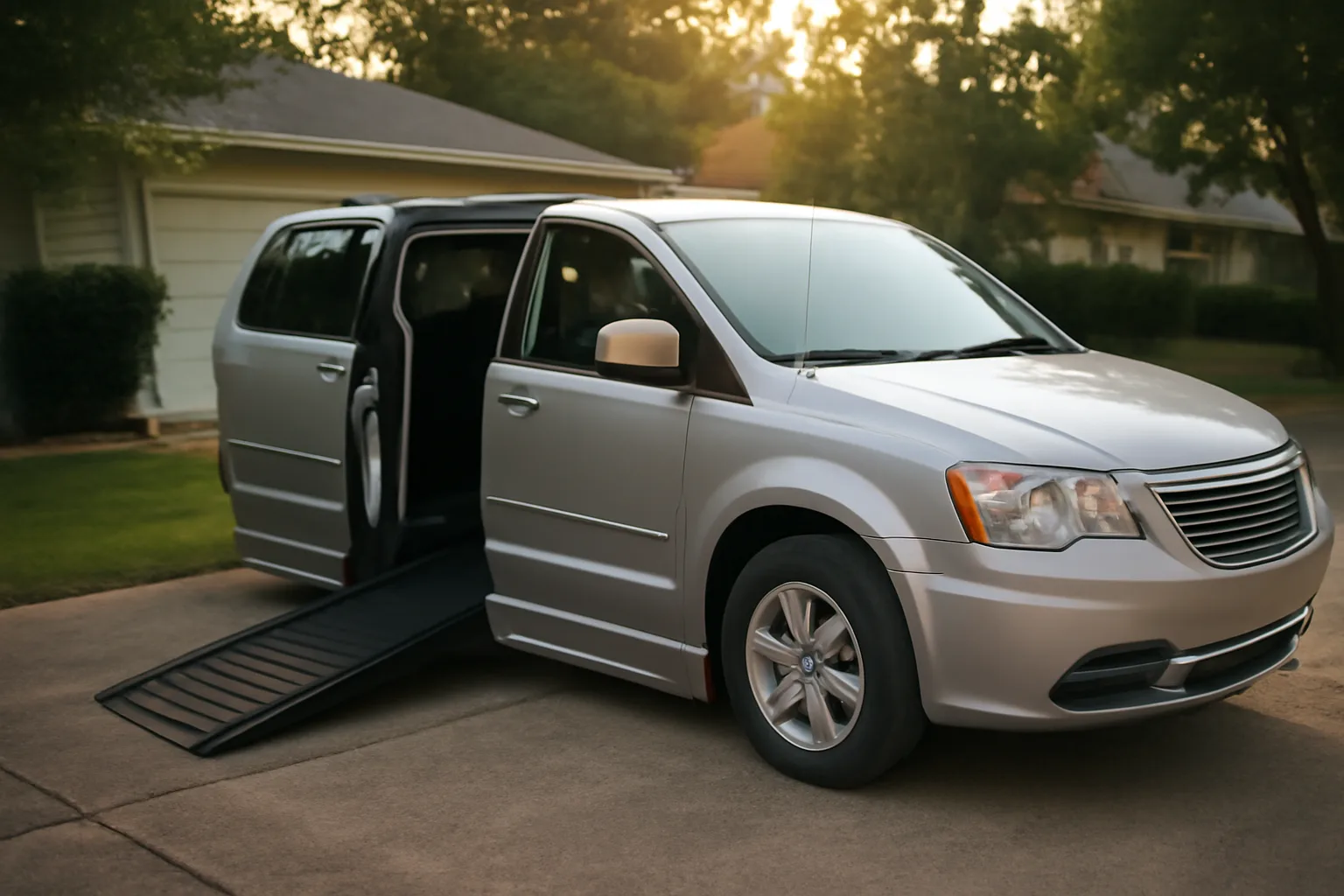
The realistic sequence, in the order most owner-operators actually go through it: 1. Form your business entity (LLC in most states) and get an EIN from the IRS. 2. Get the right vehicle. A used wheelchair-accessible van (side or rear entry, with a ramp or lift meeting ADA specs) is the standard starting unit. Many new operators buy one used commercial-grade minivan conversion rather than a full cutaway van to keep upfront costs down. 3. Get commercial auto insurance with the liability limits your state and broker require, which is often higher than standard commercial auto minimums because you're transporting people with mobility or medical vulnerabilities. See insurance requirements before you shop for a policy, since some brokers require $1 million combined single limit coverage. 4. Apply for a state business license and any required transportation/PUC permit, if your state regulates for-hire passenger vehicles separately from Medicaid enrollment. 5. Enroll as a Medicaid provider with your state Medicaid agency, which typically means an application, background checks, vehicle inspection, and sometimes a surety bond. 6. Apply for broker credentialing with whichever broker(s) manage NEMT in your state or region (Modivcare, MTM, Access2Care, and others vary by state and even by county). 7. Get drivers trained and background-checked, including any state-required defensive driving, passenger assistance, or CPR/first aid certification. 8. Start operating once you're enrolled and credentialed, usually beginning with a trial period or lower trip volume while the broker evaluates your on-time performance. Each state and broker has its own paperwork stack, and requirements change, so confirm the current list with your state Medicaid transportation unit and your target broker before you spend money on anything.
How do you start a medical transportation business with just one van?
Plenty of NEMT operators start with exactly one wheelchair van, and it's a legitimate way to enter the field, but you need to be honest about the math before you commit. One van means one revenue stream at a time. If that van is in the shop, you have zero trips and zero income until it's fixed or you have a backup vehicle or driver arrangement. Most successful single-van operators budget for this by keeping a maintenance reserve fund (some suggest 5% to 10% of gross revenue set aside) and by not over-financing the vehicle to the point where the loan payment alone eats a huge share of daily revenue. With one van, your credentialing and enrollment paperwork is identical to what a larger fleet does. You still need the same insurance minimums, same background checks, same broker application. The advantage of starting small is lower capital risk. The disadvantage is that you can't spread fixed costs (insurance, licensing fees, accounting) across multiple revenue-generating vehicles, so your per-trip overhead is higher in percentage terms than a 5-van operation with the same fixed costs. A realistic first-year plan for a one-van operator: enroll with the state, get credentialed with one broker, run trips within your service area, track every mile and every expense from day one, and don't add a second van until the first one is consistently profitable on its own books, more than busy. The U.S. Small Business Administration notes that most new small businesses should plan for uneven cash flow in year one and keep working capital reserves separate from operating funds [3]. For a broader look at what the field involves, see non emergency medical transportation and non emergency medical transportation services.
Does Medicaid cover ambulance rides, and how is that different from NEMT?
Yes, Medicaid covers ambulance transportation when it's medically necessary, but that's a completely separate benefit category from NEMT and pays under different rules and rates. Ambulance transport (emergency or non-emergency stretcher-level care requiring EMS-level staffing and equipment) is billed as a medical service, typically through Medicaid fee-for-service or managed care claims, with rates set by the state Medicaid plan. NEMT, by contrast, covers transportation for enrollees who don't need medical care en route, just a ride in a wheelchair van, sedan, or sometimes a bus pass or mileage reimbursement for a friend or family member driving them. States must provide NEMT as an administrative necessity under Medicaid regulations, distinct from covering ambulance as a Medicaid service benefit [2]. If you're building a wheelchair-van business, you are almost certainly in the NEMT lane, not the ambulance/EMS lane, and you do not need paramedic-level licensure or an ambulance service license to operate. Confirm this distinction with your state Medicaid agency, since a few states blend stretcher-van service into the same broker network as wheelchair van service, which can create licensing overlap in practice. For a look at how true emergency transport differs from the population you'll be serving, see emergency medical transport.
Does Medicare cover medical transportation?
Original Medicare covers ambulance transportation when medically necessary under Medicare Part B, but it does not generally cover routine non-emergency transportation like a ride to a dialysis appointment or a doctor's visit in a wheelchair van [4]. CMS states that Medicare Part B covers "ambulance services...to the nearest appropriate medical facility that's equipped to treat your condition," when other transportation would endanger your health [4]. Some Medicare Advantage (Part C) plans do offer NEMT-type transportation as a supplemental benefit. Federal rule 42 CFR 422.102 permits Medicare Advantage plans to offer supplemental benefits that are "primarily health related" and not otherwise covered by original Medicare, which is the regulatory basis plans use to add transportation benefits [5]. Whether a specific Medicare Advantage plan covers NEMT, how many trips per year, and what provider network it uses, varies plan by plan and is set in that plan's Evidence of Coverage document. If you want to serve Medicare Advantage riders, you'd need to credential separately with whatever transportation vendor that specific plan uses, which is often the same brokers who manage state Medicaid NEMT contracts.
What actually drives NEMT revenue per trip and per mile?
Your revenue per trip is set by whatever rate your state Medicaid program and broker contract establish, not by what you'd like to charge. States typically pay NEMT through one of a few models: a flat per-trip rate, a base rate plus per-mile rate, or a capitated broker contract where the broker gets paid a fixed amount per member per month and then negotiates its own rates down to individual transportation providers. That last point matters a lot for margin. When a state pays a broker under a capitated model, the broker's incentive is to control its own costs, meaning the rate they offer you as a subcontracted provider may be lower than what a state fee-for-service program would pay directly. This is a structural reason margins can look different in a broker-heavy state versus a state that pays providers directly. Because these rates are set by state contract and change periodically (some states rebid broker contracts every 3 to 5 years), there is no single national per-mile or per-trip rate to quote. You need your specific state Medicaid transportation unit's current fee schedule or your broker's current rate sheet before you can build any real revenue estimate. Federal guidance leaves the payment model design to the state, which is why the variation is so wide. A 2013 Government Accountability Office review of Medicaid NEMT found that states use widely different broker payment models and that federal oversight of those arrangements was limited, concluding that "CMS has not issued guidance to states on how to oversee brokered NEMT programs" [6].
What are the real costs that eat into NEMT gross profit?
| Vehicle payment or lease | Used ADA-compliant van conversions commonly run $25,000 to $55,000+ depending on age, mileage, and lift/ramp condition | |
|---|---|---|
| Fuel | Varies by region and gas prices; wheelchair vans typically get worse mileage than a standard sedan due to weight and idling for loading | |
| Commercial auto insurance | Often the single biggest surprise cost; NEMT-specific policies commonly run several thousand dollars per vehicle per year, higher than personal auto by a wide margin | |
| Maintenance | Lift/ramp mechanisms, tie-downs, and higher-mileage driving patterns add wear beyond typical passenger vehicle use | |
| Driver wages or contractor pay | If you're not driving every trip yourself, this is usually the largest ongoing expense | |
| Background checks, drug testing, training | Recurring, not one-time, since most states and brokers require periodic re-checks | |
| Broker/software fees | Some brokers require you to use specific dispatch or GPS tracking software, sometimes at your own cost | |
| Bonding/licensing renewal | State PUC or Medicaid provider re-enrollment fees, typically annual or biennial | Gross profit (revenue minus direct trip costs like fuel and driver pay) can look reasonable on paper. Net profit, after insurance, vehicle depreciation, maintenance reserves, and administrative overhead, is a much thinner number, and it's the one most new operators underestimate. This is also why cash flow timing matters: Medicaid and broker payments often run on a 15 to 30 day (or longer) reimbursement cycle, so you're fronting fuel and driver costs before you get paid. |
Here's the honest cost stack most wheelchair-van operators are dealing with, in the order they usually bite hardest: | Cost category | What drives it |
How do brokers and state contracts affect your margin?
Your broker relationship affects margin in ways that go beyond the per-trip rate. Brokers control dispatch volume, meaning even a fully credentialed, insured van can sit idle if the broker isn't routing trips to you. Utilization, more than rate, is often the bigger swing factor in whether a given month is profitable. Brokers also set performance standards (on-time percentage, no-show handling, complaint rates) that can affect whether you keep getting dispatched at all, or whether you get moved to a lower-priority tier. A credentialed provider with excellent on-time performance in a broker's system often gets more trip volume than a newer provider with the same vehicle and rate, simply because the broker's software prioritizes reliability. Because broker contracts are rebid periodically and state Medicaid agencies periodically change which broker manages a region, the rules you credential under this year may shift. Confirm current requirements directly with your state Medicaid transportation unit and with the specific broker (Modivcare, MTM, Access2Care, SafeRide, or others) operating in your service area before assuming last year's rate sheet still applies. For background on how broker credentialing fits into the bigger NEMT landscape, see nemt transportation.
Should you expect a certain profit margin in year one?
No, and anyone who gives you a specific number for year one without knowing your state, your broker rate, your vehicle cost, and your financing terms is guessing. What's realistic to expect instead: thinner margins in year one while you absorb startup costs (vehicle down payment or full purchase, insurance setup, licensing, initial credentialing delays), and margins that firm up in year two and beyond if utilization holds and major repairs don't hit. New operators commonly underestimate two things: the length of the credentialing runway (weeks to a few months is common, and it varies a lot by state and broker) and the gap between gross trip revenue and what's left after insurance and maintenance. Build your own break-even model using your actual vehicle cost, your actual insurance quote, and your state's actual current NEMT rate schedule (get this in writing from the state Medicaid transportation unit or the broker, not from a forum post). That's the only margin number worth trusting, because it's yours.
What should a new owner-operator actually do to build a real cost and margin picture?
Skip the search for a magic industry-average percentage. Build a spreadsheet with your actual numbers instead: your specific vehicle's purchase price and loan terms, an actual insurance quote for NEMT coverage in your state (not a generic commercial auto quote), your state's current published NEMT rate or the broker's current contracted rate, your estimated fuel cost per mile for your specific vehicle, and a maintenance reserve line based on your van's age and mileage. Get the state and broker paperwork sequence right before you spend money on a vehicle, not after. A common costly mistake is buying a van first and discovering afterward that the specific ADA specs, insurance limits, or vehicle age cutoffs required by your state or broker don't match what you bought. Confirm vehicle age and lift/ramp specifications with your state Medicaid transportation unit and target broker in writing before purchase. If you want a structured starting point for the paperwork side (state Medicaid enrollment application requirements and broker credentialing checklists organized by state), that's exactly the gap the RideCredential $199 State + Broker NEMT Launch Kit is built to close: a one-time reference package, not a guarantee of approval or any income outcome, but a way to stop guessing at the sequence of steps.
Frequently asked questions
What is the average profit margin for a NEMT business in the US?
There is no verified, sourced national average. No federal agency or state Medicaid program publishes NEMT profit margin data, and unsourced blog figures (often 15% to 40%) should not be trusted. Your actual margin depends on your state's reimbursement rate, your broker contract, vehicle costs, insurance, and utilization. Build your own estimate using your state's current rate sheet and your real expenses.
What is NEMT?
NEMT stands for non-emergency medical transportation: scheduled rides for Medicaid enrollees (and sometimes Medicare Advantage or private-pay patients) to medical appointments, when they don't need ambulance-level medical care during transport. States must ensure NEMT is available under federal Medicaid regulation, and most manage it through contracted transportation brokers rather than paying providers directly.
How do you start a NEMT business?
Form a business entity, get a wheelchair-accessible vehicle meeting ADA and state specs, secure commercial auto insurance at required limits, get any state transportation permits, enroll as a Medicaid provider with your state, get credentialed with the relevant broker(s), and get drivers background-checked and trained. Requirements vary by state, so confirm each step with your state Medicaid transportation unit.
How do you start a medical transportation business with one van?
Start with a single ADA-compliant wheelchair van, complete the same state Medicaid enrollment and broker credentialing steps a larger fleet would, and keep a maintenance reserve fund since one van breaking down means zero revenue until it's fixed. Track every expense from day one and don't finance the vehicle so aggressively that the loan payment consumes most trip revenue.
Does Medicaid cover ambulance rides?
Yes, when medically necessary, Medicaid covers ambulance transportation as a medical service, billed and paid under different rules than NEMT. Ambulance transport requires EMS-level staffing; NEMT (wheelchair van, sedan, etc.) is for enrollees who don't need medical care en route. States are required to ensure both are available under Medicaid regulations, but through separate benefit structures.
Does Medicare cover medical transportation?
Original Medicare Part B covers ambulance services when medically necessary, but generally does not cover routine non-emergency rides to appointments. Some Medicare Advantage (Part C) plans offer NEMT as a supplemental benefit under 42 CFR 422.102, with coverage details and provider networks varying plan by plan. Check a specific plan's Evidence of Coverage document to confirm.
How do you start a non-emergency medical transportation business?
The process is the same as starting any NEMT company: entity formation, ADA-compliant vehicle acquisition, commercial insurance meeting state/broker minimums, state business and transportation permits, Medicaid provider enrollment, broker credentialing, and driver background checks/training. Timelines and exact requirements vary significantly by state, so confirm current steps with your state Medicaid transportation unit before spending on a vehicle.
What does NEMT gross profit actually look like compared to net profit?
Gross profit (trip revenue minus direct costs like fuel and driver pay) often looks reasonable. Net profit, after insurance, vehicle depreciation, maintenance reserves, licensing fees, and administrative overhead, is typically much thinner. Insurance and maintenance in particular are commonly underestimated by new operators building their first budget.
Why do NEMT rates vary so much by state?
Federal Medicaid regulation requires states to ensure transportation access but leaves the payment model to each state, so some pay per-trip flat rates, some pay per-mile, and some use capitated broker contracts where the broker then sets its own subcontractor rates. This structural flexibility is why there's no single national NEMT rate to quote.
Do NEMT brokers pay less than state Medicaid fee-for-service programs?
It can work out that way in capitated broker models, where the state pays the broker a fixed amount per member and the broker's own margin depends on controlling what it pays subcontracted providers. This isn't universal, since contract structures vary, but it's a real structural reason margins can differ between broker-managed and direct fee-for-service states.
How long does NEMT broker credentialing usually take?
There's no single national timeline; it depends on the broker, the state, and how complete your application and vehicle inspection paperwork are. Ranges of a few weeks to a few months are common. Confirm current expected timelines directly with the broker and your state Medicaid transportation unit before assuming you can start operating on a specific date.
What insurance do I need to run a wheelchair van for Medicaid trips?
You'll need commercial auto insurance meeting your state's and broker's minimum liability limits, which are often higher than personal auto minimums given the vulnerable passenger population. Some brokers require combined single limits of $1 million or more. Get a quote specific to NEMT/wheelchair-van use, since generic commercial auto quotes may not match required limits.
Sources
- 42 CFR 431.53, eCFR: Federal regulation requiring states to ensure necessary transportation for Medicaid beneficiaries to and from providers
- Medicare.gov, ambulance services coverage page: Original Medicare Part B covers ambulance services when medically necessary but does not generally cover routine non-emergency transportation
- 42 CFR 422.102, eCFR: Medicare Advantage plans may offer supplemental benefits that are primarily health related, which is the regulatory basis for offering transportation benefits
- U.S. Bureau of Labor Statistics, NAICS 485991: Special needs transportation (including NEMT-type services) is tracked under NAICS code 485991 by BLS occupational employment data
- U.S. Small Business Administration, business guide: New small businesses should plan for uneven cash flow and keep working capital reserves separate from operating funds
- U.S. Government Accountability Office, GAO-14-121, Medicaid Nonemergency Medical Transportation: GAO found wide variation across states in how NEMT is organized and paid for, with limited federal oversight guidance on broker payment structures