Last updated 2026-07-25
TL;DR
Becoming a non emergency medical transportation (NEMT) provider means forming a business, getting a wheelchair-accessible or ambulatory vehicle inspected, carrying commercial insurance, enrolling as a Medicaid transportation provider in your state, then credentialing with brokers like Modivcare or MTM. Most states require this even for a one-van operation. Expect weeks, not days, for approval.
What is non emergency medical transportation (NEMT)?
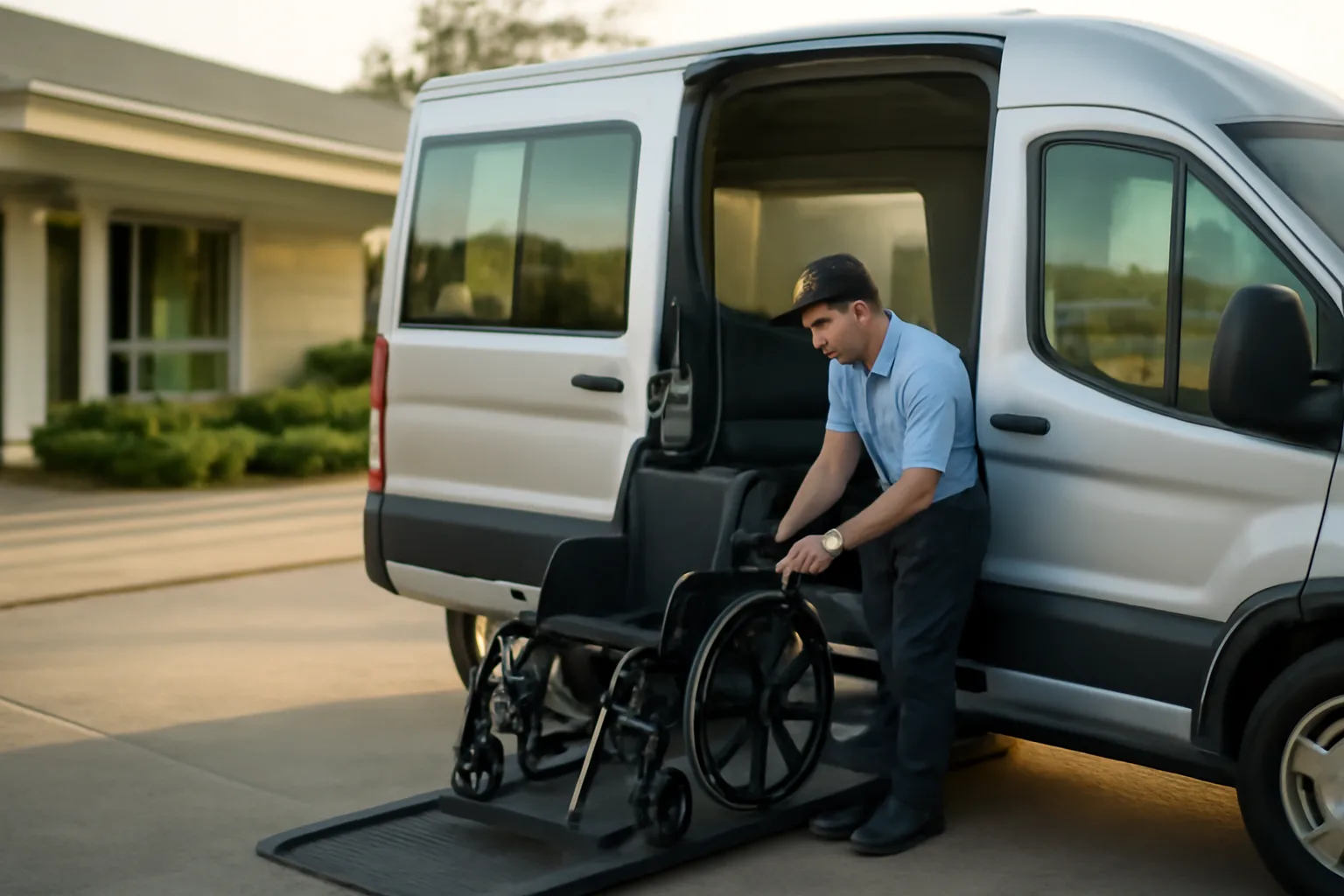
Non emergency medical transportation, usually shortened to NEMT, is scheduled transportation for people who need to get to a medical appointment, dialysis, adult day care, or a pharmacy pickup but don't need an ambulance or emergency response. Riders might use a wheelchair, a stretcher, or just need a driver because they can't drive themselves after a procedure. Medicaid is required by federal regulation to make sure enrollees can get to and from covered services. The rule sits at 42 CFR 431.53, which says the state plan "must specify that the Medicaid agency will ensure necessary transportation for recipients to and from providers" [1]. States meet that duty by running their own NEMT program directly, or more commonly now, by contracting with a broker that manages a network of transportation providers. That's the business you're stepping into: not an ambulance company, not a taxi company, but a credentialed Medicaid transportation provider that gets trip assignments from a broker or, in some states, bills the state directly. For a broader look at how NEMT fits inside the larger medical transportation industry, see medical transportation and nemt.
How do you start a medical transportation business?
The short version: pick your service type, form a legal entity, buy or lease the right vehicle, get commercial insurance, enroll with your state Medicaid agency, then credential with whichever broker runs NEMT in your area. Each step gates the next one, so order matters. Here's the realistic sequence most owner-operators follow: 1. Decide your niche: ambulatory-only sedan/van service, wheelchair van, or stretcher van. Wheelchair vans need a lift or ramp and tie-down anchors that meet vehicle safety standards; stretcher work usually needs more staff training and sometimes a separate state license category. 2. Form an LLC or corporation and get an EIN. Most state Medicaid provider applications and broker credentialing packets ask for your entity's legal name, more than a DBA. 3. Get a USDOT number if you cross state lines or otherwise fall under federal motor carrier rules, and check whether your state also requires a state-level for-hire or livery permit. 4. Buy commercial auto insurance with the liability limits your state and broker require (commonly $1,000,000 combined single limit for wheelchair-accessible vehicles, though this varies by state and broker; confirm with your broker and state Medicaid agency). 5. Pass a vehicle inspection, sometimes annual, sometimes tied to your state's Medicaid transportation unit or a third-party inspector the broker uses. 6. Enroll as a Medicaid provider in your state (this is separate from broker credentialing, and some states require it first). 7. Apply for broker credentialing with Modivcare, MTM, Access2Care, SafeRide, or whichever broker holds the contract in your state and county. 8. Get drivers background-checked, drug tested, and trained, then wait for network approval before you can accept your first trip assignment. None of this happens in a week. Between entity formation, insurance binding, vehicle inspection scheduling, and broker credentialing review, plan on a couple of months from a standing start, and longer if your state Medicaid enrollment has a backlog.
How to start a NEMT business with just one van?
You can start with a single wheelchair van, and plenty of owner-operators do exactly that. The paperwork burden per vehicle doesn't scale down much just because you own one van instead of ten, though, so budget the same setup steps. With one van, you're almost always the driver too, at least at first. That means your own background check, drug test, and defensive-driving or passenger-assistance training have to clear before the broker will assign you trips. If you plan to hire a second driver later, get your policies (drug testing, incident reporting, vehicle maintenance logs) written down now instead of improvising later, because brokers audit these during recredentialing. One practical tradeoff with a single vehicle: if that van is in the shop, you have zero capacity. Brokers track your on-time and completion rates, and a bad month from mechanical downtime can hurt your standing in the network. Some owner-operators keep a backup ambulatory vehicle even before adding a second wheelchair van, just to keep trips flowing during repairs. A single-van operation is also the easiest to credential cleanly, because you have one set of insurance documents, one inspection, one driver file. Complexity goes up fast once you add vehicles and drivers, so use the one-van phase to get your recordkeeping habits right.
What does state Medicaid enrollment actually involve?
State Medicaid enrollment is the process of registering your business as an approved Medicaid provider (or subcontracted transportation provider) so you're legally allowed to bill for, or receive broker-assigned, Medicaid-funded rides. It's separate from broker credentialing, though the two overlap heavily in required documents. Most states route NEMT through their Medicaid Transportation unit or a designated managed care/broker structure rather than fee-for-service billing directly by the driver. Requirements vary by state, but commonly include: - A completed Medicaid provider enrollment application (often through the state's MMIS provider portal)
- Proof of business entity formation and EIN
- Vehicle registration and current inspection
- Commercial auto insurance certificate naming required limits
- Driver background check results, often including a check against state and federal excluded-provider lists
- A National Provider Identifier (NPI) in some states, even for transportation-only providers CMS requires states to periodically revalidate enrolled Medicaid providers, generally at least every five years, under 42 CFR 455.414, which states "the State Medicaid agency must revalidate the enrollment of all providers... at least every 5 years" [2]. That revalidation clock applies to NEMT providers enrolled directly with the state, separate from any broker's own recredentialing cycle (often annual). Because requirements differ by state, always confirm the current list and portal with your state Medicaid agency's transportation unit before you assume anything, including which forms apply and how long review takes. For state-specific detail, our non emergency medical transportation hub links out to individual state pages.
How does broker credentialing work with Modivcare, MTM, Access2Care, or SafeRide?
Broker credentialing is the separate approval process run by the private companies states hire to manage their NEMT networks. Modivcare, MTM, Access2Care, and SafeRide each run their own provider portal, application, and document checklist, and passing state Medicaid enrollment does not automatically get you into a broker's network. Most brokers ask for a credentialing packet that includes your business license, vehicle registration and inspection report, commercial insurance certificate, driver files (license, background check, drug test, training certificates), and a signed provider agreement with the broker's rate schedule and service-area terms. Some brokers also require a facility or vehicle inspection by their own compliance team, on top of any state inspection you already passed. Because broker rules and rates change and differ by state contract, don't take any number you read online as current; confirm current requirements, rate schedules, and documentation with the broker's provider relations team and your state Medicaid transportation unit directly. A packet that was accurate for one county's Modivcare contract two years ago may not match a neighboring county on a different broker. One timing note worth planning around: many brokers won't start substantive credentialing review until they see your state Medicaid enrollment is active or at least submitted, so parallel-tracking both applications, where the state allows it, tends to be faster than doing them in strict sequence. If you're weighing which broker credentialing path fits your market, our broker guides hub and comparison pages are a reasonable next stop before you commit to one company's paperwork.
Does Medicaid cover ambulance rides?
Yes, Medicaid covers ambulance transportation when it's medically necessary, but that's a different benefit and billing pathway than NEMT. Ambulance services (ground or air, emergency or non-emergency) are billed under a state's Medicaid ambulance fee schedule, generally requiring licensure as an ambulance service with EMS-certified staff, more than a credentialed NEMT driver. Federal Medicaid transportation rules require states to ensure necessary transportation to covered services, which includes ambulance transport when medically necessary, with documentation showing the transport was required because the recipient's condition needed it [1]. If you're planning a wheelchair van business, you are not in the ambulance business, and trying to blur that line (accepting patients who actually need EMS-level care) is both a compliance problem and a safety one. If your long-term plan includes stretcher or critical-care transport, that's a separate licensing track through your state's EMS office, more than an add-on to your NEMT credentialing. Check with your state EMS licensing authority before assuming a stretcher van only needs a NEMT credential.
Does Medicare cover medical transportation?
Medicare's coverage of non-emergency transportation is much narrower than Medicaid's. Original Medicare Part B covers ambulance transportation, including some non-emergency ambulance transportation, only when the beneficiary's condition requires it and other transportation would endanger their health, per CMS's ambulance services coverage page [3]. It generally does not cover routine wheelchair van rides to a doctor's appointment just because the person can't drive. Some Medicare Advantage (Part C) plans offer supplemental non-emergency transportation benefits as an extra, often a limited number of one-way trips per year to plan-approved providers. Medicare's own guidance confirms Medicare Advantage plans "may offer extra benefits that Original Medicare doesn't offer, like...transportation to doctor visits" [4], but coverage, trip limits, and provider networks vary entirely by plan, so a Medicare Advantage member's transportation benefit has to be confirmed with that specific plan, not assumed. For an NEMT owner-operator, this means Medicaid, not Medicare, is almost certainly your primary payer relationship, with Medicare Advantage plan contracts as a secondary opportunity worth exploring once you're established, not a starting point.
What vehicle, insurance, and inspection requirements should I expect?
| Commercial auto liability | $1,000,000 combined single limit is common for WAV service | Some states/brokers accept lower for ambulatory-only sedans; confirm with your broker and state | |
|---|---|---|---|
| Vehicle inspection frequency | Annual is typical | Some brokers add their own inspection beyond the state's | |
| Wheelchair lift/ramp and tie-downs | Must meet manufacturer and ADA-related safety standards | Aftermarket conversions need documentation of compliant installation | |
| Driver background check | State and federal exclusion list checks | Often re-run annually | |
| Drug and alcohol testing | Pre-employment plus random testing common | Especially if you hold a CDL or fall under FMCSA rules | The table above is a starting reference, not a checklist you can rely on for your specific state. Insurance minimums especially vary a lot state to state and even broker to broker within the same state, so get a written quote referencing your state's actual Medicaid transportation requirement, not a generic commercial auto policy. Drivers who fall under federal motor carrier safety rules should also check FMCSA's controlled substances and alcohol testing requirements at 49 CFR Part 382, which set minimum random testing rates and pre-employment testing obligations for covered commercial drivers [5]. For more on vehicle specs and conversions, see non emergency medical transportation services. |
Requirements differ by state and broker, but a few things show up almost everywhere for wheelchair van operators: | Requirement | Typical range | Notes |
How to start a NEMT business step by step (the condensed checklist)
If you want the whole process on one page, here's the condensed order most owner-operators actually follow, with the caveat that your state may require a different sequence: 1. Research your state's NEMT structure: direct state-run program, single statewide broker, or regional brokers (this determines who you credential with). 2. Form your LLC, get your EIN, open a business bank account. 3. Buy or lease your wheelchair van and get any conversion documented. 4. Bind commercial auto insurance at required limits. 5. Schedule and pass your vehicle inspection. 6. Enroll as a Medicaid provider with your state Medicaid agency's transportation unit. 7. Submit broker credentialing applications (Modivcare, MTM, Access2Care, SafeRide, or your regional broker) once state enrollment is active or pending, per that broker's rule. 8. Complete driver background checks, drug testing, and any required passenger-assistance or defensive-driving training. 9. Get final network approval and your provider ID/portal access from the broker. 10. Set up trip acceptance, dispatch, and mileage/documentation habits before your first assigned trip, since brokers audit trip records during recredentialing. A $199 one-time State + Broker NEMT Launch Kit exists specifically to organize this checklist against your state's actual forms and your target broker's actual packet, so you're not guessing which document goes where. You can start building yours at /launch-kit-builder. It doesn't file anything for you or guarantee approval; it organizes the paperwork trail so you submit a complete packet the first time instead of getting bounced back for missing documents.
How long does approval take, realistically?
Nobody publishes a reliable national average, and it varies enormously by state workload and by broker. What's fair to say: state Medicaid provider enrollment reviews commonly take several weeks once a complete application is submitted, and incomplete applications restart the clock. Broker credentialing on top of that can add more weeks, especially if the broker requires its own inspection visit or has a backlog after a new state contract just started. A realistic total-time expectation for a first-time single-van applicant, from a completely cold start (no entity, no insurance yet) to first trip assignment, is measured in months, not weeks, once you count entity formation, insurance binding, inspection scheduling, state enrollment review, and broker credentialing review as separate sequential and sometimes overlapping steps. The biggest time sink is usually incomplete paperwork getting kicked back, not the review itself. Getting every document right the first time (correct insurance limits, correct entity name matching across every form, current inspection date) saves more calendar time than anything else you can control.
What mistakes slow down or sink new applicants?
A few patterns show up again and again with new owner-operators: - Applying to the broker before state Medicaid enrollment is active, when the broker's rule requires active enrollment first, causing an automatic hold.
- Insurance certificates that don't list the exact coverage limits or endorsements the broker requires, which is one of the most common rejection reasons in credentialing reviews.
- Entity name mismatches: the LLC name on your insurance certificate doesn't exactly match the name on your Medicaid enrollment or broker agreement.
- Vehicle inspection dates that expire mid-review, forcing a re-inspection before the packet can move forward.
- Assuming one state's or one broker's requirements apply everywhere. Rules genuinely differ county to county under different broker contracts even within the same state.
- Skipping driver background check renewal timelines, then getting flagged during a routine recredentialing audit months into operating. None of these are exotic problems. They're clerical, and they're avoidable with a checklist built around your specific state and broker rather than a generic one.
Frequently asked questions
What is non emergency medical transportation?
Non emergency medical transportation (NEMT) is scheduled transportation to medical appointments, dialysis, or pharmacy visits for people who don't need ambulance-level care but can't get there themselves. It includes ambulatory sedan service, wheelchair-accessible vans, and stretcher vans. Medicaid is required under 42 CFR 431.53 to ensure enrollees have transportation to covered services, and most states deliver that through contracted brokers.
How to start a medical transportation business?
Form a legal entity, choose your vehicle type (ambulatory, wheelchair, or stretcher), get commercial insurance and a vehicle inspection, enroll as a Medicaid provider with your state, then credential with the broker managing NEMT in your area (Modivcare, MTM, Access2Care, SafeRide, or a regional broker). Expect the full process to take a couple of months or more.
How do you start a medical transportation business with one van?
Buy or lease one wheelchair or ambulatory van, form your LLC, get commercial insurance, pass a vehicle inspection, enroll with your state Medicaid agency, then apply for broker credentialing. You'll likely be your own driver at first, so your own background check and training need to clear before you get trip assignments.
Does Medicaid cover ambulance rides?
Yes. Medicaid covers medically necessary ambulance transportation, but it's billed separately from NEMT and requires state EMS ambulance licensure, not a NEMT credential. NEMT wheelchair van and sedan providers are not licensed or insured to handle patients who actually need emergency-level ambulance care.
Does Medicare cover medical transportation?
Original Medicare Part B covers non-emergency ambulance transportation only when the patient's condition requires it and other transport would be unsafe. It generally doesn't cover routine wheelchair van rides. Some Medicare Advantage plans offer limited supplemental non-emergency transportation benefits, but coverage varies entirely by plan.
What is NEMT?
NEMT stands for non emergency medical transportation, meaning rides to medical appointments for people who need transportation assistance (wheelchair access, a stretcher, or just a driver) but not ambulance-level emergency care. It's usually funded through state Medicaid programs and managed through contracted transportation brokers.
How long does it take to get Medicaid NEMT provider approval?
There's no single published timeline, and it varies by state workload and broker. Complete applications commonly take several weeks for state Medicaid enrollment review, with broker credentialing adding more time on top. Incomplete packets restart the clock, so a realistic total from cold start to first trip is months, not weeks.
Do I need a special license to drive NEMT wheelchair vans?
Requirements vary by state. Many states don't require a commercial driver's license (CDL) for standard wheelchair vans under a certain seating capacity, but almost all require passenger-assistance training, a background check, and drug testing as part of broker credentialing. Confirm your state's specific driver licensing threshold with its Medicaid transportation unit.
Can I credential with more than one broker at the same time?
Often yes, especially in states with multiple regional broker contracts, and many owner-operators do work with more than one broker to diversify trip assignments. Each broker runs its own separate credentialing process, though, so you'll maintain separate document files, insurance certificates, and recredentialing timelines for each one.
What insurance do I need for a NEMT wheelchair van business?
Commercial auto liability insurance is required, with limits commonly around $1,000,000 combined single limit for wheelchair-accessible vehicles, though exact minimums vary by state and broker. You may also need general liability and workers' compensation once you hire drivers. Always get the specific limit requirement in writing from your state Medicaid agency and target broker before binding a policy.
Is NEMT provider enrollment the same as broker credentialing?
No. State Medicaid provider enrollment registers your business to legally provide Medicaid-funded transportation under state rules, separate from any specific broker. Broker credentialing (with Modivcare, MTM, Access2Care, SafeRide, etc.) is that company's own private application process to join their trip-assignment network. Most owner-operators need to complete both.
How much does it cost to start a NEMT business?
Costs vary widely by vehicle (new or used wheelchair van conversion), insurance premiums, and state fees, and there's no reliable national average to quote responsibly. Major cost drivers are the vehicle/conversion, commercial insurance premiums, and any state provider enrollment or inspection fees. Get quotes specific to your state and vehicle before budgeting.
What happens during Medicaid provider revalidation?
Federal rule requires state Medicaid agencies to revalidate enrolled providers, including NEMT providers, at least every 5 years under 42 CFR 455.414. Revalidation typically means resubmitting current business, insurance, vehicle, and driver documentation to confirm you still meet enrollment standards. Broker recredentialing cycles, often annual, are separate and happen more frequently.
Sources
- Code of Federal Regulations, 42 CFR 431.53: Medicaid state plans must ensure necessary transportation for recipients to and from providers
- Code of Federal Regulations, 42 CFR 455.414: State Medicaid agencies must revalidate enrollment of all providers at least every 5 years
- Medicare.gov, Ambulance Services coverage page: Medicare covers ambulance transportation only when medically necessary and other transport would endanger health
- Medicare.gov, How Medicare Advantage Plans Work: Medicare Advantage plans may offer extra supplemental benefits, such as transportation to doctor visits, beyond Original Medicare
- Code of Federal Regulations, 49 CFR Part 382: FMCSA controlled substances and alcohol testing requirements applying to covered commercial drivers, including pre-employment and random testing