Last updated 2026-07-25
TL;DR
Nobody publishes solid income data for NEMT owner-operators, because pay depends on your state's Medicaid rate, which broker you're credentialed with, your mileage, and your vehicle mix. Brokers typically pay a base trip rate plus a per-mile or per-loaded-mile rate; wheelchair van trips generally pay more than ambulatory sedan trips. Confirm actual rates with your broker and state Medicaid agency before you buy a van.
How much does a non emergency medical transportation business actually make?
There is no honest single number to give you here, and any article that hands you one is guessing or selling you something. NEMT owner-operator income depends on at least five variables that change by state and even by county: your state's Medicaid reimbursement rate, which broker (Modivcare, MTM, Access2Care, SafeRide, or a state-run program) holds the contract in your region, your vehicle type (ambulatory sedan versus wheelchair van versus stretcher van), your loaded-mile rate versus your per-trip base rate, and how many hours a day you're actually running paid trips versus deadheading back empty. What we can tell you honestly: brokers generally structure driver or owner-operator pay as a base rate per trip plus a per-mile rate once you exceed a mileage threshold, and wheelchair-accessible vehicle (WAV) trips almost always pay more than ambulatory trips because the vehicle, insurance, and driver certification costs are higher. Some state Medicaid programs also pay NEMT providers directly under a fee schedule rather than through a broker; those fee schedules are public documents, but they still don't tell you your take-home pay because they don't account for your fuel, insurance, maintenance, and idle time. Any page online claiming you'll clear a specific dollar figure per month with one van is not using real data. Your actual state Medicaid agency's NEMT unit and your target broker are the only sources with rate information that applies to you, and both will tell you to confirm current rates directly since they change with rebids and rate reviews. For a broader look at how the industry is structured, medical transportation covers the different service types you might get contracted for.
What is non emergency medical transportation (NEMT)?
Non-emergency medical transportation is transportation to and from Medicaid-covered medical appointments for people who have no other way to get there and don't need an ambulance. Federal Medicaid rules require states to make sure eligible people can get to covered services, and NEMT is the mechanism most states use to meet that requirement. The Code of Federal Regulations puts it directly: state Medicaid plans must "specify that the Medicaid agency will ensure necessary transportation for recipients to and from providers" and may do this "by providing the transportation itself, by arranging for it through contracts, agreements, or arrangements with the medical assistance staff, by paying case management providers, or by giving the recipient cash or a voucher" (42 CFR 431.53) [1]. In practice, states hand this transportation coordination to regional or statewide brokers. Modivcare, MTM, Access2Care, and SafeRide are the big national names, though many states also run all or part of NEMT in-house through the state Medicaid agency or county transit systems. NEMT covers ambulatory sedan trips, wheelchair van trips, and stretcher van trips, and some states also cover public transit passes or mileage reimbursement for a family member driving the patient. See non emergency medical transportation and what is nemt for a full breakdown of vehicle types and trip categories.
Does Medicaid cover ambulance rides?
Yes, Medicaid covers ambulance transportation when it's medically necessary, but that's a separate benefit category from NEMT. Ambulance service is billed as emergency or non-emergency medical transportation under a different fee schedule than the broker-managed NEMT rides that wheelchair van and sedan owner-operators run. Medicaid.gov's own guidance on non-emergency medical transportation explains the distinction: NEMT is for beneficiaries who need a ride to a covered Medicaid service but don't require ambulance-level medical care during transport [2]. Ambulance transport, by contrast, requires a higher level of clinical care during the ride (oxygen, monitoring, an EMT or paramedic on board) and is billed as a distinct Medicaid service, not through the same broker network that manages wheelchair van and sedan trips. If you're planning to run a wheelchair van business, you're generally not competing with ambulance providers for the same trips. Your market is people who are mobile enough to not need ambulance-level care but can't transfer into a regular car, or people using a wheelchair full time. For more on how that distinction plays out state to state, see emergency medical transport.
Does Medicare cover medical transportation?
Medicare's coverage of non-emergency transportation is much narrower than Medicaid's. Original Medicare Part B covers ambulance services when other transportation could endanger your health, and it covers non-emergency ambulance transportation only in limited situations, generally when a doctor writes an order stating it's medically necessary [3]. Medicare does not have a standing NEMT broker benefit like Medicaid does. Some Medicare Advantage plans offer supplemental transportation benefits (a set number of rides per year to medical appointments), but that's a plan-by-plan perk, not a guaranteed federal benefit, and coverage varies widely by insurer and plan. This matters for your business planning because it means your Medicaid enrollment and broker credentialing is where the real, structured NEMT volume lives. If you want Medicare Advantage transportation contracts too, you'd need to approach those insurers separately, since they aren't run through the same state Medicaid broker system.
How do you start a medical transportation business?
Starting a medical transportation business generally means five things happen in roughly this order: you form a legal business entity, you get commercial auto and general liability insurance, you buy or lease a compliant vehicle, you get any state-required permits or driver background checks done, and you enroll as a Medicaid provider and credential with your state's broker. First, form your LLC or corporation and get an EIN from the IRS. Second, get commercial insurance quotes early, because NEMT insurance costs more than personal auto and some insurers won't write wheelchair van policies at all; you'll need proof of insurance before a broker will credential you. Third, decide on your vehicle: used wheelchair vans from a fleet liquidation typically run cheaper than new ones, but you'll want a pre-purchase inspection on the wheelchair lift and tie-down system since those repairs get expensive fast. Fourth, check your state's requirements for a NEMT operating permit, vehicle inspection, or driver background check; some states require these through the Department of Transportation or Department of Health, separate from Medicaid enrollment. Fifth, apply for Medicaid provider enrollment through your state Medicaid agency's portal and then apply separately to credential with whichever broker holds the contract in your service area. That last step trips people up the most because it's actually two separate applications with two separate sets of paperwork, and approval timelines are entirely up to the state agency and broker, not something any private company can guarantee or speed up.
How do you start a NEMT business step by step?
| 1. Business formation | LLC/corp registration, EIN, business bank account | Your state's Secretary of State office | |
|---|---|---|---|
| 2. Insurance | Commercial auto liability, general liability, workers comp if hiring drivers | Insurance broker familiar with NEMT/livery | |
| 3. Vehicle | Buy/lease WAV, get ADA-compliant lift/ramp inspected | Vehicle dealer, state DOT if inspection required | |
| 4. State/local permits | Livery permit, vehicle inspection sticker, driver background check | State Medicaid transportation unit and DOT | |
| 5. Medicaid provider enrollment | Application through state Medicaid portal, NPI number if required | State Medicaid agency | |
| 6. Broker credentialing | Separate application to Modivcare, MTM, Access2Care, SafeRide, or your state's broker | The specific broker operating in your region | Most states publish a Medicaid provider enrollment page with the exact document checklist; New York, for example, publishes its Medicaid Transportation Manager enrollment materials and prior authorization requirements through its Department of Health Medicaid transportation program [4]. Every state's list is a little different, so pull your own state's checklist rather than assuming another state's rules apply. For a state-by-state look, non emergency medical transportation services walks through how enrollment differs by region. |
The step-by-step version of starting a NEMT business looks like this in most states, though the order can shift depending on whether your state requires the operating permit before or after Medicaid enrollment. | Step | What it involves | Who to confirm with |
How do you start a medical transportation business with one van?
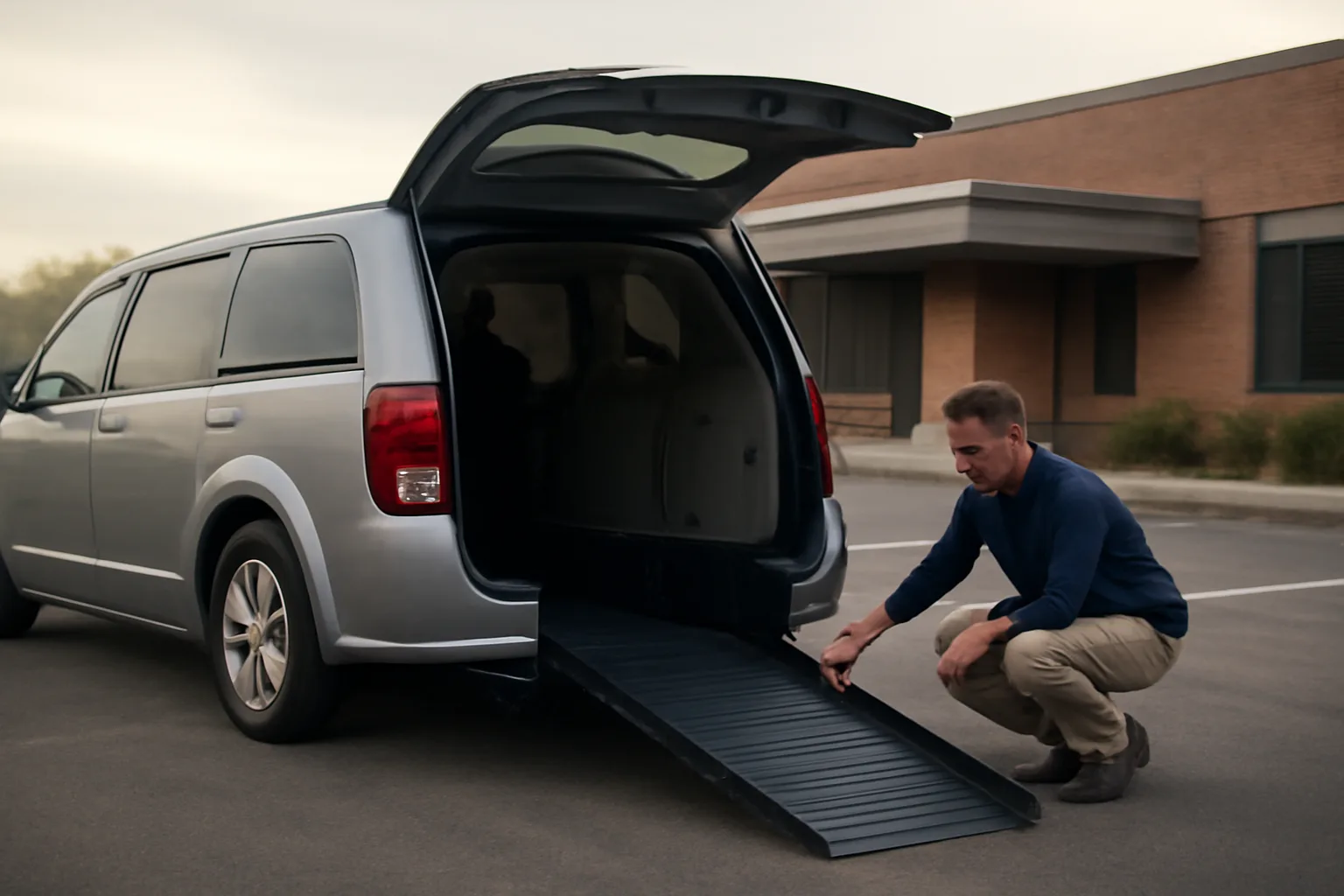
Starting with one van is more than possible, it's how most owner-operators in this industry actually begin. You don't need a fleet to get Medicaid-enrolled or broker-credentialed; you need one compliant vehicle, valid insurance, and a clean background check. The practical tradeoff with one van is capacity, not eligibility. Brokers will credential a single-vehicle operator the same way they credential a ten-van company, but you'll only ever have as many trips as one van and one driver can run in a day, and if that van breaks down you have zero backup capacity until it's fixed. Some owner-operators solve this by starting solo, building a track record with the broker for six to twelve months, then adding a second vehicle once trip volume and cash flow justify it. One real cost to plan for: wheelchair vans need working lifts or ramps, and those mechanical systems are the most common breakdown point. A pre-purchase inspection from a mobility equipment dealer (more than a general mechanic) before you buy a used WAV is money well spent, since lift and ramp repairs can run into the thousands depending on the make.
What paperwork does Medicaid provider enrollment actually require?
Every state's Medicaid provider enrollment for NEMT asks for a similar core set of documents, even though the exact portal and form names differ. Expect to submit business formation documents, proof of commercial insurance meeting your state's minimum liability limits, vehicle registration and inspection records, driver background check results, and often a completed W-9 or provider agreement. Some states also require an NPI (National Provider Identifier) even for transportation-only providers, while others don't. Some require a surety bond. Some require proof of a business address separate from a home address. This is exactly the kind of detail that changes by state and sometimes by rebid cycle, so treat any list you read online, including this one, as a starting checklist to confirm against your specific state Medicaid agency's current published requirements, not a final answer. Broker credentialing after state enrollment usually adds its own layer: broker-specific driver training modules, a separate vehicle inspection to the broker's spec (which can be stricter than the state minimum), and sometimes a background check refresh even if you already passed the state's. Budgeting time for both processes, more than one, keeps your launch timeline realistic.
What does broker pay actually look like for wheelchair van trips?
Brokers generally pay owner-operators through a rate schedule built around a base trip rate plus a per-mile rate once the trip exceeds a set number of loaded miles, and wheelchair van rates run higher than ambulatory sedan rates because of the added equipment, insurance, and driver training requirements. The honest problem is that these rate schedules are not standardized nationally and most brokers treat them as proprietary information shared only with credentialed providers in a given state or region. What one broker pays in one state's contract can be meaningfully different from what the same broker pays under a different state's contract, because the broker's own rate comes from what that state's Medicaid agency pays the broker in the underlying procurement. Some states do publish their Medicaid NEMT fee schedules directly when they run the program without a broker or alongside one; those documents are public and worth pulling if your state has one, since it at least tells you the ceiling rate the state is paying into the system, even if the broker's pass-through rate to you is lower. If you're evaluating whether wheelchair van trips are worth the higher vehicle and insurance cost compared to running an ambulatory sedan, ask the broker directly for their current rate card during credentialing rather than relying on rate figures posted in forums or old blog posts, since rates get renegotiated at each contract cycle.
How does state Medicaid rate-setting affect what I get paid?
Your Medicaid NEMT pay traces back to a rate the state Medicaid agency sets or approves, either directly for fee-for-service transportation providers or indirectly through the capitated or fee-for-service contract it awards to a broker like Modivcare or MTM. Federal law requires state Medicaid programs to ensure transportation is available, but it does not set a national reimbursement rate; that's left to each state, which is exactly why NEMT pay varies so much by geography [1]. Some states run open-enrollment fee-for-service NEMT where any qualified provider can enroll and bill Medicaid directly for approved trips. Other states use a single statewide broker under a capitated contract, where the broker gets paid a set amount per Medicaid member per month and then negotiates its own rates with the drivers and companies in its network. That second model, the capitated broker model, is why your pay as an owner-operator depends heavily on which broker holds your state's contract and how that broker chooses to structure driver payment, more than on the underlying state Medicaid budget. It's worth asking directly during credentialing whether your state runs fee-for-service, broker-capitated, or a hybrid, since that shapes both your paperwork and your pay structure.
What ongoing costs eat into NEMT income?
Fuel, insurance, maintenance, and idle time (unpaid deadhead miles between trips) are the four costs that most affect what you actually keep from your gross trip revenue, and none of them are optional or one-time. Commercial auto insurance for a wheelchair van typically costs more than a personal vehicle policy of comparable value, because insurers price in the higher liability exposure of transporting a passenger who may need physical assistance, plus the added value of the lift or ramp equipment. Get quotes from insurers who specifically write NEMT or livery policies rather than a general personal auto insurer, since some personal insurers won't write a policy for a vehicle used commercially to transport passengers at all. Maintenance on the wheelchair lift or ramp system is a recurring cost that ambulatory-only operators don't have. Hydraulic lifts and ramps need periodic servicing, and a failed lift on trip day means a cancelled ride, a possible broker penalty for a missed or late trip, and a repair bill. Deadhead time (driving back from a drop-off with no paying passenger, or driving to a pickup) is unpaid in almost every broker pay structure. Owner-operators who cluster trips geographically and manage their own scheduling tend to reduce deadhead miles more than those who take every dispatched trip regardless of location, though this depends heavily on how much control your broker's dispatch system gives you over trip selection.
Is NEMT a good business to start in 2026?
There's no single yes-or-no answer, because it depends on your state's broker contract terms, your local competition, your access to a reliable used or new WAV, and your tolerance for two layers of paperwork (state Medicaid plus broker) before your first paid trip. What's genuinely true across states: Medicaid NEMT demand is structural, not seasonal, because federal Medicaid rules require states to guarantee transportation access to covered services [1], so the underlying need for rides doesn't disappear. What varies enormously is how many owner-operators are already credentialed in your specific broker region, whether that broker is currently accepting new providers or has a waitlist, and what the local wheelchair van trip rate actually is. The realistic way to find out if it's worth it for you is to call your state Medicaid transportation unit and your target broker's provider enrollment line before you buy a van, ask directly whether they're accepting new wheelchair van providers in your county, and ask for their current rate schedule. If you're organizing the state enrollment and broker credentialing paperwork yourself, a resource like RideCredential's $199 Launch Kit Builder can help you assemble the state and broker document checklists in one place, though it's a paperwork tool, not a guarantee of approval or income; approval decisions rest entirely with the state agency and broker.
Frequently asked questions
How much does a non emergency medical transportation business make?
There's no reliable public data on this, because pay depends on your state's Medicaid rate, your broker's pay structure, and your vehicle type. Brokers generally pay a base trip rate plus per-mile fees, with wheelchair van trips paying more than sedan trips. Confirm current rates directly with your broker and state Medicaid agency before buying a vehicle.
What is non emergency medical transportation (NEMT)?
NEMT is transportation Medicaid provides to eligible members who need a ride to a covered medical service but don't require ambulance-level care. States must ensure this transportation is available under 42 CFR 431.53, and most run it through regional or statewide brokers like Modivcare, MTM, Access2Care, or SafeRide.
Does Medicaid cover ambulance rides?
Yes. Medicaid covers ambulance transportation when medically necessary, but it's billed and reimbursed separately from broker-managed NEMT trips. NEMT covers members who don't need ambulance-level clinical care during the ride; ambulance service is for situations requiring monitoring or emergency-level care in transit.
Does Medicare cover medical transportation?
Medicare Part B covers ambulance transportation when other transport would endanger your health, and covers some non-emergency ambulance rides with a doctor's order. Original Medicare does not have a standing non-emergency broker benefit like Medicaid; some Medicare Advantage plans offer limited supplemental transportation perks instead.
How do you start a medical transportation business?
Form a business entity, get commercial insurance, buy a compliant vehicle, complete any state-required permits or background checks, and enroll as a Medicaid provider before credentialing separately with your regional broker. Each state's exact checklist differs, so confirm requirements with your state Medicaid transportation unit before spending on a vehicle.
How do you start a NEMT business specifically, as opposed to general medical transport?
Starting a NEMT business follows the same core steps as general medical transport (entity, insurance, vehicle, permits) plus two NEMT-specific requirements: Medicaid provider enrollment through your state agency and separate credentialing with whichever broker (Modivcare, MTM, Access2Care, SafeRide, or a state-run program) holds your region's contract.
How do you start a medical transportation business with one van?
One van is enough to get Medicaid-enrolled and broker-credentialed; capacity, not eligibility, is the limit. Make sure the van's insurance and, for wheelchair vans, the lift or ramp pass inspection. Many owner-operators start solo and add vehicles later once trip volume and broker relationship are established.
What is NEMT, and how is it different from a regular ambulance?
NEMT stands for non-emergency medical transportation: rides to Medicaid-covered appointments for people who don't need ambulance-level medical care in transit. Ambulances provide emergency or clinically monitored transport and are billed under a separate Medicaid benefit category with different providers and rates.
Does Medicaid cover ambulance rides for non-emergency situations too?
Sometimes, but it depends on medical necessity documentation, more than a request for a ride. Non-emergency ambulance use under Medicaid generally requires a physician certification that the patient's condition requires ambulance-level transport; otherwise the trip falls under the standard NEMT broker system instead.
How long does Medicaid provider enrollment take for NEMT?
Timelines vary by state and are not something any private company can guarantee or speed up. Processing depends on your state Medicaid agency's current workload, whether your documentation is complete on first submission, and whether your state requires a separate site or vehicle inspection. Confirm current timelines directly with your state Medicaid transportation unit.
Do I need to be credentialed with every broker, or just one?
Only with the broker or brokers actually operating Medicaid NEMT contracts in your service area; most regions have one primary broker, though this can change at each contract rebid. Check with your state Medicaid transportation unit to confirm which broker currently holds your region's contract before applying.
What's the biggest mistake new NEMT owner-operators make?
Buying a van before confirming broker enrollment status in their county. Some broker regions have waitlists or aren't accepting new wheelchair van providers at all. Call the broker's provider enrollment line and your state Medicaid transportation unit first, then buy the vehicle once you know there's an open path to credentialing.
Sources
- Cornell Law School Legal Information Institute, 42 CFR 431.53: States must ensure necessary transportation for Medicaid recipients to and from providers
- Medicaid.gov, Non-Emergency Medical Transportation: NEMT is for beneficiaries who need a ride to a covered Medicaid service but don't require ambulance-level care
- Medicare.gov, Ambulance Services: Medicare Part B covers ambulance services when other transportation could endanger health, including limited non-emergency coverage with a doctor's order
- New York State Department of Health, Medicaid Transportation Program: State Medicaid agencies publish specific NEMT provider enrollment and transportation program materials that vary by state
- Social Security Act Section 1902(a)(70), Cornell LII: Federal Medicaid law establishes the state plan requirements, including transportation assurance, that underlie NEMT broker contracting
- Government Accountability Office, GAO-16-238, Nonemergency Medical Transportation: Updated Medicaid Guidance Could Help States: Federal oversight review found states vary widely in how they structure and pay for Medicaid NEMT, including broker versus fee-for-service models