Last updated 2026-07-23
TL;DR
"No emergency medical transportation" usually means NEMT, non-emergency medical transportation: scheduled rides to medical appointments for people who don't need an ambulance. Medicaid must cover it under federal rule 42 CFR 431.53. Medicare Part B covers it only in narrow cases. Starting a business means an entity, a compliant wheelchair van, driver screening, state Medicaid enrollment, and broker credentialing with companies like Modivcare or MTM.
What is non-emergency medical transportation (NEMT)?
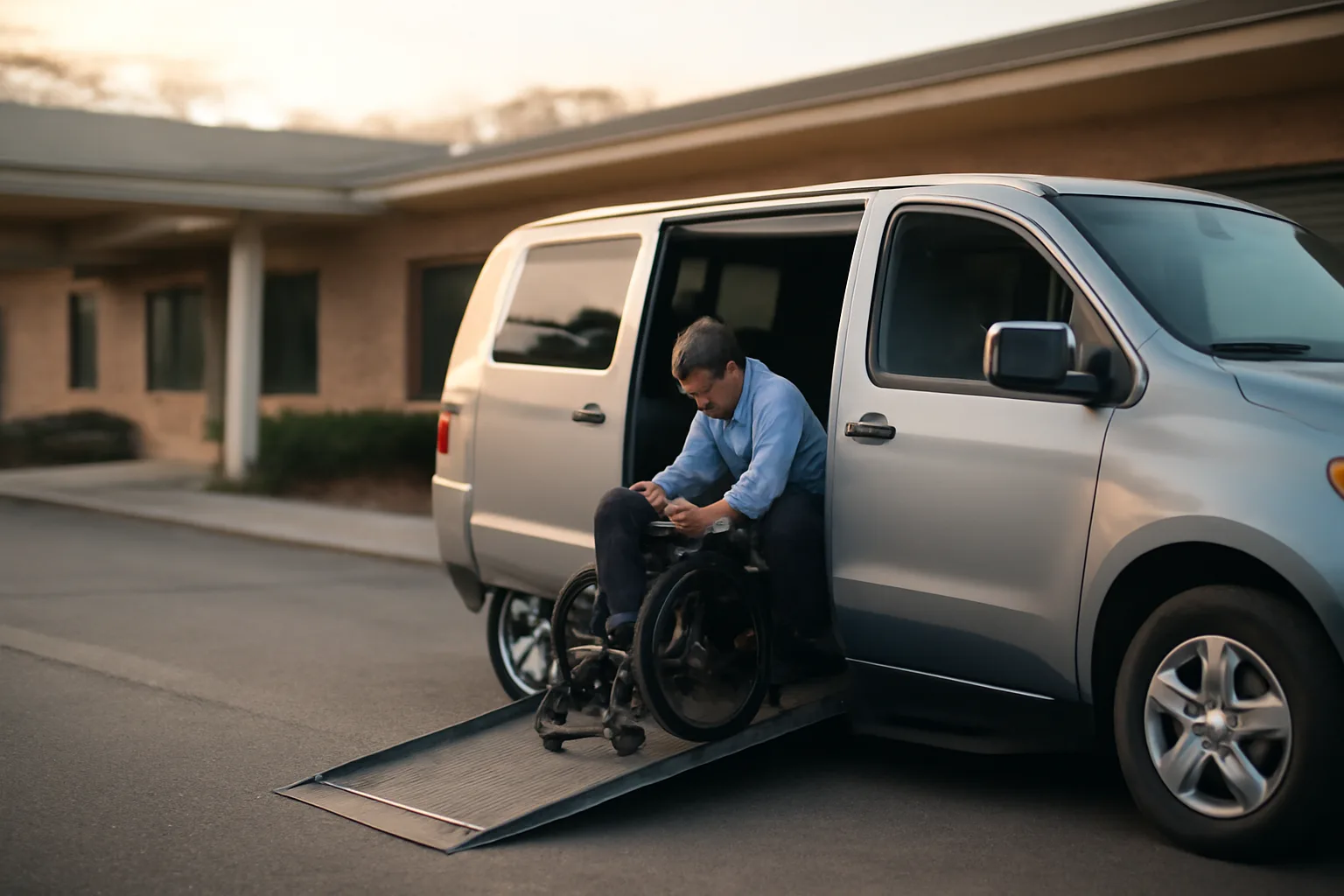
Non-emergency medical transportation, almost always shortened to NEMT, is transportation to and from medical care for people who don't have an emergency but can't get there on their own. Think dialysis three times a week, chemo infusions, physical therapy, or a routine OB visit for someone who doesn't drive and has no ride. It's not a 911 call. No siren, no paramedic, no cardiac monitor. The phrase people sometimes search, "no emergency medical transportation," is really just a garbled way of asking about NEMT. It's the same service: rides for people whose medical need is real but not urgent. NEMT vehicles range from a sedan or minivan for an ambulatory rider up to a wheelchair-accessible van with a ramp or lift, and in some states, stretcher vans for people who must travel lying down but don't need ambulance-level medical care. The federal government requires state Medicaid programs to make this transportation available. As the Centers for Medicare & Medicaid Services puts it, states must "ensure necessary transportation for beneficiaries to and from providers" under the Medicaid transportation assurance rule [1]. Most states don't run this in-house anymore. They contract with transportation brokers, companies like Modivcare, MTM, Access2Care, or SafeRide, who schedule and dispatch rides across a network of independent transportation providers. That's where most new wheelchair-van owner-operators actually plug in: not by contracting directly with a state Medicaid agency, but by getting credentialed with the broker that holds that state's contract. If you're new to the terminology, nemt and non emergency medical transportation are the two search terms that map onto this same service, so you'll see both used interchangeably across state Medicaid websites.
How is NEMT different from an ambulance or emergency medical transport?
The line is medical necessity and level of care, more than the vehicle. An ambulance carries emergency medical equipment and trained EMS staff who can intervene if a patient crashes en route. NEMT does not. A wheelchair van driver can secure a wheelchair, help someone transfer to a seat, and drive safely, but can't administer oxygen titration or run a cardiac protocol. If someone needs monitoring, IV medication management, or the possibility of emergency intervention during the ride, that's emergency medical transport or at minimum a specialized medical transport, not standard NEMT. States generally define these tiers in their Medicaid provider manuals: ambulatory (car or van, walks or uses a cane), wheelchair van, and stretcher van, each billed and authorized differently. Getting this distinction right matters for credentialing. Brokers ask what level of service you're set up to provide, and misrepresenting your vehicle's capability (claiming stretcher capacity in a standard wheelchair van, for example) is the kind of thing that gets a contract terminated fast, more than flagged.
Does Medicaid cover ambulance rides?
Yes, but through a different benefit and different reimbursement rules than NEMT. Medicaid covers ambulance transportation when it's medically necessary, meaning the beneficiary's condition requires the vehicle itself and the medical attention only an ambulance crew can give during transport. States set their own ambulance rates and prior authorization rules within federal guidelines, and Medicaid.gov's transportation guidance page covers both benefits under the umbrella of ensuring beneficiaries "are transported to and from providers" [1]. NEMT and ambulance service are billed differently, licensed differently (ambulance services typically need state EMS licensure, more than a transportation provider agreement), and staffed differently. If you're buying a wheelchair van and planning to enroll as an NEMT provider, you are not entering the ambulance business, and you shouldn't market yourself as one. Different rules, different insurance, different training requirements entirely.
Does Medicare cover medical transportation?
Barely, and this trips up a lot of new operators who assume Medicare works like Medicaid here. Medicare Part B covers ambulance services when other transportation could endanger the person's health, and only under specific medical necessity documentation [2]. It does not generally cover routine non-emergency van or wheelchair-van rides to a doctor's appointment. Some Medicare Advantage plans have added non-emergency transportation as a supplemental benefit in recent years, and CMS has expanded the flexibility Advantage plans have to offer it since 2019. But that's plan-specific, not a Medicare Part A/B guarantee, and coverage varies wildly by plan and county. If a caller says "Medicare will pay for my ride," verify it. Don't assume it, and don't bill it as if it were Medicaid NEMT. This is one of the most common billing mistakes new NEMT owner-operators make in their first year, mixing up a beneficiary's Medicare Advantage transportation benefit with a state Medicaid NEMT authorization.
What is NEMT, exactly, and who has to provide it?
NEMT is the transportation benefit that gets Medicaid beneficiaries to covered medical services when they have no other way to get there and don't need emergency care. Federal Medicaid regulation 42 CFR 431.53 requires state Medicaid plans to "specify that the Medicaid agency will ensure necessary transportation for recipients to and from providers" [1]. That single regulation is why every state Medicaid program, one way or another, funds a NEMT benefit. States have real flexibility in how they deliver it. Some run it through a single statewide broker contract. Some split the state into regions with different brokers. A few still let counties or managed care organizations manage transportation directly. That's why "how do I get credentialed" has 50 different answers depending on which state you're in, and sometimes different answers depending on which region of the same state you're in. The practical upshot for a new owner-operator: you don't enroll in "NEMT" as a single national program. You enroll as a Medicaid transportation provider with your state (sometimes required before broker credentialing, sometimes not), and separately you get credentialed with whichever broker or brokers hold contracts in your service area. Confirm both requirements with your broker and your state Medicaid agency before you assume you're ready to take trips.
How to start a medical transportation business (the full sequence)
Most people who ask "how to start a medical transportation business" are really asking how to start a NEMT business with one or two wheelchair vans, so that's the version worth walking through step by step. 1. Pick a business structure and get your EIN. An LLC is the common choice for liability separation, but talk to an accountant about what fits your situation. 2. Get your entity licensed to operate in your state, which may mean a business license, a for-hire transportation permit, or both depending on your state's Department of Transportation or Public Utilities Commission rules. 3. Buy or lease a compliant vehicle. A wheelchair-accessible van needs a certified lift or ramp, secured wheelchair tie-downs (four-point strap systems are standard), and it needs to meet the Americans with Disabilities Act's accessibility expectations for public accommodation vehicles [3]. 4. Get commercial auto insurance with the right limits. NEMT insurance is not standard commercial auto; brokers set minimum liability thresholds (commonly in the $1 million combined single limit range, though this varies by broker and state, so confirm with your broker and state Medicaid agency). 5. Handle driver requirements: a clean motor vehicle record, background check, drug screening, CPR/First Aid certification, and often defensive driving or passenger assistance training specific to wheelchair securement. 6. Enroll as a Medicaid provider with your state Medicaid transportation unit, if your state requires direct enrollment ahead of or alongside broker credentialing. 7. Apply for credentialing with the broker(s) operating in your county or region, which usually means a separate application, vehicle inspection, insurance certificate, and driver roster submission. 8. Set up scheduling, dispatch, and mileage/trip documentation systems, because brokers audit trip logs and GPS data, and sloppy records are one of the top reasons contracts get suspended. That's the real order of operations. Skipping steps (buying a van before confirming broker vehicle-age limits, for instance) is the single most expensive mistake new operators make.
How to start a NEMT business with just one van
One van is a completely normal way to start, and plenty of successful owner-operators never scale past two or three vehicles. The sequence doesn't change; the scale does. With one van, focus your energy on getting that vehicle perfectly compliant rather than spreading thin across paperwork for a fleet you don't have yet. Brokers inspect vehicles, sometimes annually, sometimes at enrollment and randomly after, checking things like tie-down function, interior cleanliness, mirror and lift condition, and current registration and inspection stickers. A single van that fails inspection stalls your entire income, so there's no cutting corners here. One-van operators should also think hard about driver redundancy. If you are the only driver and you get sick, the van sits idle and trips you're contracted for may go unfulfilled, which brokers track. Some owner-operators bring on a second part-time driver even before adding a second vehicle, specifically to keep the one van running. Finally, don't over-invest in fleet-scale software or a dispatch office when you're running one vehicle. A phone-based scheduling app and a simple spreadsheet for trip logs is enough at this stage. Save the capital for insurance, maintenance reserves, and the vehicle itself.
How do you start a medical transportation business (state and broker enrollment specifics)
This is the part that varies the most and frustrates new operators the most, because there is no single national NEMT enrollment portal. Each state Medicaid agency runs its own transportation program, sometimes through its Medicaid agency's transportation unit directly, sometimes fully outsourced to a broker with almost no state-level provider portal at all. Start by identifying your state's current NEMT broker(s) by service region. States frequently rebid these contracts (a broker holding a contract today may not hold it in three years), so check your state Medicaid transportation page directly rather than relying on older articles or forum posts. Then check whether your state also requires separate Medicaid provider enrollment (a state Medicaid ID number) in addition to broker credentialing, because some states require both and some fold it entirely into the broker application. Expect the broker credentialing packet to ask for: your business license and EIN documentation, vehicle registration and inspection records, insurance certificates naming the broker as certificate holder, driver background check and drug test results, and often a signed provider agreement with specific service-level and cancellation-notice terms. Processing times vary widely by broker and by how backed up their credentialing department is; some operators report a few weeks, others report a couple of months, so build a cash buffer for the wait. Because every state's process, every broker's paperwork checklist, and every set of vehicle and insurance minimums differs, this is genuinely a "confirm with your broker and state Medicaid agency" situation at almost every step. Anyone who tells you the process is identical in Ohio and Texas either hasn't done it in both states or is oversimplifying.
How to start a non-emergency medical transportation business without wasting money
| Vehicle | Confirm broker's vehicle age, mileage, and equipment rules | Buy any used wheelchair van and hope it qualifies | |
|---|---|---|---|
| Insurance | Get broker's minimum limits in writing | Buy a generic commercial auto policy | |
| Drivers | Confirm required certifications (CPR, passenger assistance, etc.) | Assume a regular CDL or driver's license is enough | |
| Enrollment | Check if state Medicaid enrollment is required alongside broker credentialing | Assume broker credentialing alone covers you | |
| Documentation | Set up compliant trip logs and mileage records before your first trip | Wing it and fix records after an audit flag | A lot of the friction here isn't regulatory complexity for its own sake, it's just that nobody hands new owner-operators a checklist that spans both the state Medicaid side and the broker side at once. That gap is exactly what a $199 State + Broker NEMT Launch Kit is built to close: a single reference that walks through both tracks so you're not discovering a missing document the week you expected to start taking trips. |
The costliest mistakes are almost always sequencing mistakes, not effort mistakes. People buy a used minivan and convert it before confirming the broker's vehicle age limit (many brokers won't credential vehicles over 5 to 7 years old, though this varies), or they get commercial insurance before confirming the broker's specific minimum limits and endorsement requirements, then have to redo the policy. Here's a cleaner order to avoid rework: | Step | Do this first | Not this |
What does the state Medicaid transportation unit actually require, separate from the broker?
This is a distinction a lot of new operators miss entirely. Your state Medicaid agency and the broker managing rides in your region are not always the same review process, and meeting one doesn't automatically mean you've met the other. Some states require you to be an enrolled Medicaid provider (with your own state Medicaid provider ID) before a broker will even look at your application, because the broker is paying you as a subcontracted Medicaid provider, not as an independent vendor outside the Medicaid system. Other states have folded transportation provider enrollment entirely into the broker's process, so there's no separate state application at all. Medicaid.gov's own guidance for states notes that transportation can be delivered "directly, or through contracts, or a combination" of methods [1], which is exactly why the process looks so different state to state. Georgia's approach isn't Ohio's approach, and Ohio's approach may not even look the same next year if the state rebids its broker contract. The only reliable move is to check your specific state Medicaid agency's transportation unit page directly, and to ask your target broker in writing whether state-level Medicaid enrollment is a prerequisite or a parallel requirement. Don't assume; get it confirmed and keep the confirmation in writing.
What ongoing compliance keeps a NEMT contract active?
Getting credentialed is the start, not the finish line. Brokers routinely re-verify insurance certificates (usually annually), re-inspect vehicles, and re-check driver background screens and drug testing on a recurring schedule, often annually or biennially depending on the broker and state. Trip documentation is the area that causes the most contract suspensions after year one. Brokers expect accurate mileage logs, on-time pickup and drop-off records, and no-show documentation that matches their dispatch system's GPS data. Discrepancies between what you log and what the GPS shows trigger audits, and repeated discrepancies can end a contract regardless of how good your driving record is. Vehicle maintenance records matter too. Keep dated receipts for lift/ramp servicing, tie-down inspections, and routine maintenance, because a broker's periodic vehicle inspection will ask for them, and "I did the oil change but didn't keep the receipt" doesn't hold up well in an audit. Finally, watch your driver roster. If a driver's license status changes, or a background check flag appears, most broker agreements require you to report it and pull that driver from Medicaid trips immediately, not after your next scheduled recredentialing cycle.
Frequently asked questions
What is non-emergency medical transportation (NEMT)?
NEMT is transportation to and from medical appointments for people who need a ride but don't require ambulance-level emergency care, such as dialysis, chemo, or physical therapy trips. Federal Medicaid rule 42 CFR 431.53 requires state Medicaid programs to guarantee this transportation for beneficiaries who have no other way to get to covered care.
Does Medicaid cover ambulance rides?
Yes, when medically necessary, meaning the person's condition genuinely requires an ambulance crew and equipment during transport. This is a separate Medicaid benefit from NEMT, with its own licensing (state EMS certification) and billing rules, and states set their own ambulance reimbursement rates within federal Medicaid guidelines.
Does Medicare cover medical transportation?
Medicare Part B covers ambulance transportation only when other transport would endanger the person's health, with strict medical necessity documentation required. Routine non-emergency van rides to appointments generally aren't covered by original Medicare, though some Medicare Advantage plans now offer non-emergency transportation as a supplemental benefit, varying by plan and county.
How do you start a medical transportation business?
Form your business entity, get properly licensed vehicles and commercial insurance, meet driver screening and certification requirements, enroll with your state Medicaid agency if required, and get credentialed with the broker(s) operating in your service area, such as Modivcare or MTM. Confirm the exact sequence with your state and broker, since it varies.
How much does it cost to start a NEMT business with one van?
Costs vary too widely by state, vehicle condition, and insurance market to give a reliable number, and this article won't guess at revenue or trip volume either. Major cost categories include the vehicle (or conversion), commercial insurance meeting broker minimums, driver certifications, and business licensing. Get quotes for your specific state and vehicle before budgeting.
What's the difference between NEMT and an ambulance?
An ambulance carries emergency equipment and EMS staff who can intervene medically during transport. NEMT vehicles, like wheelchair vans, transport people who need help getting to care but aren't at risk of a medical emergency en route. The distinction affects licensing, billing, staffing, and insurance requirements.
Do I need to be Medicaid-enrolled before applying with a broker like Modivcare or MTM?
It depends on your state. Some states require you to hold a state Medicaid provider ID before a broker will process your application, since the broker pays you as a subcontracted Medicaid provider. Other states fold enrollment entirely into the broker's own credentialing process. Confirm directly with your state Medicaid transportation unit.
What kind of vehicle do I need for NEMT?
It depends on the service level you plan to offer. Ambulatory service can use a sedan or minivan. Wheelchair-accessible service needs a van with a certified ramp or lift and proper four-point tie-down securement, meeting ADA accessibility expectations. Some states also authorize stretcher vans for non-ambulatory patients who don't need ambulance-level care.
How long does NEMT broker credentialing take?
There's no fixed timeline; operators report anywhere from a few weeks to a couple of months, depending on the broker's backlog and how complete your submitted paperwork is. Build a cash buffer for the wait, and submit vehicle, insurance, and driver documentation together to avoid delays from back-and-forth corrections.
Can I run a NEMT business with just one wheelchair van?
Yes. Many owner-operators start and stay at one or two vehicles. Focus on getting that single van fully compliant with your broker's inspection standards, keep insurance and driver certifications current, and consider a backup driver early so the van isn't idle if you're unavailable.
Do NEMT drivers need special certification beyond a regular license?
Most brokers require a clean motor vehicle record, background check, and drug screening at minimum, plus CPR/First Aid certification and passenger assistance or wheelchair securement training. Exact requirements vary by broker and state, so get the specific list in writing before you hire or train drivers.
What happens if my NEMT trip logs don't match the broker's GPS data?
Mismatches between your documented mileage or timestamps and the broker's dispatch GPS records are a common trigger for compliance audits, and repeated discrepancies can lead to contract suspension. Keep accurate, contemporaneous trip logs and reconcile them against the broker's system regularly rather than waiting for an audit to catch errors.
Sources
- Medicaid.gov, Non-Emergency Medical Transportation: Federal rule 42 CFR 431.53 requires states to ensure necessary transportation for Medicaid beneficiaries to and from providers
- Medicare.gov, Ambulance Services coverage: Medicare Part B covers ambulance services only when other transportation would endanger the person's health
- ADA.gov, ADA requirements overview: Wheelchair-accessible vehicles used for public transportation services must meet ADA accessibility standards
- eCFR - Title 42: Federal regulation requiring states to ensure necessary transportation for Medicaid beneficiaries to and from providers (the basis for NEMT assurance of transportation).
- Federal Motor Carrier Safety Administration (FMCSA): Federal requirement that vehicles transporting passengers for compensation across state lines, including NEMT vans, may need a USDOT number as part of business registration.
- Internal Revenue Service (IRS) Publication 15 (Circular E): Federal employer tax withholding guidance relevant to hiring drivers when starting a non-emergency medical transportation business.
- CMS Medicaid Informational Bulletin: CMS informational bulletin outlining Medicaid NEMT broker requirements and state administration options relevant to broker enrollment specifics.
- Social Security Administration - Social Security Act Section 1902: Statutory basis under the Social Security Act requiring state Medicaid plans to provide for transportation of beneficiaries to and from medical providers.