Last updated 2026-07-25
TL;DR
A non-emergency medical transport business for sale can save you time, but only if the Medicaid enrollment, broker contracts, and vehicle permits actually transfer with it. Many don't. In most states you still have to re-enroll as a new Medicaid transportation provider and re-credential with brokers like Modivcare or MTM under your own name, even if you buy someone else's vans and phone number.
What is non-emergency medical transportation (NEMT)?
NEMT stands for non-emergency medical transportation. It's transportation to and from medical appointments for people who don't need an ambulance but can't drive themselves or use regular transit, often because they use a wheelchair, have a cognitive impairment, or live somewhere without reliable transit. Medicaid is required to cover it. Federal regulation at 42 CFR 431.53 requires states to "ensure necessary transportation for beneficiaries to and from providers" and to describe the methods they'll use to do that [1]. CMS guidance calls this the Non-Emergency Medical Transportation (NEMT) benefit, and it's technically an administrative requirement of the Medicaid state plan, not a guaranteed benefit category the way physician services are. That distinction matters because it's why every state runs NEMT a little differently: some manage it directly, most contract it out to regional or statewide brokers. The vehicles involved run from ambulatory sedans and minivans up to wheelchair vans and stretcher vans. NEMT does not include ambulances, and it does not include transportation during a medical emergency. If you're picturing lights and sirens, you're in the wrong article; that's emergency medical transport, a completely different licensing and reimbursement world.
How do you start a non-emergency medical transportation business (from scratch)?
Starting a NEMT business from scratch means five things happen roughly in this order: you form the business entity, get the right insurance and vehicle permits, enroll as a Medicaid transportation provider with your state, credential with the broker(s) that manage rides in your area, and pass vehicle/driver inspections before you're allowed to accept trips. First, form an LLC or corporation and get an EIN. Second, buy or lease a vehicle that meets your state's NEMT vehicle standards (wheelchair lift or ramp, tie-downs, size). Third, get commercial auto insurance with the liability limits your state Medicaid transportation unit requires, which is often higher than personal auto minimums. Fourth, enroll with your state Medicaid agency as a transportation provider, which usually means an application, background checks (owners and drivers), a site inspection, and sometimes a surety bond. Fifth, apply for credentialing with whichever broker (Modivcare, MTM, Access2Care, SafeRide Health, or a state-run alternative) holds the contract in your service area, since in most states you cannot bill Medicaid directly for NEMT trips; you get dispatched through the broker instead. Timelines vary a lot by state and by how backed up the broker's credentialing queue is. Confirm current timelines with your broker and your state Medicaid agency directly, since these change without much public notice. For a fuller walkthrough of documentation and background check requirements, see our guide to non emergency medical transportation provider enrollment.
How to start a NEMT business with one van
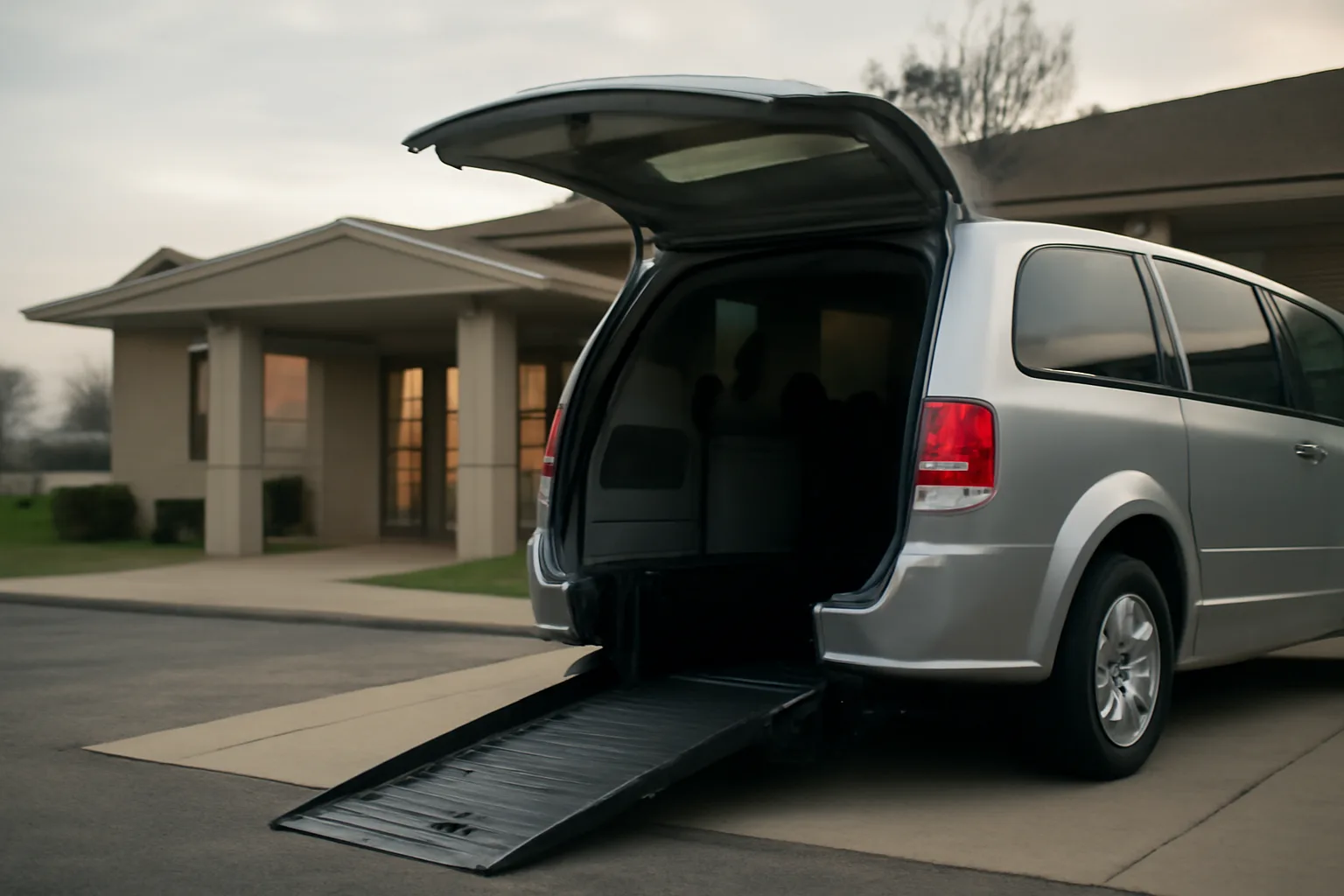
You can start with a single wheelchair van. Plenty of owner-operators do exactly that, and neither Medicaid enrollment nor broker credentialing requires a fleet. What it does require is that your one van, and you as the driver (or your one hired driver), meet every standard the state and broker apply to a hundred-van company. That means the van needs a compliant wheelchair lift or ramp, working tie-downs and occupant restraints meeting the vehicle's ADA and state inspection standards, and passes whatever annual or semi-annual inspection your state transportation unit runs. The driver needs a clean background check, often a specific NEMT or passenger-endorsement training certificate, and sometimes a CPR/first aid card. Insurance has to name the business, more than you personally, and meet the state's minimum liability limits for wheelchair-accessible passenger vehicles. The economics of a one-van operation are simple in structure even if nobody can promise you the numbers. You have vehicle payment or lease cost, fuel, insurance, maintenance, and driver time (yours or an employee's) against whatever per-trip or per-mile rate the broker pays. Brokers set those rates by contract with the state, and they vary by state, by mileage, and by whether the trip is ambulatory, wheelchair, or stretcher level. There's no universal number to quote here, and any article that gives you one is guessing. Ask the broker directly for their current rate sheet before you commit to a lease.
What should you check before buying a NEMT business for sale?
A NEMT business for sale usually advertises "Medicaid contracts," "broker approved," or "established routes." Verify every one of those claims directly with the state and broker before you pay anything, because in most states these credentials are not transferable to a new owner. Here's the checklist that matters: - Medicaid provider enrollment: Confirm whether the seller's enrollment is tied to their specific NPI, EIN, and owner background check, or whether it can transfer via a change-of-ownership (CHOW) process. Many state Medicaid programs require a fresh application on ownership change rather than a transfer, similar to how CMS treats provider enrollment changes of ownership for other Medicaid providers [2].
- Broker credentialing status: Ask the broker (Modivcare, MTM, Access2Care, SafeRide, or your state's broker) in writing whether credentialing follows the vehicle/business or the individual owner. Assume it does not transfer until you have that in writing.
- Vehicle titles and inspection history: Get the current state NEMT vehicle inspection certificate, more than a DMV title. An expired inspection means the van can't run trips on day one.
- Driver files: Background checks, MVR pulls, and training certificates usually belong to the individual, not the business. You'll likely need to re-run these under your own provider number.
- Outstanding compliance issues: Ask the state Medicaid transportation unit directly whether the seller has any open corrective action, suspension, or audit findings. This is public-record adjacent in many states and worth a call, more than an email.
- Contracts and rate sheets: Get the actual broker service agreement, not a summary. Rates and trip volume commitments (if any) should be in writing, dated, and current. If a seller can't produce broker credentialing letters and current state enrollment confirmation, you are buying a used van and a phone number, not a business.
Does Medicaid cover ambulance rides?
Yes. Medicaid covers ambulance transportation when it's medically necessary, under a separate benefit category from NEMT. States set their own coverage rules and rates within federal guidelines, and CMS's Medicaid benefits page confirms transportation services, including emergency ambulance, are covered as part of the required set of Medicaid transportation benefits [3]. The key difference from NEMT: ambulance transport requires medical necessity tied to an emergency or a condition requiring monitoring/care en route, and it's billed and licensed completely differently, usually through your state's EMS licensing agency rather than the Medicaid transportation broker. If you're looking at a business-for-sale listing that includes an ambulance service alongside NEMT vans, treat those as two separate regulatory tracks: one under EMS/ambulance licensure, one under NEMT broker credentialing. Don't assume a license in one covers the other.
Does Medicaid cover ambulance transportation and NEMT the same way?
No. Ambulance transportation and NEMT are covered under different parts of Medicaid's transportation framework, with different providers, different licensing bodies, and usually different payment mechanisms. Ambulance transport (emergency or medically necessary non-emergency ambulance transport) is billed fee-for-service or through managed care as a medical service, tied to EMS licensure standards set by your state health department. NEMT, by contrast, is administered by states as a Medicaid "assurance of transportation" obligation under 42 CFR 431.53, and most states hand day-to-day management to a broker who credentials providers, schedules rides, and pays per-trip rather than treating each ride as a standalone medical claim [1]. If your business plan mixes wheelchair van NEMT with stretcher-van or ambulance-adjacent transport, check both regulatory tracks separately with your state. A wheelchair van business and an ambulance business file completely different applications, even in the same state.
Does Medicare cover medical transportation?
Medicare's coverage of transportation is much narrower than Medicaid's. Medicare Part B covers ambulance services when other transportation could endanger the person's health, subject to medical necessity documentation, per CMS's ambulance services coverage rules [4]. Medicare does not have a broad NEMT benefit like Medicaid does. That said, some Medicare Advantage plans now offer NEMT-style transportation as a supplemental benefit. CMS's 2019 Medicare Advantage and Part D final rule expanded the definition of allowable supplemental benefits to include items and services that are not primarily health-related, including certain transportation, starting with contract year 2019 [5]. Coverage, trip limits, and provider networks for these Medicare Advantage transportation benefits are set plan-by-plan, not federally standardized, so if you want to work with Medicare Advantage riders you need to contract with each plan or its transportation vendor directly. This is a real opportunity for owner-operators. But it's a separate credentialing track from Medicaid NEMT broker enrollment, with its own applications and its own vendors.
What licenses and permits does a NEMT business need?
Licensing for NEMT is set state by state, and there's no federal NEMT operating license. At minimum, expect to need: a business entity registration, an EIN, a state vehicle permit specific to non-emergency medical transport (separate from a standard commercial vehicle registration), commercial auto insurance meeting the state's minimum liability limits, and driver background checks that typically include a state criminal history check and often an exclusion list check against the federal List of Excluded Individuals/Entities (LEIE) maintained by HHS OIG [6]. Many states also require: - A vehicle inspection specific to wheelchair lift/ramp function and tie-down integrity, done more often than a standard annual vehicle inspection.
- Driver training specific to passenger assistance, wheelchair securement, and sometimes CPR/first aid certification.
- A surety bond or proof of financial responsibility beyond standard insurance.
- Broker-specific credentialing on top of state enrollment, since the broker (not the state) usually does the actual dispatch and payment. Confirm the exact list with your state Medicaid transportation unit; requirements differ enough between states that a checklist written for one state will miss requirements in another. For a state-by-state breakdown, see medical transportation enrollment requirements.
How does broker credentialing work with Modivcare, MTM, Access2Care, and SafeRide?
Most states contract NEMT management to one or more brokers who handle scheduling, driver/vehicle credentialing, and payment on the state's behalf. Modivcare, MTM, Access2Care, and SafeRide Health are the largest national brokers, though many states also run their own regional broker systems or use smaller regional companies. Broker credentialing is a separate process from state Medicaid enrollment, and you typically need both, not one or the other. The broker will usually require: proof of your state Medicaid provider enrollment, current vehicle inspection and insurance documents, driver background checks and training certificates, and a signed provider services agreement setting out rates, service area, and performance standards (on-time percentage, complaint thresholds, and so on). Each broker runs its own portal and paperwork, and requirements shift with contract renewals, so a document set that got you approved in 2023 may not match what's required in 2026. Confirm current credentialing requirements directly with the broker operating in your state before you submit anything. If your state changes brokers (which happens when a state re-bids its NEMT contract), you may have to re-credential from scratch even if nothing else about your business changed. See our nemt broker comparison for a rundown of how the major brokers differ in documentation style and turnaround.
How much does it cost to buy or start a NEMT business?
There's no honest single number here, and any article promising one is making it up. Costs depend heavily on your state's specific licensing fees, insurance market, and whether you're buying a used wheelchair van or new. What you can budget for with real ranges: a used wheelchair-accessible van typically runs from the high teens into the $40,000s depending on age, mileage, and lift condition, while a new one from a mobility dealer often runs well over $50,000. Commercial auto insurance for a single wheelchair van varies enormously by state and driving record; get quotes from at least three carriers that specifically write NEMT policies, since general commercial auto carriers often don't understand the wheelchair-lift liability exposure and either decline or overprice it. State enrollment fees, background check fees, and broker application costs are usually in the low hundreds of dollars in total, not thousands, but they add up when you're also paying for vehicle inspection, driver training certification, and a surety bond if your state requires one. If you're buying an existing business, add the purchase price on top of all the above, since (as covered earlier) you'll likely be re-doing most of the enrollment and credentialing work anyway rather than inheriting it.
Is buying an existing NEMT business for sale worth it versus starting new?
Buying makes sense mainly for the vehicle and the local reputation, not for the paperwork. If the seller has a well-maintained wheelchair van with a current inspection, a known service area, and maybe an existing relationship with a dialysis clinic or dispatcher who trusts them, those things have real value. The Medicaid enrollment and broker credentialing almost always have to be redone under your name regardless, so don't pay a premium for "active contracts" without verifying in writing that they transfer. Starting new gives you a clean paper trail and lets you pick your own vehicle rather than inheriting someone else's maintenance history and mileage. It also means you control the timeline instead of discovering mid-purchase that the broker credentialing is stuck in a queue you didn't know about. Either path runs through the same core steps: state enrollment, broker credentialing, vehicle compliance, driver compliance. If you'd rather not piece together which state form and which broker packet you need on your own, a assembled reference like RideCredential's $199 State + Broker NEMT Launch Kit (see the launch kit builder) pulls the current state Medicaid transportation unit contacts and broker credentialing checklists into one place, though you still have to do the actual applications yourself; nobody can do that part for you or guarantee the outcome.
What ongoing compliance do NEMT businesses have to maintain?
Compliance doesn't stop once you're enrolled and credentialed. Expect recurring vehicle inspections (often annual or semi-annual), periodic driver background check renewals, insurance certificate updates whenever your policy renews, and broker performance reviews tied to on-time rates and complaint volume. Most state Medicaid programs also require providers to report ownership changes, new drivers, and new vehicles as they happen, more than at renewal time. Missing these updates is one of the most common reasons owner-operators get suspended from a broker network, not fraud or bad driving. Keep a simple compliance calendar from day one: inspection due dates, insurance renewal dates, driver certification expirations, and broker recredentialing deadlines. If you're buying an existing business, ask for that calendar and history directly, since a seller who can't produce clean compliance records is telling you something important without saying it out loud.
Frequently asked questions
How do I start a medical transportation business?
Form your business entity, get commercial auto insurance and a compliant wheelchair van, then enroll as a Medicaid transportation provider with your state and credential with the broker (Modivcare, MTM, Access2Care, SafeRide, or your state's broker) covering your area. Vehicle inspections and driver background checks happen alongside enrollment. Confirm exact steps and order with your state Medicaid transportation unit, since sequencing varies by state.
Does Medicaid cover ambulance rides?
Yes, Medicaid covers medically necessary ambulance transportation as a distinct benefit from NEMT, with states setting specific coverage and payment rules within federal guidelines set out in Medicaid's benefits framework. Ambulance transport is licensed and billed separately from wheelchair-van NEMT, usually through your state's EMS licensing agency rather than a Medicaid transportation broker.
What is NEMT?
NEMT stands for non-emergency medical transportation: rides to and from medical appointments for Medicaid beneficiaries who can't use regular transportation because of a disability, wheelchair use, or lack of transit access. States must "ensure necessary transportation" for beneficiaries under 42 CFR 431.53, usually managed through a contracted broker rather than billed directly to Medicaid.
Does Medicare cover medical transportation?
Medicare Part B covers ambulance services when other transportation would endanger the patient's health, but Medicare doesn't have a broad non-emergency transportation benefit like Medicaid does. Some Medicare Advantage plans offer NEMT-style rides as a supplemental benefit since CMS expanded allowable supplemental benefits starting in contract year 2019, but coverage varies by plan.
How do I start a NEMT business?
Same core path as any medical transportation business: entity formation, a compliant wheelchair van, commercial insurance, state Medicaid provider enrollment, and broker credentialing. The specific forms, fees, and background check requirements are set by your individual state Medicaid transportation unit and the broker operating in your service area, so confirm current requirements directly before applying.
What is non-emergency medical transportation?
It's transportation for people who need help getting to medical appointments but don't need an ambulance, often wheelchair users, dialysis patients, or people with cognitive impairments. It's a required part of state Medicaid programs' transportation assurance obligation, distinct from emergency ambulance transport, and is usually managed by a contracted broker rather than paid directly by the state.
Can I start a NEMT business with just one van?
Yes. A single wheelchair van meeting your state's vehicle standards, insured under the business, with one properly background-checked and trained driver, can be enrolled and credentialed the same as a large fleet. The regulatory bar (inspections, insurance limits, driver checks) doesn't scale down for small operators, so budget time and money for full compliance even with one vehicle.
Do Medicaid NEMT contracts transfer when you buy an existing business?
Usually not automatically. Most state Medicaid programs and brokers require a new owner to submit a fresh enrollment or credentialing application, including new background checks, rather than transferring the seller's approval. Get this confirmed in writing from the state Medicaid transportation unit and the broker before paying for a business based on its 'existing contracts.'
What vehicle requirements does NEMT credentialing usually include?
Expect requirements for a functioning wheelchair lift or ramp, secure tie-downs and occupant restraints, passing a state-specific vehicle inspection (often more frequent than standard annual inspections), and commercial auto insurance at limits set by the state, which are often higher than personal auto minimums. Exact standards differ by state, so confirm with your state Medicaid transportation unit.
How much does a wheelchair van cost for a NEMT business?
Used wheelchair-accessible vans commonly run from the high teens into the $40,000s depending on age, mileage, and lift condition, while new ones from mobility dealers often exceed $50,000. Costs vary by region and dealer, so get multiple quotes and have any used lift and tie-down system inspected before purchase, separate from the general vehicle inspection.
Do I need a special license to drive for a NEMT company?
Requirements vary by state, but many require a standard driver's license (not necessarily commercial) plus passenger-assistance and wheelchair-securement training, a clean background check, and sometimes CPR/first aid certification. Some states or brokers add additional training modules. Confirm the specific driver requirements with your state Medicaid transportation unit and the broker you plan to credential with.
What's the difference between NEMT and ambulance transportation for licensing purposes?
NEMT is credentialed through state Medicaid enrollment and a transportation broker (Modivcare, MTM, Access2Care, SafeRide, or a state equivalent), covering non-emergency rides for people who don't need medical monitoring en route. Ambulance transportation is licensed through your state's EMS or health department and covers emergency or medically necessary transport requiring clinical care during the ride. They are separate licensing tracks with separate applications.
Is a NEMT business profitable for an owner-operator with one van?
This depends on broker per-trip rates in your state, vehicle costs, insurance, and how much driving time you or an employee can put in, all of which vary too much by state and market to state a reliable figure. Get the broker's current rate sheet and run your own numbers against real vehicle, insurance, and fuel costs before assuming profitability.
Sources
- eCFR, 42 CFR 431.53 (Assurance of transportation): States must ensure necessary transportation for Medicaid beneficiaries to and from providers
- CMS, Medicare Provider Enrollment: Change of Ownership (CMS Pub. 100-08, Chapter 10): Provider enrollment status can require new applications on ownership change rather than automatic transfer
- Medicaid.gov, Medicaid Benefits: Transportation: Medicaid covers transportation services including ambulance as part of required benefits framework
- Medicare.gov, Ambulance Services coverage: Medicare Part B covers ambulance services when other transportation would endanger health
- Federal Register, Medicare Program; Contract Year 2019 Policy and Technical Changes to the Medicare Advantage, Medicare Cost Plan, Medicare Fee-for-Service, and Medicare Prescription Drug Benefit Programs (83 FR 16440): CMS expanded allowable Medicare Advantage supplemental benefits to include non-medical transportation starting contract year 2019
- HHS Office of Inspector General, List of Excluded Individuals/Entities (LEIE): Federal exclusion list used in provider and driver background check screening