Last updated 2026-07-25
TL;DR
"NEMT lån" is Norwegian/Danish for "NEMT loan," the financing owner-operators use to buy a wheelchair van before enrolling as a Medicaid transportation provider. Options include commercial auto loans, SBA 7(a) loans, and equipment financing. Lenders typically want 10-20% down, and you'll need Medicaid enrollment and broker credentialing lined up before a van generates any billable trips.
What does "nemt lån" mean, and why are you seeing this term?
"Nemt lån" is a Scandinavian phrase, most likely Norwegian or Danish, that translates roughly to "easy loan" or, in the context most searchers mean it, "NEMT loan." If you landed here searching that exact phrase, you're almost certainly looking for financing information for a non-emergency medical transportation (NEMT) business, specifically how to borrow money to buy a wheelchair van or accessible vehicle and get it running as a Medicaid transportation provider. This guide treats it that way. We're not going to pretend there's a formal financial product called a "NEMT lån." There isn't. What exists is a real financing problem every new wheelchair-van owner-operator faces: you need a vehicle that can cost $45,000 to $75,000 or more once it's wheelchair-accessible, and you need that vehicle before you can enroll with Medicaid or get credentialed with a broker like Modivcare, MTM, Access2Care, or SafeRide. Nobody hands you trips first and lets you buy the van later. So this article covers three things in order: what NEMT actually is and what it covers, how financing for a wheelchair van typically works, and the state/broker enrollment steps that have to happen alongside or after the loan. If you already know what NEMT is, skip to the financing section. If you're brand new, start at the top.
What is NEMT (non-emergency medical transportation)?
Non-emergency medical transportation (NEMT) is transportation to and from Medicaid-covered medical appointments for people who don't need an ambulance but can't get there on their own, whether because of a disability, a wheelchair, a vision impairment, or simply no access to a car. It's a federally required part of most state Medicaid programs, not an optional extra. The Code of Federal Regulations requires state Medicaid plans to "ensure necessary transportation for beneficiaries to and from providers" and specifies that states "shall... ensure that eligible individuals have transportation to and from providers." [1] States can run this in-house, contract with brokers, or use a mix of both, which is exactly why credentialing looks different depending on which broker manages the area you serve. NEMT is not an ambulance. It's not for emergencies. It covers routine trips: dialysis, chemotherapy, physical therapy, OB/GYN visits, mental health appointments, and pharmacy pickups tied to a covered visit. The vehicles range from ambulatory sedans to wheelchair vans to stretcher vans, and what you can legally provide depends on your vehicle type and your state's licensing rules. For a broader breakdown of vehicle categories and how brokers assign trips by vehicle type, see non emergency medical transportation.
Does Medicaid cover ambulance rides, or only NEMT?
Medicaid covers both, but they're different benefits with different rules. Emergency ambulance transportation, the kind dispatched through 911 for a life-threatening situation, is covered under a separate Medicaid transportation benefit and billed differently than NEMT. Non-emergency ambulance transportation (for example, a stretcher transfer between facilities for a patient who is bedbound but stable) is covered too, but it usually requires a physician certification of medical necessity. Medicaid.gov's own program page for this benefit confirms that Medicaid covers transportation to and from medically necessary services as part of the assurance of transportation requirement in federal regulation. [2] The exact ambulance billing codes, mileage rates, and prior authorization rules are state-specific, so if you're planning to run an ambulance (not a wheelchair van) business, confirm the details with your state Medicaid transportation unit, since ambulance licensure and NEMT vehicle licensure are usually handled by completely different state agencies. If you're a wheelchair-van owner-operator, this distinction matters mostly so you don't accidentally market yourself as an "ambulance service." You're not one, and claiming to be can create liability and licensing problems. Stick to what you actually are: a wheelchair-accessible NEMT provider.
Does Medicare cover medical transportation the same way Medicaid does?
No, and this trips up a lot of new operators. Medicare's coverage of non-emergency transportation is much narrower than Medicaid's. Original Medicare generally covers ambulance transportation only when other transportation would endanger the patient's health, and it does not have a standing NEMT benefit the way Medicaid does. [3] Some Medicare Advantage plans do offer non-emergency transportation as a supplemental benefit. CMS's final rule expanding Medicare Advantage supplemental benefits, published in the Federal Register in 2019, broadened the definition of allowable supplemental benefits to include items and services that are not "primarily health related," a category transportation falls under. [4] But that coverage varies enormously by plan and isn't guaranteed, and you'd contract directly with the Medicare Advantage plan or its transportation vendor, not through a state Medicaid broker. Practically speaking: if your business plan assumes steady Medicare-covered NEMT trips the way Medicaid trips work, rework the plan. Medicaid, through your state's fee-for-service program or its NEMT broker, is where the volume and the predictable enrollment pathway actually is.
How do you start a medical transportation business? (the basic sequence)
Starting a medical transportation business, specifically a wheelchair-van NEMT operation, follows roughly the same sequence in every state, even though the paperwork and fees differ. Here's the order that actually works, based on how state Medicaid agencies and brokers structure their requirements. 1. Form your business entity (LLC in most cases) and get an EIN from the IRS. 2. Get commercial auto insurance quotes and general liability quotes early, before you buy a vehicle, because your insurance requirements affect which vehicle makes financial sense. 3. Buy or finance your wheelchair van (see financing section below). 4. Get any state-required vehicle inspection, permit, or NEMT operator license. Many states require a separate transportation provider permit distinct from Medicaid enrollment. 5. Enroll as a Medicaid provider with your state Medicaid agency. This is a separate process from broker credentialing. 6. Credential with the broker(s) operating in your service area (Modivcare, MTM, Access2Care, SafeRide, or a regional broker), which usually requires proof of Medicaid enrollment, insurance certificates, vehicle inspection records, and driver background checks. 7. Get drivers trained and background-checked per your state's requirements (often includes CPR/first aid, defensive driving, and a fingerprint-based criminal background check). The order matters because most states won't let you complete Medicaid enrollment without a vehicle already inspected and insured, and brokers won't credential you without an active Medicaid enrollment number. Confirm the exact sequence with your state Medicaid agency, since some states let you apply for enrollment and vehicle inspection in parallel.
How to start a NEMT business with one van: is it realistic?
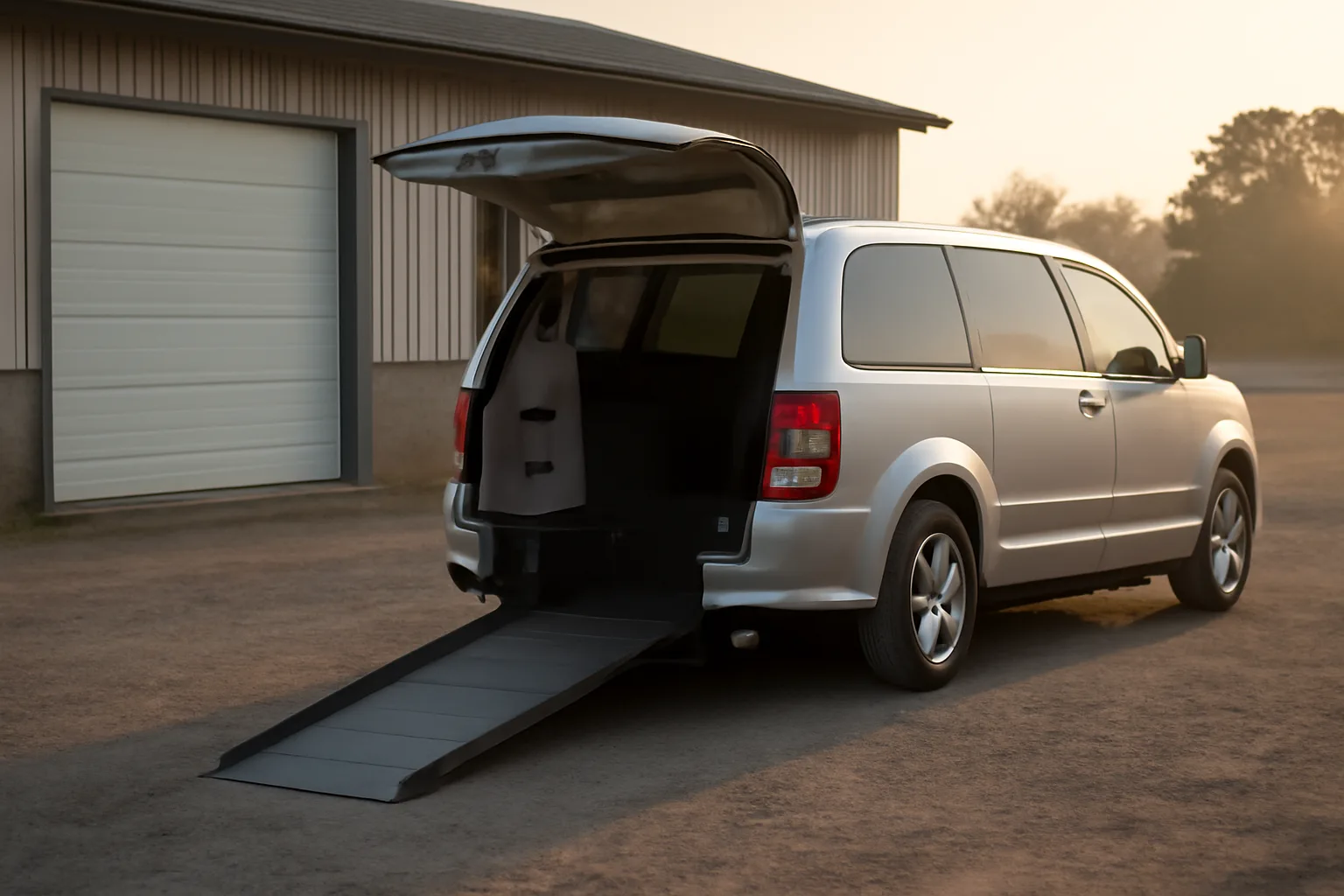
Yes, a huge share of NEMT owner-operators start with exactly one van, usually a used or new minivan converted for wheelchair access (think Dodge Grand Caravan, Honda Odyssey, or Chrysler Pacifica conversions). One van is enough to enroll with Medicaid and get credentialed with at least one broker in most states. The real constraint with one van isn't legal, it's operational. You can only run trips your single vehicle and driver can physically cover, and brokers assign trips based on your registered capacity, availability windows, and service area. A one-van operation typically means you're driving it yourself, at least at first, which also means you need your own driver qualifications sorted (background check, defensive driving course, CPR certification where required) before you can accept trips. A few practical notes for one-van operators: keep your insurance certificate and vehicle inspection paperwork organized and easy to re-submit, because brokers re-verify these periodically, sometimes annually. Also budget for the fact that a wheelchair-accessible conversion adds real cost. A base minivan might run $28,000 to $38,000 new, and a wheelchair conversion (ramp or lift, tie-downs, lowered floor) commonly adds $18,000 to $30,000 on top, depending on the converter and whether it's a manual or power ramp. These figures move with used-vehicle markets and conversion demand, so treat them as a planning range, not a quote.
How does NEMT vehicle financing actually work?
Financing a wheelchair van for NEMT use looks a lot like financing any commercial vehicle, with a few wrinkles specific to accessible conversions. Lenders you're likely to encounter fall into three buckets: commercial auto lenders (banks, credit unions), SBA-backed loans, and dealer or converter in-house financing. Commercial auto loans work like a standard auto loan but sized for business borrowers, usually with terms of 3 to 6 years and down payments in the 10% to 20% range, higher if your personal or business credit is thin. Lenders will usually want to see your business formation documents, a commercial insurance quote, and sometimes a simple business plan, especially if this is your first vehicle. SBA 7(a) loans are a common path for small NEMT operators because they can finance both the vehicle and working capital (insurance deposits, initial driver training costs, wheelchair tie-down equipment) in one loan, and SBA loan guarantees can make lenders more willing to work with a brand-new business with no trip history. The U.S. Small Business Administration's own guidance describes the 7(a) program as the agency's "primary program for providing financial assistance to small businesses," usable for equipment and working capital among other purposes. [5] Terms, rates, and collateral requirements are set by the individual lender within SBA guidelines, so shop more than one SBA-approved lender before committing. Dealer and converter financing (through the company that does your wheelchair-accessible conversion) can be convenient because the vehicle and the conversion get financed together, but compare the APR against a bank or credit union quote before signing. Convenience financing is sometimes priced a point or two higher than what you'd get walking into your local credit union with the same paperwork. A fourth path some operators use is equipment leasing, where you lease the van (sometimes with a buyout option) instead of buying outright. This lowers the upfront cash need but usually costs more over the life of the vehicle, and leased vehicles sometimes complicate the insurance and title paperwork state Medicaid agencies want to see during enrollment. Confirm with your state Medicaid agency whether a leased vehicle title creates any extra documentation requirement before you sign a lease.
What do lenders and Medicaid enrollment both want to see from your vehicle?
There's real overlap between what a lender wants before approving financing and what your state Medicaid agency wants before approving enrollment, which is worth knowing before you shop for a van. Lenders typically want: a clean title or purchase agreement, proof of commercial insurance (or a binder showing coverage will start at purchase), your business's EIN and formation documents, and sometimes two to three years of personal tax returns if your business has no financial history yet. State Medicaid agencies typically want, once you own the vehicle: proof of a passed vehicle safety inspection (often annual), proof of commercial auto insurance meeting the state's minimum liability limits (these vary by state, so confirm the exact dollar minimums with your state Medicaid transportation unit), the vehicle's VIN and registration matching your business entity, and sometimes ADA-compliance documentation for the wheelchair lift or ramp. Because both lists overlap on insurance and titling, it's worth getting your commercial insurance binder finalized before you close on vehicle financing, not after. That way the exact same insurance documentation serves the loan closing, the state vehicle inspection, and the Medicaid provider enrollment application without you scrambling for updated paperwork three separate times.
How do you start a NEMT business, step by step, with credentialing included?
| 1. Entity formation | LLC filing, EIN, business bank account | 1-2 weeks | |
|---|---|---|---|
| 2. Insurance quotes | Commercial auto + general liability quotes | 1-2 weeks (parallel with step 1) | |
| 3. Vehicle purchase/financing | Loan approval, vehicle purchase, conversion if needed | 2-8 weeks | |
| 4. State vehicle inspection/permit | State-specific NEMT vehicle inspection and permit | 1-4 weeks | |
| 5. Medicaid provider enrollment | Application to state Medicaid agency, NPI if required | 30-90 days (state-dependent) | |
| 6. Broker credentialing | Application to Modivcare/MTM/Access2Care/SafeRide or regional broker | 2-6 weeks after Medicaid enrollment is active | |
| 7. Driver onboarding | Background check, defensive driving, CPR/first aid | 1-3 weeks | These timing ranges are general patterns, not guarantees, since every state Medicaid agency and every broker sets its own review timeline, and neither this article nor any private company can promise approval or a specific processing time. Confirm current timelines directly with your state Medicaid agency and with each broker's provider relations contact before you plan your cash flow around a specific start date. For a walkthrough of the differences between state Medicaid provider enrollment and broker credentialing specifically, see nemt and medical transportation. |
Here's a more detailed version of the sequence for readers who want the credentialing steps spelled out alongside the vehicle and financing steps. | Step | What happens | Typical timing |
What's the real difference between Medicaid enrollment and broker credentialing?
Medicaid provider enrollment is your relationship with the state. Broker credentialing is your relationship with the company (Modivcare, MTM, Access2Care, SafeRide, or a regional broker) that the state hired to manage trip dispatch and routing in your area. You typically need both, and they're not the same paperwork submitted twice; they're two separate reviews with two separate sets of requirements. Medicaid enrollment usually asks for your business license, tax ID, ownership disclosure, and sometimes a surety bond or background check on the owner. Broker credentialing usually asks for proof that you're already Medicaid-enrolled, plus vehicle-specific documents (inspection certificates, insurance certificates naming the broker as an additional insured, driver rosters with background check confirmations). A common mistake new operators make is applying to a broker before their Medicaid enrollment is finalized, which just gets the application bounced back. Confirm the sequence your specific state uses, because a few states run a combined application, while most keep them fully separate. For a side-by-side look at how the major brokers structure their credentialing packets, see nemt transportation.
What does the wheelchair van itself typically cost, financed or not?
| Base minivan (new or lightly used) | $28,000 - $38,000 | |
|---|---|---|
| Wheelchair conversion (ramp, tie-downs, lowered floor) | $18,000 - $30,000 | |
| Full-size cutaway wheelchair van, fully equipped | $60,000 - $90,000+ | |
| Commercial auto insurance (annual, varies heavily by state) | Confirm with your insurer and state minimums | |
| State vehicle inspection/permit fee | Confirm with your state Medicaid transportation unit | These ranges reflect general market patterns for accessible vehicle conversions and move with used-vehicle prices, so get current quotes from at least two mobility dealers before finalizing a loan amount. Financing the full converted price (rather than financing the base van and paying cash for the conversion) is common, and most mobility dealers can bundle both into a single loan through their in-house lender or a partner bank. |
Since this is the number that drives your loan size, it's worth breaking down where the money actually goes. A new or lightly used minivan base vehicle (before conversion) commonly runs $28,000 to $38,000, and a full wheelchair conversion, done by a certified mobility converter, commonly adds another $18,000 to $30,000 depending on ramp type (manual versus power), floor lowering, and tie-down/restraint systems. Full-size cutaway van conversions, which some operators choose for higher passenger or wheelchair capacity, run considerably higher, often into the $60,000 to $90,000+ range once fully equipped. Here's a rough breakdown for planning purposes: | Item | Typical range |
What are the biggest financing mistakes new NEMT owner-operators make?
The most expensive mistake is financing a vehicle before confirming your state's specific vehicle-age and inspection rules. Some states cap how old a vehicle can be to qualify for NEMT service, or require a certain wheelchair lift certification standard. Buying a used van that turns out to be too old, or that has a lift that doesn't meet your state's ADA or safety standard, means you're stuck with loan payments on a vehicle you can't actually use for Medicaid trips. A second common mistake is underestimating insurance costs when sizing the loan. Commercial auto insurance for a wheelchair-accessible vehicle carrying Medicaid patients costs meaningfully more than personal auto insurance, and some brokers require specific liability minimums (sometimes $1,000,000 combined single limit or higher) before they'll credential you. If you finance the van without leaving room in your budget for that insurance premium, you can end up cash-strapped in month one. A third mistake is assuming broker credentialing will happen fast once Medicaid enrollment clears. It often doesn't. Build a cash cushion for the gap between when loan payments start and when your first broker-assigned trips actually get billed and paid, since brokers also typically pay on a delay (often 15-30 days after trip completion, though this varies by broker and by state contract), not the day of the ride.
Where does something like a launch kit fit into all this?
None of the vehicle-financing steps above are things a checklist can do for you, a loan is a loan and only a lender can approve it. But the Medicaid enrollment forms and broker credentialing packets are where a lot of new operators lose weeks, mostly because the paperwork requirements aren't obvious until you're three form fields deep and realize you're missing a document. A $199 one-time State + Broker NEMT Launch Kit (see the launch kit builder) is built around exactly that gap: state-specific Medicaid enrollment checklists and broker credentialing document lists, organized so you're not guessing what Modivcare, MTM, Access2Care, or SafeRide wants versus what your state Medicaid agency wants. It doesn't touch your financing decision and it can't guarantee approval from any state or broker, but it can save you from resubmitting an application because you forgot one insurance endorsement.
What should you do first, this week, if you're planning a wheelchair-van NEMT business?
Start with three phone calls, not a vehicle purchase. Call your state Medicaid agency's transportation unit and ask for their current NEMT provider enrollment packet and vehicle inspection requirements. Call two mobility vehicle dealers for current wheelchair conversion pricing, since prices shift with used-vehicle markets. Call a commercial insurance agent who specifically writes NEMT policies and ask what liability limits your state and the local broker require. Only after you have those three answers should you go shop for financing, because now you know the real number you need to borrow and the real ongoing costs (insurance, inspection fees, driver background checks) that need to fit your monthly budget alongside the loan payment. Skipping straight to a vehicle purchase is how operators end up with a van that's wrong for their state's rules or an insurance bill that blows up their cash flow in month two. For more on vehicle types and what brokers look for during trip assignment, see non emergency medical transportation services and emergency medical transport for how NEMT differs from emergency transport licensing.
Frequently asked questions
What does "nemt lån" mean?
"Nemt lån" is Norwegian/Danish for "NEMT loan" or "easy loan." Most people searching this phrase in English are looking for financing options to buy a wheelchair van for a non-emergency medical transportation (NEMT) business, including commercial auto loans, SBA loans, and dealer financing for wheelchair-accessible vehicle conversions.
How do you start a medical transportation business?
Form a business entity and get an EIN, get commercial insurance quotes, buy or finance a wheelchair van, pass your state's vehicle inspection, enroll as a Medicaid provider with your state agency, get credentialed with the relevant broker (Modivcare, MTM, Access2Care, SafeRide, or a regional broker), and get drivers background-checked and trained. Confirm the exact order with your state Medicaid agency.
Does Medicaid cover ambulance rides?
Yes. Medicaid covers emergency ambulance transportation and non-emergency ambulance transportation (for stretcher-level medical needs), though these are billed and licensed separately from routine NEMT wheelchair-van or sedan trips. Federal regulation requires state Medicaid programs to ensure necessary transportation to covered services, per 42 CFR 431.53, but exact ambulance coverage rules and rates vary by state.
What is NEMT?
NEMT stands for non-emergency medical transportation, a Medicaid-covered benefit that gets eligible beneficiaries to and from routine medical appointments (dialysis, therapy, checkups) when they can't get there on their own but don't need an ambulance. It's required under federal Medicaid regulation and typically managed by state agencies or contracted transportation brokers.
Does Medicare cover medical transportation?
Medicare's coverage is much narrower than Medicaid's. Original Medicare generally covers ambulance transportation only when other transport would endanger the patient's health, and has no standing non-emergency transportation benefit. Some Medicare Advantage plans offer non-emergency transportation as a supplemental benefit, but this varies by plan and isn't guaranteed.
How to start a NEMT business with one van?
Yes, one van is a realistic starting point and is how most owner-operators begin. You'll need the van inspected and insured to your state's standard, Medicaid provider enrollment completed, and broker credentialing done with at least one broker. Growth beyond one van depends on driver capacity and how many trips brokers assign to your service area.
How much does it cost to finance a wheelchair van for NEMT?
A base minivan commonly runs $28,000-$38,000, and a wheelchair conversion (ramp, tie-downs, lowered floor) adds roughly $18,000-$30,000 more, per industry pricing patterns for accessible vehicle conversions. Full-size cutaway wheelchair vans can run $60,000-$90,000+ fully equipped. Get current quotes from at least two mobility dealers since prices shift with used-vehicle markets.
What's the difference between Medicaid enrollment and broker credentialing?
Medicaid enrollment is your approval to bill the state Medicaid program directly, requiring business licensing, tax ID, and ownership disclosures. Broker credentialing is a separate approval from the company (Modivcare, MTM, Access2Care, SafeRide, etc.) that manages trip dispatch in your area, requiring proof of active Medicaid enrollment plus vehicle and driver documentation.
What loan types work best for a first NEMT wheelchair van?
Commercial auto loans through a bank or credit union, SBA 7(a) loans (useful because they can cover vehicle plus working capital), and dealer/converter financing are the three most common paths. Compare APRs across all three, since dealer financing convenience sometimes costs more than a bank or credit union quote for the same borrower.
Do you need a down payment for a NEMT vehicle loan?
Most commercial auto lenders want 10% to 20% down, sometimes more if your business has no credit history yet. SBA-backed loans may allow different down payment structures depending on the lender and program terms. Get quotes from multiple lenders since down payment requirements vary by credit profile and vehicle age.
How long does NEMT Medicaid enrollment and broker credentialing take?
Timing varies widely by state and broker; state Medicaid enrollment commonly takes 30 to 90 days, and broker credentialing can add another 2 to 6 weeks after enrollment is active. These are general patterns, not guarantees. Confirm current processing timelines directly with your state Medicaid agency and each broker's provider relations contact.
What insurance do you need before enrolling as a NEMT provider?
You'll need commercial auto insurance meeting your state's minimum liability limits, and many brokers require specific coverage minimums (sometimes $1,000,000 combined single limit) with the broker named as an additional insured. Confirm exact requirements with your state Medicaid transportation unit and the specific broker before finalizing your insurance purchase.
Can you start a NEMT business without buying a vehicle first?
Generally no. Both state Medicaid enrollment and broker credentialing require proof of an inspected, insured, compliant vehicle before approval, since neither will credential a provider with no vehicle to dispatch. You can research and prepare paperwork in advance, but the vehicle purchase or financing has to happen before enrollment finalizes.
Sources
- eCFR, 42 CFR 431.53 (Assurance of transportation): States must ensure necessary transportation for Medicaid beneficiaries to and from providers
- Medicaid.gov, Non-Emergency Medical Transportation: Medicaid covers transportation to and from medically necessary services as a required benefit
- Medicare.gov, Ambulance Services coverage: Original Medicare covers ambulance transportation mainly when other transportation would endanger health, with no standing non-emergency transportation benefit
- Federal Register, Medicare and Medicaid Programs; Policy and Technical Changes to Medicare Advantage (CMS-4185-F), 83 FR 68770: CMS expanded Medicare Advantage supplemental benefit flexibility to include non-primarily health-related benefits such as transportation starting in 2019
- U.S. Small Business Administration, 7(a) loan program overview: SBA 7(a) is the agency's primary loan program for small business equipment and working capital financing