Last updated 2026-07-25
TL;DR
There is no reliable, sourced national average for NEMT profit margins; anyone quoting a precise percentage is guessing. What you can verify are your own inputs: per-mile costs, broker per-trip rates, insurance, and Medicaid reimbursement structure. Build your margin from those real numbers instead of trusting an industry-wide figure nobody has actually published.
What is NEMT and why does it matter for margins?
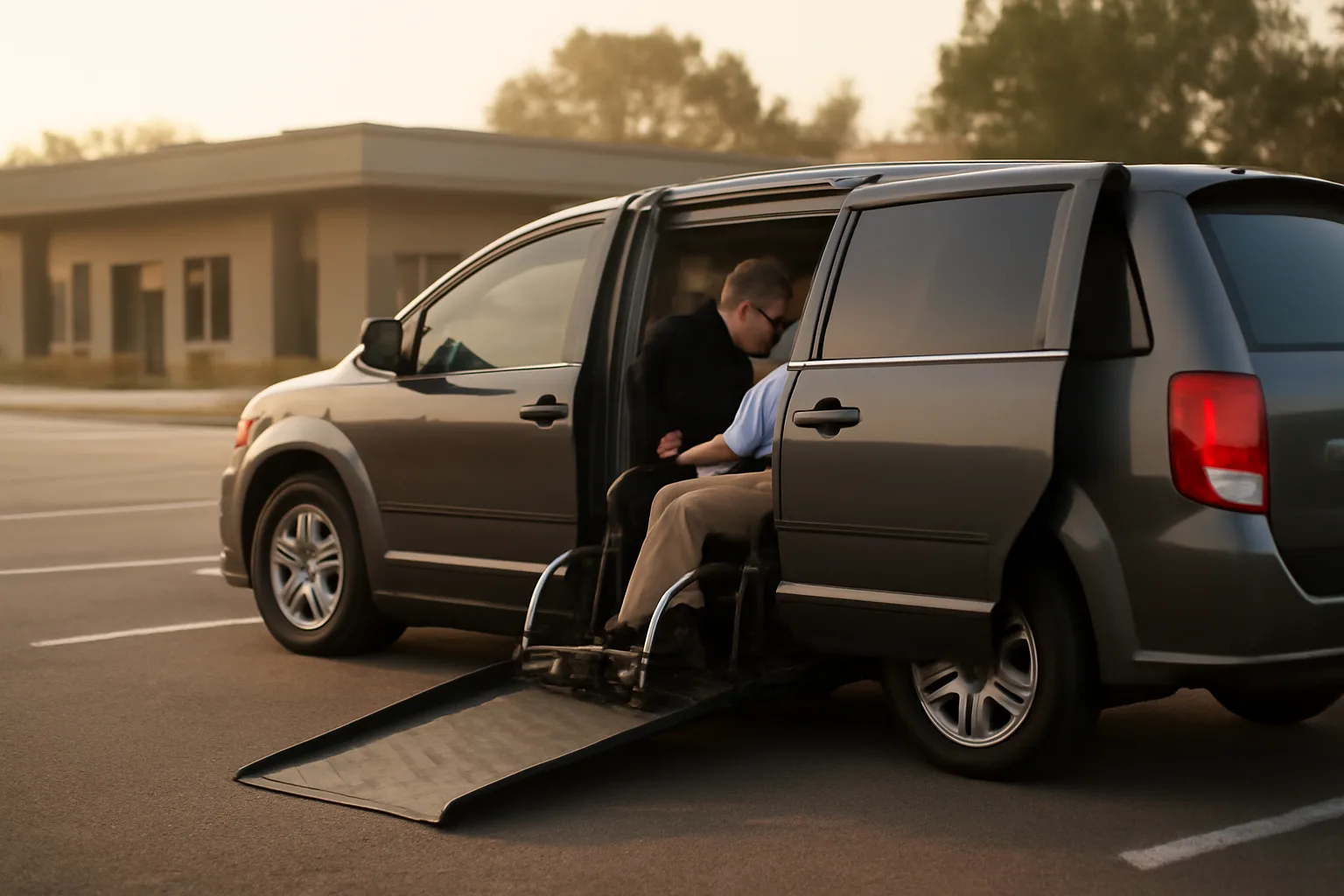
Non-emergency medical transportation (NEMT) is transportation to and from covered medical care for people who don't need an ambulance but can't get there on their own, often because of a wheelchair, a walker, dialysis schedule, or no working vehicle. Federal Medicaid rules require states to make sure eligible beneficiaries can get to and from providers, and NEMT is the mechanism most states use to meet that obligation. The Code of Federal Regulations at 42 CFR 431.53 requires state Medicaid plans to "ensure necessary transportation for beneficiaries to and from providers" [1]. That federal mandate is exactly why the business exists, and it's also why margins are so state-dependent. Every state runs its transportation benefit differently: some pay a flat per-trip rate through a broker, some pay per-mile plus a base fee, and some let counties or managed care plans set their own rates. Your gross revenue per trip in Ohio can look nothing like your gross revenue per trip in Texas, even for the identical wheelchair-van ride. That's the first reason nobody can give you one honest "average NEMT margin" number: the revenue side varies by state before you've even bought a van. See our broader explainer on what NEMT is and how it differs from ambulance transport.
What's the real average profit margin for an NEMT business?
There isn't a solid, citable, industry-wide figure, and you should be skeptical of anyone who gives you one. NEMT is not a business with a public 10-K or a trade association publishing audited margin surveys the way, say, the trucking or home health industries do. Most of the percentages floating around online ("NEMT businesses average 15-20% margins," "you can net 30%") trace back to marketing pages for franchise sellers or software vendors, not to any government dataset or peer-reviewed study. What we can point to instead is the input side: known per-mile operating costs, known broker rate structures, and known Medicaid reimbursement mechanics. The IRS standard mileage rate for business use of a vehicle, a commonly cited reference point for vehicle operating cost, was 70 cents per mile for 2025, per IRS Notice 2025-5 [2]. That figure is meant to approximate the fixed and variable costs of operating a standard vehicle for business, including gas, maintenance, depreciation, and insurance; a wheelchair-accessible van running a lift and tie-downs daily will run higher than that once you count lift maintenance and the heavier fuel draw. On the revenue side, state Medicaid transportation rates are public record in most states, filed as fee schedules by the state Medicaid transportation unit or by the broker under contract. A serious operator builds their margin estimate from their own state's fee schedule and their own vehicle's real cost per mile, not from a stranger's percentage on a forum. Treat any margin number you didn't calculate yourself as unverified.
Gross revenue vs. net profit: what's actually the difference in NEMT?
Gross revenue is every dollar you bill and collect, whether from Medicaid via a broker, private pay, facility contracts, or veteran transportation programs. Net profit is what's left after every real cost of running the vehicle and the business: fuel, maintenance, insurance, driver wages or your own labor, vehicle payment or depreciation, background checks, dispatch software, broker credentialing fees where applicable, and general overhead like phone and accounting. Most new owner-operators only track gross. They see a broker pay $18 or $30 for a trip (rates vary enormously by state, mileage, and whether it's an ambulatory or wheelchair-accessible ride) and mentally bank that as profit. It isn't. Subtract fuel for that trip, a share of that day's insurance premium, a share of the van payment, and a share of your own time, and the number left is much smaller, sometimes negative on short trips in slow months. The honest way to build your own margin picture: pick a real trip length from your actual service area, apply your real per-mile cost (start from the IRS's 70-cent 2025 reference rate [2] and adjust up for a wheelchair van's extra weight and lift maintenance), and compare that to the actual per-trip or per-mile rate your broker or state program pays. Do that math before you buy a second van, not after.
Does Medicaid cover ambulance rides, and how is that different from NEMT pricing?
Yes. Medicaid covers ambulance transportation when it's medically necessary, meaning the beneficiary's condition requires the equipment or trained personnel an ambulance provides, per Medicaid's transportation coverage rules described on Medicaid.gov [3]. Ambulance transport is billed and reimbursed under a completely different structure than NEMT, generally tied to the Ambulance Fee Schedule methodology used across Medicare and mirrored by many state Medicaid programs, with base rates plus mileage. NEMT is the non-emergency counterpart: no red lights, no siren, and typically no clinical care needed en route, just a ride in a car, van, or wheelchair-accessible vehicle to a covered appointment. Medicaid.gov describes NEMT as being for beneficiaries who "need assistance getting to and from providers" but don't require emergency-level care [3]. Why this matters for your margin: if you're comparing your own numbers to "ambulance company profit margins" you see quoted elsewhere, stop. Ambulance operators carry paramedic-level staffing costs, controlled substances, and far higher liability exposure; their fee schedule and cost structure have nothing to do with a wheelchair-van NEMT operation. Don't benchmark against a different business model.
Does Medicare cover medical transportation the same way Medicaid does?
Not really, and this trips up a lot of new operators who assume Medicare NEMT is a comparable revenue stream. Original Medicare covers emergency ambulance transportation and, in limited circumstances, non-emergency ambulance transportation when a doctor certifies it's medically necessary (for example, a bed-confined dialysis patient), under the rules at 42 CFR 410.40 [4]. Original Medicare generally does not cover routine non-emergency transportation in a car or van the way state Medicaid programs do. Some Medicare Advantage plans offer supplemental NEMT-style transportation benefits as an extra, but that's plan-specific and not a guaranteed line of business, and coverage terms vary by insurer and by year. Practically: your steady NEMT revenue base is state Medicaid, not Medicare. If a Medicare Advantage plan in your area contracts for supplemental transportation, that's a bonus contract to chase after you're already credentialed and running, not something to build your initial business plan around.
What does it cost to start a wheelchair-van NEMT business (and how does that hit your margin)?
Your startup cost structure sets your margin ceiling before you complete a single trip, because vehicle cost and financing terms drive your fixed monthly nut. A new wheelchair-accessible minivan conversion commonly runs from roughly $45,000 to $65,000+ depending on the base vehicle and the conversion company, while a used, already-converted van can run substantially less but usually carries higher near-term maintenance risk on the lift and ramp mechanism. Beyond the vehicle, expect these real line items: commercial auto insurance for a wheelchair-accessible vehicle (higher than a personal auto policy, and higher again if you carry passengers commercially), a state or local business license, an EIN and business entity formation, driver background checks and often a driving record pull, and in many states a specific NEMT operator permit or PUC-style authority separate from Medicaid enrollment itself. Then there's the credentialing side: Medicaid provider enrollment through your state's Medicaid Management Information System, plus broker credentialing with whichever transportation broker your state contracts with (commonly Modivcare, MTM, Access2Care, or a regional broker depending on your state, though this varies and changes over time, so confirm current broker assignments with your state Medicaid agency). Application fees, background check fees, and vehicle inspection costs are real but usually modest individually; the compounding cost is the weeks or months of paperwork time before you can legally bill a single trip. That idle period, van payment running with zero revenue, is one of the biggest hidden margin-killers new operators underestimate.
How do you start a medical transportation business step by step?
There's no single national process; every state Medicaid agency runs its own provider enrollment, and every broker runs its own credentialing on top of that. But the sequence is broadly consistent across states: 1. Decide your service type and vehicle: ambulatory sedan/van, wheelchair-accessible van, or stretcher van, since each has different licensing and insurance requirements. 2. Form your business entity and get an EIN. 3. Get commercial insurance quoted and bound for the specific vehicle type and passenger transport use. 4. Check state and local licensing: many states require a separate NEMT or passenger-carrier permit beyond Medicaid enrollment. 5. Enroll as a Medicaid provider through your state Medicaid agency's provider enrollment portal. 6. Apply for credentialing with the transportation broker(s) operating in your service area (confirm the current broker and its specific requirements with your state Medicaid agency, since broker contracts get rebid and reassigned). 7. Pass vehicle inspection and driver background/training requirements. 8. Start taking trip assignments through the broker's dispatch system. Each of those steps has its own document list, fee, and processing time, and none of it is optional if you want to bill Medicaid legitimately. For a full walkthrough of vehicle-specific requirements, see our guide on medical transportation basics and our NEMT overview.
How do you start an NEMT business with just one van?
Plenty of operators start with exactly one wheelchair van, and it's a legitimate way to test the business before committing to a fleet. The credentialing process is identical whether you own one van or ten; the difference is entirely in your margin math and your risk tolerance. With one van, every day that vehicle is in the shop is a day of zero revenue against a fixed van payment, insurance premium, and any driver wage if you're not driving yourself. That's the core one-van risk: no redundancy. Many solo operators handle this by driving the van themselves in year one, which removes labor cost from the equation but caps how many trips you can physically run in a day. The realistic one-van path: get Medicaid provider enrollment and broker credentialing done first (this alone commonly takes weeks to a few months depending on your state's backlog and your broker's documentation requirements), keep your personal overhead low while that's pending, and don't finance a second van until you have real trip data from your own service area telling you what your actual per-trip and per-mile revenue looks like. Confirm current requirements with your broker and state Medicaid agency before assuming any timeline, since processing speed varies a lot state to state and changes over time.
How does broker credentialing (Modivcare, MTM, Access2Care, SafeRide) affect your take-home rate?
Brokers, not the state directly, handle day-to-day dispatch and payment for NEMT trips in most states that use a brokered model. Companies like Modivcare, MTM, Access2Care, and SafeRide contract with state Medicaid agencies (and sometimes managed care organizations) to manage the transportation network, assign trips to credentialed providers, and pay per-trip or per-mile rates set in that broker's contract. This matters for your margin because the broker's rate, not some abstract "Medicaid NEMT rate," is what actually lands in your account. Two operators in neighboring states, or even under two different broker contracts in the same state, can see meaningfully different per-trip pay for what looks like an identical ride. Broker contracts also periodically change: rates get renegotiated, service areas get reassigned to a different broker entirely, and documentation requirements shift. What was true about a broker's payment structure two years ago may not be true today. This is exactly why we don't publish a broker-by-broker rate comparison here: any number would be stale within a contract cycle. Confirm current per-trip rates, mileage rates, and payment timelines directly with the broker operating in your service area and with your state Medicaid transportation unit. Some states publish their broker contract and rate structure publicly; when your state does, that document is the only trustworthy source, not a secondhand forum post.
What are the biggest hidden costs that eat into NEMT margins?
A few cost categories consistently surprise new operators more than the obvious ones like fuel and insurance: Deadhead miles: the drive to pick up a passenger and the drive back after drop-off often aren't reimbursed the same way as loaded miles, depending on the broker's rate structure, meaning your real cost-per-mile is spread over fewer paid miles than your odometer shows. Lift and ramp maintenance: wheelchair-van lifts are mechanical, hydraulic or electric systems that need regular service; a failed lift on a scheduled dialysis run isn't just a repair bill, it's a missed trip and potentially a broker performance mark against you. No-shows and late cancellations: broker payment policies for no-show trips vary significantly, and some pay a reduced or zero rate when a passenger isn't ready, which is lost time and fuel with no corresponding revenue. Credentialing renewal cycles: Medicaid re-enrollment (often required periodically per state rules) and broker re-credentialing both take staff time and sometimes new inspection or background check fees, an ongoing cost that's easy to forget after the initial launch. Insurance premium creep: commercial auto policies for passenger transport tend to increase at renewal, especially after any claim, and that's a fixed cost increase that directly compresses margin regardless of how many trips you run.
How should you actually calculate your own NEMT profit margin?
Build it from your own numbers, in this order, rather than borrowing an industry average that nobody has actually sourced: 1. Total fixed monthly costs: van payment or depreciation, insurance premium, any software/dispatch fees, business insurance, licensing renewal amortized monthly. 2. Real per-mile variable cost: fuel at current local prices, plus maintenance reserve (tires, oil, lift service) per mile driven, using something like the IRS's 70-cents-per-mile 2025 reference [2] as a starting benchmark and adjusting for your specific van's fuel economy and lift upkeep. 3. Your actual broker or state per-trip and per-mile pay rate, confirmed directly from your broker or state fee schedule, not estimated. 4. Average loaded miles vs. total miles driven per day, since deadhead miles cost you but usually don't get paid. Gross margin, in this framework, is (trip revenue) minus (fuel and per-mile variable cost) minus (driver labor if applicable). Net margin subtracts your fixed monthly costs spread across your actual trip volume for the month. Run this on a spreadsheet with a real week of your own trip log before you scale, and rerun it every time a broker rate changes or your insurance renews. That's the only version of "NEMT profit margin" that's actually true for your business, because it's built from your numbers, not a stranger's.
Where should you go to actually start the paperwork?
Once you understand the cost structure, the actual filing work is state agency forms, broker applications, and vehicle documentation, and it's genuinely tedious to assemble from scratch across multiple portals. If you'd rather not hunt down every state Medicaid enrollment form and broker credentialing checklist yourself, RideCredential's $199 one-time State + Broker NEMT Launch Kit at /launch-kit-builder pulls together the state-specific and broker-specific document checklists so you're not guessing what's missing from your application. Whatever route you take, treat every dollar figure in this article as a benchmark to verify against your own state's current fee schedule and your own broker's current contract, not a promise. Rules, rates, and broker assignments change, sometimes yearly.
Frequently asked questions
What is NEMT?
NEMT stands for non-emergency medical transportation, rides to and from covered medical appointments for people who don't need an ambulance but can't drive themselves, often due to a disability, a wheelchair, age, or lack of a vehicle. Federal Medicaid rules under 42 CFR 431.53 require states to ensure this transportation is available to eligible beneficiaries.
Does Medicaid cover ambulance rides?
Yes, Medicaid covers ambulance transportation when it's medically necessary, meaning the person's condition requires the equipment or trained staff an ambulance provides. This is billed separately from NEMT under a different fee methodology; check your state Medicaid transportation unit's page for exact ambulance coverage rules and rates in your state.
Does Medicare cover medical transportation?
Original Medicare covers emergency ambulance transport and limited non-emergency ambulance transport when a doctor certifies medical necessity, under 42 CFR 410.40. It generally does not cover routine non-emergency van or car transportation the way state Medicaid programs do, though some Medicare Advantage plans offer supplemental transportation benefits as an extra.
What is the average profit margin for an NEMT business?
There's no reliable, sourced industry-wide average; most percentages you'll see online come from marketing pages, not audited data or government studies. Build your own margin from your state's actual broker or Medicaid fee schedule, your real per-mile cost, and your actual loaded-mile ratio instead of trusting a generic number.
How do you start a medical transportation business?
Form your business entity, get commercial insurance for your vehicle type, check state and local passenger-carrier licensing, enroll as a Medicaid provider through your state agency, get credentialed with the transportation broker in your area, pass vehicle inspection, and confirm every requirement directly with your state Medicaid agency since rules vary by state.
How do you start an NEMT business with one van?
Start with vehicle and insurance in place, complete Medicaid provider enrollment and broker credentialing before financing anything else, and consider driving the van yourself initially to avoid labor costs while you gather real trip data. Confirm processing timelines with your broker and state Medicaid agency, since they vary a lot and can take weeks to months.
How much does it cost to start a wheelchair-van NEMT business?
A new wheelchair-accessible van conversion commonly runs roughly $45,000 to $65,000 or more depending on the base vehicle and conversion company; used converted vans cost less upfront but carry higher near-term maintenance risk. Add commercial insurance, licensing, and credentialing fees on top, all of which vary by state.
What's the difference between gross revenue and net profit in NEMT?
Gross revenue is every dollar collected from trips before any costs are subtracted. Net profit is what remains after fuel, maintenance, insurance, driver wages, vehicle payment or depreciation, and overhead. Many new operators mistake per-trip broker pay for profit; it's actually gross revenue with real costs still to come out.
Who are the major NEMT brokers and how do they affect pay rates?
Modivcare, MTM, Access2Care, and SafeRide are among the brokers that contract with state Medicaid agencies to manage NEMT dispatch and payment in many states, though broker assignments and contracts vary by state and change over time. Each broker sets its own per-trip and per-mile rates, so confirm current rates directly with the broker serving your area.
Does Medicaid cover NEMT in every state?
Federal rule under 42 CFR 431.53 requires state Medicaid plans to ensure necessary transportation for beneficiaries, but each state designs its own NEMT program, sometimes brokered statewide, sometimes managed through Medicaid managed care plans, and sometimes handled regionally. Confirm your specific state's NEMT structure with its Medicaid transportation unit.
What hidden costs hurt NEMT profit margins the most?
Unpaid deadhead miles (driving to pickup and back empty), lift and ramp maintenance on wheelchair vans, reduced or zero pay for no-show trips depending on broker policy, periodic re-credentialing costs, and rising commercial insurance premiums at renewal are the costs new operators most often underestimate when projecting margin.
How do you calculate your own NEMT profit margin accurately?
Track your real fixed monthly costs (van payment, insurance, licensing), your true per-mile variable cost (fuel plus maintenance reserve), your actual broker or Medicaid per-trip pay rate, and your loaded-versus-total miles ratio. Subtract variable costs from trip revenue for gross margin, then subtract fixed costs across your monthly trip volume for net margin.
Is NEMT a profitable business to start?
It can be, but profitability depends entirely on your state's reimbursement rates, your broker's contract terms, your vehicle's real operating cost, and how efficiently you route trips to minimize deadhead miles. There's no guaranteed margin; run the math on your own state and broker numbers before committing to a purchase.
Sources
- eCFR, 42 CFR 431.53: Federal Medicaid rule requiring states to ensure necessary transportation for beneficiaries to and from providers
- IRS Notice 2025-5, Standard Mileage Rates for 2025: 2025 standard business mileage reimbursement rate of 70 cents per mile used as a vehicle operating cost reference
- Medicaid.gov, Non-Emergency Medical Transportation: Medicaid NEMT program description and coverage purpose for beneficiaries needing transportation assistance
- eCFR, 42 CFR 410.40: Medicare ambulance transportation coverage rules including limited non-emergency coverage with medical necessity certification
- CMS, Medicare Benefit Policy Manual, Chapter 10 (Ambulance Services): CMS guidance detailing when non-emergency ambulance transport is covered as medically necessary, including repetitive scheduled non-emergency transport such as dialysis