Last updated 2026-07-25
TL;DR
You can't start a legitimate NEMT business for $0, but you can start lean: skip the fleet, use one used wheelchair van (owned or financed), get your entity, insurance, and driver credentials in order, then enroll with your state Medicaid agency and broker networks (Modivcare, MTM, Access2Care) before you spend on marketing or extra vehicles.
How to start a medical transportation business with no money (the honest version)
There's no free path into NEMT. Every state requires some combination of business licensing, commercial auto insurance, vehicle inspections, and background-checked drivers before you can legally move a Medicaid member, and none of that is free. What "no money" really means for most people asking this is "I don't have $50,000 to buy a fleet and a building, what's the leanest possible start." That's a fair goal, and it's achievable. The leanest real path looks like this: form a single-member LLC yourself through your Secretary of State's website (often $50 to $200 depending on the state), buy or finance one used wheelchair-accessible van instead of a fleet, get commercial auto and general liability insurance quoted before you commit to anything, and put your energy into Medicaid provider enrollment and broker credentialing before you spend a dollar on branding, a website, or a second vehicle. Most of the "no money" content you'll find online skips the part where you still need somewhere between $3,000 and $15,000 to get legally operational once you count insurance deposits, vehicle inspection or retrofitting costs, background checks, and state enrollment fees. That's real, and pretending otherwise sets people up to fail mid-application. If you genuinely have close to zero capital, your best move is a used van you can finance with a small down payment, not a purchase you pay cash for.
What is NEMT and why does it require this much paperwork?
NEMT stands for non-emergency medical transportation. It's transportation for Medicaid (and sometimes Medicare Advantage) members who need to get to medical appointments, dialysis, or therapy but don't need an ambulance. Federal law requires state Medicaid programs to make sure eligible members can actually get to covered care, which is the legal root of every NEMT program in the country. Specifically, federal Medicaid regulation at 42 CFR 431.53 requires that state Medicaid plans "specify that the Medicaid agency will ensure necessary transportation for recipients to and from providers," and states may meet that duty directly, through a broker, or through managed care plans [1]. That's why almost every state now runs NEMT through a broker like Modivcare, MTM, Access2Care, or a regional broker like SafeRide, rather than paying transportation providers directly. The paperwork exists because this is federal and state health care money, not a private taxi contract. You're being vetted to move a vulnerable population, often people with mobility limitations, dialysis schedules that can't slip, or cognitive impairments. Skipping steps doesn't just risk a rejected application, it risks fraud referrals if you transport members before you're actually enrolled. Read the nemt overview if you want the full landscape before you commit.
How do you start a medical transportation business, step by step?
The order matters more than most new operators realize. Doing these in the wrong sequence (buying a van before confirming your state's vehicle requirements, or marketing before you're credentialed) is the single most common way people burn cash they didn't have to spend. 1. Pick your entity type and register it. Most owner-operators use a single-member LLC for liability protection. Filing is done through your state's Secretary of State site. 2. Get an EIN from the IRS (free, done in minutes at irs.gov). 3. Call your state Medicaid transportation unit before buying anything. Ask directly: what vehicle age limits, what driver background check standard, what insurance minimums, and what NEMT-specific licensing (some states require a separate transportation network or PUC-type authority) apply in your state. Confirm this directly with your state Medicaid agency, because requirements vary by state and change. 4. Get insurance quotes for commercial auto and general liability before you buy a van, not after. Wheelchair-van insurance is priced differently than a standard commercial vehicle policy and the quote will shape what vehicle you can actually afford to run. 5. Buy or finance one used, ADA-compliant wheelchair van. One van, not a fleet. 6. Complete driver requirements: CPR/first aid where required, passenger assistance training, and any state-mandated background check (many states require an FBI fingerprint check for NEMT drivers). 7. Apply for Medicaid provider enrollment in your state. 8. Apply for broker credentialing (Modivcare, MTM, Access2Care, SafeRide, or your state's assigned broker) separately, since Medicaid enrollment and broker credentialing are two different processes. 9. Only then, build a simple website, get a business phone line, and set up scheduling. See the medical transportation hub for state-by-state variation on these steps.
How to start an NEMT business with just one van
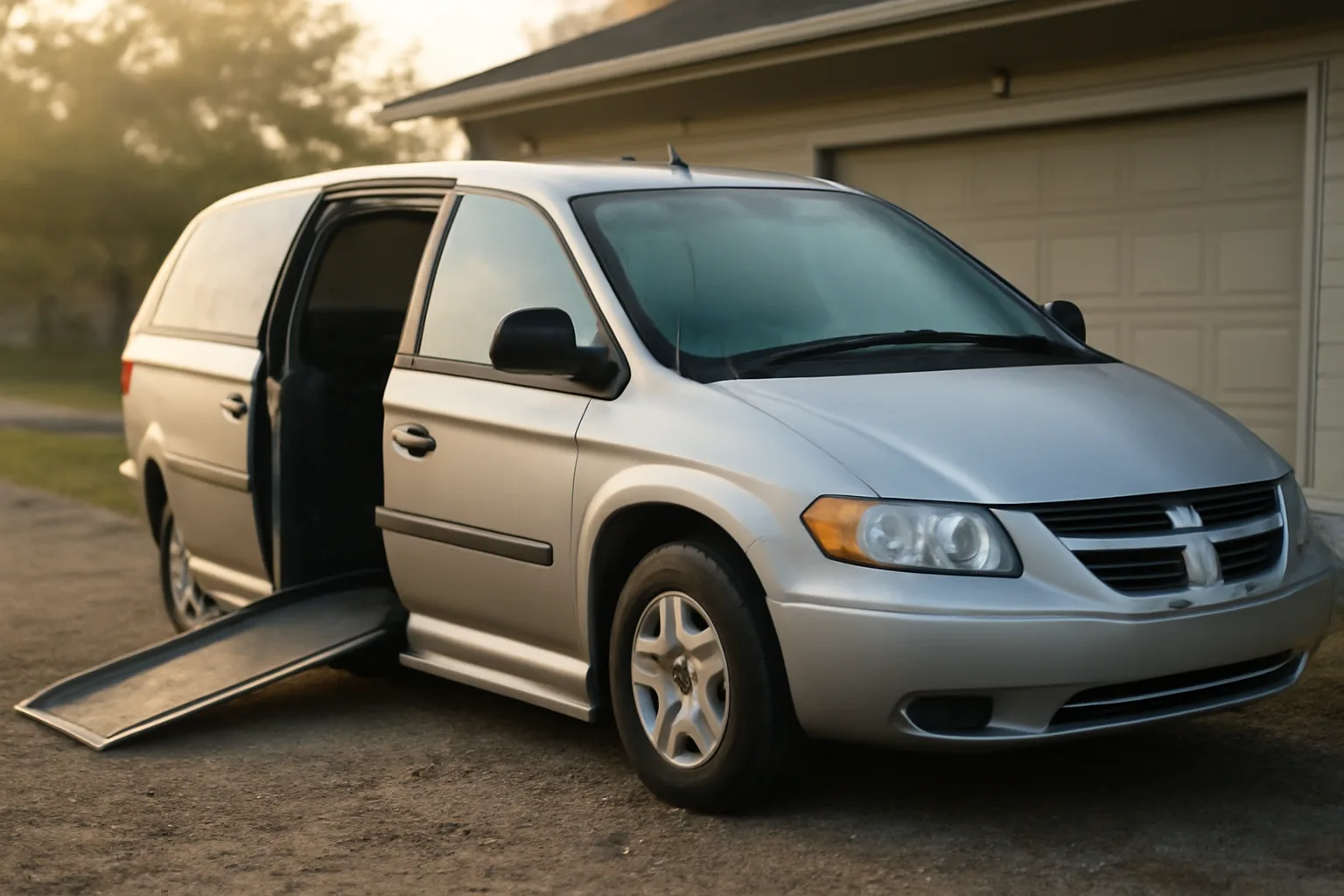
One van is not a limitation, it's the correct starting size for almost everyone. Brokers credential individual vehicles and drivers, not "companies" in the abstract, so a one-van operation is a completely normal, fully legitimate NEMT business, not a stepping stone you have to apologize for. The practical mechanics: your LLC is the legal entity, you (or your first hire) are the credentialed driver, and your single wheelchair-accessible van is the vehicle on file with both the state Medicaid agency and whichever broker manages your region. Most brokers require the van to be a certain age or newer (commonly 10 years or newer, though this varies by state and broker, so confirm with your broker), pass an annual DOT-style inspection, and carry a wheelchair lift or ramp meeting ADA accessibility standards. With one van, plan for the fact that you'll have downtime for maintenance, inspections, and driver rest, so don't expect to run every hour of every day. Growth to a second van should follow demand you can already see (broker trip offers you're turning down), not projections. If you're financing rather than buying outright, expect the lender to want commercial insurance in place first, which loops back to getting quotes early.
Does Medicaid cover ambulance rides?
Yes, Medicaid covers medically necessary ambulance transportation as part of its emergency and non-emergency transportation benefit, but ambulance and NEMT are different services with different licensing. Ambulance transport requires emergency medical services (EMS) licensure and typically EMT or paramedic staffing, which is a separate regulatory track from wheelchair-van NEMT. CMS confirms that state Medicaid programs must ensure necessary transportation to covered services under 42 CFR 431.53, and this duty covers both emergency ambulance transport and non-emergency transportation depending on medical need [1]. If you're picturing an ambulance business, you're looking at a materially different startup path (EMS licensing, ambulance-specific vehicle standards, clinical staffing requirements) than the wheelchair-van NEMT path this article focuses on. Most new owner-operators asking "how to start a medical transportation business with no money" are describing NEMT, not ambulance service, because NEMT has a lower clinical staffing bar. Confirm which category your state places your intended service in with your state Medicaid transportation unit before you build a business plan around either one.
Does Medicare cover medical transportation?
Medicare's transportation coverage is much narrower than Medicaid's. Original Medicare Part B covers ground ambulance transportation when it's medically necessary and other transportation would endanger your health, and CMS is explicit that this coverage is for ambulance services, not routine non-emergency rides to a doctor's office [2]. Medicare.gov states that ambulance services are covered "if you need to be transported to a hospital, critical access hospital, or skilled nursing facility for medically necessary services and the use of other transportation could endanger your health," with a standard 20% coinsurance after the Part B deductible [2]. Traditional Medicare generally does not cover routine wheelchair-van NEMT trips to dialysis or a specialist appointment the way Medicaid does. Where NEMT businesses do find Medicare-adjacent work is through Medicare Advantage (Part C) plans, many of which offer a supplemental non-emergency transportation benefit that isn't in Original Medicare. Those arrangements run through the Medicare Advantage plan or its contracted broker, not through a state Medicaid agency, so credentialing and billing work differently. If a plan in your area offers this benefit, confirm the enrollment and billing process directly with that plan or its broker, since it isn't uniform the way Medicaid's federal minimum is.
How much does it actually cost to get NEMT-legal (even on a tight budget)?
| LLC formation | $50 to $500 | Varies by state filing fee | |
|---|---|---|---|
| EIN | $0 | Free directly from IRS.gov | |
| Commercial auto insurance (wheelchair van) | Varies widely by state and driving record | Get quotes before buying the van | |
| General/commercial liability insurance | Varies by carrier | Often bundled with auto | |
| Used wheelchair-accessible van | Widely variable | Financing changes monthly cash need dramatically | |
| Vehicle inspection/retrofit compliance | Varies by state | Some states require third-party lift inspection | |
| Driver background check (fingerprint-based) | Set by state agency | Confirm fee with your state Medicaid agency | |
| CPR/First Aid certification | Set by training provider | Often required for NEMT drivers | |
| Medicaid provider enrollment application fee | Varies, some states waive for individual/small providers | Confirm with your state Medicaid agency | The honest takeaway: your biggest lever isn't avoiding these costs, it's sequencing them so you don't pay for something (like a van) before you know your state's exact requirements for it. Insurance and vehicle compliance are where people with little capital get stuck, because both often require money up front, before your first Medicaid trip is ever billed. |
Here's a realistic, unglamorous breakdown of the costs that come before your first paid trip. Numbers vary heavily by state and insurer, so treat these as planning ranges, not quotes. | Cost item | Typical range | Notes |
How do you get Medicaid provider enrollment as an NEMT owner-operator?
Medicaid provider enrollment is the process of getting your business registered directly with your state's Medicaid agency as an approved transportation provider. This is separate from broker credentialing, and in most states you need both to actually get trip assignments and get paid. Every state's Medicaid program is required under federal law to have a process for ensuring transportation to covered services, but the specific enrollment forms, provider agreements, and NPI requirements are set by each state Medicaid agency, not by CMS directly [1]. Some states enroll NEMT providers directly, other states route enrollment almost entirely through the broker, and some do both. You genuinely have to check. Practical steps: get an NPI (National Provider Identifier) through the federal enrollment system described in CMS's NPPES data dissemination notice, then contact your state Medicaid transportation unit directly to request its NEMT provider enrollment application and current requirements [3]. Expect to submit your LLC documents, insurance certificates, vehicle registration and inspection records, and driver credentialing packets. Processing time varies by state; confirm current turnaround with your state Medicaid agency rather than planning around a number you saw online, because these timelines change with staffing and volume. The non emergency medical transportation guide breaks down more state-specific detail.
How does broker credentialing work with Modivcare, MTM, Access2Care, or SafeRide?
Broker credentialing is a separate application process run by the private company your state contracts with to manage NEMT trip dispatch and payment, and it typically happens after or alongside Medicaid enrollment, not instead of it. Modivcare, MTM, and Access2Care are the three largest national NEMT brokers, and SafeRide operates in several regions as well; which one you deal with depends entirely on your state and sometimes your county. Each broker runs its own credentialing packet: vehicle inspection forms, driver background check documentation, insurance certificates naming the broker as a certificate holder, and often a facility or safety self-audit. Requirements differ by broker and by state contract, so a checklist that's accurate for Modivcare in one state may not match MTM's requirements in another. Confirm the exact packet and timeline with your assigned broker directly. A realistic budget-conscious approach: don't try to credential with every broker in your state at once if you're a one-van operation. Start with whichever broker holds the largest state Medicaid contract in your service area (your state Medicaid transportation unit can tell you which broker that is), get through that credentialing fully, and expand to additional brokers once you have capacity. Spreading a single van thin across three broker networks usually creates more no-shows and compliance headaches than it's worth. If you want a structured way to track state enrollment and broker credentialing requirements side by side, a state-and-broker launch packet like RideCredential's $199 Launch Kit is built for exactly this stage, though the state and broker paperwork itself is always filed by you, directly, for free.
What insurance and driver requirements should you expect regardless of state?
Two things are close to universal in NEMT, even though exact minimums vary: commercial auto insurance well above personal auto minimums, and a background-checked, trained driver. Neither is optional, and neither is something you should try to shortcut to save money. Commercial auto insurance for a wheelchair van typically needs higher liability limits than a personal policy, plus coverage that acknowledges you're transporting passengers for compensation, including passengers using mobility equipment. Rates vary enormously by state, driving history, and vehicle, so get multiple quotes early in your planning, not after you've committed to a van purchase. Driver requirements commonly include a state or FBI-level fingerprint background check, a clean driving record check, CPR and first aid certification, and passenger assistance or defensive driving training. Some states also require drivers to complete NEMT-specific training modules before they can be listed on a broker's approved driver roster. None of this is standardized nationally, so build your checklist directly from your state Medicaid transportation unit's published driver requirements rather than assuming another state's rules apply to you.
What's the realistic timeline from zero to your first Medicaid trip?
Plan for months, not weeks. Between LLC formation, insurance underwriting, vehicle acquisition or financing approval, driver background checks, Medicaid provider enrollment review, and broker credentialing, most new owner-operators are looking at a multi-month runway before their first paid trip, and that's assuming no delays or resubmissions. The sequence that wastes the least time: file your LLC and get your EIN in the first week (both can be done same-day), request your state's NEMT requirements and application packet in that same first week so you're not waiting on a callback later, get insurance quotes while you're still shopping for a van (not after you buy it), and submit your Medicaid provider enrollment application as soon as your entity, insurance, and vehicle documentation are all in hand. Broker credentialing can often run in parallel with the tail end of Medicaid enrollment, but confirm with your specific broker whether they'll start reviewing before your Medicaid provider number is issued, since some brokers require it first. Don't spend money on branding, a fancy website, or a second vehicle until you have both your Medicaid provider status and at least one broker credential confirmed. That's the actual finish line for "legally operating," not the day you bought the van.
Frequently asked questions
How to start a medical transportation business with no money?
You can't do it for literally zero dollars, but you can start lean: form an LLC yourself, finance one used wheelchair van instead of buying a fleet, get insurance quotes before you buy anything, and prioritize Medicaid provider enrollment and broker credentialing over marketing spend. Realistic minimum capital before your first paid trip is usually several thousand dollars, mostly insurance and vehicle costs.
What is NEMT?
NEMT stands for non-emergency medical transportation. It's transportation to and from Medicaid-covered medical appointments for people who don't need an ambulance but can't drive themselves or use regular transit, often because they use a wheelchair or have a condition limiting mobility. States must ensure this transportation under federal Medicaid rules at 42 CFR 431.53.
Does Medicaid cover ambulance rides?
Yes. Medicaid covers medically necessary ambulance transportation as part of its federally required transportation benefit under 42 CFR 431.53, though coverage details and prior authorization rules are set by each state Medicaid agency. Ambulance service requires separate EMS licensing from wheelchair-van NEMT, so it's a different business model with different startup requirements.
Does Medicare cover medical transportation?
Medicare Part B covers ground ambulance transportation when it's medically necessary and other transport would endanger your health, per Medicare.gov, with a standard 20% coinsurance after the deductible. Original Medicare generally does not cover routine non-emergency wheelchair-van rides; some Medicare Advantage plans offer a supplemental NEMT benefit instead.
How do you start a medical transportation business?
Form your LLC, get an EIN from the IRS, contact your state Medicaid transportation unit for exact vehicle and driver requirements, get insurance quotes, buy or finance one compliant vehicle, complete driver background checks and training, then apply for Medicaid provider enrollment and broker credentialing before spending on marketing or additional vehicles.
How to start an NEMT business with one van?
One van is a normal, legitimate way to start. Brokers credential individual vehicles and drivers, not fleets, so a single wheelchair-accessible van meeting your state's age and inspection standards, paired with one credentialed driver, is enough to get enrolled with Medicaid and credentialed with a broker. Expand only when demand you can see justifies a second vehicle.
How to start a non-emergency medical transportation business?
The core path is the same everywhere: legal entity formation, commercial insurance, a compliant wheelchair-accessible vehicle, background-checked and trained drivers, then separate applications for state Medicaid provider enrollment and broker credentialing (Modivcare, MTM, Access2Care, SafeRide, or whichever broker holds your state's contract). Requirements and fees vary by state, so confirm specifics with your state Medicaid transportation unit.
What is non-emergency medical transportation exactly, versus an ambulance?
NEMT moves people who need help getting to medical care but aren't in a medical emergency, often using wheelchair vans or accessible sedans with no clinical staff required. Ambulance transport is for emergencies or situations requiring EMT/paramedic-level care during transit, and requires separate EMS licensure that NEMT businesses don't need.
Can you start an NEMT business without buying a van at all, by leasing?
Yes, leasing or financing a used wheelchair-accessible van is common among new owner-operators with limited capital, and it's often more realistic than saving to buy outright. Lenders typically want proof of commercial insurance and, in some cases, your Medicaid or broker credentialing already underway, so line up insurance quotes and your state paperwork before you approach a lender.
Do you need a special license to drive for NEMT?
Requirements vary by state, but most states require a valid driver's license, a clean driving record, a background check (often FBI fingerprint-based), and CPR/first aid certification; some states also require passenger assistance or NEMT-specific training. A commercial driver's license (CDL) is generally not required for a standard wheelchair van, but confirm with your state Medicaid transportation unit since vehicle size can change this.
How long does Medicaid provider enrollment take for NEMT?
There's no single national timeline because each state Medicaid agency runs its own review process and staffing levels vary. Some states process individual/small transportation provider applications faster than large facility applications, but delays for incomplete insurance or vehicle documentation are common. Confirm current processing times directly with your state Medicaid transportation unit.
Is broker credentialing the same as Medicaid enrollment?
No, they're two separate processes. Medicaid provider enrollment registers your business with the state Medicaid agency; broker credentialing (with Modivcare, MTM, Access2Care, SafeRide, or your state's contracted broker) is a separate application that determines whether you receive trip dispatch and payment through that broker's network. Most states require both.
What's the cheapest legal way to get a wheelchair-accessible van?
A used, previously converted wheelchair van financed with a small down payment is generally the most accessible option for low-capital owner-operators, versus a new conversion which costs significantly more. Get your insurance quote and confirm your state's vehicle age and inspection standards before purchase, since some older conversions won't pass broker or state inspection.
Sources
- Code of Federal Regulations, 42 CFR 431.53: State Medicaid plans must ensure necessary transportation for recipients to and from Medicaid-covered providers
- Medicare.gov, Ambulance Services coverage page: Medicare Part B covers medically necessary ground ambulance transportation with standard 20% coinsurance after the deductible
- Federal Register, CMS National Plan and Provider Enumeration System (NPPES) Final Rule, 69 FR 3434: NEMT providers obtain an NPI through the federal NPPES system as part of enrollment
- IRS, Apply for an Employer Identification Number (EIN) Online: An EIN can be obtained free directly from the IRS
- 42 U.S.C. 1396a, Social Security Act Section 1902(a)(4), State plan requirements: Federal Medicaid law requires state plans to provide methods of administration necessary for proper and efficient operation, the statutory basis implemented by 42 CFR 431.53's transportation assurance requirement
- GAO, Medicaid Nonemergency Medical Transportation: Updated Medical Necessity Criteria Could Improve Assurance of Access to Care (GAO-16-238): State Medicaid programs vary in how they administer NEMT benefits, including through brokers, and oversight of the benefit has faced documented access and administration challenges