Last updated 2026-07-25
TL;DR
Non-emergency medical transportation (NEMT) moves Medicaid and Medicare enrollees to appointments like dialysis or physical therapy when they have no other way to get there and don't need an ambulance. Medicaid must cover it under federal rule; Medicare covers it only in limited cases. Starting a NEMT business means state Medicaid enrollment, broker credentialing, and vehicle/driver compliance, usually 60-120 days.
what is non-emergency medical transportation (NEMT)?
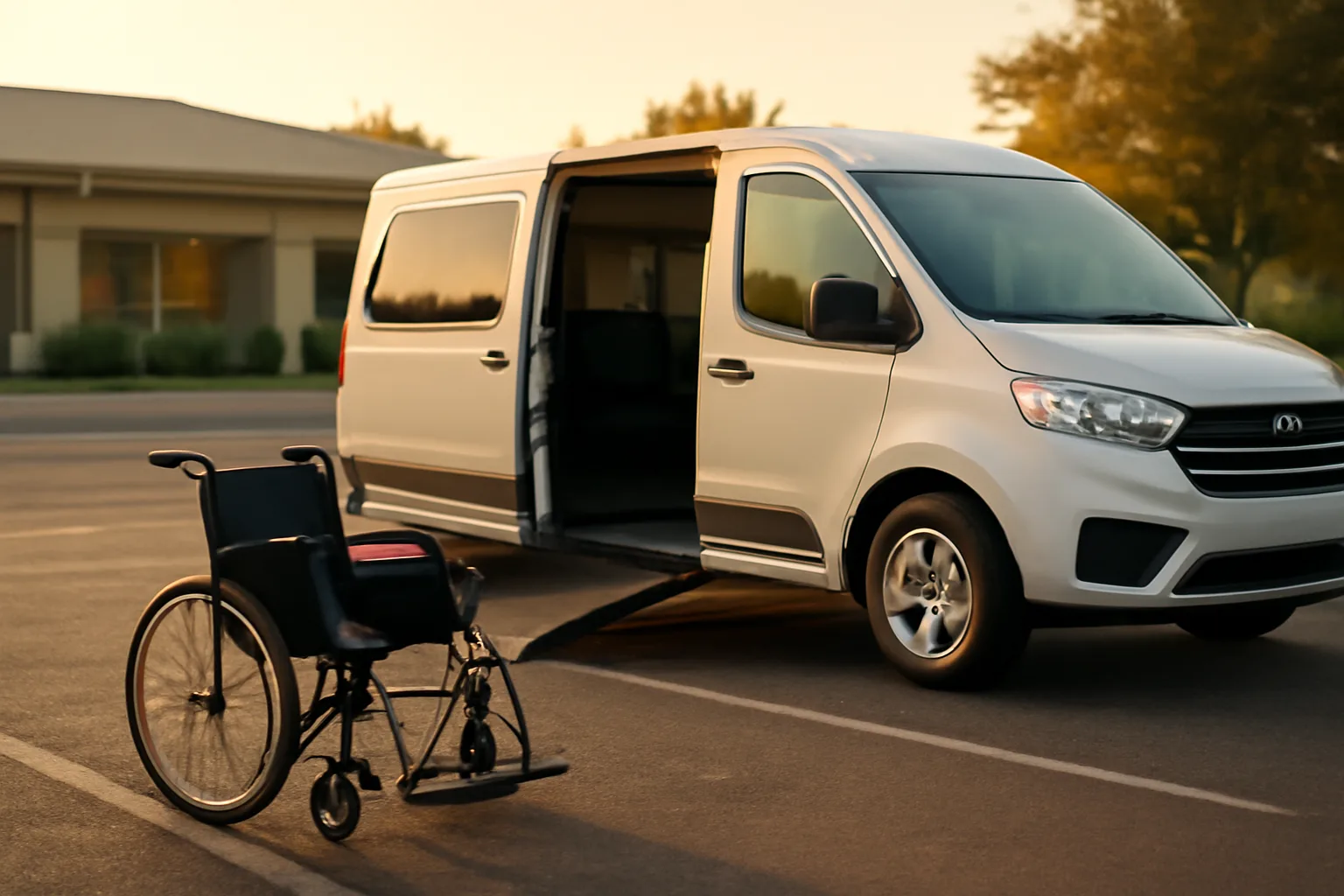
Non-emergency medical transportation, almost always shortened to NEMT, is rides to and from medical care for people who don't need an ambulance but also can't get there any other way. Think dialysis three times a week, physical therapy, a psychiatrist visit, a prenatal checkup. The person isn't in crisis. They just don't have a working car, a valid license, or a body that can safely ride a city bus. Federal Medicaid rules treat this as a required benefit, not an optional extra. The regulation at 42 CFR 431.53 requires state Medicaid programs to "ensure necessary transportation for recipients to and from providers" [1]. States can run this themselves or hand it to a broker, but they can't just skip it. NEMT is not one thing. It covers ambulatory sedan and rideshare-style rides, wheelchair van transport, and sometimes stretcher van service for someone who must stay lying down but doesn't need medical monitoring. What it does NOT cover is emergency ambulance transport, that's a completely separate benefit with separate billing codes and separate rules, covered under emergency medical transport. Most states farm this out to a transportation broker (Modivcare, MTM, Access2Care, SafeRide are the big national names) who screens providers, schedules the actual rides, and pays the claims. You as the driver or fleet owner contract with the broker, not directly with the state Medicaid agency in most states, though you still have to enroll as a Medicaid provider first in nearly every state that requires it. More background is in our NEMT overview.
does Medicaid cover ambulance rides?
Yes. Medicaid covers emergency ambulance transport as a distinct benefit from NEMT, and it's covered nationally as part of the mandatory Medicaid benefit package tied to emergency medical services. States set their own ambulance fee schedules and mileage rates, and those numbers vary a lot state to state. The confusion people run into is thinking "ambulance" and "medical transportation" are the same claim category. They're not. An ambulance ride, lights-and-siren or not, uses EMS-specific billing and is usually reimbursed through the state's fee-for-service ambulance rate or through managed care plans directly. NEMT wheelchair van and sedan rides run through the broker system in most states and get reimbursed at a flat trip rate plus mileage, set by the broker's state contract. If you're trying to figure out which lane your business belongs in: if your vehicle carries oxygen tanks, cardiac monitors, and EMT-certified staff and responds to 911, that's ambulance/EMS licensing through your state's EMS office, a completely different application than what this article covers. If your vehicle is a wheelchair-accessible van or a sedan driven by a background-checked driver with no clinical equipment, that's NEMT, and that's what broker credentialing through Modivcare, MTM, and similar companies is built around.
does Medicare cover medical transportation?
Rarely, and only in narrow circumstances. Original Medicare Part B covers ambulance transportation when it's medically necessary and any other transportation would endanger the patient's health, under the ambulance services benefit codified at 42 CFR 410.40 [2]. Routine non-emergency rides to a dialysis center or a doctor's office are generally NOT covered by Original Medicare. There is one carve-out worth knowing: the same regulation allows scheduled, non-emergency ambulance transport under Part B in specific repetitive-need situations (like some end-stage renal disease dialysis patients) if a physician certifies medical necessity in writing, a requirement spelled out at 42 CFR 410.40(d)(2) [2]. That's still ambulance-level transport, not a wheelchair van. Where Medicare beneficiaries actually get NEMT-style rides is through Medicare Advantage (Part C) plans. CMS's 2019 Medicare Advantage and Part D Advance Notice expanded what counts as a "primarily health related" supplemental benefit, opening the door for MA plans to cover non-emergency transportation [3]. So if you want Medicare Advantage business, you're not enrolling with a state Medicaid agency at all, you're contracting directly with the MA plan or its transportation vendor, which is often the same brokers (Modivcare, MTM) who run state Medicaid contracts.
how do you start a medical transportation business?
At a basic level: register the business, get the right vehicle, get Medicaid provider enrollment in your state, get credentialed with the broker(s) that manage rides in your area, and get your insurance and driver files in order before you ever schedule a ride. Here's the realistic order of operations most owner-operators follow: 1. Form your business entity (LLC is standard) and get an EIN. 2. Get commercial auto insurance with the liability limits your state and broker require, often $1,000,000 combined single limit for wheelchair-accessible vehicles, though this varies by state and broker contract, so confirm with your broker and state Medicaid agency. 3. Buy or convert a wheelchair-accessible van that meets ADA and state accessibility standards. 4. Enroll as a Medicaid transportation provider with your state Medicaid agency (many states use a portal run through their fiscal agent, like Gainwell or Conduent). 5. Apply for credentialing with the broker operating in your county or region. 6. Complete driver requirements: background check, MVR pull, drug screening, defensive driving or passenger assistance training, sometimes first aid/CPR. 7. Pass a vehicle inspection, sometimes done by the broker, sometimes by a third-party inspection service they designate. Most owner-operators find state Medicaid enrollment takes anywhere from 30 to 90 days depending on the state's backlog, and broker credentialing on top of that runs another 2 to 6 weeks. Total runway from a standing start to your first paid ride is often 60 to 120 days. Build a cash cushion for that period; nobody pays you while you're in the paperwork queue.
how to start a NEMT business with just one van
One van is a completely normal way to start, and plenty of successful owner-operators never grow past two or three vehicles. The paperwork burden is basically the same whether you're running one van or ten, so single-vehicle operators just eat a higher fixed cost per ride in the early going. The practical difference with one van: you have zero redundancy. If your van is in the shop or your one driver is sick, you have no rides that day, and brokers track your on-time and completion rates closely. A missed or late pickup rate that's too high can get you put on a corrective action plan or dropped from the broker network, so confirm the specific performance thresholds with your broker. With one van, prioritize: - A reliable used wheelchair-accessible van (Dodge Grand Caravan, Toyota Sienna, or Ford Transit conversions are common in this space) with a maintained lift or ramp.
- Getting your own CDL or non-CDL driver requirements straight; most states don't require a CDL for a van under 26,000 lbs GVWR carrying fewer than 16 passengers, but always confirm with your state DMV and broker.
- Building a maintenance reserve fund. Wheelchair lifts and ramps are the single most common point of failure and out-of-service violation in an inspection.
- Picking one or two brokers to start with rather than trying to credential with every broker in your state at once. Spread yourself thin on paperwork and you'll spread yourself thin on service quality too. More detail on vehicle choice and compliance lives in our non emergency medical transportation hub.
what does Medicaid NEMT provider enrollment actually involve?
State Medicaid provider enrollment is the government-facing half of the process, separate from broker credentialing, and both are required in most states. Enrollment typically means submitting a provider application through the state's Medicaid Management Information System (MMIS) portal, an NPI number, your business's tax ID, proof of insurance, vehicle registration and inspection records, and background check clearances for owners and drivers. Some states require you to enroll directly with Medicaid before a broker will even look at your application; others let the broker handle intake and only push you to state enrollment once you're approved on their side. This differs enough state to state that generalizing past this point is a bad idea, confirm the sequence with your state Medicaid agency's transportation unit before you spend money on vehicles or insurance. Medicaid.gov's non-emergency medical transportation guidance page confirms the federal baseline: states "must ensure that eligible individuals have transportation to and from providers," and that this can be delivered "through a variety of methods, including... contracts with transportation brokers" [4]. The specific forms, fees, and portals are state-run, not federal, which is why the actual mechanics of "how do I enroll" only make sense once you know which state you're in.
what is broker credentialing and how is it different from Medicaid enrollment?
Broker credentialing is the private company's version of a background check on your whole operation, done in addition to, not instead of, state Medicaid enrollment. Modivcare, MTM, Access2Care, and SafeRide each run their own credentialing process, and each has its own document checklist, portal, and renewal cycle. Typical broker credentialing packets ask for: proof of Medicaid enrollment (or an active application), commercial auto insurance certificates naming the broker as certificate holder, vehicle photos and inspection reports, driver files (license, MVR, background check, drug test results), a signed transportation services agreement, and sometimes a facility or dispatch capability questionnaire if you're running more than one vehicle. Here's the part new owner-operators underestimate: credentialing isn't a one-time event. Brokers re-verify insurance annually, often require re-inspection of vehicles every 6 to 12 months, and can suspend you from their network for a lapse in any single document, even if your actual service quality is fine. Set calendar reminders for every expiration date the day you get approved, not the week before it lapses. Our NEMT transportation and non emergency medical transportation services guides walk through document checklists broker by broker where we've been able to confirm current requirements.
who actually pays for NEMT trips, and how much?
For Medicaid NEMT, the broker pays you, and the broker gets paid by the state through its capitated contract, not by billing each individual trip back to Medicaid directly in most arrangements. Your reimbursement is set by the rate schedule in your broker agreement, usually a base trip rate plus a per-mile rate, and it is negotiated (or simply set, take-it-or-leave-it) at the state or broker level, not by you. Rates vary enormously by state and by vehicle type. A wheelchair van trip reimburses more than an ambulatory sedan trip because of the added equipment, insurance, and driver training cost. We're not going to publish specific dollar figures here because they change by state and broker contract cycle and get outdated fast; confirm current rates directly with the broker you're credentialing with. What's stable across states is the structure: trip rate plus mileage, sometimes with a wait-time or no-show fee, sometimes with a loaded-mile vs. deadhead-mile distinction. Build your cost-per-mile math (fuel, insurance, maintenance reserve, driver pay) before you accept a broker's rate sheet, not after.
what vehicles and equipment do NEMT operators need?
At minimum you need a vehicle that can safely and legally transport a wheelchair user, which almost always means a factory or professionally converted wheelchair-accessible van with a certified lift or ramp, wheelchair tie-down (WC19 compliant, per the widely used SAE/RESNA WC19 wheelchair transportation safety standard many state contracts reference), and passenger securement straps. Brokers typically require: - A vehicle inspection, sometimes annual, sometimes tied to mileage.
- Working lift/ramp with no more than X out-of-service days without a backup vehicle, confirm the exact threshold with your broker.
- Interior cleanliness and safety equipment: fire extinguisher, first aid kit, reflective triangles.
- Vehicle age limits; some brokers won't credential vehicles past a certain age or mileage, commonly cited informally around 8-10 years but this is broker-specific and not something we'll state as universal. Don't buy a van before you know which broker you're targeting and what their vehicle spec sheet requires. A used Dodge Grand Caravan converted by a reputable mobility dealer runs a wide range depending on age and lift condition; a stretcher-capable van costs meaningfully more. Buying first and asking questions later is the single most common expensive mistake new owner-operators make in this business.
what drivers need (background checks, training, licensing)
Every state and broker has its own specific driver requirements, but the common core across nearly all NEMT programs includes a criminal background check, a motor vehicle record (MVR) pull showing a clean-enough driving history, and some form of passenger assistance or sensitivity training. Many states require NEMT drivers to complete training on safely assisting wheelchair users, securing mobility devices, and recognizing medical emergencies, sometimes through a state-approved curriculum. CPR/first aid certification is commonly required, though not universal, confirm with your state and broker. A CDL is usually not required for a standard wheelchair van under the federal 26,001 lbs GVWR / 16-passenger threshold that triggers CDL rules, but always verify against your specific vehicle's rating and your state's DMV rules. Drug testing (pre-employment and sometimes random) is standard in broker contracts. If you're the owner and the driver, you go through the exact same screening as any employee you'd hire, there's no owner exemption in this business.
which broker do you actually work with?
| Credentialing portal | Each broker runs its own online enrollment system | |
|---|---|---|
| Re-inspection cycle | Commonly 6-12 months, broker-specific | |
| Insurance minimums | Often $1M CSL but confirm exact figure per broker/state | |
| Payment terms | Net 15-30 days is common but not universal | |
| Service area | County or region-specific, tied to the state's Medicaid contract | |
| Renewal documents | Insurance cert, vehicle inspection, driver files, usually annual | Some states run more than one broker at once, split by region, which means you may need to credential with two different companies to cover a single metro area that straddles a broker boundary line. |
It depends entirely on your state and your county, and often on which Medicaid managed care plan the specific patient is enrolled in. Modivcare (formerly LogistiCare) and MTM are the two largest national NEMT brokers and between them cover NEMT brokerage in a large share of states with broker-managed Medicaid transportation, though exact market share shifts as state contracts get rebid. Access2Care and SafeRide operate in specific regional and state markets. Here's a comparison of what typically differs broker to broker, though every one of these details can change with a contract renewal, so confirm current specifics before you build a business plan around them: | Factor | What varies |
what does it cost to get started, and where does a launch kit fit in?
Your two biggest costs are the vehicle and the insurance, both of which vary too much by state, vehicle age, and driving record to put a single number on responsibly. A used wheelchair-accessible conversion van, decent commercial auto policy, business registration fees, and state Medicaid enrollment fees (some states charge an application fee, some don't) are your core startup costs before you've moved a single passenger. The part that eats time, not money, is figuring out which forms your state wants, in what order, and which broker's checklist applies to your county. That's the gap a $199 one-time State + Broker NEMT Launch Kit is built to close: state-specific Medicaid enrollment checklists and broker credentialing document lists in one place, so you're not reconstructing the process from scattered PDFs and phone hold music. It doesn't get you approved and it isn't legal advice, approval decisions sit entirely with your state Medicaid agency and the broker, but it does save the research hours most owner-operators lose in month one. You can build yours at /launch-kit-builder. Whatever route you take, budget real calendar time, more than money. Insurance underwriting alone can take 1-2 weeks; vehicle inspections need scheduling; background checks take days to weeks depending on the vendor. None of this compresses just because you're eager to start earning.
Frequently asked questions
What is NEMT in simple terms?
NEMT (non-emergency medical transportation) is scheduled rides to medical appointments for people who don't need an ambulance but can't drive themselves or use regular public transit. It's a required Medicaid benefit under 42 CFR 431.53 and is usually arranged through a state-contracted broker like Modivcare or MTM rather than billed as a standalone Medicaid claim by the driver.
Does Medicaid cover ambulance rides?
Yes, Medicaid covers medically necessary ambulance transport as part of its emergency services benefit, separate from NEMT. Rates and rules are set by each state, so the mileage rate and prior authorization requirements differ significantly depending on where you live; check your state Medicaid agency's ambulance fee schedule for specifics.
Does Medicare cover medical transportation?
Original Medicare Part B mostly covers only ambulance transport when other transportation would endanger the patient's health, under the coverage rules at 42 CFR 410.40. Routine rides to dialysis or a doctor visit usually aren't covered under Original Medicare. Medicare Advantage plans, however, have been allowed to offer non-emergency transportation as a supplemental benefit since CMS's 2019 policy expansion.
How do I start a medical transportation business?
Form an LLC, get commercial auto insurance, buy or convert a wheelchair-accessible van, enroll as a Medicaid provider in your state, get credentialed with the broker(s) covering your area, and get your drivers background-checked and trained. Expect 60-120 days total between starting the process and your first paid ride.
How do I start a NEMT business with just one van?
One van is a normal starting point. Focus on a reliable wheelchair-accessible van with a working lift, get commercial insurance meeting your state/broker minimums, complete Medicaid enrollment and broker credentialing, and build a maintenance reserve since you have no backup vehicle if it breaks down.
What's the difference between NEMT and an ambulance service?
NEMT uses wheelchair vans or sedans with no clinical equipment, for people who don't need medical monitoring in transit. Ambulance service requires EMS licensing, certified EMTs, and clinical equipment, and is billed and regulated separately from NEMT broker contracts entirely.
Do I need a CDL to drive a wheelchair van for NEMT?
Usually not. Federal CDL rules generally apply to vehicles over 26,001 lbs GVWR or those carrying 16+ passengers including the driver, and most wheelchair vans fall well under that. Always confirm against your specific vehicle's GVWR and your state DMV's rules before assuming you're exempt.
How long does Medicaid NEMT provider enrollment take?
It commonly runs 30 to 90 days depending on your state's backlog and portal, and that's before broker credentialing, which can add another 2 to 6 weeks. Total time from starting paperwork to your first paid ride is often 60 to 120 days; confirm current processing times with your state Medicaid transportation unit.
Is broker credentialing the same as Medicaid enrollment?
No. State Medicaid enrollment is the government approval to be a Medicaid provider. Broker credentialing (with Modivcare, MTM, Access2Care, SafeRide, etc.) is a separate, private-company process required in addition, with its own document checklist, insurance certificate requirements, and renewal cycle.
How much does it cost to start a NEMT business?
Costs vary too much by state, vehicle age, and insurance rating to state a reliable single figure. Your two biggest line items are the wheelchair-accessible van and commercial auto insurance, followed by state enrollment fees where they apply. Budget real time too: underwriting, inspections, and background checks all take days to weeks.
Can I run NEMT for Medicare Advantage instead of Medicaid?
Yes. Since CMS's 2019 policy expansion, Medicare Advantage plans can offer non-emergency transportation as a supplemental benefit. You'd contract directly with the MA plan or its transportation vendor, often the same broker companies that run state Medicaid NEMT contracts, rather than enrolling with a state Medicaid agency.
What insurance do I need for a wheelchair van NEMT business?
Commercial auto liability insurance is required, with limits commonly around $1,000,000 combined single limit for wheelchair-accessible vehicles in many broker contracts, though this varies by state and broker. You'll typically need to name the broker as a certificate holder and keep the policy active continuously; a lapse can suspend your credentialing.
What happens if my vehicle's wheelchair lift breaks down?
Most brokers require the lift or ramp to be functional to keep the vehicle active, and repeated out-of-service time without a backup vehicle can affect your standing in the network. Confirm the specific allowed downtime and backup vehicle rules with your broker before you rely on a single van for all your trips.
Sources
- 42 CFR 431.53, Cornell Legal Information Institute: Federal Medicaid regulation requiring states to ensure necessary transportation to and from providers
- 42 CFR 410.40, Cornell Legal Information Institute: Medicare Part B ambulance coverage rules and scheduled non-emergency ambulance transport for repetitive-need patients
- CMS, 2019 Medicare Advantage and Part D Advance Notice Part II and Draft Call Letter Fact Sheet: Medicare Advantage plans allowed to offer non-emergency transportation as a supplemental benefit starting in 2019
- Medicaid.gov, Non-Emergency Medical Transportation: States must ensure eligible individuals have transportation to and from providers, delivered through methods including transportation broker contracts
- 42 CFR 440.170, Cornell Legal Information Institute: Definition of transportation as a Medicaid benefit including expenses for transportation to secure medical examinations and treatment
- Federal Motor Carrier Safety Administration, 49 CFR 383.5 definition of commercial motor vehicle: Federal threshold of 26,001 lbs GVWR or 16+ passengers that triggers CDL requirements