Last updated 2026-07-25
TL;DR
NEMT (non-emergency medical transportation) is licensed transport for people who need help getting to medical appointments but don't need an ambulance. Medicaid covers it in every state as either a required or optional benefit, usually through a broker like Modivcare or MTM. Medicare covers it only in limited cases. Starting a business means a vehicle, insurance, a business license, then state Medicaid enrollment and broker credentialing.
what is non-emergency medical transportation (NEMT)?
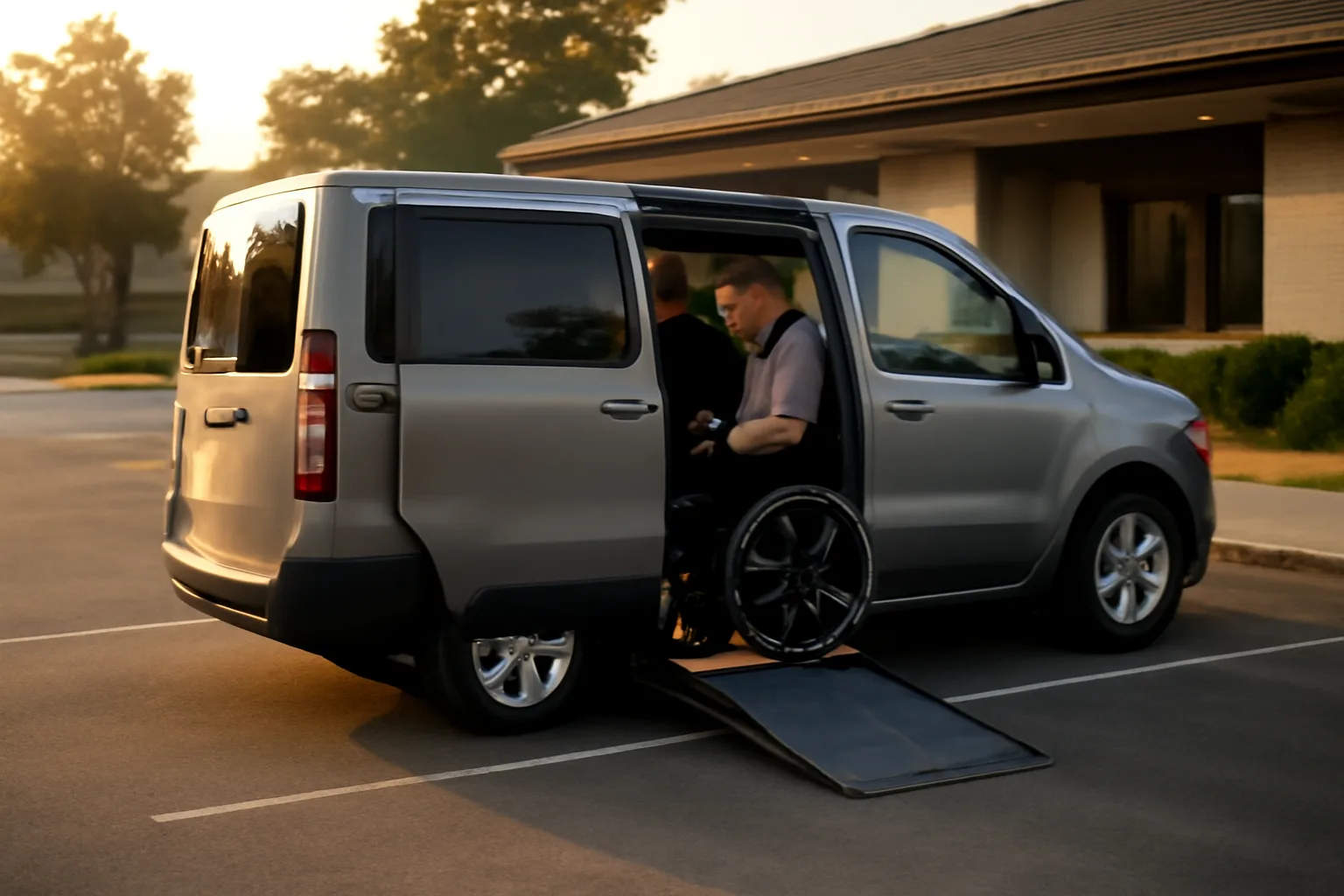
Non-emergency medical transportation, almost everyone in the industry just says NEMT, is transport for people who need to get to a medical appointment, dialysis, physical therapy, a pharmacy pickup, but don't need an ambulance or emergency response. Think wheelchair vans, ambulatory sedans, and stretcher vans, not lights-and-sirens rigs. The federal Medicaid regulation that created this whole industry is short and worth reading. Under 42 CFR 431.53, states must "ensure necessary transportation for recipients to and from providers" and may do this directly, through contracts, or by paying recipients' or someone else's travel costs [1]. That's it. That one sentence is why a Medicaid program in, say, Ohio or Texas, ends up paying a private company to drive a dialysis patient three times a week. NEMT is different from ambulance transport in a legal sense, more than a practical one. Ambulance transport is billed as a medical service under its own Medicare and Medicaid rules and usually requires a licensed EMT crew. NEMT vehicles carry drivers, not medical crews, though many states require some level of first aid or CPR training [2]. If a rider needs medical monitoring en route, that's an ambulance call, not an NEMT trip. Most NEMT companies run one of three vehicle types: ambulatory vans or sedans for riders who can walk and transfer, wheelchair-accessible vans (often called WAVs) with a ramp or lift, and stretcher vans for people who must travel lying down but aren't in an emergency. Some companies run all three; a lot of new owner-operators start with a single wheelchair van because that's the segment with the steadiest broker demand and the least vehicle cost compared to a stretcher van outfitted for lift-equipped gurney transport.
does Medicaid cover ambulance rides and NEMT trips?
Yes to both, but they're separate benefits with separate rules. Medicaid covers medically necessary ambulance transport (the emergency kind, or non-emergency ambulance transport for someone who genuinely can't be moved safely any other way) as a distinct service line, billed by ambulance providers under their own state fee schedules. NEMT is a different benefit. For the population covered by the traditional Medicaid State Plan, NEMT is a required benefit that CMS treats as an "assurance" tied to access to care, not an optional add-on [1]. Medicaid.gov's own overview describes NEMT as a benefit "for beneficiaries who need access to non-emergency medical care but need transportation assistance to and from their medical appointments" [2]. That said, state Medicaid agencies have wide room to decide how they'll deliver it. Some states run NEMT in-house through county or regional transportation offices. Most contract it out to one or more transportation brokers who manage trip scheduling, provider credentialing, and payment for a defined region. Because of that, whether you enroll with a broker or bill the state Medicaid agency directly for NEMT trips depends entirely on your state, and you should confirm the current setup with your broker and state Medicaid agency before you assume either way.
does Medicare cover medical transportation?
Medicare's coverage is much narrower than Medicaid's. Original Medicare Part B covers ambulance transportation when it's medically necessary and other transportation would endanger the person's health, per CMS's ambulance services coverage rules [3]. It does not cover routine NEMT rides to a doctor's office or dialysis for someone who is just mobility-limited, not medically unstable. Some Medicare Advantage plans have started adding limited non-emergency transportation as a supplemental benefit, a set number of one-way trips per year to plan-network providers. This authority comes from CMS's 2019 final rule expanding the definition of primarily health-related supplemental benefits under 42 CFR 422.102, which for the first time let plans cover services like transportation that address social needs affecting health [4]. Coverage, trip limits, and eligibility vary plan by plan and change every contract year, so this is not something to build a business plan around without confirming directly with the specific Medicare Advantage plans in your area. Bottom line for a new operator: your steady, predictable revenue base is Medicaid NEMT, not Medicare. If you pick up Medicare Advantage transportation contracts later, treat that as a bonus line, not the foundation.
how does the NEMT broker system actually work?
Most states with large Medicaid populations don't manage thousands of individual transportation providers directly. They hire a transportation broker (sometimes called a transportation management contractor) to build a network of local providers, take ride requests from members, dispatch trips, and handle payment. The big national brokers are Modivcare, MTM (Medical Transportation Management), Access2Care, and SafeRide Health, though which broker holds the contract in your state, county, or even just one region of your state varies and changes when contracts are rebid. A broker's job is essentially matching supply (drivers and vehicles like yours) with demand (Medicaid members needing rides) and paying you per completed, verified trip. To get trips from a broker, you generally have to go through their credentialing process separately from, and usually after, your state Medicaid enrollment. That means: proof of business registration, vehicle inspection and insurance documentation, driver background checks and often drug testing, and sometimes a facility or vehicle site visit. Requirements differ by broker and by state contract, so always confirm the current credentialing checklist with the specific broker operating in your service area.
how to start a NEMT business (the general process)
Starting a non-emergency medical transportation business follows a rough sequence, even though the details shift heavily by state. Here's the order that avoids the most rework: 1. Form your business entity (LLC is the most common choice for owner-operators) and get an EIN from the IRS. 2. Get commercial auto insurance for your vehicle before you do anything else; you cannot enroll with a state or broker without proof of adequate coverage, and personal auto policies typically exclude for-hire passenger transport. 3. Buy or convert your vehicle to meet accessibility and safety standards, wheelchair lift or ramp, tie-downs, safety restraints, if you're running a wheelchair-accessible van. 4. Check state-level licensing beyond Medicaid: many states require a separate NEMT operating permit, a Public Utilities Commission or Department of Transportation for-hire vehicle permit, or a local municipal permit. This is on top of, not instead of, Medicaid enrollment. 5. Enroll as a Medicaid provider through your state Medicaid agency's provider enrollment portal. 6. Apply for credentialing with the broker(s) operating NEMT in your service area. 7. Get your drivers cleared: background checks, driving record checks, and any required training (CPR, first aid, passenger assistance, defensive driving) that your state or broker mandates. Each state Medicaid agency publishes its own provider enrollment instructions and fee (if any) on its transportation unit's page; there is no single federal enrollment portal for NEMT the way there is for standard Medicare Part B enrollment, so you'll need to search your specific state's page directly.
how do you start a medical transportation business with just one van?
You can absolutely start with a single wheelchair van. Plenty of owner-operators do exactly that and grow from there. A one-van operation just means you're both the owner and the driver on day one, which keeps costs down but also means your revenue caps out at however many trips one vehicle and one driver (or one relief driver) can run in a week. The checklist is the same as the multi-vehicle version, just scaled down: entity formation, commercial auto/livery insurance sized for one vehicle, the vehicle itself (new accessible conversion vans commonly run somewhere in the $45,000 to $65,000-plus range depending on the chassis and lift system, though used conversions are common in this industry and cost considerably less), state licensing, Medicaid enrollment, and broker credentialing. One practical note specific to solo operators: brokers and states sometimes ask about backup capacity, what happens to scheduled rides if your one vehicle breaks down or your one driver gets sick. Having an answer (a relief driver arrangement, a maintenance plan, whatever it is) before you're asked tends to speed up credentialing conversations rather than slow them down.
what does it cost to enroll and get credentialed?
Costs break into three buckets: the vehicle and insurance (the largest expense by far), state enrollment fees (which vary widely, some states charge nothing for NEMT provider enrollment, others charge an application or revalidation fee), and broker credentialing (typically no direct fee from the broker itself, but you're on the hook for background checks, drug screens, and any required training that the broker or state mandates). Commercial auto insurance for a wheelchair van used for hire is meaningfully more expensive than a personal policy, and premiums vary hugely by state, driving record, and coverage limits, so get quotes early rather than assuming a number. Some states also require specific minimum liability limits for NEMT vehicles that exceed standard personal auto minimums; confirm the exact limit with your state Medicaid agency's transportation unit or your state's for-hire vehicle regulator. Budget for the paperwork itself too: notarized documents, background check fees (often $20 to $75 per driver depending on the vendor and how many jurisdictions get searched), DOT physical exams if your state requires them, and vehicle inspection fees. None of these individually are large, but they add up before your first paid trip.
what vehicle types and requirements matter most?
| Vehicle type | Typical use | Key equipment | |
|---|---|---|---|
| Ambulatory sedan/minivan | Riders who can walk and transfer independently | Standard seating, seatbelts | |
| Wheelchair-accessible van (WAV) | Riders who use a wheelchair or scooter | Ramp or lift, wheelchair tie-downs, occupant restraints | |
| Stretcher van | Riders who must travel lying down, non-emergency | Gurney/cot securement, sometimes basic first aid equipment | Most states and brokers require wheelchair lift/ramp systems to meet specific safety standards, and vehicle age limits are common (some brokers won't credential a vehicle older than a set number of years, commonly somewhere in the 5 to 10 year range depending on the contract). Annual or semi-annual vehicle inspections are standard, and you'll typically need to show proof of inspection, registration, and insurance every credentialing cycle, more than once. If you're deciding between vehicle types for your first purchase, wheelchair vans tend to have the deepest and steadiest broker demand because that population (dialysis patients, wheelchair users going to routine appointments) represents a large and recurring share of NEMT trip volume in most Medicaid programs. Stretcher vans serve a real need but usually require more specialized equipment, more driver training, and often a smaller pool of qualifying trips. |
what training and driver requirements are typical?
Requirements vary by state and by broker, but common ones include a valid driver's license appropriate to the vehicle class, a clean or acceptable motor vehicle record, a criminal background check (state and often federal), drug and alcohol screening, and CPR/First Aid certification. Passenger assistance training, sometimes called PASS (Passenger Assistance, Safety, and Sensitivity) certification, is required by many brokers for drivers transporting wheelchair users. Some states require a specific commercial driver's license (CDL) tier depending on vehicle size and passenger capacity; most single wheelchair vans and sedans don't require a CDL, but always check your state's Department of Motor Vehicles rules for the specific vehicle you're running. Drivers should expect ongoing requirements too, more than a one-time check. Annual MVR pulls, periodic drug testing, and re-certification of CPR/First Aid every one to two years are standard in most broker contracts.
how is NEMT different from other medical transport services?
It's worth being clear about what NEMT is not, because the terms get used loosely. Emergency medical transport (ambulances responding to 911 calls or urgent hospital-to-hospital transfers) is a completely different licensing category, usually regulated by a state's EMS office rather than its Medicaid transportation unit, and it requires licensed EMTs or paramedics on board. Non-emergency medical transportation services can also include things adjacent to Medicaid trips, like private-pay rides for people ineligible for Medicaid, contracted rides for hospital discharge programs, or rides for Veterans Affairs beneficiaries through the VA's own transportation programs. Each of those has its own enrollment and payer rules separate from state Medicaid NEMT. For a deeper look at how state Medicaid transportation programs are structured, see medical transportation and nemt transportation. If you're trying to understand the difference between what you're building and true emergency medical transport, that comparison is worth reading before you finalize your vehicle purchase.
how do you actually get enrolled with your state Medicaid agency?
Every state Medicaid agency runs its own provider enrollment process for NEMT, and there's no shortcut around learning your specific state's version. The general steps are consistent though: create an account in the state's provider enrollment portal, submit your business entity documents, vehicle registration and insurance proof, driver credentials, and any state-specific licenses (some states require a separate transportation provider license issued by a different agency entirely, like the Department of Transportation, before Medicaid will even process your application). Processing times vary a lot, from a few weeks in some states to several months in others, especially if your application is missing a document and gets kicked back for correction. Submitting a complete package the first time is the single biggest lever you have over how fast this moves. Once you're enrolled with the state, that enrollment on its own usually doesn't generate trips. In broker-managed states, you still need to separately apply for network credentialing with whichever broker holds the contract for your county or region. Skipping that step is the most common mistake new operators make: they get state-enrolled, wait for trips, and nothing happens because they were never credentialed with the broker actually dispatching rides.
is this worth doing, and where do people go wrong?
NEMT is a real, federally-mandated Medicaid benefit, not a niche gig, and demand for it exists in every state because 42 CFR 431.53 requires it [1]. That's a genuinely durable foundation compared to a lot of small transportation businesses. But it's also a regulated, paperwork-heavy business, not a side hustle you back into overnight, and getting the sequencing wrong (buying a vehicle before checking your state's specific vehicle age and equipment rules, or enrolling with the state before confirming which broker actually controls trip volume in your area) wastes real money. The most common failure points aren't dramatic. They're small administrative gaps: an insurance policy that technically excludes for-hire passenger transport, a driver background check that misses a required jurisdiction, a vehicle inspection certificate that expired between submission and review. None of that is exciting to talk about, but it's what actually delays or kills applications. We built a $199 one-time State + Broker NEMT Launch Kit at RideCredential specifically because most new operators lose weeks, not because the rules are impossible, but because nobody hands you the actual document checklist for your specific state and broker combination up front. It won't get you approved by itself; no product can promise that, and any credentialing decision is entirely up to your state Medicaid agency and broker. What it does is organize the paperwork you'll need to submit so you're not guessing.
quick reference: NEMT vs. ambulance vs. Medicare transport
| Service | Who covers it | Typical vehicle/crew | |
|---|---|---|---|
| NEMT (non-emergency medical transportation) | Medicaid (required benefit under most state plans) [1] | Wheelchair van, ambulatory sedan, stretcher van; drivers, not medical crew | |
| Non-emergency ambulance transport | Medicaid and Medicare, when medically necessary [3] | Ambulance with licensed EMT/paramedic crew | |
| Emergency ambulance transport | Medicare Part B, Medicaid | Ambulance, licensed EMS crew | |
| Medicare Advantage supplemental transportation | Some MA plans only, varies by plan year [4] | Varies by plan contract | The table above is the fastest way to explain to a new driver or a curious family member why their Medicaid ride to dialysis isn't the same program, legally, as the ambulance that once took them to the ER. For general orientation on the field, what is nemt and non emergency medical transportation cover the basic landscape; if you want the services-level breakdown by state, non emergency medical transportation services is the next place to look. |
Frequently asked questions
What is NEMT in simple terms?
NEMT stands for non-emergency medical transportation. It's transport, usually a wheelchair van, ambulatory sedan, or stretcher van, for people who need to get to medical appointments but don't need an ambulance or emergency medical crew. Medicaid covers it as a required benefit in most states under 42 CFR 431.53, usually delivered through a state-contracted broker.
Does Medicaid cover ambulance rides?
Yes. Medicaid covers medically necessary ambulance transport, both emergency and non-emergency, as its own benefit category separate from NEMT. Ambulance transport requires a licensed EMT or paramedic crew and is billed under a state's ambulance fee schedule, not the NEMT broker system. Coverage details and prior authorization rules vary by state Medicaid agency.
Does Medicare cover medical transportation to appointments?
Original Medicare Part B covers ambulance transport only when medically necessary, not routine rides to a doctor's office. Some Medicare Advantage plans offer limited non-emergency transportation as a supplemental benefit, with trip caps that vary by plan and change yearly, under CMS's expanded supplemental benefits rule at 42 CFR 422.102. Confirm coverage with the specific plan.
How do you start a NEMT business from scratch?
Form a business entity, get commercial auto insurance sized for for-hire passenger transport, buy or convert a compliant vehicle, secure any state-required transportation permits beyond Medicaid, enroll with your state Medicaid agency as a provider, then get credentialed with the broker (Modivcare, MTM, Access2Care, SafeRide, or others) operating in your service area.
Can you start a medical transportation business with just one van?
Yes, many owner-operators start with a single wheelchair-accessible van. You'll need the same entity formation, insurance, state licensing, Medicaid enrollment, and broker credentialing steps as a larger fleet, just scaled to one vehicle. Brokers may ask about your backup plan if that vehicle or driver becomes unavailable, so having an answer ready helps.
What's the difference between NEMT and an ambulance company?
NEMT vehicles carry drivers, not medical crews, and transport people who don't need medical monitoring en route. Ambulance companies, whether emergency or non-emergency, require licensed EMTs or paramedics and are regulated separately, usually by a state's EMS office rather than its Medicaid transportation unit.
Do you need a special license to run an NEMT business?
Requirements vary by state. Beyond enrolling as a Medicaid provider, many states require a separate NEMT operating permit, a for-hire vehicle permit from a state transportation department or public utilities commission, or a local municipal permit. Confirm the exact combination required with your specific state Medicaid agency and any state transportation regulator.
How much does it cost to get NEMT credentialed with a broker?
Brokers typically don't charge a direct application fee, but you'll pay for driver background checks (often $20 to $75 each depending on the vendor), drug screening, required training or certification, and vehicle inspections. The largest costs are the vehicle itself and commercial insurance, not the credentialing paperwork.
What vehicle is best for starting a wheelchair transport business?
A wheelchair-accessible van (WAV) with a ramp or lift and proper tie-down restraints is the most common starting vehicle because wheelchair-using Medicaid members represent a large, recurring share of NEMT trip demand in most states. New accessible conversion vans commonly cost in the $45,000 to $65,000-plus range; used conversions cost considerably less.
Do NEMT drivers need CPR or special training?
Many states and brokers require CPR/First Aid certification, and drivers transporting wheelchair users are often required to complete Passenger Assistance, Safety, and Sensitivity (PASS) training. Requirements, and how often certifications must be renewed, vary by state and by the specific broker's contract, so confirm current requirements directly.
Is NEMT enrollment the same as broker credentialing?
No, they're separate steps. State Medicaid enrollment registers you as an eligible provider with the state program. Broker credentialing (with Modivcare, MTM, Access2Care, SafeRide, or whichever broker holds the contract in your area) is a separate application that actually gets you into the network dispatching trips. You typically need both.
How long does it take to get approved as an NEMT provider?
It varies widely by state, from a few weeks to several months, largely depending on whether your application package is complete the first time. Missing documents (expired insurance certificates, incomplete background checks) are the most common cause of delay. Contact your state Medicaid agency's transportation unit for current processing timelines.
Sources
- eCFR, 42 CFR 431.53 (Assurance of transportation): States must ensure necessary transportation for Medicaid recipients to and from providers
- Medicaid.gov, Non-Emergency Medical Transportation: NEMT is a Medicaid benefit for beneficiaries who need transportation to medical services
- Medicare.gov, Ambulance Services coverage: Medicare Part B covers ambulance transportation only when medically necessary and other transportation would endanger health
- Federal Register, CMS Final Rule 83 FR 16440, Medicare Program; Contract Year 2019 Policy and Technical Changes to the Medicare Advantage program: CMS expanded the definition of primarily health-related supplemental benefits to allow Medicare Advantage plans to offer non-emergency transportation
- eCFR, 42 CFR 422.102 (Special rules for the use of savings): Medicare Advantage plans may offer supplemental benefits, including transportation, under the standards codified at 42 CFR 422.102