Last updated 2026-07-25
TL;DR
A medical transportation business needs a state operating license or permit, a compliant wheelchair van, commercial insurance, driver background checks, and either state Medicaid enrollment or broker credentialing (Modivcare, MTM, Access2Care). NEMT is non-emergency medical transportation, covered by Medicaid in every state as a required benefit, unlike Medicare which covers it only in narrow cases. Expect 60 to 120 days and several thousand dollars in startup paperwork costs before your first paid trip.
what is non emergency medical transportation (NEMT)?
Non-emergency medical transportation, or NEMT, is transportation for people who need to get to a medical appointment (dialysis, chemo, physical therapy, a routine checkup) but don't need an ambulance. Think wheelchair vans, ambulatory sedans, and stretcher vans, not lights and sirens. Federal Medicaid rules require states to make sure eligible people have transportation to and from covered medical services. This comes from 42 CFR 431.53, which says states must "ensure necessary transportation for beneficiaries to and from providers" and may do this directly, through contracts, or through broker arrangements [1]. That's the legal root of the entire NEMT industry. It exists because Medicaid is required to provide it, and most states hire private companies (owner-operators like you) to actually do the driving. NEMT is different from emergency medical transport, which involves 911 dispatch, EMTs or paramedics, and ambulances built to a different federal spec. If you're cross-shopping vehicle types, it helps to understand where NEMT stops and emergency medical transport starts, because the licensing, staffing, and insurance requirements are not the same animal at all.
how to start a medical transportation business (the short version)
In order, here's roughly what it takes: form your business entity, get a compliant vehicle, get commercial auto and general liability insurance, register with your state's transportation or NEMT licensing agency, pass a vehicle and driver inspection, enroll as a Medicaid transportation provider (or get credentialed with the broker your state uses), and pass a background check for every driver, including yourself. The order matters more than people think. Insurance underwriters often want to see your state operating authority before they'll quote commercial NEMT coverage. Brokers usually won't credential you until you have both the state license and insurance in hand. So the real sequence is usually: entity and EIN, vehicle, state license application, insurance binder, broker credentialing packet, background checks, then go-live inspection. Many states route all of this through a specific Medicaid transportation unit or a designated broker, not the general Medicaid provider enrollment system. Rules vary enough state to state that "confirm with your broker and state Medicaid agency" isn't a cop-out, it's the actual first step, because a checklist written for Ohio won't match Texas or Florida in the details.
how do you start a medical transportation business step by step?
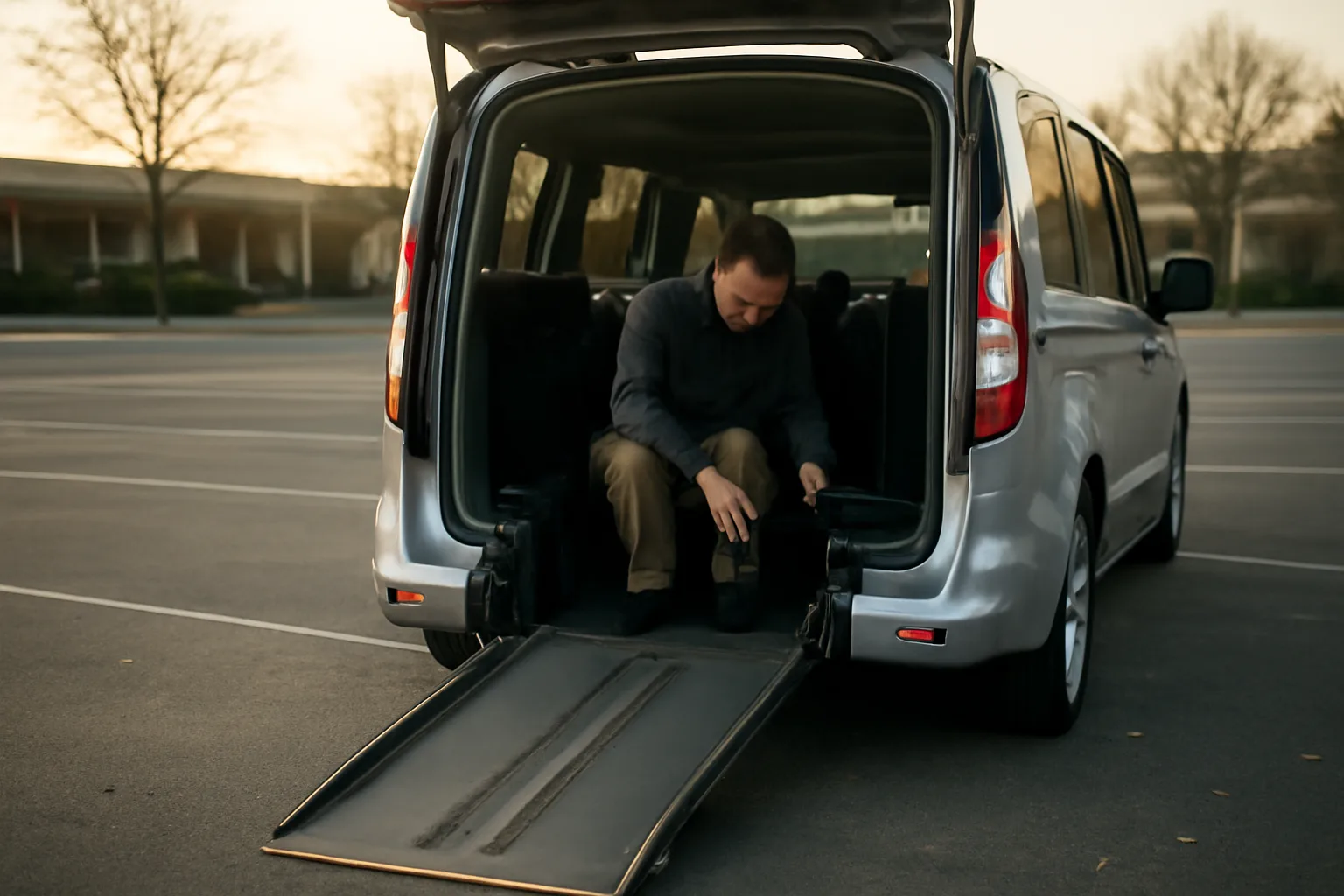
1. Pick a business structure and get an EIN. LLC is the common choice for liability separation, but talk to a local accountant before you file anything. 2. Decide your service type. Wheelchair van only, ambulatory sedan, stretcher van, or a mix. This decision drives your vehicle purchase, your insurance premium, and which broker contracts you're even eligible for. 3. Buy or convert your vehicle. Wheelchair-accessible vans need a compliant lift or ramp, tie-down and securement systems that meet SAE J2249 standards for wheelchair securement, and in most states a passed annual or biennial vehicle inspection specific to accessible transport [2]. 4. Get commercial insurance. Personal auto policies exclude commercial passenger transport. You need commercial auto liability (states commonly require $1 million combined single limit for passenger vehicles-for-hire, though minimums vary) plus general liability, and many brokers require proof before they'll even open a credentialing file. 5. Apply for state operating authority. This might be a Certificate of Public Convenience and Necessity, a transportation network permit, or direct Medicaid transportation provider enrollment, depending on the state. 6. Enroll with Medicaid and/or the broker. Most states use a regional or statewide broker (Modivcare, MTM, Access2Care, SafeRide are the big four) instead of paying you directly. You'll submit a credentialing packet: business license, insurance certificates, vehicle inspection, driver files, W-9, and often a site visit. 7. Background-check every driver. Federal Medicaid program integrity rules and most state Medicaid agencies require checks against fraud and abuse exclusion lists. Providers must not employ anyone listed on the HHS Office of Inspector General's List of Excluded Individuals/Entities [3]. 8. Pass your final inspection and go live. Some brokers do a physical vehicle inspection and a driver ride-along before activating you in their dispatch system.
how to start a nemt business with one van?
One van is plenty to start. Most owner-operators begin exactly this way, and broker networks generally welcome single-vehicle providers, especially in rural or underserved zip codes where broker capacity is thin. The practical difference with a single van is that you have zero redundancy. If that van is in the shop, you have no trips, no revenue, and depending on your broker contract, possibly a service-level penalty for missed rides. Some broker agreements include on-time performance and no-show thresholds that can affect your standing in the network, so read your specific broker contract for those terms before you sign. With one van, prioritize three things: a preventive maintenance schedule you actually follow, a backup driver (even part-time) so illness doesn't shut you down, and insurance that covers a loaner or rental if your van is down for repairs. Skipping any of these is the most common reason single-van operators lose broker standing in year one. Don't over-buy up front. A used, well-maintained wheelchair van with a mechanically sound lift beats a brand-new van you financed past what your first few months of trips can support. Get the paperwork and credentialing right first; add vehicles once you have a working relationship with your broker.
does medicaid cover ambulance rides and NEMT trips?
Yes. Medicaid covers ambulance transportation when medically necessary, and separately, federal law requires state Medicaid programs to provide non-emergency transportation to covered services for beneficiaries who have no other means of getting there [1]. These are two different benefit categories with two different provider types, but both fall under the Medicaid transportation umbrella. Ambulance coverage (the emergency kind) is billed as a medical service through your state's ambulance fee schedule, usually tied to CPT/HCPCS codes and mileage rates set by the state. NEMT, by contrast, is usually managed through a broker contract at a negotiated per-trip or per-mile rate, not billed like a medical claim at all. Coverage rules and prior-authorization requirements differ by state and by whether the person is in a Medicaid fee-for-service plan or a Medicaid managed care organization. If you're building a business plan around ambulance-adjacent work, confirm with your state Medicaid agency's transportation unit which side of the line (ambulance vs. NEMT) your service model actually falls under, since the enrollment paths are separate.
does medicare cover medical transportation?
Medicare covers ambulance transportation only when it is medically necessary and other transportation would endanger the person's health, per the Medicare Benefit Policy Manual, Chapter 10 [4]. Medicare does not generally cover routine non-emergency rides to a doctor's appointment. There are narrow exceptions. Some Medicare Advantage (Part C) plans offer a supplemental NEMT benefit as an extra. Medicaid.gov notes that transportation benefits and administration approaches vary by state and by plan type, which is the same variability that shows up on the Medicare Advantage side when plans choose to offer supplemental transportation [5]. This is plan-specific, not a guaranteed Medicare benefit, and it varies wildly by insurer and county. For an owner-operator, the practical takeaway is this: your steady contract volume is going to come from Medicaid NEMT brokers, not traditional Medicare, unless you separately contract with specific Medicare Advantage plans that offer the supplemental transportation benefit. Don't build a business plan assuming standard Medicare will pay for routine non-emergency rides, because for the vast majority of beneficiaries, it won't.
what licenses and permits does a medical transportation business need?
| Business entity registration | State Secretary of State filing | Your state's business filing office | |
|---|---|---|---|
| NEMT operating license/permit | State DOT, DMV, or health department | State Medicaid transportation unit | |
| Medicaid provider enrollment or broker credentialing | Direct state enrollment or broker application | State Medicaid agency and assigned broker | |
| Vehicle inspection | Wheelchair lift/ramp, securement, annual/biennial | State DOT or DMV | |
| Commercial insurance | Auto liability, general liability | State insurance department minimums | |
| Driver background checks | Criminal history, exclusion list check | State Medicaid agency, HHS-OIG | |
| Driver medical/physical certification | DOT physical in many states | FMCSA or state equivalent | Some states fold NEMT operating authority into their general for-hire vehicle or livery licensing scheme; others have a dedicated Medicaid transportation provider designation entirely separate from taxi or limo rules. A few states require a Certificate of Public Convenience and Necessity, a legacy transportation regulatory tool, before you can even apply for Medicaid enrollment. The honest answer to "what do I need" is this: pull up your specific state Medicaid agency's transportation or NEMT provider page, and call the number listed. This is genuinely one of those areas where the requirements differ enough (and change often enough) that a generic national article, including this one, can't give you exact numbers with confidence. For background on how state programs are typically structured, the medical transportation overview and nemt guide break down the general categories most states use. |
This is the part that varies most by state, and it's why a national checklist can only get you so far. Common requirements include: | Requirement | Typical scope | Who to confirm with |
how does broker credentialing work with Modivcare, MTM, Access2Care, and SafeRide?
Most states contract NEMT management to a small number of national or regional brokers instead of paying providers directly through Medicaid claims. Modivcare, MTM, Access2Care, and SafeRide are the largest players nationally, though many states run their own regional brokers or use a mixed model. Credentialing with a broker typically means submitting a packet that includes your business license, proof of insurance meeting the broker's minimums, vehicle registration and inspection records, driver files (license, background check, drug screen results, training certificates), and sometimes a facility or garage inspection. Brokers re-credential providers periodically, commonly annually, so this isn't a one-time task. Each broker runs its own portal, its own onboarding timeline, and its own minimum insurance and vehicle age requirements. What MTM requires in one state may not match what Modivcare requires in a neighboring state, because the broker's requirements are set by their specific state contract, not by the broker company nationwide. Don't assume credentialing you did for one broker transfers to another, even in the same state. This is the step where a lot of new owner-operators lose weeks. Missing a single required document (a specific insurance endorsement, a particular driver certification) can bounce your application back to the end of the queue. Building your packet once, correctly, with everything a broker commonly asks for, saves real time. That's the exact gap the $199 State + Broker NEMT Launch Kit is built to close: a structured packet builder for state enrollment and broker credentialing paperwork, not a guarantee of approval, since every broker and state makes its own credentialing decisions.
what vehicle and equipment requirements apply to wheelchair vans?
Wheelchair-accessible vans used for NEMT generally need a certified lift or ramp system, wheelchair securement points meeting SAE J2249 recommended practice for wheelchair tie-down and occupant restraint systems, and passenger restraints appropriate for a rider remaining in their own wheelchair [2]. Most states also require periodic vehicle inspections separate from standard passenger vehicle registration, sometimes annual, sometimes tied to mileage. Age and mileage limits on vehicles vary by broker and by state Medicaid contract. Some brokers won't credential a van older than 7 to 10 years or with certain mileage; others have no hard cutoff but require more frequent inspections on older vehicles. Confirm this with your specific broker before you buy, not after. Beyond the lift itself, expect requirements around interior signage for capacity, a first aid kit, a fire extinguisher, and sometimes a GPS-based dispatch or tracking system that integrates with the broker's routing software. Several brokers now require real-time GPS trip verification as a condition of the contract, which means budgeting for a compatible mobile data terminal or smartphone-based dispatch app, more than the van itself.
what insurance and driver requirements apply to NEMT owner-operators?
Insurance minimums are set at the state level and often layered with broker-specific minimums on top. Commercial auto liability for passenger-carrying vehicles-for-hire commonly runs $1 million combined single limit in many broker contracts, though exact figures depend on your state and the specific broker agreement, so confirm the number in writing before you bind a policy. General liability, and in some states workers' compensation once you hire even one employee driver, round out the standard package. A personal auto policy will not cover you here; insurers explicitly exclude commercial passenger-for-hire use, and an uncovered accident while transporting a Medicaid beneficiary is a liability exposure that can end a small operation. Drivers need a valid license appropriate to the vehicle class (most wheelchair vans don't require a CDL, but some larger cutaway vans or stretcher vans might, depending on gross vehicle weight rating), a clean-enough motor vehicle record by your state's or broker's standard, a passed background check against state and federal exclusion databases, and often specific training in passenger assistance and wheelchair securement (many states and brokers reference the National Aging and Disability Transportation Center's driver training curriculum or an equivalent state-approved course). Every driver, owner included, needs to be checked against the HHS Office of Inspector General's List of Excluded Individuals/Entities before working on any Medicaid-funded trip [3]. This check is not optional and not a one-time formality; most state Medicaid agencies expect ongoing monthly or quarterly rechecks for the life of your enrollment.
how long does it take and what does it cost to launch?
Realistically, plan on 60 to 120 days from "I have a van" to "I'm dispatched my first trip." State licensing alone can take 30 to 60 days depending on backlog. Broker credentialing, once your packet is complete and correct, commonly takes another 2 to 6 weeks, longer if anything bounces back for corrections. Costs vary widely by state. But expect: business filing fees ($50 to $500 depending on state and entity type), state operating license or permit fees (often $100 to a few thousand dollars depending on the state's fee schedule), commercial insurance (this is usually the biggest recurring cost, often several thousand dollars a year for a single wheelchair van, varying heavily by state and driving record), vehicle inspection fees (typically under $200), and background check fees per driver (often $30 to $100 per check depending on the state's vendor). The paperwork itself, not the vehicle, is where new owner-operators lose the most time. Assembling a correct, complete credentialing packet the first time, instead of getting bounced back twice by a broker reviewer, easily saves two to four weeks. That gap is the whole reason a structured document kit for non emergency medical transportation startup paperwork exists as a category at all.
what mistakes cause NEMT startup applications to get rejected or delayed?
The most common one is applying to the broker before the state license is finalized. Most brokers won't open a credentialing file, or won't finish it, until they can verify your state operating authority is active, more than "in process." Second most common: insurance certificates that don't name the broker or the state as a certificate holder or additional insured when required. Many brokers have a specific endorsement wording they want; a generic certificate of insurance from your agent often gets rejected on the first pass. Third: driver files missing one piece. A missing DOT physical, an expired background check, a training certificate from a course the state doesn't recognize. Brokers process high volumes of these packets and don't chase down missing documents for you; incomplete files sit or get returned. Fourth: vehicle inspection scheduled before the securement equipment is actually installed and functional, forcing a re-inspection. Fifth, underestimating how long re-credentialing and periodic recheck cycles take once you're live, since this isn't a one-time hurdle, it's an ongoing compliance calendar you have to manage for as long as you're in the network.
Frequently asked questions
What is NEMT?
NEMT stands for non-emergency medical transportation: rides to medical appointments (dialysis, therapy, checkups) for people who don't need an ambulance. Federal Medicaid rules require states to ensure this transportation is available for eligible beneficiaries under 42 CFR 431.53, usually delivered through contracted brokers or direct provider networks rather than billed like a standard medical claim.
Does Medicaid cover ambulance rides?
Yes, Medicaid covers medically necessary ambulance transportation as a distinct benefit from non-emergency transportation, billed through the state's ambulance fee schedule. Separately, states must also ensure non-emergency transportation to covered services under 42 CFR 431.53. Coverage details, prior authorization rules, and rates vary by state, so confirm specifics with your state Medicaid agency.
Does Medicaid cover NEMT?
Yes. Federal regulation 42 CFR 431.53 requires state Medicaid programs to ensure necessary transportation for beneficiaries to and from Medicaid-covered services, which is the legal basis for the entire NEMT broker and provider system nationwide. States implement this differently, often through regional or statewide broker contracts.
Does Medicare cover medical transportation?
Medicare covers ambulance transportation only when medically necessary and other transport would endanger the patient's health, per the Medicare Benefit Policy Manual Chapter 10. Standard Medicare generally does not cover routine non-emergency rides. Some Medicare Advantage plans offer a supplemental NEMT benefit, but this varies by plan and is not guaranteed.
How do I start a NEMT business?
Form a business entity, buy or convert a compliant wheelchair van, get commercial insurance, apply for state operating authority, enroll with Medicaid or your state's assigned broker, background-check every driver, and pass a vehicle and driver inspection before going live. Expect 60 to 120 days total, and confirm exact steps with your state Medicaid agency.
Can I start a medical transportation business with just one van?
Yes, most owner-operators start with a single wheelchair van, and broker networks generally accept single-vehicle providers, especially in underserved areas. The tradeoff is zero redundancy: if that van is down for repairs, you have no trips. Have a backup driver and a maintenance plan before you rely on it as your only vehicle.
How much does it cost to start a NEMT business?
Costs vary by state but commonly include business filing fees ($50-$500), state license fees (roughly $100 to a few thousand dollars), vehicle inspection fees (usually under $200), driver background checks ($30-$100 each), and commercial insurance, typically the largest recurring cost at several thousand dollars a year for one van. Get exact figures from your state and insurer.
What insurance do I need for a wheelchair van business?
You need commercial auto liability insurance (not personal auto, which excludes commercial passenger transport), general liability, and workers' compensation once you have employees. Many broker contracts specify a minimum liability limit, commonly around $1 million combined single limit, though this varies by state and broker, so confirm the exact figure before binding a policy.
What is the difference between NEMT and emergency medical transport?
NEMT covers scheduled, non-emergency rides (dialysis, therapy, appointments) in wheelchair vans or sedans, with no lights, sirens, or EMT staffing required. Emergency medical transport involves 911 dispatch, licensed EMTs or paramedics, and ambulances built and licensed under separate state and federal standards. The licensing, staffing, and insurance requirements are entirely different.
How do I get credentialed with Modivcare, MTM, Access2Care, or SafeRide?
Submit a credentialing packet with your business license, insurance certificates meeting the broker's minimums, vehicle inspection records, and driver files (license, background check, training certificates). Each broker's requirements are set by their specific state contract, not the company nationwide, so requirements for the same broker can differ between states. Confirm the exact checklist with your assigned broker.
Do NEMT drivers need a CDL?
Most standard wheelchair vans don't require a commercial driver's license, but larger cutaway vans or stretcher vans above certain gross vehicle weight thresholds might, depending on your state's rules. Drivers generally need a valid license appropriate to the vehicle class, a passable driving record, and a background check clear of federal and state exclusion lists.
How long does NEMT provider enrollment take?
Plan on roughly 60 to 120 days total from starting your application to your first dispatched trip. State licensing alone can take 30 to 60 days, and broker credentialing typically adds another 2 to 6 weeks once your packet is complete, longer if documents are missing or need correction.
What background checks do NEMT drivers need?
Every driver, including owner-operators, must be checked against the HHS Office of Inspector General's List of Excluded Individuals/Entities before working on Medicaid-funded trips, plus a standard criminal background check per state Medicaid rules. Most states require ongoing rechecks (monthly or quarterly) for as long as the driver remains active, more than a one-time check at hiring.
Sources
- Code of Federal Regulations, 42 CFR 431.53: States must ensure necessary transportation for Medicaid beneficiaries to and from providers
- SAE International, J2249 wheelchair tie-down and occupant restraint standard: Wheelchair securement systems for transport vehicles are governed by SAE J2249
- HHS Office of Inspector General, List of Excluded Individuals/Entities (LEIE): Providers must not employ individuals listed on the OIG exclusion list for Medicaid-funded work
- CMS, Medicare Benefit Policy Manual, Chapter 10 (Ambulance Services): Medicare covers ambulance transportation only when medically necessary and other transport would endanger health
- Medicaid.gov, Non-Emergency Medical Transportation benefit page: Medicaid.gov's official description of the NEMT benefit and how states administer transportation coverage
- 42 CFR 440.170(a), Transportation services definition: Federal Medicaid regulation defining transportation as a coverable service state plans may include, distinct from the assurance duty in 431.53