Last updated 2026-07-25
TL;DR
Non-emergency medical transportation (NEMT) is Medicaid-funded transport to medical appointments for people without a car or who can't ride public transit. In Elizabeth and the rest of New Jersey, Medicaid contracts this out to a broker (Modivcare, as of the state's current contract), so owner-operators enroll with NJ Medicaid first, then credential with the broker to get trip assignments.
What is non-emergency medical transportation?
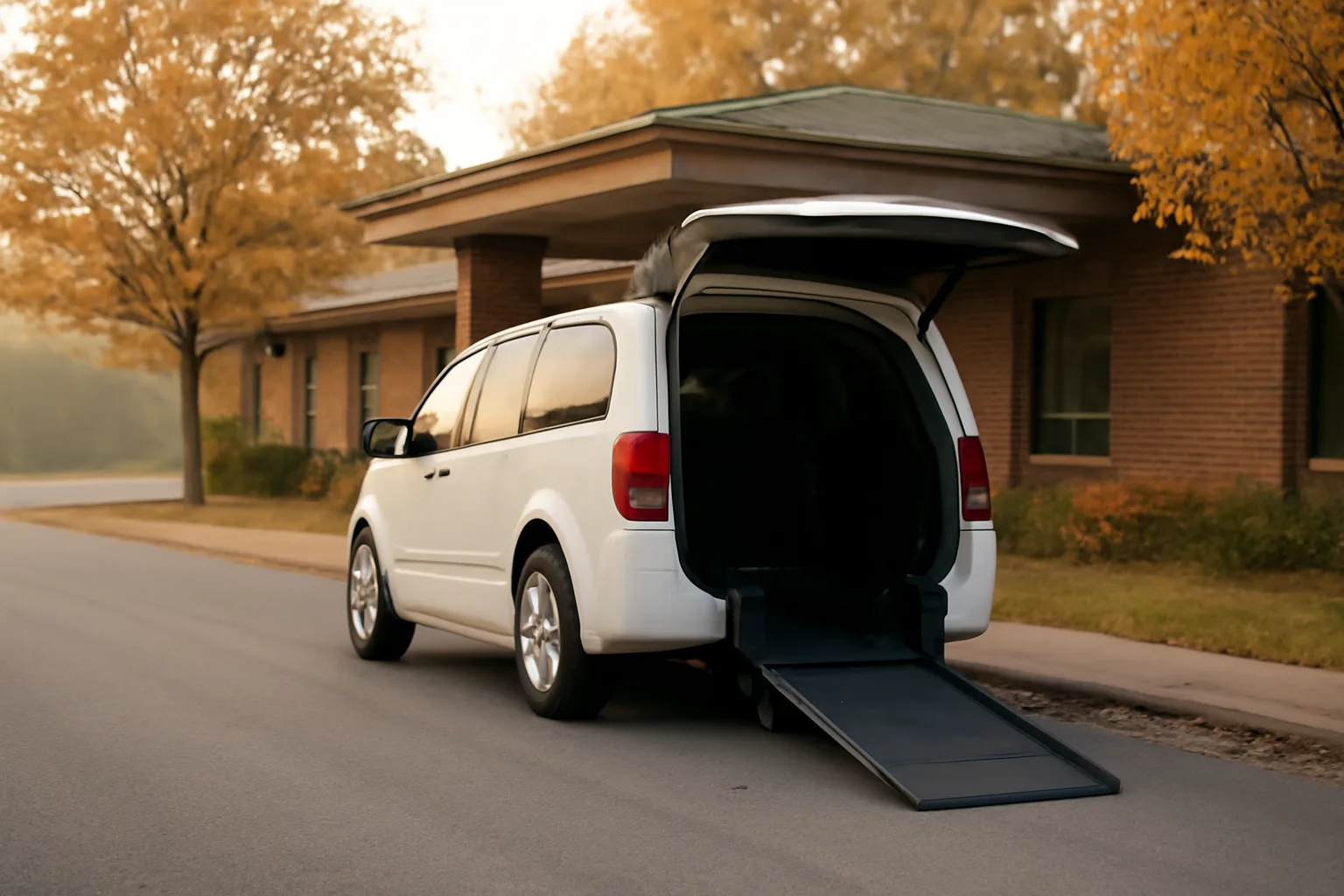
Non-emergency medical transportation (NEMT) is transport for Medicaid enrollees to and from medical appointments when the trip isn't an emergency and the person can't get there on their own. Think dialysis three times a week, chemo, physical therapy, a prenatal visit, or a routine checkup. The federal rule requiring states to provide it is old and specific: states must "ensure necessary transportation for beneficiaries to and from providers" under 42 CFR 431.53 [1]. That's the legal floor every state Medicaid NEMT program sits on. In practice, NEMT covers a range of vehicle types. Ambulatory sedan service for someone who can walk and sit in a regular car. Wheelchair van service for someone who uses a wheelchair and can't transfer into a sedan. Stretcher service, less common, for people who must stay lying down but don't need ambulance-level medical care. None of this is ambulance service. NEMT is scheduled, non-emergency, and billed differently than an ambulance run. For a reader in Elizabeth, NJ specifically, NEMT means: NJ FamilyCare (the state's Medicaid program) pays for the ride, but a private broker manages the scheduling, dispatch, and driver network. You don't bill Medicaid directly for these trips in most cases. You get paid by the broker, per the broker's rate schedule, and the broker got the contract to manage this from NJ Medicaid. That structure is the single most important thing to understand before you buy a van. For background reading before you commit money, see our overview of non emergency medical transportation and the broader nemt hub page.
Does Medicaid cover ambulance rides, and how is that different from NEMT?
Yes, Medicaid covers ambulance transportation when it's medically necessary, but that's a separate benefit from NEMT and it's billed differently. Ambulance transport (ground or air) is for emergencies or situations requiring medical monitoring during the ride. It's billed under Medicare/Medicaid ambulance fee schedules, usually by a licensed ambulance provider with EMTs or paramedics on board. NEMT is the opposite scenario: the person is stable, doesn't need medical care during the ride, but has no other way to get to a covered appointment. Medicaid.gov describes NEMT as helping beneficiaries "get to and from medical appointments" when they "have no other way to get there" [2]. A wheelchair van driver isn't providing medical care and doesn't need EMT certification. That distinction matters for licensing: NEMT wheelchair vans are typically regulated as a form of livery or medical transport under state motor vehicle rules, not as ambulances under state EMS statutes. If you're picturing yourself running lights-and-siren calls, that's a different business (and a different, much heavier regulatory lift). NEMT owner-operators run wheelchair vans and sedans on a schedule, not a 911 dispatch.
Does Medicare cover medical transportation?
Medicare's NEMT coverage is much thinner than Medicaid's. Original Medicare (Part A/B) generally does not cover routine non-emergency transportation to medical appointments. Medicare Part B covers ambulance services when other transportation could endanger your health, per CMS's ambulance services coverage rules [3], but that's emergency-oriented ambulance coverage, not a standing wheelchair-van benefit. Some Medicare Advantage (Part C) plans have started offering limited NEMT as a supplemental benefit, but this varies enormously by plan and insurer, and it's not guaranteed year to year. If you're building a business plan, don't count on Medicare trips as a base. Medicaid NEMT is the stable, statutorily required piece; Medicare is a maybe, plan by plan. This is one reason almost every wheelchair-van owner-operator we hear about targets Medicaid/broker credentialing first, then adds private-pay, VA, or Medicare Advantage contracts later once the Medicaid pipeline is running.
How does NEMT work for Medicaid patients in Elizabeth, NJ?
NJ FamilyCare (Medicaid) has managed its NEMT benefit through a statewide broker model for years. Historically that broker was LogistiCare/Modivcare under a statewide contract with the NJ Department of Human Services. Broker contracts do change on renewal cycles, so confirm the current broker with your state Medicaid agency before you build a business plan around any single name. Here's the mechanic that matters to you as a driver: a Medicaid member in Elizabeth needing a ride to a dialysis center or specialist calls the broker's reservation line (or their managed care organization routes them there). The broker's system matches that ride to a credentialed transportation provider in its network, geographically close to Union County. If you're not credentialed with the broker, you never see that trip, no matter how good your van is. So there are two separate approvals you need, not one: 1. NJ Medicaid provider enrollment (through the NJ Department of Human Services / Division of Medical Assistance and Health Services process for NEMT providers) [4]. 2. Broker network credentialing (application, vehicle inspection, insurance minimums, driver background checks, often a road test or ride-along) [1]. Getting one without the other is a dead end. You can be a fully licensed NJ business with a clean wheelchair van and still get zero trips if you never finish broker credentialing. Confirm current enrollment steps and required forms directly with NJ Medicaid's transportation unit and with the broker, since documentation requirements shift.
How to start a medical transportation business (the general roadmap)
Starting a medical transportation business follows a fairly consistent sequence across states, even though every state's specific forms differ. Here's the order that actually works, based on how state Medicaid programs and brokers structure their requirements. 1. Form your business entity (LLC is standard) and get an EIN. 2. Get commercial auto insurance quotes early. This is often the line item that surprises new owner-operators, and insurers want to know your business structure before quoting. 3. Get NJ business licensing sorted (business registration certificate, and any local Elizabeth/Union County livery or for-hire vehicle permit that applies to your vehicle type). 4. Buy or convert your wheelchair van to meet ADA/state accessibility standards, including wheelchair lift or ramp, tie-downs, and securement systems. 5. Enroll as an NJ Medicaid transportation provider. 6. Apply for broker network credentialing (Modivcare or whichever broker currently holds the NJ contract). 7. Complete driver requirements: background check, drug screen, defensive driving or passenger assistance training, and any state-required NEMT driver certification. 8. Pass the vehicle inspection required by the broker and/or state. Don't skip step 2. A lot of new operators shop insurance last and get blindsided by premiums for wheelchair-accessible commercial vehicles, which run higher than standard livery coverage because of the lift equipment and passenger risk profile. Get quotes before you finalize your van purchase. For state-specific process detail beyond New Jersey, our medical transportation guide and nemt transportation page break down how other states structure this.
How to start a NEMT business with one van (is it realistic?)
Yes, plenty of owner-operators start with a single wheelchair van, and both NJ Medicaid enrollment and broker credentialing are designed to accept a one-vehicle fleet. You don't need a fleet to get approved. What you do need is every piece of paperwork clean and complete, because a single-vehicle operation has zero redundancy if something falls through. With one van, a few things matter more than they would for a bigger fleet. First, insurance: make sure your commercial auto policy explicitly covers wheelchair-accessible passenger transport, more than general livery, since brokers typically require specific coverage language and minimum liability limits (confirm exact minimums with your broker, they vary and change). Second, driver backup: if you're the only driver and you get sick, your one van earns nothing that day, so some new operators line up a part-time backup driver early even before trip volume justifies it. Third, maintenance: a lift or ramp failure takes your only vehicle out of service, so a maintenance reserve matters more here than in a multi-van fleet. The credentialing process itself, vehicle inspection, insurance verification, driver background check, doesn't care how many vans you own. A one-van applicant with tidy paperwork moves through review faster than a five-van applicant with gaps. Don't let "I only have one van" talk you out of applying; that's not a disqualifier anywhere we've seen documented in state or broker credentialing criteria.
How do you start a medical transportation business step by step (checklist)
| 1. Entity + EIN | Form LLC, get federal EIN | Skipping this delays every later step | |
|---|---|---|---|
| 2. Insurance quotes | Commercial auto, wheelchair-van rider | Underestimating premium cost | |
| 3. Vehicle | Buy/convert ADA-compliant wheelchair van | Buying before confirming broker vehicle specs | |
| 4. NJ business licensing | State registration, local livery permit if required | Missing Elizabeth/Union County local rules | |
| 5. Medicaid provider enrollment | NJ DHS/DMAHS NEMT provider application | Incomplete supporting documents | |
| 6. Broker credentialing | Modivcare (or current NJ broker) network application | Assuming Medicaid enrollment alone gets you trips | |
| 7. Driver compliance | Background check, drug test, training | Not budgeting time for background check turnaround | |
| 8. Vehicle inspection | State and/or broker inspection | Deferring lift maintenance until inspection day | Every row on that table has a real failure mode we hear about constantly: people buy the van first, then discover the insurance costs more than expected, or they finish Medicaid enrollment and assume the broker application is a formality. It isn't. Broker credentialing is its own gate with its own document list, and Modivcare's provider network requirements (insurance certificates, vehicle photos, driver rosters) are separate from what NJ Medicaid asks for on the state side [1]. Confirm both checklists directly with NJ Medicaid's transportation unit and the broker before you spend money. |
Below is the practical order of operations, condensed into a checklist you can actually work through. | Step | What it involves | Typical trap |
What does NEMT credentialing actually require from an owner-operator?
Every broker's exact checklist differs and changes over time, but the categories are consistent across Modivcare, MTM, Access2Care, and SafeRide contracts nationally. Expect to provide: - Proof of business entity and EIN
- Commercial auto insurance certificate meeting minimum liability limits (confirm exact numbers with your broker; these are not standardized nationally)
- Vehicle registration, and for wheelchair vans, documentation the lift/ramp and securement system meet accessibility standards
- Driver's license, background check clearance, and often a motor vehicle record check for every driver
- Drug and alcohol screening results
- Proof of NJ Medicaid provider enrollment (in states with a broker model, brokers usually require this first)
- A completed broker provider application, sometimes with a vehicle inspection scheduled by the broker's own inspector Brokers periodically re-credential providers, meaning this isn't a one-time hurdle. Insurance certificates lapse, background checks expire, vehicle inspections have to be redone annually or biannually depending on the contract. Build a calendar for renewal dates from day one; a lapsed document can get you suspended from the network with no warning in some broker contracts, so track this proactively rather than waiting for a notice.
What does it cost to get an NEMT wheelchair van business running?
Costs vary a lot by whether you buy new or used, and by how much conversion work the van needs. A used, already-converted wheelchair van (Dodge Grand Caravan, Ford Transit, or similar with a factory or aftermarket lift conversion) commonly runs somewhere in the tens of thousands of dollars on the used market; new conversions cost substantially more. Beyond the vehicle, plan for: - Commercial auto insurance (recurring, often the single biggest recurring line item, varies by state and driving record)
- Business registration and any local livery/for-hire permit fees
- Driver background checks and drug screening fees (per driver)
- Broker credentialing fees, if the broker charges any (this varies by broker and by state contract)
- Ongoing vehicle maintenance, with the lift/ramp mechanism as the highest-risk failure point We won't give you a made-up total cost or an income estimate here; nobody running this article has good state-by-state cost data, and NEMT reimbursement rates in New Jersey specifically aren't published in a way that lets us cite a defensible number. What is knowable and worth budgeting for: insurance and background-check costs recur, and a lapsed insurance certificate or expired background check is the fastest way to get pulled from a broker's active provider list.
Where do I actually enroll and apply in New Jersey?
Start with NJ Medicaid's own transportation program materials rather than a broker's marketing page, since the state sets the underlying eligibility and provider enrollment rules. NJ FamilyCare and the Division of Medical Assistance and Health Services publish provider enrollment guidance for transportation providers [4]. From there, once you have your NJ Medicaid provider status (or are far enough along in that process, brokers sometimes let you start credentialing in parallel), apply to the broker's provider network directly. A practical note for anyone in Elizabeth specifically: Union County has a dense concentration of dialysis centers, senior housing, and specialty clinics, which is exactly the trip mix NEMT brokers route constantly. That doesn't guarantee any particular volume of assignments (we're not going to project numbers here), but it does mean the demand category NEMT serves, recurring dialysis and treatment trips, is a real and heavy part of the mix in this market. Confirm current broker assignment areas and any sub-region rules directly with the broker, since coverage zones get redrawn. If you want a structured way to organize both the state enrollment paperwork and the broker credentialing checklist in one place instead of chasing PDFs across two websites, that's the exact gap our $199 one-time State + Broker NEMT Launch Kit is built to close. It's a paperwork organizer, not a guarantee of enrollment or broker approval; final decisions always sit with NJ Medicaid and the broker.
What trips can NEMT actually take a Medicaid patient to?
NEMT covers rides to Medicaid-covered services: doctor visits, dialysis, physical therapy, mental health appointments, pharmacy pickups tied to a covered visit in some states, and similar medically necessary, non-emergency care. It does not cover trips to non-medical destinations like grocery stores or social visits, and it's not a general-purpose ride service. Eligibility for the ride itself usually requires that the person has no other means of transportation (no working vehicle, no family member available, can't use public transit due to disability) and that the appointment is for a Medicaid-covered service. States and brokers verify this differently; some require prior authorization from the medical provider, others rely on the member's self-report plus periodic audits. For owner-operators, this matters because it shapes your trip mix. Dialysis and long-term recurring treatment trips tend to be the steadiest, most schedule-predictable work in a broker's network, which is part of why wheelchair van operators specifically (versus ambulatory sedan-only operators) tend to see a heavier share of these recurring medical trips. Again, we're describing trip type patterns here, not making a volume promise; confirm actual assignment patterns with your broker once you're credentialed.
What if I want to expand beyond Elizabeth or beyond one broker?
Once you're credentialed and running, a lot of owner-operators look at expanding into neighboring counties or adding a second broker relationship (for example, credentialing with more than one broker if NJ's Medicaid managed care structure allows multiple regional contracts, or picking up private-pay and non-Medicaid contracts on the side). Each additional broker relationship is a separate credentialing process with its own document requirements, even within the same state, so budget the paperwork time accordingly. Some operators also look at Medicare Advantage supplemental transportation contracts or VA community care transportation as additional revenue streams once the Medicaid pipeline is stable. These are genuinely separate contracting processes, not add-ons to your Medicaid/broker credentialing, so don't assume being in the Modivcare network in NJ automatically qualifies you for a VA or Medicare Advantage contract. It doesn't. For operators thinking about growth beyond a single wheelchair van, our non emergency medical transportation services page and emergency medical transport overview (useful for understanding where NEMT's boundary with ambulance service actually sits) are good next reads.
Frequently asked questions
What is non-emergency medical transportation?
Non-emergency medical transportation (NEMT) is Medicaid-funded transport to medical appointments for people who have no other way to get there and don't need emergency or ambulance-level care during the ride. It covers sedan, wheelchair van, and stretcher trips to dialysis, therapy, and doctor visits. Federal Medicaid rules require states to provide it under 42 CFR 431.53.
Does Medicaid cover ambulance rides?
Yes, Medicaid covers medically necessary ambulance transportation, but that's billed and regulated separately from NEMT. Ambulance coverage is for emergencies or situations needing medical monitoring en route; NEMT is for stable patients who just lack transportation. Confirm specific coverage rules with your state Medicaid agency, since ambulance billing rules vary by state.
Does Medicare cover medical transportation?
Original Medicare generally doesn't cover routine non-emergency transportation. Medicare Part B covers ambulance services when other transport would endanger the patient's health, per CMS coverage rules, but that's emergency-oriented, not a standing NEMT benefit. Some Medicare Advantage plans offer limited NEMT as a supplemental benefit, but this varies by plan and isn't guaranteed.
How do I start a NEMT business?
Form your business entity, get commercial auto insurance quotes, buy or convert an ADA-compliant wheelchair van, complete local business licensing, enroll as a state Medicaid transportation provider, then apply for broker network credentialing (Modivcare, MTM, or whichever broker holds your state's contract). Driver background checks and vehicle inspections happen alongside these steps.
Can I start a medical transportation business with just one van?
Yes. State Medicaid enrollment and broker credentialing don't require a minimum fleet size. With one van, prioritize clean paperwork, wheelchair-van-specific insurance coverage, a backup driver plan, and a maintenance reserve for the lift or ramp, since a single vehicle has no redundancy if it breaks down.
What's the difference between Medicaid enrollment and broker credentialing?
Medicaid provider enrollment is your registration with the state Medicaid agency (in NJ, through the Division of Medical Assistance and Health Services). Broker credentialing is a separate application to the private company (Modivcare, MTM, etc.) that actually dispatches trips. You typically need both; one without the other gets you zero trip assignments.
Who is the NEMT broker for NJ Medicaid in Elizabeth?
NJ FamilyCare has used a statewide broker model, historically Modivcare (formerly LogistiCare), but broker contracts renew and can change hands. Confirm the current broker directly with NJ Medicaid's transportation unit before applying, since building a plan around an outdated broker name wastes time.
How much does it cost to start a wheelchair van NEMT business?
Costs vary widely by vehicle condition and state. A used, already-converted wheelchair van commonly costs tens of thousands of dollars; new conversions cost more. Add recurring commercial auto insurance, licensing fees, driver background check costs, and possible broker credentialing fees. No published national average exists that we can cite reliably.
What insurance do I need for NEMT wheelchair van transport?
You need commercial auto insurance that explicitly covers wheelchair-accessible passenger transport, more than general livery coverage. Minimum liability limits vary by broker and state and change over time, so confirm exact current minimums with your specific broker and state Medicaid agency before buying a policy.
Does NEMT cover trips to the pharmacy or grocery store?
NEMT covers trips to Medicaid-covered medical services, like doctor visits, dialysis, and therapy. Pharmacy trips tied to a covered visit are covered in some states; general errands like grocery shopping are not covered. It's not a general-purpose ride service.
Do NEMT drivers need special certification?
Requirements vary by state and broker, but expect background checks, drug screening, and often passenger assistance or defensive driving training, especially for wheelchair securement. Some states require a specific NEMT driver certification. Confirm exact driver requirements with your state Medicaid transportation unit and your broker.
How long does NEMT credentialing take for a new owner-operator?
Timelines vary by state and broker workload and aren't standardized or reliably published, so we won't guess a number here. Build in time for background check turnaround, insurance certificate processing, and vehicle inspection scheduling, and start the Medicaid enrollment and broker application processes in parallel where the broker allows it.
Sources
- Code of Federal Regulations, 42 CFR 431.53: States must ensure necessary transportation for Medicaid beneficiaries to and from providers
- Medicaid.gov, Non-Emergency Medical Transportation: NEMT helps beneficiaries get to and from medical appointments when they have no other way to get there
- CMS, Medicare Coverage of Ambulance Services: Medicare Part B covers ambulance services when other transportation could endanger the patient's health
- NJ Department of Human Services, Division of Medical Assistance and Health Services (DMAHS) Provider Enrollment: NJ Medicaid transportation providers must complete state provider enrollment through DMAHS
- 42 CFR 440.170, Transportation as a Medicaid State Plan Service: Transportation is defined as an optional or assurance-based Medicaid service distinct from ambulance services, which are covered under separate provisions