Last updated 2026-07-25
TL;DR
NEMT (non-emergency medical transportation) moves Medicaid enrollees to medical appointments when they have no other way to get there. Federal Medicaid rules require states to provide it. Medicare generally does not cover it except limited cases. Starting one means an LLC, a wheelchair-accessible or ambulatory vehicle, state Medicaid enrollment, and broker credentialing (Modivcare, MTM, or similar) before you can bill a single ride.
What is NEMT (non-emergency medical transportation)?
NEMT stands for non-emergency medical transportation. It's the organized system, mostly funded through Medicaid, that gets people to and from medical appointments when they can't drive themselves and have no other way to get there. Think dialysis three times a week, chemo infusions, physical therapy, or a routine primary care visit for someone who uses a wheelchair or just doesn't have a car. It is not an ambulance. No lights, no sirens, no paramedics doing clinical care en route. NEMT is a car, minivan, or wheelchair-accessible van driven by a trained but non-clinical driver. The federal regulation that requires this is 42 CFR 431.53, which says states must "ensure necessary transportation for recipients to and from providers" and may do this directly, through contracts, or by paying recipients' own transportation costs [1]. Most states outsource the logistics to a transportation broker. That broker (Modivcare, MTM, Access2Care, SafeRide Health, or a state-specific vendor) takes the trip requests from Medicaid members, dispatches them to a network of contracted transportation providers, and pays those providers per completed trip. You, as an owner-operator, are one of those contracted providers. You don't bill Medicaid directly in most states; you bill the broker, and the broker bills the state. For a broader look at how the whole system fits together, see medical transportation and nemt transportation.
Does Medicaid cover ambulance rides?
Yes, Medicaid covers ambulance transportation, but it's handled completely separately from NEMT. Ambulance transport is for emergencies or medically necessary situations where a patient needs monitoring, oxygen, or clinical intervention during transit. It's billed as an emergency medical service, usually by a licensed EMS agency, not by an NEMT wheelchair-van company. Federal Medicaid regulation 42 CFR 440.170 defines ambulance service as transportation by ground, water, or air specifically designed for transporting the sick or injured, and requires that state plans specify the conditions for medical necessity [2]. If a Medicaid member just needs a ride to a dialysis appointment and can safely travel seated in a wheelchair van, that's an NEMT trip, not an ambulance trip. The distinction matters for you as an NEMT owner-operator: you cannot bill for, or represent yourself as providing, ambulance-level service unless you're separately licensed as an EMS provider in your state. Confirm with your state Medicaid agency exactly where the line sits, because some states carve out "stretcher van" or non-emergency ambulance-adjacent services with their own certification rules.
Does Medicare cover medical transportation?
Mostly no. Medicare Part B covers ambulance services when they're medically necessary and other transportation would endanger your health, and the coverage conditions are set out in 42 CFR 410.40 [3]. Routine non-emergency rides to a doctor's appointment, dialysis, or physical therapy are generally not a Medicare Part B benefit for most beneficiaries. There are exceptions. Some Medicare Advantage (Part C) plans offer NEMT as a supplemental benefit, and CMS expanded what counts as a permissible supplemental benefit for chronically ill enrollees starting with plan year 2020, under authority from the Bipartisan Budget Act of 2018 [4]. If you want to build a business that serves Medicare Advantage members, that means contracting separately with individual MA plans or the transportation brokers those plans use, which is a distinct credentialing path from state Medicaid NEMT enrollment. Don't assume Medicaid broker credentialing automatically gets you access to Medicare Advantage trip volume; ask each MA plan or its broker directly what they require.
How do you start a medical transportation business? The real sequence
Here's the order that actually works, based on how state Medicaid programs and brokers structure their requirements. Skipping steps just means you redo them later. 1. Form your legal entity (LLC or corporation) and get an EIN from the IRS. 2. Get commercial auto insurance with the liability limits your state Medicaid program requires, often $1,000,000 combined single limit, but confirm the exact number with your state Medicaid agency and any broker you plan to join. 3. Buy or lease your vehicle. A wheelchair-accessible van (converted minivan with a ramp or lift) covers more trip types than an ambulatory-only sedan. 4. Get any state-specific NEMT provider permit or certificate of authority. Many states require a separate NEMT operator license before you can even apply for Medicaid enrollment. 5. Enroll as a Medicaid transportation provider with your state Medicaid agency. This is separate from broker credentialing and usually happens first. 6. Apply for credentialing with the broker(s) operating in your region (Modivcare, MTM, Access2Care, SafeRide, or a state-run system). 7. Complete driver background checks, drug testing, and any required training (defensive driving, passenger assistance, wheelchair securement, HIPAA). 8. Get your vehicle inspected to the broker's and state's standards, then start accepting trips. The federal floor for all of this sits in 42 CFR 431.53, but the specific documents, forms, and timelines are entirely state-driven [1]. There's no federal NEMT license. Every state runs its own enrollment and every broker runs its own credentialing on top of that.
What is non-emergency medical transportation, and who actually needs it?
Non-emergency medical transportation is transportation for people who have a medical appointment, are enrolled in Medicaid (or occasionally another qualifying program), and don't have a safe, reliable way to get there themselves. That covers a wide population: elderly patients who no longer drive, people with disabilities who use wheelchairs or walkers, dialysis patients on a fixed weekly schedule, and people recovering from surgery who can't drive themselves yet. States are required to provide this under Medicaid rules. The regulation itself frames transportation as an administrative necessity for accessing care rather than a direct medical service: 42 CFR 431.53 requires the state plan to "specify that the Medicaid agency will ensure necessary transportation for recipients to and from providers" [1]. In practice, most states route this through a broker who manages eligibility verification, trip scheduling, and network of drivers. If you want a plain overview of the umbrella term, non emergency medical transportation covers the basics, and nemt has more on how the acronym gets used across state programs.
How do you start an NEMT business with just one van?
One van is a completely normal way to start. Most owner-operators in this space begin exactly this way, and plenty of brokers are built to onboard single-vehicle providers. The practical constraints with one van: you can only run one trip at a time, so you're limited on how many broker contracts and trip types you can realistically accept without turning some down. A wheelchair-accessible van is usually the better first purchase over an ambulatory sedan, because it lets you accept both ambulatory and wheelchair trip requests, while a sedan-only fleet locks you out of wheelchair trip assignments entirely (and wheelchair trips often pay more per mile in broker rate schedules). With one van, expect to wear every hat yourself: driver, scheduler, biller, compliance officer. That's fine at small scale, but build your paperwork like you're going to grow, because broker audits don't care how many vehicles you have. They want the same insurance certificates, driver files, and vehicle inspection records whether you run one van or twenty. If you're deciding what to buy, emergency medical transport is worth reading just to understand what NEMT is not, so you don't accidentally market yourself into ambulance territory you're not licensed for.
What does Medicaid enrollment actually involve for an NEMT provider?
Medicaid provider enrollment is the state-level step where you register your business as an approved Medicaid transportation provider, separate from broker credentialing. Requirements vary by state but commonly include a business license, proof of vehicle insurance, a National Provider Identifier (NPI) in some states, background checks on owners and drivers, and a signed provider agreement. CMS requires state Medicaid programs to screen and enroll providers under 42 CFR Part 455, Subpart E, which sets risk-based screening levels (limited, moderate, high) depending on provider type [5]. Transportation providers are commonly screened at the "limited" or "moderate" level depending on the state, which affects whether you need fingerprint-based background checks. Confirm the exact screening level and document list with your state Medicaid agency's transportation or provider enrollment unit, because this is one of the areas where states differ the most and where outdated third-party checklists cause the most wasted time.
What does broker credentialing involve, and how is it different from Medicaid enrollment?
Broker credentialing is a separate approval process run by the private company (Modivcare, MTM, Access2Care, SafeRide, or a regional broker) that manages trip dispatch for the state. Being enrolled with your state Medicaid agency does not automatically make you an approved provider in a broker's network. You apply separately, and the broker sets its own document requirements, insurance minimums, vehicle age limits, and driver qualification standards on top of whatever the state requires. Expect to submit: proof of Medicaid provider enrollment, commercial auto insurance certificates naming the broker as certificate holder, vehicle registration and inspection records, driver license and background check results, and often a signed broker services agreement with its own rate schedule and trip acceptance rules. Some brokers also require completed training modules before your account goes live. None of this is standardized nationally; each broker's portal and paperwork looks different, and rate schedules and requirements change without much public notice, so always confirm current specifics directly with the broker before you plan around them.
Vehicle requirements: what you actually need to buy or convert
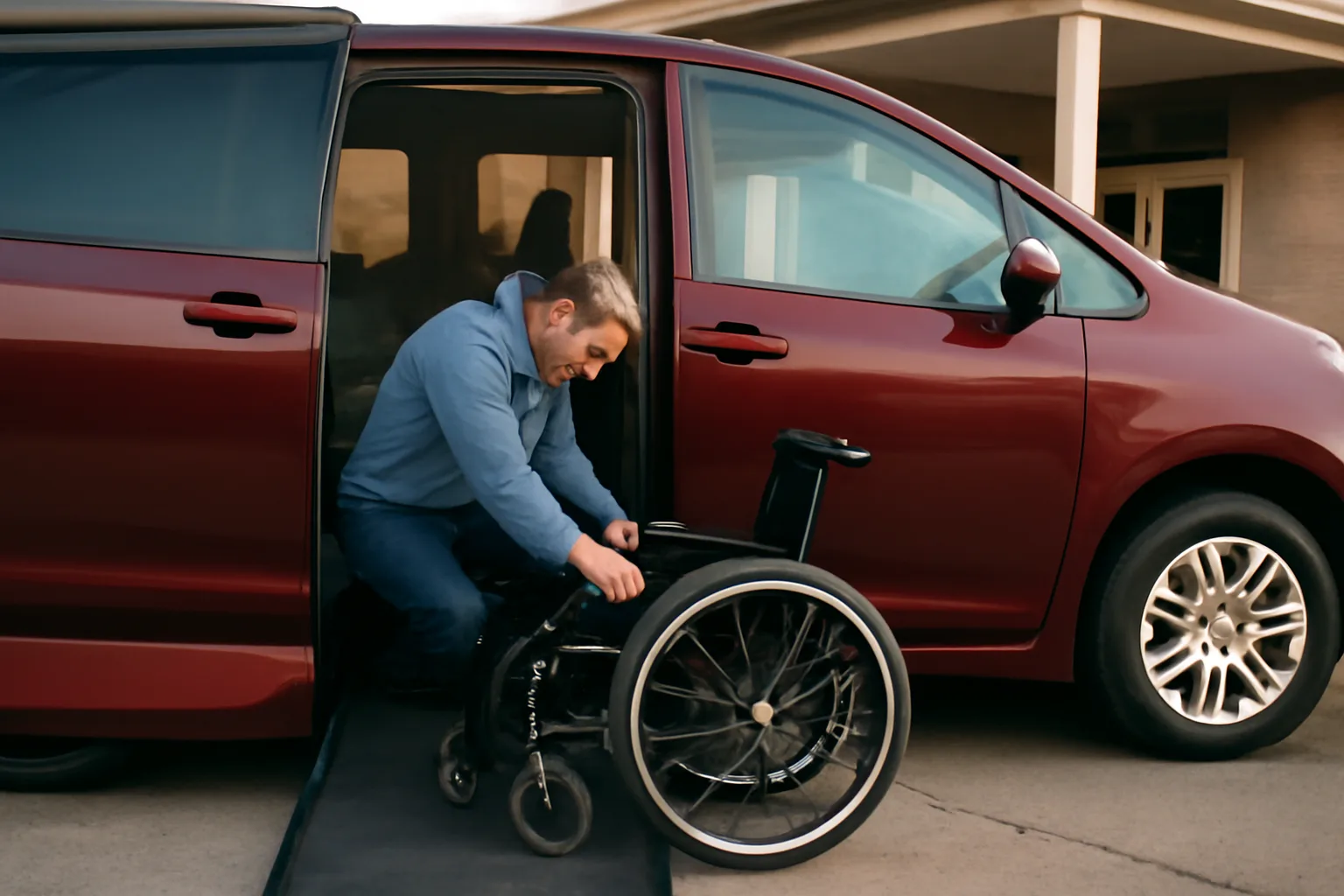
Most states and brokers distinguish between ambulatory vehicles (sedans, minivans, for passengers who can walk and transfer themselves) and wheelchair-accessible vehicles (WAVs) with a ramp or lift for passengers who remain in their wheelchair during transport. A wheelchair van conversion typically means a factory minivan (Dodge Grand Caravan, Chrysler Pacifica, Toyota Sienna are common bases) modified by a mobility conversion company with a lowered floor and a ramp. New converted vans commonly run well into the $50,000 to $70,000+ range depending on the base vehicle and conversion type, though used conversions are considerably cheaper and common among new owner-operators; get current pricing from a licensed mobility dealer rather than relying on old estimates, since prices shift with vehicle model years and conversion company changes. Whatever you buy needs to pass both your state's vehicle inspection standards for NEMT (which may include wheelchair securement points, working ramp/lift, functioning seatbelts for wheelchair passengers, first aid kit, and fire extinguisher) and the broker's separate vehicle inspection checklist. Keep both inspection reports on file; audits ask for them.
How much does it cost to get NEMT-ready before your first trip?
Beyond the vehicle itself, budget for: LLC formation and state registration fees (commonly $50 to $500 depending on the state), commercial auto insurance (NEMT-rated commercial policies run higher than personal auto, and pricing depends heavily on your state, driving history, and vehicle type), state Medicaid provider enrollment fees (some states charge an application fee, others don't), driver background checks and drug testing, and any required defensive driving or passenger assistance training course fees. There's no single national number for total startup cost because insurance rates, state fees, and vehicle prices vary too much state to state. What's true everywhere: the paperwork and credentialing process is where most new owner-operators lose weeks, not the vehicle purchase. Knowing exactly which state forms and which broker forms you need, in the right order, is the difference between being road-ready in a month versus three. That's the specific gap a resource like the $199 State + Broker NEMT Launch Kit is built to close: the state Medicaid enrollment packet and broker credentialing checklist assembled in one place so you're not hunting through a dozen different agency websites.
What trip types and payer sources exist beyond Medicaid?
Medicaid is the dominant payer in NEMT, but it's not the only one. Some owner-operators also serve: Medicare Advantage supplemental transportation benefits (contracted separately, per plan), Veterans Affairs beneficiary travel programs, workers' compensation transportation, private-pay clients (private hospitals, assisted living facilities, private individuals paying out of pocket), and some Medicaid managed care organizations that run their own transportation networks parallel to the state's primary broker. Diversifying payer sources reduces how dependent you are on one broker's trip volume and rate schedule, which brokers can and do change. But each additional payer source usually means another separate credentialing process, so weigh the administrative load against how much it actually adds for your specific market. For state-by-state specifics on Medicaid transportation programs, see non emergency medical transportation services.
What ongoing compliance keeps your NEMT authority active?
Getting approved is the start, not the finish. States and brokers both run periodic re-credentialing, which usually means updated insurance certificates, current vehicle inspections, refreshed driver background checks, and sometimes re-signed provider agreements on a set cycle (often annually). Miss a renewal deadline and you can get suspended from receiving trip assignments, sometimes with very little notice. Keep a calendar of every expiration date: insurance policy renewal, vehicle inspection, each driver's background check and license, and any required refresher training. Federal rules under 42 CFR 455.414 also require states to revalidate provider enrollment at least every five years, so build that into your long-term compliance calendar too [6].
Frequently asked questions
What is NEMT in simple terms?
NEMT means non-emergency medical transportation. It's rides to and from medical appointments, dialysis, therapy, and similar covered services for people (mostly Medicaid enrollees) who can't drive themselves and have no other transportation option. It uses cars and wheelchair vans, not ambulances, and doesn't involve clinical care during the ride.
Does Medicaid cover ambulance rides?
Yes. Medicaid covers ambulance transportation when it's medically necessary and other transportation would endanger the patient's health, billed separately from NEMT through licensed EMS providers under the conditions set in 42 CFR 440.170. Routine rides that don't require clinical monitoring in transit are NEMT, not ambulance service, and are billed differently.
Does Medicare cover medical transportation?
Generally not for routine non-emergency rides. Medicare Part B covers ambulance transport when medically necessary under 42 CFR 410.40, but standard NEMT to a doctor's appointment isn't a typical Part B benefit. Some Medicare Advantage plans offer NEMT as a supplemental benefit, credentialed separately from state Medicaid NEMT programs.
How do I start a medical transportation business from scratch?
Form an LLC, get commercial auto insurance meeting your state's minimums, buy an ambulatory or wheelchair-accessible vehicle, get any state NEMT operator permit required, enroll as a Medicaid transportation provider with your state agency, then get credentialed with the broker(s) operating in your area before accepting trips.
Can I start an NEMT business with just one van?
Yes, and most owner-operators do. A wheelchair-accessible van is usually the better first purchase since it can accept both ambulatory and wheelchair trip assignments. Keep your insurance, driver files, and vehicle inspection records audit-ready from day one, since broker requirements don't relax for smaller fleets.
What's the difference between Medicaid enrollment and broker credentialing?
Medicaid enrollment is your state's approval to be a Medicaid transportation provider, done through the state agency. Broker credentialing is a separate process with the private company (Modivcare, MTM, Access2Care, SafeRide, etc.) that actually dispatches trips. You typically need both, done in that order, and each has its own paperwork.
Do I need a special license to drive an NEMT vehicle?
Requirements vary by state and vehicle type. Some states require only a standard driver's license plus background checks and defensive driving training; others require a special certification for wheelchair van drivers. Confirm exact licensing and training requirements with your state Medicaid agency and the broker you're applying to.
How much does it cost to start an NEMT business?
Costs vary widely by state and vehicle choice. Beyond the vehicle (used wheelchair vans cost far less than new conversions, which often run into the tens of thousands), budget for LLC filing fees, commercial auto insurance, state enrollment fees, background checks, and training. There's no single national total; get quotes locally.
What vehicles qualify for NEMT work?
Ambulatory sedans and minivans work for passengers who can walk and transfer independently. Wheelchair-accessible vans (WAVs) with a ramp or lift serve passengers who remain in their wheelchair. Both must pass state and broker vehicle inspections covering safety equipment, securement points, and mechanical condition.
How long does it take to get approved as an NEMT provider?
Timelines vary by state and broker workload; there's no fixed federal timeline. Provider enrollment and broker credentialing each involve document review, background checks, and sometimes vehicle inspections, which commonly take several weeks to a few months combined. Confirm current processing times with your state Medicaid agency and target broker.
Which brokers manage NEMT trips for Medicaid?
The largest national brokers include Modivcare, MTM, Access2Care, and SafeRide Health, though many states use regional or state-specific brokers instead. Which broker operates in your area depends entirely on your state's Medicaid contract, so confirm with your state Medicaid transportation unit which broker(s) you need to apply to.
Do NEMT drivers need medical training?
Generally no clinical training is required since NEMT drivers don't provide medical care. Most states and brokers do require training in passenger assistance, wheelchair securement, defensive driving, and sometimes CPR/first aid awareness. Requirements differ by state, so confirm the specific training checklist with your state Medicaid agency and broker.
Can one NEMT business work with multiple brokers at once?
Yes, this is common and can diversify your trip volume. Each broker requires its own separate credentialing application, insurance documentation, and vehicle inspection, even if you're already approved with another broker in the same state. There's no shared credentialing system across brokers.
Sources
- CMS, 42 CFR 431.53 (eCFR): States must ensure necessary transportation for Medicaid recipients to and from providers
- CMS, 42 CFR 440.170 (eCFR): Ambulance service is defined as transportation specifically designed for transporting the sick or injured, with medical necessity conditions set by the state plan
- CMS, 42 CFR 410.40 (eCFR): Medicare Part B covers ambulance services only when medically necessary and other means of transportation would endanger the patient's health
- Congress.gov, Bipartisan Budget Act of 2018, Public Law 115-123, Section 50302: Federal law expanded Medicare Advantage supplemental benefit flexibility for chronically ill enrollees, enabling some plans to cover non-emergency transportation
- CMS, 42 CFR Part 455 Subpart E (eCFR): Medicaid provider screening is risk-based (limited, moderate, high) depending on provider type
- CMS, 42 CFR 455.414 (eCFR): States must revalidate enrollment of all providers at least every five years