Last updated 2026-07-25
TL;DR
There's no official government figure for 'NEMT net profit margin.' Small operators who talk about their numbers publicly tend to cite low-to-mid single digit to low double digit net margins after vehicle costs, insurance, fuel, and broker deductions. Your real margin depends on per-mile/per-trip broker rates, deadhead miles, vehicle payment, insurance class, and how many wheelchair vs. ambulatory trips you run.
What is a realistic net profit margin for a NEMT business?
Nobody has a clean government dataset on this, so be suspicious of anyone who quotes you a precise number like "NEMT runs 22% margins." The federal government doesn't publish profit margin benchmarks for NEMT providers, and state Medicaid agencies don't either, because they're paying for rides, not auditing your P&L. What we do know: NEMT is a low-margin, high-fixed-cost transportation business wrapped around a healthcare reimbursement system. Your revenue per trip is usually set by a broker contract or a state fee schedule, not by what the market will bear. That means your margin is almost entirely a function of controlling cost per mile and cost per trip, not raising prices. For a one-van or two-van operation, a working range that many small operators describe (in trade forums, broker onboarding calls, and industry surveys, not audited financials) is somewhere between break-even and 15% net margin in year one, improving to 10-20% once routes are optimized and deadhead miles drop. Larger fleets with better route density and back-office efficiency can push higher. Treat any specific percentage, including these, as directional, not a promise. The single biggest lever isn't the broker rate. It's deadhead mileage (driving empty to pick up a client or between trips). A van that's empty 40% of its miles is a fundamentally different business than one empty 15% of the time, even at identical per-trip rates.
What is NEMT and why does its business model squeeze margins?
NEMT stands for non-emergency medical transportation: rides to and from medical appointments, dialysis, therapy, and pharmacy visits for people who don't need an ambulance but can't drive themselves or use regular transit. It's distinct from emergency medical transport, which involves 911 response and higher acuity care. Medicaid is required by federal regulation to make sure eligible people can get to covered medical care, and NEMT is the mechanism. The rule lives at 42 CFR 431.53, which requires states to "ensure necessary transportation for beneficiaries to and from providers" [1]. States implement this differently: some run NEMT in-house, most contract with a broker like Modivcare, MTM, Access2Care, or SafeRide to manage scheduling, dispatch, and provider networks. That broker layer is exactly why margins are tight. You're not selling rides directly to riders or negotiating your own price. You're bidding into (or getting assigned) a broker network that sets per-trip or per-mile rates, often bundled into capitated regional contracts. The broker takes a cut for managing the network before a dollar reaches you. Your negotiating position as a new one-van operator is close to zero; you take the posted rate or you don't get trips. For more on how the whole system fits together, see our overview of non emergency medical transportation and how it differs from emergency medical transport.
Does Medicaid cover ambulance rides?
Yes, Medicaid covers ambulance rides when they're medically necessary, but that's a separate benefit from NEMT. Ambulance transport is billed under emergency medical services rules and typically requires a determination that ground or air ambulance transport was medically necessary, more than convenient [2]. NEMT, by contrast, covers rides where an ambulance isn't required: someone who uses a wheelchair going to a dialysis appointment, for example, needs a wheelchair-accessible van, not paramedics. States define "medical necessity" for NEMT differently, and some require a physician certification or prior authorization for higher-cost trip types (like stretcher van or long-distance trips). Confirm with your state Medicaid agency exactly which trip types require prior authorization in your state, because that affects both your service mix and your billing paperwork. Does Medicare cover medical transportation? Mostly not for routine NEMT. Original Medicare covers ambulance transportation when medically necessary under Medicare Part B, but it generally does not cover routine non-emergency rides to a doctor's office the way state Medicaid NEMT benefits do [3]. Some Medicare Advantage plans have started adding limited NEMT-like transportation benefits as a supplemental benefit, but that's plan-specific, not a guarantee, and it's a much smaller and more fragmented market than Medicaid NEMT. If you're building a business model around Medicare-funded trips, verify the specific Medicare Advantage plan's supplemental benefit terms directly with that plan, not with a general assumption.
How do you start a medical transportation business?
Here's the realistic sequence, stripped of fluff: 1. Decide your service type. Wheelchair van, ambulatory sedan, stretcher van, or a mix. Wheelchair vans have higher upfront vehicle cost (often $45,000-$80,000+ for a new or lightly used ADA-compliant conversion van) but access higher-paying trip categories. 2. Register your business entity and get an EIN. Standard LLC or corporation formation through your state, plus a federal Employer Identification Number from the IRS. 3. Get commercial auto insurance rated for livery/NEMT use, not personal auto insurance. This is one of the most commonly underestimated startup costs; policies vary heavily by state and vehicle class. 4. Apply for Medicaid provider enrollment in your state. This usually runs through your state's Medicaid Management Information System (MMIS) provider portal and can take anywhere from a few weeks to a few months depending on the state's backlog. Confirm current processing timelines with your state Medicaid agency, since these change. 5. Apply for broker network credentialing separately. Enrollment with your state Medicaid program does not automatically get you into a broker's provider network. Modivcare, MTM, Access2Care, and SafeRide each run their own credentialing process (vehicle inspection, driver background checks, insurance verification, W-9, sometimes a service area capacity assessment). Confirm current requirements directly with each broker, since they update credentialing checklists often. 6. Get your vehicle inspected and any required permits (some states require a separate NEMT vehicle permit or decal, separate from standard vehicle registration). 7. Set up dispatch and billing systems before your first trip, not after. Broker portals often have specific claim submission windows and formats; missing them delays payment. For a state-by-state breakdown of what enrollment actually looks like, see our guide on medical transportation provider enrollment steps.
How to start a NEMT business with one van?
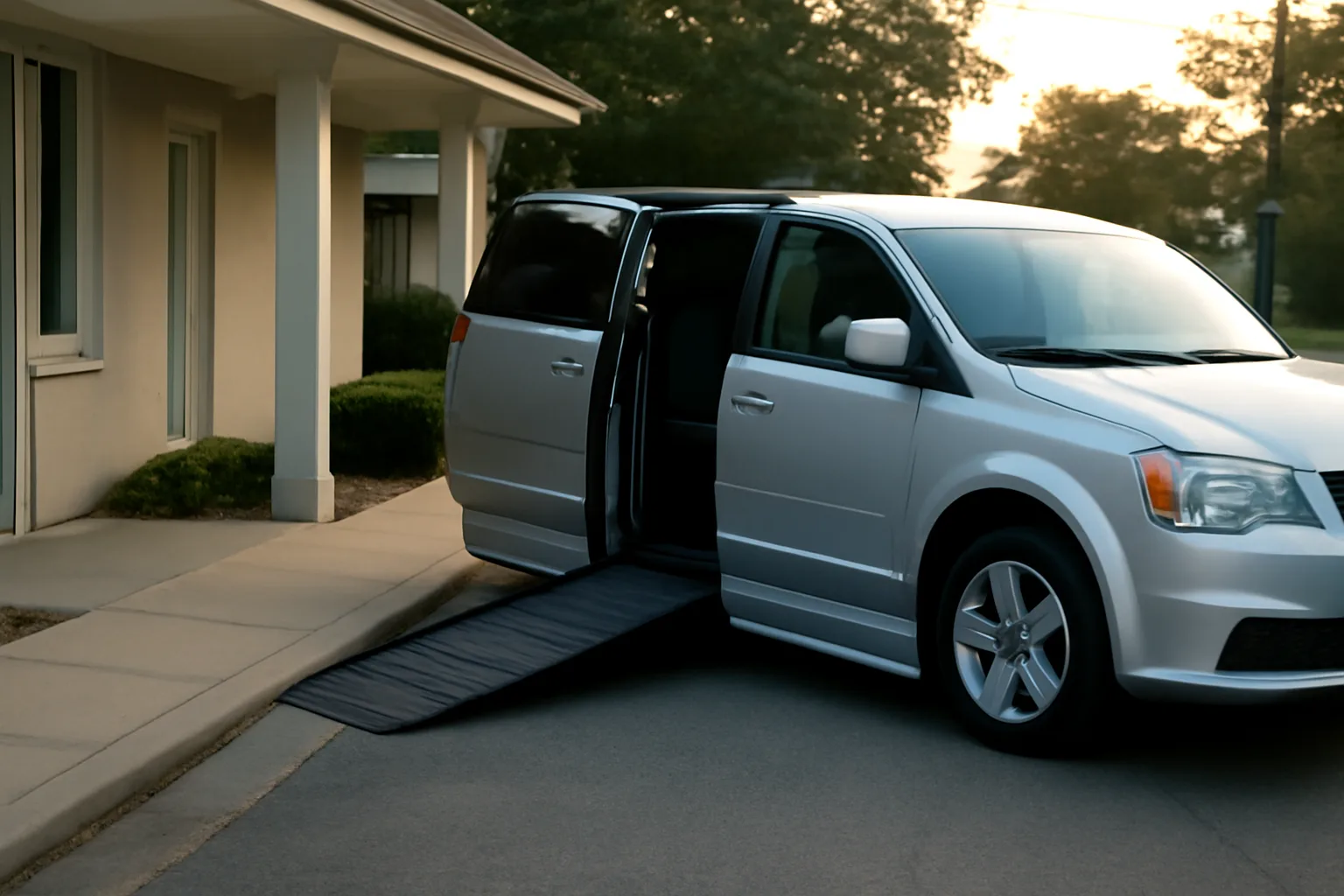
One van is a completely legitimate way to start, and a lot of successful multi-van operators started exactly this way. The math is tighter, though, because you have zero route redundancy: if that van is in the shop, your revenue is zero that day. With one van, focus on three things: pick a wheelchair-accessible conversion van (this qualifies you for a broader, higher-paying trip category than a standard sedan), get credentialed with at least one broker and ideally your state Medicaid program directly if your state allows fee-for-service NEMT billing outside the broker system, and build a maintenance reserve before you need it. A transmission failure on your only vehicle isn't a minor setback, it's a business-stopping event. Don't try to run three trip types (wheelchair, ambulatory, stretcher) with one van. Pick the lane your vehicle is actually equipped for and get very good at that lane's paperwork and scheduling before adding complexity. Most one-van operators do best sticking to a defined local service area rather than accepting long-distance trips that eat a whole day in deadhead and fuel for one fare.
What actually drives NEMT profit margin up or down?
| Deadhead miles | Large | Empty miles cost fuel and time with zero revenue; every mile matters more in a single-van operation | |
|---|---|---|---|
| Broker mix | Medium-large | Different brokers pay different per-trip or per-mile rates for the same trip type in the same region | |
| Vehicle financing terms | Medium | A financed conversion van with a high monthly payment eats margin before you've earned a dollar | |
| Insurance class and claims history | Medium | Commercial NEMT insurance premiums vary heavily by state and prior claims | |
| No-show and cancellation handling | Small-medium | Some brokers pay a reduced no-show rate, some pay nothing; this adds up over a month | Fuel is a real but usually smaller factor than people assume, since most trip pricing (per-mile or per-trip flat rate) already has some fuel assumption baked in. What kills margin faster is scheduling inefficiency: accepting trips scattered across a wide area instead of clustering routes. If you're comparing brokers before you commit your van's calendar to one network, it's worth reading how nemt transportation networks structure their trip assignment and payment cycles, since payment timing (net 15 vs. net 45) affects your cash flow just as much as the rate itself. |
Margin in this business is decided by five variables, and almost none of them is the headline per-trip rate. | Factor | Effect on margin | Why |
How does broker credentialing timing affect your first-year margin?
Slow credentialing is a margin killer nobody budgets for. If it takes you 60-90 days to get fully credentialed with a broker after your Medicaid provider enrollment is approved, that's 60-90 days of a vehicle payment, insurance premium, and (if you have one) driver wage with zero broker-generated revenue. States and brokers don't publish a standard timeline, and it genuinely varies. Some operators report being trip-ready within a few weeks; others describe multi-month waits tied to incomplete paperwork, vehicle inspection scheduling, or broker network capacity in their specific county (some brokers cap how many providers they credential per service area based on current rider demand). Confirm current wait times and any capacity caps directly with your broker and your state Medicaid transportation unit before you take vehicle delivery, not after. The practical fix: don't buy or finance your van the same week you start the enrollment paperwork. Get provider enrollment and broker credentialing substantially underway first, so the vehicle payment clock and the revenue clock start close together instead of the payment clock starting three months early.
How to start a non-emergency medical transportation business step by step
This is the condensed checklist version, useful once you've read the fuller explanation above: 1. Pick your vehicle type and trip specialty (wheelchair van is the most common entry point because demand is consistent and the vehicle also qualifies for ambulatory trips). 2. Form your business entity, get your EIN, open a business bank account. 3. Secure commercial NEMT-rated auto insurance (get quotes before buying the vehicle; premiums vary by vehicle class and state). 4. Enroll as a Medicaid transportation provider through your state's Medicaid agency. 5. Apply for credentialing with the broker(s) operating your service area. 6. Complete any state-specific vehicle permitting, driver background checks, and required training (some states mandate defibrillator/first aid certification or passenger assistance training for wheelchair securement). 7. Set up a dispatch and billing workflow that matches your broker's submission system. 8. Start with a defined, tight service radius before expanding. Each state's Medicaid transportation unit publishes its own provider manual with specifics on required forms, vehicle standards, and driver qualifications. Search your state Medicaid agency's site for its "NEMT provider manual" or "transportation services provider handbook" and read it before spending money on anything.
What are typical startup and operating costs that eat into margin?
Every dollar here is a margin input. Rough categories to budget (actual figures vary heavily by state, vehicle age/condition, and insurance market, so treat these as planning categories, not quotes): - Vehicle: new or used wheelchair-accessible conversion van, financed or cash
- Commercial NEMT insurance: significantly higher than personal auto insurance, varies by state and driving record
- State Medicaid provider enrollment fees, if your state charges one
- Broker credentialing costs (vehicle inspection fees, background check fees for you and any drivers)
- Fuel, maintenance, and wheelchair lift/ramp servicing
- Dispatch/scheduling software or a manual system
- Driver wages, if you're not driving yourself
- Ongoing insurance renewal and any required recurring training The categories that most catch new operators off guard are commercial insurance premiums (often the single largest fixed monthly cost besides the vehicle payment) and the gap between provider enrollment approval and actual first paid trip. Budget three to six months of fixed costs in reserve before you count on broker revenue covering your bills.
Where do most new operators actually lose margin without realizing it?
Three places, consistently: no-show handling, service area sprawl, and paperwork rejections. No-shows and late cancellations are common in NEMT because riders may be sick, hospitalized, or simply forget. Some brokers pay a reduced rate for a documented no-show if you arrived on time and followed the required wait period; others pay nothing. If you don't know your specific broker's no-show payment policy before you start accepting trips, you're flying blind on a meaningful chunk of potential revenue loss. Confirm this in writing with each broker you credential with. Service area sprawl happens when a new operator accepts every trip offered, including ones 40 miles outside their normal radius, because turning down trips feels like turning down money. It's usually not. A 40-mile one-way trip that takes 90 minutes each way with deadhead return can tie up your one van for most of a day for the revenue of maybe two or three local trips. Paperwork rejections (missing signatures, wrong trip codes, mismatched mileage logs) delay payment and sometimes result in claims being denied outright. Building a clean documentation habit from trip one, matched exactly to your broker's required format, protects margin more than almost any other single operational habit. If you want the enrollment and credentialing paperwork itself organized before you start driving, that's the specific gap our $199 one-time State + Broker NEMT Launch Kit is built to close: state Medicaid enrollment document checklists and broker credentialing checklists in one place, so you're not discovering requirements broker by broker after your van is already sitting idle.
How can a new operator realistically improve net margin over time?
Route density beats rate-chasing almost every time. Instead of trying to negotiate a better per-mile rate (which you usually can't, as a small new provider), cluster your accepted trips geographically and by time window so deadhead miles shrink. That's a margin improvement you control directly. Getting credentialed with more than one broker, where your state's structure allows it, gives you more trip volume to choose from, which lets you be pickier about which trips you accept, which in turn lowers your average deadhead ratio. This takes more paperwork upfront but tends to pay off within a few months. Track your cost per mile and cost per trip monthly, not annually. A one-van or two-van operation can shift meaningfully month to month based on fuel prices, an unexpected repair, or a change in trip mix (more wheelchair trips than ambulatory, for example, often means higher revenue per trip but also more time per trip for securement). Finally, don't add a second van until your first van's numbers are genuinely stable for a few consecutive months. Adding vehicle debt and insurance cost before your operational rhythm is proven is one of the most common ways a marginally profitable one-van business becomes an unprofitable two-van business.
Frequently asked questions
What is a good net profit margin for a NEMT business?
There's no official benchmark. Small operators commonly describe low-single-digit to mid-teens net margins in year one, improving with route density and broker mix over time. Treat any specific percentage you're quoted as directional, since it depends heavily on deadhead miles, broker rates, and your fixed vehicle/insurance costs, not a fixed industry standard.
How to start a medical transportation business?
Pick a vehicle type (wheelchair van is common), form your business entity and get an EIN, secure commercial NEMT-rated insurance, enroll with your state Medicaid agency, get credentialed with your local broker(s), complete vehicle permitting and driver background checks, and set up a billing workflow before your first trip.
Does Medicaid cover ambulance rides?
Yes, when medically necessary, but ambulance transport is a separate Medicaid benefit from NEMT, billed under emergency medical transport rules rather than the non-emergency transportation benefit that covers rides in wheelchair vans or sedans to routine appointments.
What is NEMT?
NEMT stands for non-emergency medical transportation: rides to medical appointments, dialysis, and therapy for people who don't need an ambulance but can't drive themselves. States must ensure this transportation for Medicaid beneficiaries under 42 CFR 431.53, usually delivered through state-contracted brokers.
Does Medicare cover medical transportation?
Original Medicare Part B covers ambulance transportation when medically necessary but generally does not cover routine non-emergency rides the way state Medicaid NEMT benefits do. Some Medicare Advantage plans offer limited NEMT-like supplemental benefits; confirm terms directly with the specific plan.
How do you start a medical transportation business?
Register your entity, get commercial auto insurance rated for livery/NEMT use, apply for state Medicaid provider enrollment through your state's MMIS portal, and separately apply for broker credentialing with networks like Modivcare, MTM, Access2Care, or SafeRide operating in your area.
What is non emergency medical transportation?
It's transportation for people with a medical need who don't require ambulance-level care: wheelchair van rides, ambulatory sedan rides, and stretcher van rides to appointments, dialysis, and therapy, usually reimbursed through state Medicaid programs and coordinated by regional transportation brokers.
How to start a medical transportation business with one van?
Pick one vehicle type and trip specialty, get credentialed with at least one broker, build a maintenance reserve before your first trip, and keep your service area tight to minimize deadhead miles. Don't try to serve multiple trip types with one vehicle before you're operationally stable.
How to start a non-emergency medical transportation business?
Form your business entity, secure NEMT-rated commercial insurance, enroll with your state Medicaid agency, get broker credentialing, complete required vehicle inspections and driver checks, and set up a dispatch and billing system matched to your broker's claim submission format before accepting your first trip.
How long does NEMT broker credentialing usually take?
There's no standard timeline; it varies by broker and state, from a few weeks to a few months. Confirm current processing times directly with your broker and state Medicaid transportation unit before taking vehicle delivery, since delays here directly cost you months of fixed costs with no revenue.
Do I need to be credentialed with more than one broker?
It's not required, but many operators find that credentialing with multiple brokers where their state allows it increases available trip volume, letting them be more selective about which trips to accept, which lowers average deadhead miles and improves margin over time.
What's the biggest hidden cost that hurts NEMT margin?
Deadhead mileage (driving empty between trips or to a pickup) and the gap between provider enrollment approval and actual first paid trip. Both eat into margin silently because they don't show up as a single line-item expense the way insurance or fuel does.
Does NEMT pay for no-shows or late cancellations?
It depends entirely on the broker's policy. Some pay a reduced rate for a documented no-show if you arrived and waited the required period; others pay nothing. Get this policy in writing from each broker before you rely on it in your revenue planning.
Sources
- Electronic Code of Federal Regulations, 42 CFR 431.53: States must ensure necessary transportation for Medicaid beneficiaries to and from providers.
- Electronic Code of Federal Regulations, 42 CFR 440.170 (transportation as a Medicaid benefit, including ambulance and other transportation): Federal regulation defines transportation, including ambulance services, as a distinct Medicaid benefit category subject to medical necessity determinations.
- Medicare.gov, Ambulance Services coverage: Medicare Part B covers ambulance transportation only when medically necessary, distinct from routine NEMT.
- Government Accountability Office, Medicaid Nonemergency Medical Transportation: Updated Medicaid Guidance Could Help States (GAO-16-238): Federal review documenting how states and brokers administer NEMT benefits and the variation in oversight across states.
- Office of Inspector General, U.S. Department of Health and Human Services, Medicaid Paid for Non-Emergency Medical Transportation Despite Concerns About Provider Eligibility (Report A-06-14-00003): OIG review of NEMT provider eligibility and payment practices, illustrating how broker-managed networks control payment flow to providers.