Last updated 2026-07-25
TL;DR
Medical transport business insurance for NEMT means commercial auto liability (often $1 million combined single limit per broker contract), plus general liability, and usually occupational accident or workers' comp. Brokers like Modivcare and MTM set their own minimums in your contract, and state Medicaid enrollment has separate insurance and vehicle requirements. Confirm exact numbers with your broker and state Medicaid agency before you buy a policy.
What is NEMT and why does it need its own insurance category?
NEMT stands for non-emergency medical transportation. It's transportation for Medicaid (and some Medicare Advantage) members who can get to a medical appointment on their own two feet, or with a wheelchair lift, but can't drive themselves and don't need an ambulance. Think dialysis three times a week, a follow-up at an orthopedic clinic, a WIC appointment. No siren, no paramedic, just a safe ride and, often, help getting from the door to the vehicle. That distinction matters for insurance because a standard personal auto policy, and even a lot of standard commercial auto policies, exclude "livery" or "for-hire" transportation of passengers, especially passengers with mobility equipment. If you're hauling paying medical passengers and your policy was written for a landscaping truck, a claim can get denied on exactly that ground. NEMT insurance is really commercial auto insurance written (or endorsed) for passenger-for-hire use, plus a stack of other coverage a broker or state agency will require before they let you touch a client. The Centers for Medicare & Medicaid Services describes NEMT as a required benefit: federal Medicaid rules require states to "ensure necessary transportation for beneficiaries to and from providers" and states "must ensure that eligible individuals have transportation to and from providers" [1]. That federal mandate is why almost every state either runs its own NEMT unit or contracts it out to a broker, and why insurance requirements flow down from both the state and the broker, more than from a generic business insurance agent. If you want the fuller picture of how the benefit works and who runs it in your state, see medical transportation and the state-level rundown at nemt.
What insurance does a medical transportation business actually need?
| Commercial auto liability (for-hire/livery endorsed) | Injury/damage you cause while driving clients | State Medicaid agency, broker contract | |
|---|---|---|---|
| General liability | Slip-and-fall, non-auto injury on your premises or during loading | Broker contract, landlords | |
| Workers' comp / occupational accident | Driver injury on the job | State law (employees), often broker contract too | |
| Cargo/equipment coverage | Damage to lifts, ramps, onboard medical equipment | Optional, sometimes lender-required | |
| UM/UIM | Injury from an uninsured at-fault driver | Recommended, sometimes state-mandated | An honest cost range: commercial auto for a single wheelchair van with livery endorsement commonly runs from roughly $6,000 to $15,000+ a year depending on state, driving record, and coverage limits, with wide variation by state and carrier. Nobody has a single clean national average because rates depend heavily on your state's auto insurance climate, your loss history, and how many vehicles you're insuring. Treat any flat number you see online as a starting point for a quote conversation, not a quote. |
There's no single national NEMT insurance product. What you need is a stack, and each piece is required by a different party (your state, your broker, your lender, and sometimes your own good sense). Commercial auto liability with a for-hire or livery endorsement is the core policy. This covers bodily injury and property damage if you cause an accident while transporting a client. Brokers commonly require combined single limits in the $1,000,000 range per occurrence, though some contracts ask for split limits or higher aggregate totals; the exact figure is set in your specific broker contract, so confirm it with your broker and state Medicaid agency before you shop. General liability (sometimes called commercial general liability, CGL) covers non-auto incidents: a client slips getting out of the van in your parking lot, or a wheelchair lift pinches someone's hand while the vehicle is parked. Auto liability alone usually won't cover that. Workers' compensation or occupational accident coverage protects you and your drivers if someone gets hurt on the job, whether that's a back injury from lifting a wheelchair or a fall. Most states require workers' comp once you have employees; if you're a true one-person owner-operator with no employees, some states let you opt out, but broker contracts sometimes require occupational accident coverage anyway regardless of employee status. Cargo or "passenger/equipment" coverage matters less for NEMT than for freight, but wheelchair lifts, ramps, and oxygen equipment on board can be worth insuring separately if your auto policy's equipment limits are thin. Uninsured/underinsured motorist (UM/UIM) coverage protects your driver and passenger if the at-fault other driver has no insurance or not enough. Given how much time a wheelchair van spends on the road with a vulnerable passenger aboard, skipping UM/UIM to save a few dollars a month is one of the worse corners to cut. A quick comparison of what each coverage actually does: | Coverage type | What it covers | Who usually requires it |
How to start a medical transportation business, step by step
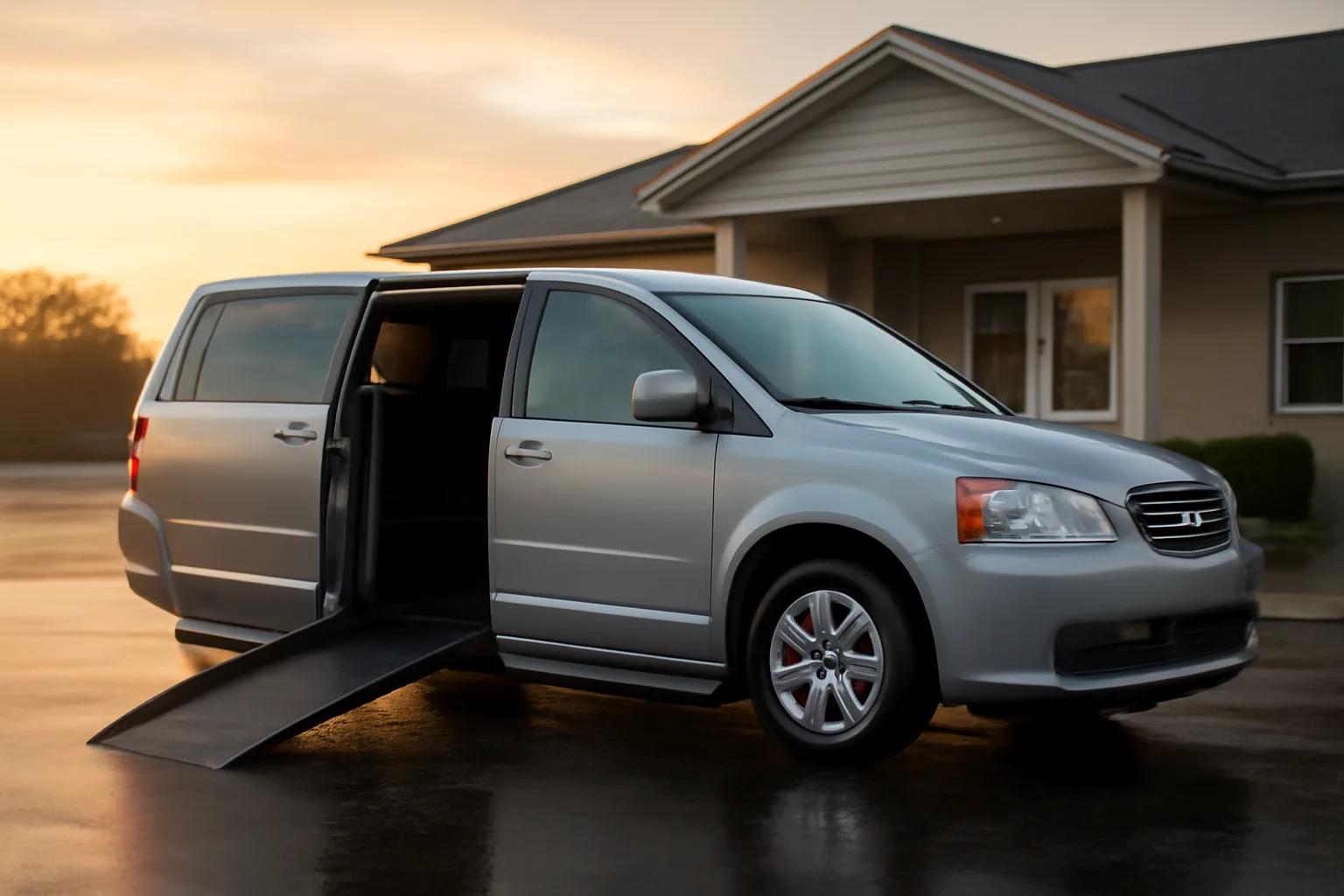
Most people who search "how to start a medical transportation business" are really asking about NEMT specifically, since true emergency ambulance service requires EMT/paramedic licensure and a much heavier regulatory lift. Here's the realistic sequence for a wheelchair-van NEMT startup. 1. Decide on your vehicle and service type. A used wheelchair-accessible minivan (Dodge Grand Caravan or Toyota Sienna conversions are common) or a full-size van with a wheelchair lift is the standard entry vehicle. Confirm your state's vehicle inspection and ADA-accessibility requirements before you buy, since some states require specific tie-down systems or lift certifications. 2. Register your business entity (LLC is common) with your state, get an EIN from the IRS, and open a business bank account. This is basic small-business formation, not NEMT-specific, but Medicaid enrollment and broker credentialing both ask for your entity documents. 3. Get your insurance stack in place before you apply anywhere. Brokers and state Medicaid units generally want a certificate of insurance as part of the application packet, not after approval. 4. Enroll as a Medicaid transportation provider with your state Medicaid agency, and separately apply to become a credentialed network provider with whichever broker manages NEMT in your region (Modivcare, MTM, Access2Care, SafeRide, or a state-run program). These are two different applications with two different reviewers, and approval in one doesn't guarantee approval in the other. 5. Pass vehicle and driver background checks. Most states and brokers require driver background checks, drug screening, and a vehicle inspection on a set interval (often annual). 6. Get your NPI number if your state requires it for billing (many state Medicaid transportation programs do). For the driver-side requirements, see nemt transportation. For a broader look at how these services are structured across the industry, non emergency medical transportation services covers the landscape.
How do you start a NEMT business with just one van?
Yes. A lot of owner-operators start with exactly one wheelchair van before scaling. The core requirements don't change much based on fleet size: you still need the insurance stack, the entity, the Medicaid enrollment, and the broker credentialing. What changes is your negotiating position and your risk exposure. With one vehicle, a single accident or a single extended vehicle repair can take you fully offline, so your insurance choices matter more, not less. Some owner-operators skip occupational accident coverage thinking it's optional if they're the only driver; check your specific broker's contract language, because several brokers require it regardless of whether you have employees. One practical note: brokers sometimes have a minimum fleet size or minimum service-area coverage written into their provider agreements, so a one-van operator might be capped on how many trip requests they can accept in a given area, or excluded from certain contract tiers entirely. Confirm this with the specific broker before you assume one van is enough to build a full schedule around.
What is non emergency medical transportation, exactly?
Non-emergency medical transportation (NEMT) is transportation to and from medical care for people who don't have an emergency but also don't have another way to get there safely. It's a Medicaid benefit in every state, required under federal Medicaid regulations, and it's the category wheelchair vans, ambulettes, and even some rideshare-style sedan services fall into. The federal regulation at 42 CFR 431.53 requires states to "specify that the Medicaid agency will ensure necessary transportation for recipients to and from providers" [2]. States implement that requirement differently: some run NEMT in-house through the state Medicaid transportation unit, and many others contract it to a managed transportation broker who then credentials individual transportation providers (that's you) to actually run the trips. NEMT is distinct from emergency ambulance transport in both regulation and reimbursement. Ambulance transport requires licensed EMS personnel and is billed as an emergency medical service; NEMT does not require clinical staff on board (though some trip levels, like stretcher van service, require more training than basic wheelchair-van service). For more on where NEMT sits relative to full emergency transport, see emergency medical transport and non-emergency-medical-transportation.
Does Medicaid cover ambulance rides, and does it cover NEMT the same way?
Yes, Medicaid covers ambulance transportation and NEMT, but they're billed and regulated differently. Medicaid.gov states plainly that "Medicaid programs must ensure that eligible, qualified individuals have transportation to and from providers," and this covers both emergency ambulance service and non-emergency transportation to covered services [1]. Ambulance rides for actual emergencies are covered as an emergency medical benefit, generally billed by the ambulance provider directly, and reimbursed under each state's ambulance fee schedule. Non-emergency ambulance transport (a transfer between facilities for a patient who needs monitoring en route but isn't in acute crisis) is a separate, narrower category that typically requires physician certification of medical necessity, a requirement CMS also applies on the Medicare side for scheduled, repetitive non-emergency ambulance trips [3]. Ordinary NEMT, the wheelchair-van and sedan trips that make up most of this industry, is covered as an administrative/access benefit rather than a straight medical service, which is part of why it's often brokered out separately from regular Medicaid medical claims. Coverage details, prior-authorization rules, and mileage or trip limits vary by state, so always confirm specifics with your state Medicaid transportation unit rather than assuming national uniformity.
Does Medicare cover medical transportation?
Medicare's coverage of medical transportation is much narrower than Medicaid's. Original Medicare covers emergency ambulance transportation when it's medically necessary and covers non-emergency ambulance transportation only in specific situations, generally requiring a doctor's written order stating that ambulance transportation is medically necessary, per CMS guidance on ambulance services [4]. For scheduled, repetitive non-emergency ambulance transport specifically, Medicare regulation at 42 CFR 410.40 requires the ambulance supplier to obtain a written physician certification statement before the transport, or within 21 days after, documenting the medical necessity of the trip [3]. Original Medicare (Part A/B) generally does not cover routine non-emergency medical transportation like a wheelchair van to a dialysis appointment. Some Medicare Advantage (Part C) plans do offer a NEMT-style benefit as a supplemental benefit, but this varies enormously by plan and by year, and it's the plan, not original Medicare, providing it. If you're building a business plan around Medicare Advantage NEMT contracts, confirm each plan's specific supplemental benefit terms directly, since these change annually during CMS's plan bid cycle. This is a meaningful business-planning distinction: your Medicaid NEMT broker contract and your potential Medicare Advantage NEMT contract (if you pursue one) are separate credentialing processes with separate insurance certificate requirements, even if the same broker administers both in your state.
What do Medicaid NEMT brokers actually require for insurance?
Every broker writes its own minimums into its provider contract, and these change, so treat any specific number here as a starting point to confirm, not a guarantee. That said, the general shape is consistent across Modivcare, MTM, Access2Care, and SafeRide-style regional brokers. Expect to submit a certificate of insurance (COI) naming the broker as a certificate holder, showing commercial auto liability at whatever combined single limit the contract specifies (commonly quoted in the $1,000,000 range, sometimes with a higher aggregate), general liability, and proof of workers' comp or occupational accident coverage if you have any employees or drivers who aren't you. Most brokers also require your insurance to stay active and reportable for the life of the contract, meaning if your policy lapses even briefly, you can be suspended from the network until it's reinstated and re-verified. Set a calendar reminder well before renewal, because a lapsed COI on file is one of the most common, most avoidable reasons a provider gets temporarily deactivated from a broker network. Some brokers additionally require specific endorsements, like naming the broker as an additional insured, or requiring a minimum number of days' notice before your insurer can cancel the policy. This is exactly the kind of clause that's easy to miss when you're focused on price shopping the policy itself. Read the actual provider agreement, more than the insurance summary page, and confirm the current numbers with your broker before you bind a policy.
How much does medical transport business insurance cost?
There's no fixed national rate, and anyone quoting you one flat number without asking about your state, driving record, and vehicle count is guessing. What drives the price: your state's commercial auto insurance market. States with higher litigation rates or higher minimum liability limits (check your state's own minimum financial responsibility law) tend to have higher NEMT premiums across the board. Your vehicle type and count. A single used wheelchair-accessible minivan costs less to insure than a fleet of full-size vans, obviously, but per-vehicle rates can also drop as your fleet grows and you spread risk across a bigger book with the carrier. Your and your drivers' driving records. A clean MVR (motor vehicle record) matters more here than almost anywhere else in small business insurance, because for-hire passenger transport underwriting leans heavily on driver history. Coverage limits required by your broker contract. If your broker requires a $1,000,000 combined single limit versus a lower state-minimum limit, that difference alone can move your premium meaningfully. As a rough planning range, expect all-in insurance costs (auto, general liability, and workers' comp/occupational accident combined) for a single wheelchair van to land somewhere between $8,000 and $20,000 a year, with real operators reporting numbers both above and below that band depending on state and history. Get at least three quotes from agents who specifically write NEMT or livery/for-hire auto policies, not general commercial auto agents who've never written a passenger-for-hire risk before.
How do you start a non-emergency medical transportation business the right way, from paperwork to first trip?
Sequence matters more than most new owner-operators expect. Doing things out of order costs real money and real time. First, nail down your entity, EIN, and business bank account. This is a half-day of paperwork, not a bottleneck, so don't let it slip. Second, buy your vehicle with the insurance conversation already started. Some insurers want to see the vehicle title and VIN before quoting, and some vehicle financing requires proof of commercial insurance before the loan closes, so run these two steps in parallel rather than strictly sequentially. Third, bind your insurance stack (commercial auto with livery/for-hire endorsement, general liability, workers' comp or occupational accident) before you submit any application, because both your state Medicaid enrollment and your broker credentialing application will ask for a certificate of insurance as a required attachment, not an afterthought. Fourth, enroll with your state Medicaid agency as a transportation provider. This is separate from broker credentialing and has its own application, its own provider number, and sometimes its own separate insurance minimums layered on top of what the broker asks for. Fifth, apply for broker credentialing with each broker operating NEMT contracts in your state or region. Many states have more than one broker covering different counties or different Medicaid managed care plans, so you may end up submitting multiple broker applications with overlapping but not identical requirements. Sixth, complete driver background checks, drug testing, and any required driver training (wheelchair securement training is common) before your first scheduled trip. Putting together the paperwork for both the state application and each broker's credentialing packet at the same time is genuinely one of the more tedious parts of this business, since the same documents (insurance certificates, vehicle inspection reports, entity documents, background check results) get requested in slightly different formats by each party. A prepared reference packet, built once and adapted per application, saves real hours. That's the specific problem the $199 State + Broker NEMT Launch Kit at /launch-kit-builder is built to solve: it doesn't replace your insurance agent or your state's application, but it organizes what each state and broker typically asks for so you're not rebuilding the packet from scratch for each one.
What mistakes cost new NEMT owner-operators the most money?
Buying insurance before confirming broker minimums. If you bind a policy at your state's legal minimum liability limit and then find out your target broker requires a $1,000,000 combined single limit, you've either bought the wrong policy or you're renegotiating with your agent mid-application. Confirm broker requirements first, then shop the policy. Letting the COI lapse. This is the single most common, most preventable reason providers get temporarily suspended from a broker network. Set renewal reminders 60 days out, not 60 days after. Assuming personal auto or a generic commercial policy covers passenger-for-hire trips. It usually doesn't, and finding out during a claim is the worst possible time to learn it. Skipping general liability because "the auto policy covers everything." It doesn't cover a slip-and-fall during loading, and that's a real, common claim type in this industry. Underestimating how long dual enrollment takes. State Medicaid enrollment and broker credentialing run on separate timelines, and neither one guarantees the other. Build in weeks, not days, and don't buy a vehicle you can't afford to have sit idle for a stretch while paperwork clears.
Frequently asked questions
How to start a medical transportation business?
Form your business entity, get an EIN, buy or lease a wheelchair-accessible vehicle, secure commercial auto (livery/for-hire endorsed) plus general liability and workers' comp insurance, then enroll with your state Medicaid agency and apply for broker credentialing (Modivcare, MTM, Access2Care, SafeRide, or your state's contracted broker). Confirm exact requirements with your state Medicaid transportation unit, since they vary by state.
Does Medicaid cover ambulance rides?
Yes. Medicaid.gov confirms Medicaid programs must ensure eligible individuals have transportation to and from providers, which includes emergency ambulance transport and non-emergency medical transportation (NEMT) [1]. Coverage rules, prior authorization, and reimbursement rates for ambulance versus NEMT differ by state, so confirm specifics with your state Medicaid agency.
What is NEMT?
NEMT stands for non-emergency medical transportation, a Medicaid benefit that gets members to medical appointments when they can't drive themselves and don't need an ambulance. It covers wheelchair vans, ambulettes, and sedan trips for things like dialysis, therapy, and specialist visits, and it's required under federal Medicaid transportation rules at 42 CFR 431.53 [2].
Does Medicare cover medical transportation?
Original Medicare covers ambulance transportation when medically necessary, with non-emergency ambulance trips generally requiring a doctor's written order [3]. For scheduled, repetitive non-emergency ambulance transport, federal rule 42 CFR 410.40 requires a written physician certification of medical necessity [4]. Medicare typically does not cover routine wheelchair-van NEMT; some Medicare Advantage plans offer it as a supplemental benefit.
How to start a NEMT business?
Get your entity and EIN set up, buy a wheelchair-accessible vehicle, bind commercial auto insurance with a for-hire/livery endorsement plus general liability and workers' comp, then apply for state Medicaid provider enrollment and broker network credentialing. Both applications typically require a certificate of insurance, background checks, and vehicle inspection documentation.
How do you start a medical transportation business as a true one-person operation?
You can start with a single wheelchair van; the core steps (entity formation, insurance, state enrollment, broker credentialing) don't change with fleet size. Some brokers cap trip volume or contract tier for single-vehicle providers, and occupational accident coverage may be required even without employees, so confirm both points with your target broker directly.
What is non emergency medical transportation, in plain terms?
It's a ride to and from medical care for someone who needs assistance (like a wheelchair lift) but not an ambulance or clinical staff on board. It's a required Medicaid benefit in every state and is usually run either directly by the state or through a contracted transportation broker that credentials individual providers.
How to start a medical transportation business with one van?
Buy or convert a wheelchair-accessible van, form your LLC, get commercial auto insurance with a livery/for-hire endorsement plus general liability, then apply to your state Medicaid agency and the NEMT broker(s) covering your area. One van is enough to start, though some brokers set minimum service-area or volume expectations, so confirm that upfront.
How to start a non-emergency medical transportation business step by step?
Form your entity and get an EIN, bind your insurance stack before applying anywhere, buy your wheelchair van, enroll with your state Medicaid agency as a transportation provider, apply for broker credentialing, complete driver background checks and required training, then schedule your first trips once both state and broker approvals clear.
What insurance coverage does a broker require for NEMT providers?
Typically commercial auto liability with a for-hire/livery endorsement at a combined single limit often around $1,000,000, general liability, and workers' comp or occupational accident coverage. Exact limits, endorsements, and additional-insured requirements are set in each broker's provider contract and do change, so confirm current figures with your specific broker before buying a policy.
Does Medicaid cover non-emergency ambulance transport differently from NEMT?
Yes. Non-emergency ambulance transport (used when a patient needs medical monitoring during a transfer) typically requires physician certification of medical necessity and is billed under the ambulance fee schedule. Routine NEMT, like a wheelchair-van trip to a clinic, is usually covered as an access/administrative benefit and often runs through a separate contracted broker rather than standard medical claims.
How much does NEMT insurance typically cost for one wheelchair van?
Combined commercial auto, general liability, and workers' comp/occupational accident coverage for a single wheelchair-accessible van often falls somewhere between roughly $8,000 and $20,000 a year, though this varies widely by state, driving record, and required coverage limits. Get quotes from agents who specifically write for-hire/livery passenger transport policies, not general commercial auto agents.
Sources
- Medicaid.gov, Non-Emergency Medical Transportation: Medicaid programs must ensure eligible individuals have transportation to and from providers, covering both ambulance and NEMT
- 42 CFR 431.53, Assurance of transportation: Federal regulation requiring state Medicaid agencies to ensure necessary transportation for recipients to and from providers
- Medicare.gov, Ambulance Services coverage: Medicare covers emergency ambulance transportation and non-emergency ambulance transportation generally requires a doctor's written order of medical necessity
- 42 CFR 410.40, Coverage of ambulance services: Federal Medicare rule requiring a written physician certification statement for scheduled, repetitive non-emergency ambulance transport
- 42 U.S.C. 1396a(a)(4), State plan requirements: Statutory basis requiring state Medicaid plans to provide methods of administration necessary for proper and efficient operation, which CMS has interpreted to include transportation assurance
- CMS Medicaid and CHIP Managed Care Final Rule, 42 CFR 438: Federal managed care regulations governing how states contract with managed care entities, including transportation brokers, to deliver Medicaid benefits