Last updated 2026-07-25
TL;DR
Medicaid transport services split into two lanes: emergency ambulance transport (covered under EMS rules) and non-emergency medical transportation, or NEMT, which every state must offer under 42 CFR 431.53. Starting a wheelchair-van NEMT business means state Medicaid enrollment, broker credentialing with companies like Modivcare or MTM, proper vehicle permits, and driver background checks, roughly a 60 to 120 day process depending on your state.
What is Medicaid transport services, exactly?
"Medicaid transport services" is an umbrella phrase covering two very different benefits. One is emergency ambulance transport, the kind that shows up with lights and sirens after a 911 call. The other is non-emergency medical transportation (NEMT), which gets Medicaid enrollees to routine appointments like dialysis, physical therapy, or a primary care visit when they have no other way to get there. Federal Medicaid rules require both, in different ways. Ambulance transport is covered as a medical service when it's medically necessary, billed through standard Medicaid claims. NEMT is required under a separate regulation, 42 CFR 431.53, which says states "must ensure necessary transportation for recipients to and from providers" and may do this by contracting with a broker, paying mileage reimbursement, or running a state-operated fleet [1]. If you're trying to start a business in this space, you need to know which lane you're in. Ambulance companies need EMS licensure and paramedic or EMT staff. NEMT wheelchair-van and ambulatory sedan operators do not transport anyone who needs medical care during the ride; they just get people there. That distinction drives almost every rule that follows, from insurance minimums to driver training to what your broker application will ask you. For a broader look at how NEMT fits into the Medicaid transportation system as a whole, see medical transportation.
What is NEMT (non-emergency medical transportation)?
NEMT stands for non-emergency medical transportation. It's transportation to and from Medicaid-covered medical appointments for people who have no other way to get there, and it does not involve emergency care during the trip. The federal requirement traces back to 42 CFR 431.53, and CMS has reinforced it repeatedly in guidance to states, most notably a 2013 Informational Bulletin that reminded states NEMT is "a critical benefit for beneficiaries who have no other means of transportation to get to their medical appointments" [2]. States can't just drop the benefit; they have to have some mechanism, whether that's a broker model, a fee-for-service reimbursement system, or managed care plans handling it directly. Most states now use a broker model. A regional or national broker (Modivcare, MTM, Access2Care, SafeRide Health, or a state-specific vendor) manages trip dispatch, credentials transportation providers, and pays claims on the state's behalf. As an owner-operator, you typically don't bill Medicaid directly; you enroll with the state Medicaid program AND separately credential with whichever broker or brokers run NEMT in your service area. Two applications, two sets of paperwork, and sometimes two different timelines. NEMT vehicle types generally fall into three tiers: ambulatory (sedan or minivan for someone who can walk and transfer independently), wheelchair-accessible (ramp or lift van), and stretcher (for someone who must stay on a gurney but doesn't need ambulance-level medical care). Wheelchair-van operators sit in the middle tier, which is the fastest-growing segment because it serves dialysis patients, elderly enrollees, and people with mobility disabilities who make up a large share of repeat NEMT trips. For more on the day-to-day of running NEMT and how it differs across the industry's naming conventions, see nemt and non emergency medical transportation.
Does Medicaid cover ambulance rides?
Yes. Medicaid covers ambulance transportation when it is medically necessary, meaning the person's condition requires the medical monitoring, equipment, or immobilization that only an ambulance can provide. This is separate from the NEMT benefit and is billed as a distinct Medicaid service line. CMS's Medicaid benefits page confirms that "emergency medical transportation, e.g., ambulance services" falls within mandatory or optional benefit categories depending on state plan design, and payment rules are set at the state level within federal parameters [3]. Coverage typically includes ground ambulance (basic life support or advanced life support) and, in some states, air ambulance when ground transport isn't appropriate given distance or the patient's condition. The key word is "necessary." If someone could have taken a wheelchair van or a car instead of calling an ambulance, Medicaid (and the ambulance provider's own billing compliance program) may deny the claim as not medically necessary. That's part of why NEMT exists as a separate, cheaper benefit: it diverts non-emergency trips away from expensive ambulance transport and into wheelchair vans, sedans, or public transit vouchers. If you're building a wheelchair-van NEMT business, you are not in the ambulance business, and you should not represent your service as ambulance transport in any marketing or driver training material. Blurring that line is a fast way to trigger a state Medicaid program integrity review.
Does Medicare cover medical transportation?
Medicare's coverage of transportation is narrower than Medicaid's. Original Medicare Part B covers ground ambulance transportation when other transportation could endanger the beneficiary's health, and it covers it under strict medical necessity rules, similar to Medicaid's ambulance standard [4]. Medicare does NOT have a general non-emergency medical transportation benefit the way Medicaid does. There's no federal NEMT mandate under Medicare. Some Medicare Advantage (Part C) plans offer limited non-emergency transportation as a supplemental benefit, but this varies plan by plan and is not guaranteed; CMS has allowed Medicare Advantage plans since 2019 to offer expanded supplemental benefits including transportation for enrollees with chronic conditions, under its expanded definition of primarily health-related benefits [5]. This matters for owner-operators because a lot of your ride volume, if you serve dual-eligible populations (people on both Medicare and Medicaid), will come through the Medicaid side or through a Medicare Advantage plan's transportation vendor, not through original Medicare. If a caller asks whether "Medicare will pay for my ride," the honest answer is usually no, unless they're on a Medicare Advantage plan with a transportation benefit, and even then it depends heavily on the specific plan.
How to start a medical transportation business (the big picture)
Starting any medical transportation business, ambulance or NEMT, follows a rough sequence: pick your lane and service area, form your business entity, get the right insurance, buy or lease compliant vehicles, hire and background-check drivers, then enroll with the payers who'll actually send you trips. For NEMT specifically, that last step has two parts. First, Medicaid provider enrollment with your state agency (sometimes through a portal, sometimes through your state's Medicaid Management Information System vendor). Second, broker credentialing with whichever companies manage NEMT dispatch in your state (confirm with your broker and state Medicaid agency, since broker contracts get rebid every few years and the incumbent can change). Many states publish a specific NEMT policy manual or provider bulletin describing what's required; for example, Ohio's Medicaid NEMT rule is codified at Ohio Administrative Code 5160-15, which spells out vehicle, driver, and record-keeping standards for NEMT providers [6]. Your state will have something comparable. Read it before you buy a van, not after. Don't skip the business fundamentals. You'll need a state business registration, an EIN, commercial auto insurance with limits that meet or exceed your state Medicaid agency's minimum (often $1 million combined single limit, though this varies), and in most states a separate for-hire or livery permit from your state Department of Transportation or Public Utilities Commission. Some states also require a Certificate of Public Convenience and Necessity or a similar operating authority before you can even apply for Medicaid enrollment.
How to start a NEMT business step by step
Here's the realistic order of operations, based on how most state Medicaid NEMT programs and brokers structure enrollment. 1. Confirm which broker(s) operate NEMT in your state and county. Some states run single statewide brokers (Modivcare has statewide contracts in a number of states); others split by region or let managed care plans each pick their own vendor. Confirm with your broker and state Medicaid agency directly, since these contracts change on multi-year cycles. 2. Register your business entity (LLC is common) and get a federal EIN. 3. Get commercial auto insurance and general liability coverage that meets your state's minimum limits. Wheelchair-van operators typically need higher limits than standard livery because of the additional passenger risk. 4. Buy or lease a wheelchair-accessible vehicle that meets ADA and state conversion standards, including a certified wheelchair lift or ramp, tie-down restraint systems, and any state-required signage or markings. 5. Get your state's for-hire or NEMT operating permit, if your state requires one separately from Medicaid enrollment. 6. Apply for Medicaid provider enrollment with your state Medicaid agency. This usually requires an NPI (National Provider Identifier), proof of insurance, vehicle inspection records, and sometimes a criminal background check for the business owner. 7. Apply separately for broker credentialing. Expect to submit driver background checks (often including a check against state and federal sex offender and abuse registries), driving record checks, vehicle inspection certificates, and proof of driver training in passenger assistance and wheelchair securement. 8. Complete any required driver training (some states or brokers mandate specific curricula, such as passenger assistance training or defensive driving certification). 9. Wait for approval, then start accepting dispatched trips once you're active in the broker's system. Realistically, steps 6 through 9 take somewhere between 30 and 120 days depending on the state and how backed up the broker's credentialing team is. Nobody publishes a reliable national average for this; it varies too much by state workload. Build in a cushion before you count on trip revenue. Related reading: nemt transportation and non emergency medical transportation services.
How to start a medical transportation business with one van
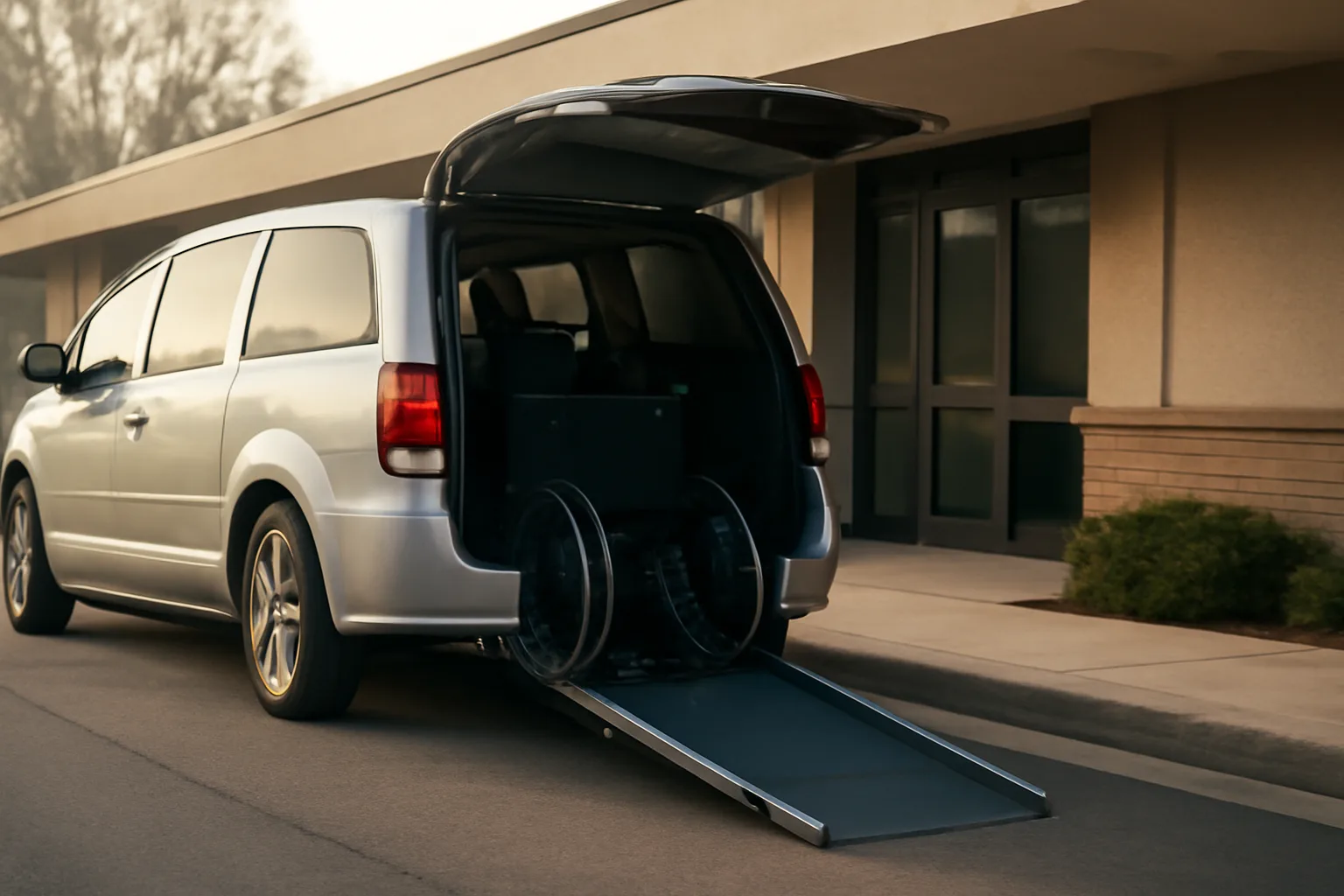
Yes, you can start with a single wheelchair van, and a lot of owner-operators do exactly that. The requirements don't scale down much just because your fleet is one vehicle, but the paperwork burden per vehicle stays the same regardless of fleet size, so a one-van operation isn't penalized structurally, it's just slower to grow trip volume once you're approved. With one van, a few things matter more than they would with a bigger fleet. First, your vehicle choice is your whole business, so buy or convert a van that meets ADA accessibility standards and your state's specific NEMT vehicle rules (lift/ramp certification, interior clearance, tie-down anchor points) the first time. Retrofitting later, or discovering your van fails a state inspection, wastes months. Second, you are probably also the driver, at least at first. That means you personally need to clear the background check, complete any required passenger assistance or wheelchair securement training, and maintain a clean driving record, since brokers pull motor vehicle records regularly, more than at initial credentialing. Third, one van means no redundancy. If it's in the shop, you have zero capacity. Factor maintenance downtime and a realistic vehicle age limit (many broker contracts won't credential vehicles over a certain age, commonly somewhere in the 5 to 10 year range, confirm with your broker) into your purchase decision. Finally, don't assume a single van locks you out of larger broker networks. Most brokers credential providers by vehicle, not by fleet size; a well-maintained, properly permitted single van can get the same dispatch access as a 20-van company in the same zip code, at least on paper. Getting a steady trip volume once credentialed depends on local demand and how the broker's dispatch algorithm allocates trips, which is outside your control and worth asking about directly during onboarding.
How to start a non-emergency medical transportation business (state and broker paperwork)
| NPI number | Usually required | Usually required | |
|---|---|---|---|
| Commercial auto insurance | Required, state minimum | Required, often higher minimum | |
| Vehicle inspection | Sometimes | Almost always, recurring | |
| Driver background check | Sometimes at state level | Almost always, broker-specific | |
| Passenger assistance training | Varies by state | Common requirement | |
| Business license/EIN | Required | Required | |
| Ongoing recredentialing | Annual or biennial, varies | Annual, varies by broker | Confirm every cell of that table with your specific state Medicaid agency and broker, because none of it is standardized nationally. What Ohio requires under OAC 5160-15 [6] will differ in detail from what Texas, California, or Florida require. If you want a structured way to track both application tracks at once instead of juggling two sets of PDFs, that's the whole reason the $199 State + Broker NEMT Launch Kit exists: a single build-as-you-go checklist for state Medicaid enrollment and broker credentialing side by side. Find it at /launch-kit-builder. You can absolutely do this without it, using your state's published NEMT manual and the broker's own onboarding packet, it's just more digging. |
This is really two enrollment tracks running in parallel, and conflating them is the single most common mistake new operators make. Track one is state Medicaid provider enrollment. This registers your business as a recognized Medicaid transportation provider in the state's system, sometimes through the state Medicaid Management Information System (MMIS) portal, sometimes through a designated fiscal agent. You'll typically need an NPI number (get this free from the National Plan and Provider Enumeration System), your business license, insurance certificates, and vehicle documentation. Track two is broker credentialing. Even after you're an approved state Medicaid provider, most states won't send you a single trip until you're also credentialed with the broker(s) managing NEMT dispatch in your area. Broker applications generally ask for the same categories of documents (insurance, vehicle inspection, driver background checks) but package them differently, and each broker has its own portal, timeline, and renewal cycle. A rough compliance checklist for both tracks: | Requirement | State Medicaid enrollment | Broker credentialing |
What vehicle and driver standards apply to Medicaid NEMT?
Standards vary by state, but a few things show up almost everywhere: ADA-compliant wheelchair lifts or ramps, secured tie-down anchor points for wheelchairs, working seatbelts at every position, regular vehicle safety inspections (often annual, sometimes more frequent for older vehicles), and clean interior/exterior maintenance. Driver standards typically include a valid driver's license appropriate to the vehicle class, a clean or acceptably clean motor vehicle record, a criminal background check (many states specifically check state abuse/neglect registries given that NEMT drivers transport a vulnerable population), CPR/First Aid certification in some states, and passenger assistance training covering safe wheelchair loading, securement, and how to assist someone with limited mobility. CMS doesn't set uniform national vehicle or driver standards for NEMT the way it does for nursing facility staffing ratios, for instance; these details live in state Medicaid plans and broker contracts. That's why "confirm with your broker and state Medicaid agency" isn't a dodge, it's the actual correct answer, because the specific lift certification standard or background check lookback period genuinely differs state to state.
What does Medicaid transport enrollment cost, roughly?
There's no single national fee schedule, because costs split across several categories that vary by state and by your existing business setup. Business formation (LLC filing) commonly runs $50 to $500 depending on the state. Commercial insurance for a wheelchair van is typically several thousand dollars a year, varying heavily by state, driving record, and coverage limits, nobody has solid national benchmark data on this because it's medically underwritten per operator. Vehicle cost is the biggest line item: a new wheelchair-accessible van conversion commonly runs from the high $40,000s to $70,000+ depending on lift type and interior configuration, while a good used conversion can run significantly less. State Medicaid provider enrollment fees are often modest or waived for transportation providers, but some states charge application or revalidation fees; confirm the current fee with your state Medicaid agency, since CMS periodically adjusts the application fee amount for certain provider types under 42 CFR 455.460 and states pass that through inconsistently for NEMT specifically. Broker credentialing itself is usually free to apply, but you're absorbing the cost of getting your documents (background checks, vehicle inspections, insurance certificates) to broker standard, which can run a few hundred dollars in inspection and background check fees per vehicle and per driver.
How do broker credentialing timelines actually work?
Once your documents are submitted, brokers typically review credentialing packets in batches, not real time. Expect an initial document review within a couple of weeks, followed by requests for corrections or missing items (this is extremely common; almost nobody gets approved on the first submission), then a final approval and system activation once everything checks out. Realistic total timeline from first application to your first dispatched trip: 30 days on a fast, clean submission in a state with an efficient broker; 90 to 120 days is not unusual if there are back-and-forth corrections, especially for new operators unfamiliar with the exact document format a specific broker wants. A few things that reliably slow credentialing down: insurance certificates that don't list the broker as certificate holder or additional insured when required, vehicle inspection forms using the wrong template, background checks run through the wrong vendor or missing a required registry check, and driver training certificates that don't match the broker's accepted training list. None of this is exotic, it's just detail work, and it's the kind of thing that goes faster the second time you do it and slower the first.
What's the difference between NEMT and emergency medical transport?
Emergency medical transport (ambulance service) responds to acute medical emergencies, staffs EMTs or paramedics, and provides in-transit medical care. NEMT provides scheduled or on-demand rides to routine medical appointments for people who don't need medical care during the ride but do need help getting there because of mobility limits, lack of a vehicle, or lack of a driver's license. The regulatory frameworks don't overlap much. Ambulance services need state EMS licensure, medical director oversight, and clinical staff certification. NEMT wheelchair-van operators need Medicaid provider enrollment, broker credentialing, ADA-compliant vehicles, and trained (but not clinically licensed) drivers. A useful gut check: if the passenger's condition could change or worsen enough during the ride that they'd need clinical intervention, that's an ambulance call, not a wheelchair-van NEMT trip. Brokers and state Medicaid agencies take this distinction seriously, and misclassifying trips (accepting a stretcher-level or clinically unstable passenger in a standard wheelchair van, for instance) is a real safety and compliance risk, more than a paperwork technicality. For context on how emergency transport rules differ from the NEMT side covered in this article, see emergency medical transport.
Frequently asked questions
How do I start a medical transportation business from scratch?
Pick emergency (ambulance, requires EMS licensure and clinical staff) or non-emergency (NEMT, requires Medicaid enrollment and broker credentialing) as your lane. Form a business entity, get commercial insurance, buy a compliant vehicle, background-check drivers, then enroll with your state Medicaid agency and credential with the relevant NEMT broker before accepting dispatched trips.
Does Medicaid cover ambulance rides?
Yes, Medicaid covers medically necessary ambulance transportation as a distinct benefit from NEMT, per CMS Medicaid benefits guidance [3]. Coverage depends on medical necessity, meaning the patient's condition genuinely required ambulance-level monitoring or equipment, more than a ride to an appointment.
What is NEMT?
NEMT stands for non-emergency medical transportation, a Medicaid benefit under 42 CFR 431.53 that gets enrollees to and from covered medical appointments when they have no other transportation option, without requiring emergency or clinical care during the ride itself [1].
Does Medicare cover medical transportation?
Original Medicare Part B covers medically necessary ambulance transportation, but has no general non-emergency transportation benefit [4]. Some Medicare Advantage plans offer limited supplemental non-emergency transportation benefits, but this varies by plan and isn't guaranteed under original Medicare [5].
How do I start a NEMT business?
Confirm your state's NEMT broker, form your business, get insurance and a compliant wheelchair van, complete driver background checks and training, then enroll with your state Medicaid agency and separately credential with the broker (Modivcare, MTM, Access2Care, SafeRide, or your state's vendor). Expect 30 to 120 days from application to first dispatched trip.
Can I start a NEMT business with just one wheelchair van?
Yes. Fleet size doesn't reduce the paperwork requirements per vehicle, but a single well-maintained, properly permitted van can get credentialed the same as a larger fleet's vehicles. The tradeoffs are no backup capacity if the van is down and you're likely also the driver, so your own background check and training matter directly.
What is non-emergency medical transportation?
Non-emergency medical transportation is scheduled or on-demand transport to Medicaid-covered medical appointments for people who can't otherwise get there, using wheelchair vans, ambulatory sedans, or stretcher vans, none of which provide clinical care during the ride, unlike an ambulance.
Do I need a separate license to drive NEMT vehicles?
Requirements vary by state; some require only a standard driver's license with a clean record, others require specific passenger endorsement classes for larger vehicles. Check your state Department of Motor Vehicles and the specific broker's driver requirements, since these are set independently of federal Medicaid rules.
How long does Medicaid NEMT broker credentialing take?
There's no fixed national timeline. A clean, complete application can clear in about 30 days; corrections and resubmissions (very common on first attempts) commonly push it to 90 to 120 days. Confirm current processing times directly with your state's broker, since staffing and application volume affect speed.
What insurance do I need for a Medicaid NEMT wheelchair van?
At minimum, commercial auto insurance meeting your state Medicaid agency's required limits (often $1 million combined single limit, though this varies), plus general liability coverage. Some brokers require the broker be named as an additional insured or certificate holder on your policy; confirm the exact requirement before purchasing.
Is NEMT the same as ambulance service?
No. NEMT transports people who don't need medical care during the ride to routine appointments; ambulance service responds to emergencies and provides in-transit clinical care by licensed EMTs or paramedics. They have entirely separate licensing, staffing, and Medicaid billing frameworks.
Does Medicaid pay NEMT drivers directly?
No. Medicaid pays the enrolled transportation provider (your business), typically through the broker managing claims in your region, not individual drivers. As the business owner you handle driver pay, scheduling, and compliance separately from how Medicaid or the broker reimburses trips.
Sources
- Code of Federal Regulations, 42 CFR 431.53: States must ensure necessary transportation for Medicaid recipients to and from providers
- CMS, Informational Bulletin on Non-Emergency Medical Transportation (2013): NEMT described by CMS as a critical benefit for beneficiaries with no other transportation means
- Medicaid.gov, Medicaid Benefits: Emergency medical transportation/ambulance services are a Medicaid benefit category set within federal parameters
- Medicare.gov, Ambulance Services coverage: Medicare Part B covers medically necessary ambulance transportation
- Ohio Administrative Code 5160-15: Ohio's Medicaid NEMT rule sets vehicle, driver, and record-keeping standards for NEMT providers
- 42 CFR 455.460: CMS sets and periodically adjusts Medicaid provider application fee requirements affecting revalidation costs