Last updated 2026-07-25
TL;DR
Starting a NEMT business means forming a company, buying or outfitting a compliant wheelchair van, getting commercial insurance, passing state vehicle/driver inspections, enrolling as a state Medicaid transportation provider, and credentialing with brokers like Modivcare or MTM. Most owner-operators can launch with one van; timelines run 60-120 days depending on your state Medicaid agency and broker backlog.
What is non-emergency medical transportation (NEMT)?
Non-emergency medical transportation, or NEMT, is scheduled transport for people who need help getting to medical appointments but don't need an ambulance. Think dialysis three times a week, chemo infusions, physical therapy, or a wheelchair user going to a primary care visit. It's not a 911 response. It's a ride, usually booked a day or more in advance, in a car, minivan, or wheelchair-accessible van. Federal Medicaid rules require states to make sure eligible people can get to and from covered medical services, and NEMT is how most states meet that obligation. The regulation sits at 42 CFR 431.53, which says a state plan must "specify that the Medicaid agency will ensure necessary transportation for recipients to and from providers" [1]. States can run this directly, contract with a broker, or let managed care plans handle it, and most now use a broker model. NEMT is different from ambulance transport (which requires emergency medical response capability and different licensing) and from public paratransit (which is usually run by a transit agency under ADA rules, not Medicaid). If you're building a business around wheelchair vans, sedans, or stretcher vehicles for pre-scheduled non-emergency rides, you're in the NEMT lane, not the ambulance lane. For background on how this fits into the broader medical transportation landscape, see medical transportation and nemt.
How do you start a medical transportation business, step by step?
There's no single national license for "NEMT operator." You're stacking together a business entity, vehicle compliance, insurance, driver requirements, and then state Medicaid enrollment plus broker credentialing. Here's the order that causes the fewest headaches: 1. Form your business entity (LLC is standard) and get an EIN from the IRS. 2. Get a general business license in your city/county, plus any local for-hire or livery permit your municipality requires. 3. Buy or convert your vehicle to meet ADA wheelchair lift/tie-down standards if you're running accessible service. 4. Secure commercial auto insurance with the liability limits your state Medicaid program and target brokers require (often $1 million combined single limit, but confirm with your broker and state Medicaid agency). 5. Pass state vehicle inspection specific to for-hire medical transport, if your state has one. 6. Get driver background checks, drug testing, and any required training (defensive driving, passenger assistance, CPR/first aid) done. 7. Apply for Medicaid transportation provider enrollment through your state Medicaid agency or its fiscal agent. 8. Apply for broker network credentialing (Modivcare, MTM, Access2Care, SafeRide, or your state's chosen broker) so you actually get dispatched trips. 9. Set up scheduling/dispatch software and a billing workflow before you take your first ride. Steps 7 and 8 are usually the slowest part, not the vehicle. Provider enrollment paperwork alone can take 30-90 days to process in many states, and broker credentialing often runs in parallel or right after, adding another few weeks. Build that timeline into your business plan so you're not making van payments for two months before you can bill a single trip.
How do I start a NEMT business with just one van?
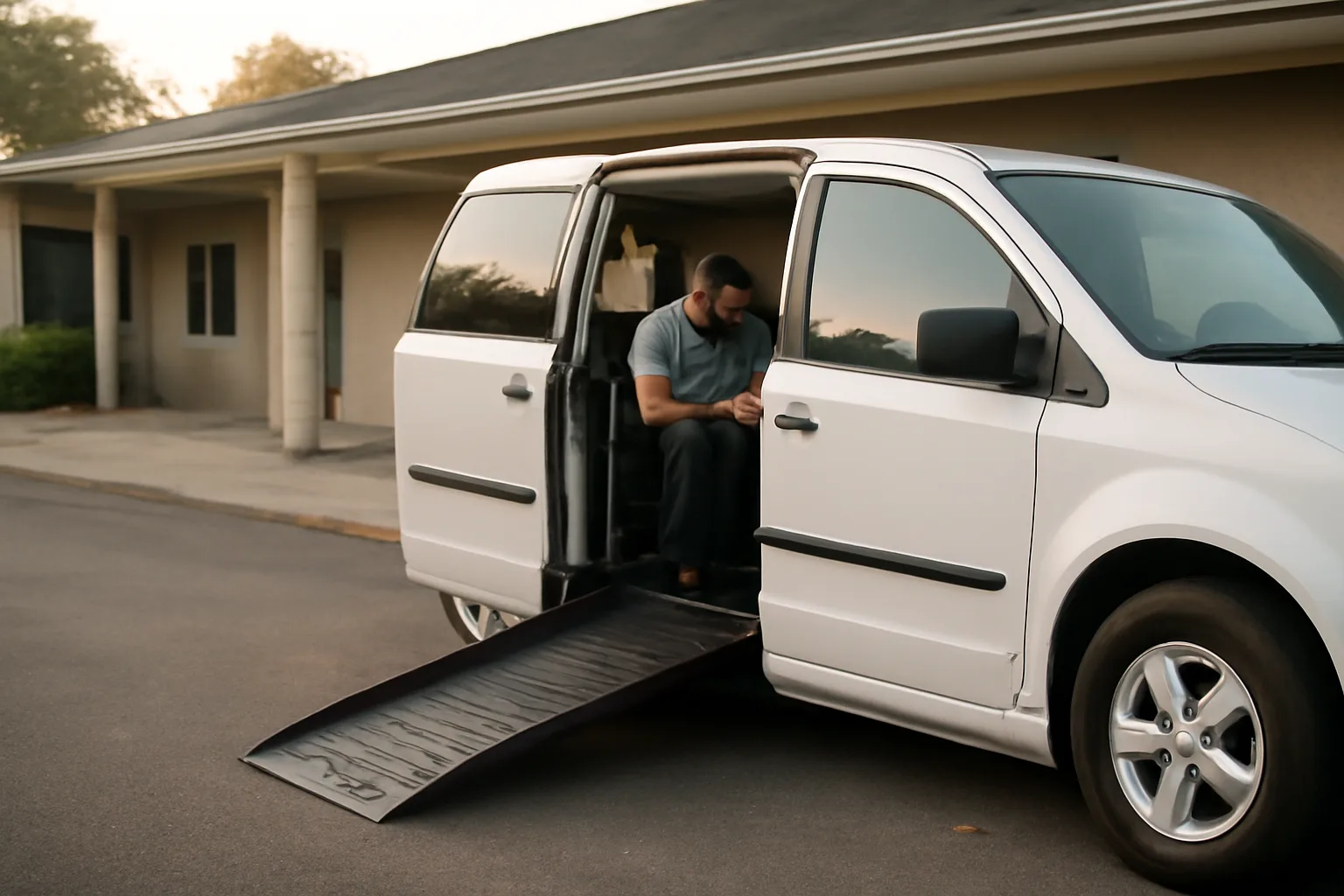
Yes, plenty of owner-operators start with a single wheelchair van. You don't need a fleet to enroll as a Medicaid NEMT provider or get credentialed with a broker, though some brokers have minimum vehicle or coverage-area expectations you should ask about directly. With one van, focus your effort on three things: getting the vehicle inspection-ready (working lift, working tie-downs, ADA-compliant ramp angle if applicable), carrying the insurance limits your state and broker require, and having a driver (possibly you) who meets background check, drug testing, and any state-mandated training requirements. One van also means no dispatcher overhead at first: you can run your own scheduling with a basic app or even a shared calendar, as long as you can reliably hit pickup windows, since brokers track no-show and late rates closely and can suspend low performers. The tradeoff with one van is capacity risk. If that van is in the shop, you have zero trips going out and a broker relationship that can sour fast if you no-show repeatedly. Many single-van owner-operators keep a backup rental agreement or a relationship with another local operator for overflow, purely so a mechanical issue doesn't turn into a credentialing problem.
What does Medicaid provider enrollment actually involve?
Medicaid provider enrollment is separate from broker credentialing, and both are usually required. Enrollment is your registration with the state Medicaid agency (or its fiscal agent, like Gainwell or Conduent in many states) as a recognized provider type eligible to bill Medicaid, directly or through a broker, for transportation services. Typical enrollment steps include: a completed provider application, your business entity documents (articles of organization, EIN letter), proof of required insurance, vehicle registration and inspection records, a National Provider Identifier (NPI) if your state requires one for transportation providers, and disclosure of ownership and any excluded individuals (checked against the OIG List of Excluded Individuals/Entities). Some states also require a surety bond or background check submission at the entity level, more than per-driver. States publish this on their Medicaid transportation unit page; for example, most state Medicaid agencies maintain a specific NEMT provider enrollment page separate from general Medicaid enrollment. Confirm with your specific state Medicaid agency which portal and forms apply, since these differ by state and sometimes by region within a state. CMS's own guidance describes NEMT as a required benefit under most state plans but leaves the administrative structure (broker vs. direct enrollment vs. managed care) to each state [2], which is exactly why the paperwork varies so much depending on where you operate.
How is broker credentialing different from Medicaid enrollment?
Broker credentialing is your onboarding with the private company that actually manages ride assignments in your region, like Modivcare, MTM, Access2Care, or SafeRide. Being enrolled with your state Medicaid agency doesn't automatically get you trips; in most states, the broker decides which providers get into their network and get dispatched. Broker applications typically ask for: your Medicaid provider enrollment confirmation or number, proof of insurance meeting their specific minimums, vehicle photos and inspection certificates, driver files (license, background check, drug test results, training certificates), and sometimes a facility or vehicle inspection done by the broker's own compliance team. Brokers also run their own periodic re-credentialing, often annually, checking insurance renewal, vehicle inspection currency, and driver roster updates. Each broker has its own portal, its own document formats, and its own response times, and none of that is standardized nationally. A provider credentialed with Modivcare in one state can face a completely different document checklist credentialing with MTM in a neighboring state. This is the part of the process where a lot of new owner-operators lose weeks resubmitting documents in the wrong format or missing one broker-specific form. If you want a structured way to track every document each broker and state wants, a state-and-broker-specific checklist tool like the Launch Kit Builder can save you from re-learning each broker's paperwork from scratch, though the underlying requirements still come from the broker and state, not from any third party.
Does Medicaid cover ambulance rides?
Yes. Medicaid covers ambulance transportation when it's medically necessary, meaning the person's condition requires the vehicle's specialized equipment or trained staff, such as during a cardiac event or major trauma. This is billed and licensed completely separately from NEMT. Ambulance providers need state EMS licensure, certified EMTs or paramedics on board, and equipment like a cardiac monitor and oxygen delivery systems that NEMT vehicles don't carry. States reimburse ambulance transport under their Medicaid state plan, and payment rates and coverage rules vary by state, so confirm specifics with your state Medicaid agency's ambulance fee schedule. If your business plan involves stretcher van or wheelchair van service (non-emergency), you do not need EMS/paramedic licensure, but if you're considering adding an ambulance line later, that's a separate state licensing track through your state's EMS office, not an extension of your NEMT credentialing. See emergency medical transport for how that licensing differs from NEMT.
Does Medicare cover medical transportation?
Medicare's coverage of non-emergency transportation is much narrower than Medicaid's. Original Medicare (Part B) covers ambulance services only when other transportation would endanger the patient's health, per CMS guidance on ambulance services [3]. Medicare does not generally cover routine non-emergency rides to a doctor's appointment or dialysis under Original Medicare. Some Medicare Advantage plans do offer NEMT as a supplemental benefit, and CMS has expanded flexibility for Medicare Advantage plans to include transportation as a supplemental benefit for chronically ill enrollees under bipartisan budget act provisions implemented starting 2019 [4]. But that's plan-by-plan, not a guaranteed benefit, and it's a completely different payer relationship than state Medicaid NEMT brokering. If you're building a business primarily around Medicaid-funded rides, don't assume Medicare Advantage NEMT contracts work the same way; they're negotiated directly with the plan or its transportation vendor, not through the state Medicaid broker system.
What vehicle and equipment requirements should I expect?
Requirements vary by state, but most states require wheelchair-accessible vehicles used for Medicaid NEMT to meet ADA lift and securement standards, pass an annual or semi-annual state or broker vehicle inspection, and carry required signage or vehicle ID depending on state rules. Ramps and lifts typically need routine maintenance documentation, since a failed lift during a broker inspection is one of the most common reasons new providers get delayed. Common inspection points include: functioning wheelchair lift/ramp with slip-resistant surface, four-point tie-down systems rated for wheelchair securement, working interior and exterior lighting, first aid kit and fire extinguisher on board, and current vehicle registration and emissions compliance. Some states also require a specific vehicle age limit (commonly vehicles under 5-10 years old, though this varies widely), so confirm your state's specific rule before you buy a used van. Don't buy the van before you know your state's inspection checklist and your target broker's vehicle standards; specs sometimes differ enough (interior clearance height, ramp angle, minimum tie-down rating) that a van that passes in one state's program fails a broker's separate inspection in another. For general vehicle context, see nemt transportation and non emergency medical transportation services.
What insurance and driver requirements come up most often?
Insurance minimums differ by state and broker, but commercial auto liability requirements for NEMT vehicles commonly land in the $1 million combined single limit range for wheelchair-accessible vehicles, with lower minimums sometimes accepted for ambulatory sedan service; confirm exact figures with your state Medicaid agency and target broker, since this is one of the most frequently updated requirements. You'll also typically need workers' compensation coverage once you have employees, and some states require a specific NEMT or livery insurance endorsement, more than standard commercial auto. Driver requirements commonly include: a valid driver's license (CDL not usually required for standard vans, but confirm for larger vehicles), a clean motor vehicle record over a lookback period the state defines, a criminal background check against state and federal databases, drug and alcohol testing, and training in passenger assistance techniques and defensive driving. Some states also mandate CPR/first aid certification for wheelchair van drivers specifically. Brokers frequently layer their own additional training modules on top of state requirements, often completed through the broker's own online portal before a driver is added to your active roster.
How long does it take to get approved and start taking trips?
Realistically, budget 60 to 120 days from the day you start gathering documents to the day you're actually receiving dispatched trips, though this varies heavily by state Medicaid agency processing speed and broker backlog. Vehicle sourcing and outfitting can run in parallel with entity formation and insurance shopping, which helps compress the timeline. A rough sequence: entity formation and EIN (days 1-5), insurance quoting and binding (days 5-20), vehicle inspection scheduling (varies, often 2-4 weeks out depending on local demand), Medicaid provider enrollment application review (commonly 30-60 days depending on the state), broker credentialing application and document review (often 2-6 weeks, sometimes running concurrently with Medicaid enrollment), and final onboarding/training before your first dispatched trip. The biggest controllable delay is incomplete paperwork. Missing one insurance endorsement or submitting an expired background check restarts a review clock, sometimes by weeks, not days. Confirm the exact document list with your state Medicaid agency and each broker before submitting anything, and keep copies of every submission with dates, since re-credentialing cycles will ask for updated versions of the same documents again later.
What ongoing compliance keeps a NEMT provider credentialed?
Credentialing isn't a one-time event. Most states and brokers require annual or biannual re-credentialing, which typically means resubmitting proof of current insurance, updated vehicle inspection certificates, refreshed driver background checks, and sometimes a new drug test cycle. Missing a renewal deadline can get you suspended from the broker's active provider list even if your Medicaid enrollment is still technically active. Other ongoing obligations commonly include: reporting any change in vehicle fleet (adding or retiring a van), reporting driver roster changes promptly, maintaining trip records and odometer/mileage logs for audit purposes, and responding to complaint or quality-of-service reviews that brokers run based on rider feedback and on-time performance data. States also periodically audit NEMT billing for fraud, waste, and abuse, consistent with CMS program integrity guidance under 42 CFR Part 455 [5], so keeping clean trip documentation isn't optional paperwork, it's what protects you in an audit. Build a simple internal calendar for renewal dates the day you get approved, not six months later when a broker email about "credentialing expiration" catches you off guard.
Frequently asked questions
How do you start a medical transportation business from scratch?
Form an LLC, get an EIN, secure commercial auto insurance meeting your state's minimums, buy or convert a wheelchair-accessible van to ADA lift/tie-down standards, get drivers background-checked and trained, then apply for Medicaid provider enrollment with your state agency and credential with the broker (Modivcare, MTM, Access2Care, SafeRide, etc.) operating in your region. Expect 60-120 days end to end.
What is NEMT?
NEMT stands for non-emergency medical transportation: scheduled rides to medical appointments (dialysis, therapy, checkups) for people who don't need an ambulance but can't get there on their own. Federal Medicaid rules under 42 CFR 431.53 require states to ensure this transportation for eligible enrollees, usually delivered through a contracted broker.
Does Medicaid cover ambulance rides?
Yes, Medicaid covers ambulance transport when medically necessary, meaning the patient's condition requires the vehicle's equipment or trained EMS staff. This is a separate licensing and billing track from NEMT, requiring state EMS licensure and certified emergency personnel, not a wheelchair van and a background-checked driver.
Does Medicare cover medical transportation?
Original Medicare Part B covers ambulance transport only when other transport would endanger the patient's health. It generally doesn't cover routine non-emergency rides. Some Medicare Advantage plans offer NEMT as a supplemental benefit under CMS flexibility rules starting in 2019, but that's plan-specific, not a standard Medicare benefit.
How do I start a NEMT business with one van?
You can enroll and credential with a single vehicle in most states and broker networks. Prioritize passing your state's vehicle inspection, carrying required insurance limits, and getting your driver (possibly yourself) through background checks and training. The main risk with one van is zero backup capacity if it needs repair, so line up a contingency plan.
What is non-emergency medical transportation exactly?
It's transportation for Medicaid (and sometimes Medicare Advantage) enrollees to medical appointments who need a ride but not emergency medical care in transit. It covers wheelchair van, stretcher van, and ambulatory sedan trips, booked in advance, and is distinct from ambulance service and from general public transit.
How much does it cost to start a NEMT business?
Costs vary enormously by state, vehicle choice, and insurance market, so there's no reliable single figure; a used ADA-compliant wheelchair van alone commonly runs from the high five figures to over $60,000, plus insurance, inspection fees, and credentialing costs. Get quotes locally rather than relying on a national average, since insurance and vehicle markets differ sharply by state.
Do I need a CDL to drive a wheelchair van for NEMT?
Usually not for a standard wheelchair van or minivan conversion, since most stay under the weight threshold requiring a commercial driver's license. Larger stretcher vans or multi-passenger vehicles may cross that threshold. Confirm with your state's department of motor vehicles and your target broker, since requirements differ by vehicle class and state.
How long does Medicaid provider enrollment take for NEMT?
Commonly 30 to 90 days depending on the state Medicaid agency's application volume and whether your documentation is complete on first submission. Missing items (like an unsigned insurance endorsement or expired background check) restart parts of the review, so submitting a complete, accurate application the first time is the biggest time-saver.
What's the difference between Medicaid enrollment and broker credentialing?
Medicaid enrollment registers your business with the state as an authorized transportation provider eligible to bill for services. Broker credentialing is a separate application with the private company (Modivcare, MTM, Access2Care, SafeRide) that actually assigns trips in your region. Most states require both before you can start receiving dispatched rides.
Can I run a NEMT business without a broker contract?
In some states you can bill Medicaid directly without a broker intermediary, but most states now route NEMT through one or more regional brokers, meaning broker credentialing is effectively required to get consistent trip volume. Confirm your state's specific model with its Medicaid transportation unit before assuming direct billing is an option.
What insurance do I need to start a NEMT business?
Commercial auto liability is the core requirement, often around $1 million combined single limit for wheelchair-accessible vehicles, though minimums vary by state and broker. You'll likely also need workers' compensation once you hire drivers, and some states require a specific livery or NEMT insurance endorsement rather than standard personal or generic commercial auto coverage.
Sources
- eCFR, 42 CFR 431.53: Federal regulation requiring state Medicaid plans to ensure necessary transportation to and from providers
- Medicaid.gov, Non-Emergency Medical Transportation: CMS description of NEMT as a required benefit administered differently by state
- Medicare.gov, Ambulance Services coverage: Medicare Part B covers ambulance transport only when other transportation would endanger health
- CMS, Reinterpretation of 'Primarily Health-Related' for Supplemental Benefits (Medicare Advantage): CMS expanded Medicare Advantage supplemental benefit flexibility, including transportation, starting 2019
- eCFR, 42 CFR Part 455: Federal program integrity requirements for state Medicaid provider audits, including fraud, waste, and abuse oversight