Last updated 2026-07-24
TL;DR
Starting a NEMT business means forming a legal entity, getting a wheelchair-accessible van that meets your state's ADA and inspection rules, enrolling as a Medicaid transportation provider (or subcontracting under one), and credentialing with brokers like Modivcare or MTM. Most solo operators spend several months and a few thousand dollars before their first paid trip, not counting the vehicle.
what is non-emergency medical transportation (NEMT)?
Non-emergency medical transportation is scheduled transport to and from medical appointments for people who don't need an ambulance but can't drive themselves or use regular transit. Think dialysis three times a week, chemo, physical therapy, or a routine doctor visit for someone in a wheelchair or using a walker. Medicaid is required to cover it. Federal regulation at 42 CFR 431.53 says states must "ensure necessary transportation for beneficiaries to and from providers" and may do this directly, through contracts, or by paying beneficiaries or someone on their behalf [1]. That's the legal hook that created the entire NEMT industry: state Medicaid agencies either run transportation in-house or, far more commonly now, hire a broker to manage it. NEMT is not an ambulance. It's not equipped for emergencies, and drivers aren't paramedics. Vehicles range from a sedan for an ambulatory rider to a wheelchair-accessible van with a lift or ramp, up to stretcher vans for people who must travel lying down but don't need EMS-level care. For background on the full landscape of vehicle types and how brokers sort riders into them, see medical transportation and nemt.
does medicaid cover ambulance rides, and how is that different from NEMT?
Yes, Medicaid covers ambulance transportation when it's medically necessary, but that's a separate benefit from NEMT and usually billed and reimbursed differently. Ambulance transport is for emergencies or cases where a person's condition requires medical monitoring in transit; NEMT is for people who are medically stable but need a ride. Medicaid.gov's guidance on non-emergency medical transportation confirms both are part of the broader transportation assurance: states must provide transportation to covered Medicaid services, and "this includes non-emergency transportation" alongside emergency ambulance coverage [2]. If you're planning to run wheelchair vans or ambulatory sedans, you're in the NEMT lane, not the ambulance lane. Ambulance companies are licensed and regulated as EMS providers under a completely different set of state rules (usually through the state health department or EMS office, not the Medicaid transportation unit), so don't confuse the two credentialing paths when you're researching what you need.
does medicare cover medical transportation?
Medicare's coverage of non-emergency transportation is much narrower than Medicaid's. Original Medicare Part B covers non-emergency ambulance transportation only when it's medically necessary and documented, for example if a beneficiary is bed-confined or transport by any other means would endanger their health [3]. It does not generally pay for a wheelchair van ride to a routine outpatient appointment the way Medicaid does. Some Medicare Advantage plans have added supplemental transportation benefits (a set number of one-way trips per year to plan-approved destinations), but that's a plan-by-plan perk, not a standard Medicare entitlement, and CMS guidance on Medicare Advantage supplemental benefits confirms these are optional add-ons plans may choose to offer [4]. If you want Medicare Advantage trip volume, you'd contract directly with individual MA plans or through a broker that manages their transportation network, separately from your state Medicaid enrollment. Don't build your whole business plan assuming Medicare will pay like Medicaid does. It won't.
how do you start a medical transportation business? (the real sequence)
Most people get the order backwards and waste months. Here's the sequence that actually works, roughly in order: 1. Pick your legal entity (LLC is standard) and get an EIN from the IRS. 2. Get your state operating authority if your state requires a NEMT-specific business license or permit (some do, some just fold it into Medicaid enrollment). 3. Buy or lease a compliant vehicle, usually a wheelchair-accessible van with a lift or ramp meeting ADA accessibility standards. 4. Get commercial auto insurance built for NEMT/livery use, not a personal or standard commercial policy. 5. Enroll as a Medicaid transportation provider with your state Medicaid agency, or decide to run only as a subcontractor under an already-enrolled larger company. 6. Apply for credentialing with the broker(s) operating in your state (Modivcare, MTM, Access2Care, SafeRide, or a state-specific broker). 7. Pass vehicle and driver background check inspections required by the broker. 8. Start taking trip assignments through the broker's dispatch system or app. The two steps that eat the most time are Medicaid provider enrollment and broker credentialing, and they often run in parallel rather than sequentially, so start both applications as soon as you have your entity and insurance in place. Confirm the exact order and required documents with your state Medicaid agency, since some states require Medicaid enrollment before they'll even list you as broker-eligible.
how to start a nemt business with one van
One van is genuinely enough to start, and plenty of owner-operators run exactly this way for years. The economics and paperwork don't scale down much, though; a one-van operation still needs its own EIN, its own commercial insurance policy, its own Medicaid enrollment, and its own broker credentialing file. There's no lightweight version of the application. What you can skip with one van: a dispatch office, multiple driver background checks, a fleet maintenance schedule across several vehicles, and (in some states) certain fleet-size-triggered requirements like a designated safety officer. What you can't skip: vehicle inspection standards, driver background checks (usually including a check against state abuse/neglect registries and a motor vehicle record pull), and liability insurance minimums that don't shrink just because you're small. Realistically, budget for the van itself (a used wheelchair-accessible conversion van commonly runs somewhere in the five figures, with wide variation by mileage and lift condition), commercial insurance (varies heavily by state and driving record, easily several thousand dollars a year for NEMT livery coverage), and whatever your state charges for provider enrollment application fees, which some states set in statute or fee schedule and others waive entirely. Confirm current fee amounts with your state Medicaid agency's provider enrollment unit, since these numbers change and vary by state.
how to enroll as a state medicaid nemt provider
Every state Medicaid agency has a provider enrollment process, and most now route it through an online portal run by the state or its fiscal agent. You'll typically need your entity documents (articles of organization, EIN letter), proof of insurance, vehicle registration and inspection records, driver documentation, and sometimes a surety bond. Some states enroll NEMT providers directly as Medicaid providers who can bill fee-for-service. Others have moved almost entirely to a broker model, where the state contracts with one statewide broker (or a few regional ones) and individual transportation companies must credential with that broker rather than bill Medicaid directly. CMS's Medicaid NEMT guidance describes this brokerage approach as one of the ways states satisfy the transportation assurance requirement under 42 CFR 431.53 [1][2]. Which model your state uses changes everything about your paperwork, so your very first move should be finding your state's Medicaid transportation unit page and reading exactly how they structure it. Search for your state name plus "Medicaid non-emergency transportation broker" or check your state Medicaid agency's transportation or NEMT program page directly. For a rundown of what these programs look like across different states, see non emergency medical transportation and non emergency medical transportation services.
how does broker credentialing work with modivcare, MTM, access2care, and saferide?
Once your state has a broker contract in place, that broker (not the state) usually handles day-to-day provider recruitment, vehicle inspections, and dispatch. Modivcare and MTM are the two largest national NEMT brokers and between them hold contracts across a large share of state Medicaid NEMT programs; Access2Care and SafeRide operate in additional states and regions. Each broker runs its own credentialing process, and they are not interchangeable: passing Modivcare's inspection in one state doesn't automatically qualify you for MTM in another. Typical broker credentialing asks for: a completed provider application, proof of Medicaid enrollment (or an active application), commercial auto insurance certificates naming the broker as certificate holder, vehicle photos and VIN/inspection records, driver license and background check documentation, and sometimes drug testing program enrollment. Brokers periodically re-inspect vehicles and re-check driver files, so credentialing isn't a one-time event; treat it as an ongoing compliance relationship. Broker requirements, application fees, and timelines change by state and by contract cycle, so confirm current specifics directly with the broker operating in your state and with your state Medicaid agency before you buy a vehicle assuming it will pass. A van that's compliant in one broker's contract may need modifications for another's specs.
what vehicle requirements does a wheelchair van need to meet?
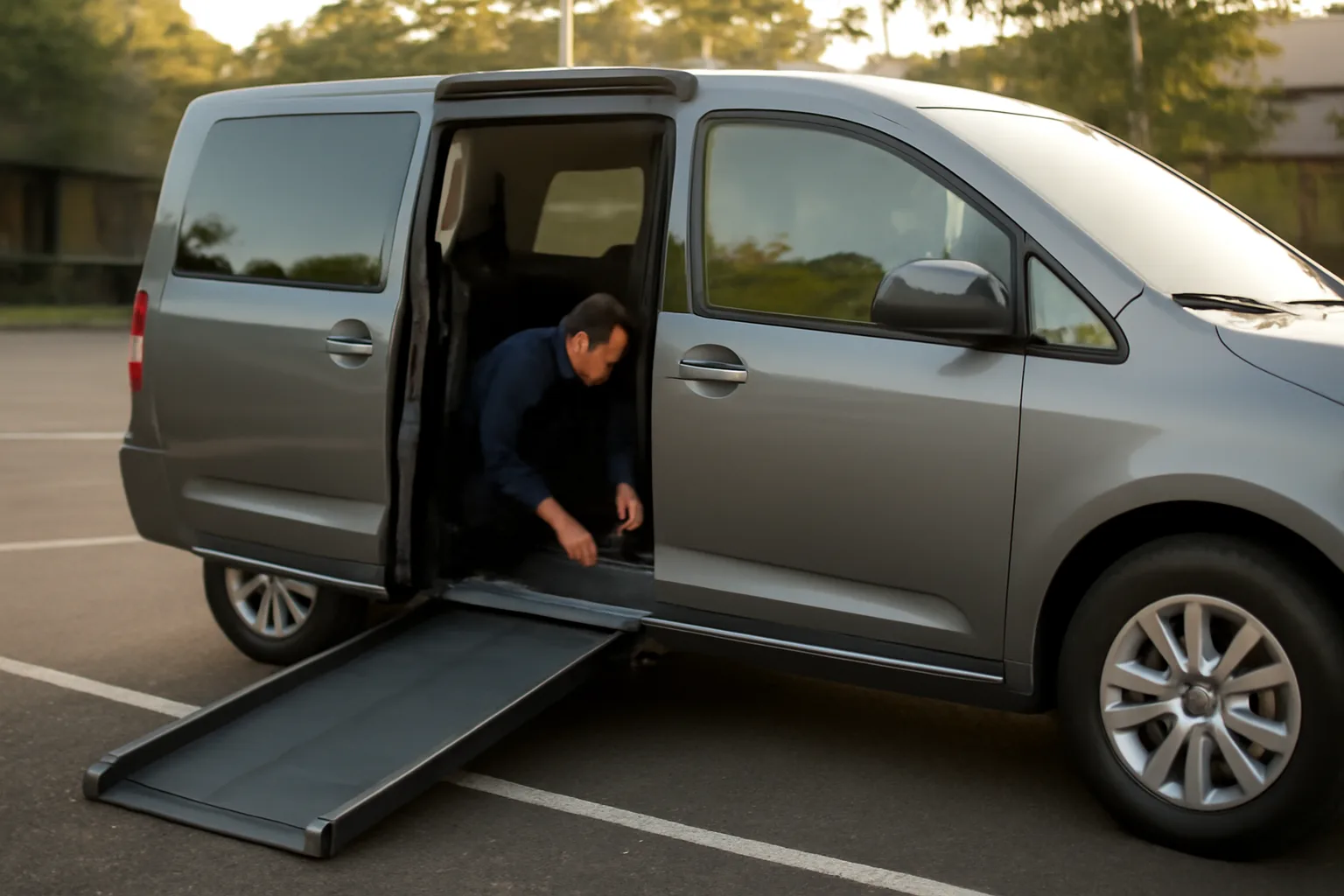
Your wheelchair-accessible van needs to meet accessibility, safety, and often broker-specific equipment standards, and these three things aren't identical. At a baseline, vans transporting wheelchair users typically need a certified lift or ramp, wheelchair securement systems (tie-downs meeting a recognized standard), and occupant restraints for the wheelchair user, more than the vehicle seats. States and brokers commonly reference the vehicle and equipment guidance in the Americans with Disabilities Act's transportation regulations for accessibility features, though exact inspection checklists come from your state Medicaid agency or your broker's contract, not directly from the ADA text itself. Some states also require annual state vehicle safety inspections beyond your normal registration renewal, specific vehicle age limits (many broker contracts won't credential a van older than 7 to 10 years, though the exact cutoff varies by contract), and a documented maintenance log. Buy the van after you've read your state's and your target broker's vehicle spec sheet, not before. Retrofitting a used van you already own to meet a spec you didn't check first is one of the most common expensive mistakes in this business. For more on vehicle types and what separates a wheelchair van from a stretcher van or ambulatory sedan fleet, see nemt transportation.
what insurance and driver requirements should you expect?
You'll need commercial auto insurance rated for livery or NEMT passenger transport, not a personal auto policy and often not even a standard commercial policy meant for cargo vans. Liability minimums are usually set by your state (sometimes in the same statute governing for-hire vehicles) and separately by your broker contract, and the broker's minimum is often higher than the state's floor. Get quotes from an agent who has written NEMT policies before; a lot of general commercial agents don't know this niche and will underinsure you or price it wrong. Driver requirements commonly include: a valid driver's license (many states also want a specific passenger endorsement or a clean-record threshold), a background check that includes a check against state abuse/neglect and sex offender registries, a motor vehicle record pull, and sometimes CPR/first aid certification. Some states or brokers also require passenger assistance training specific to wheelchair securement, more than a general defensive driving course. None of this is optional for a one-person owner-operator business; if you're both the owner and the only driver, you personally have to clear every one of these checks yourself.
what does it cost and how long does it take to get running?
There's no single number here because state fees, insurance rates, and vehicle prices vary too much to average honestly, but the rough building blocks are: your entity formation and EIN (typically inexpensive, often under a few hundred dollars in state filing fees), a wheelchair-accessible van (used conversion vans commonly range widely into the five figures depending on age, mileage, and lift type), commercial NEMT insurance (annual premiums commonly run into the low thousands of dollars or more, driven heavily by your state, your driving record, and your coverage limits), and any state Medicaid provider enrollment fee (some states charge an application fee set by rule or statute; others don't charge one at all). Timeline-wise, expect provider enrollment and broker credentialing together to take anywhere from a few weeks to a few months, driven mostly by how complete your paperwork is on the first submission and how backed up your state's enrollment unit is. Incomplete applications and vehicles that don't meet spec on first inspection are the two most common causes of delay. Nobody can promise you a specific approval timeline, and any broker or state Medicaid rep who does isn't being straight with you. If you want a structured way to track every document across both the state Medicaid application and broker credentialing packets so you're not discovering a missing form on week six, that's the exact gap the $199 State + Broker NEMT Launch Kit is built to close. It's a paperwork organizing tool, not a guarantee of approval from any state or broker.
should you enroll directly with medicaid or subcontract under an existing provider first?
Subcontracting under an already-credentialed NEMT company is a legitimate way to start earning trips while your own state and broker applications work through the queue. You drive under their authority and insurance (or your own insurance layered under their contract, depending on the arrangement), they handle dispatch, and you get a percentage of the trip payment instead of the full rate. The tradeoff is straightforward: you give up a chunk of revenue per trip and you have zero say over the broker relationship, but you can often start driving within days instead of months. Some owner-operators use this as a bridge for the first three to six months while their own Medicaid enrollment and broker credentialing move forward, then transition to running fully independent once they're approved. If you go this route, get the subcontracting arrangement in writing, including who carries the primary insurance, how trip payment splits are calculated, and what happens to your standing with that company once your own credentialing comes through. Verbal agreements in this industry go bad often enough that it's worth the hour with a lawyer or at least a plain-language written agreement.
what mistakes cause the most delays and rejections?
The single biggest one: buying the van before checking the broker's vehicle spec and the state's inspection checklist. People fall in love with a good price on a used conversion van, buy it, then find out the lift doesn't meet the securement standard or the van is a year past the broker's age cutoff. Second: submitting incomplete Medicaid provider enrollment paperwork. Missing a signature page, an outdated insurance certificate, or a background check that's technically still pending will bounce your application back and restart the clock, sometimes by weeks. Third: underestimating insurance. Owner-operators sometimes get a quote for a standard commercial auto policy, not realizing brokers require specific livery or NEMT passenger endorsements and often specific liability limits well above a generic commercial minimum. Get the insurance conversation started early and be explicit with the agent that this is Medicaid NEMT passenger transport, not delivery or general commercial use. Fourth: assuming one state's rules or one broker's process applies elsewhere. If you ever plan to expand across a state line, treat it as starting over, not as an extension. For a broader look at how emergency transport regulation differs from the NEMT world entirely, see emergency medical transport.
Frequently asked questions
How to start a medical transportation business?
Form a legal entity, get a compliant wheelchair van, secure NEMT-rated commercial insurance, enroll as a Medicaid transportation provider with your state, and credential with the broker operating in your state (Modivcare, MTM, Access2Care, SafeRide, or a state-specific broker). Confirm exact steps and order with your state Medicaid agency since requirements vary.
What is NEMT?
NEMT (non-emergency medical transportation) is scheduled transport to medical appointments for people who don't need an ambulance but can't drive themselves or use regular transit. Medicaid must cover it under 42 CFR 431.53, either directly, through contracted brokers, or by paying beneficiaries for transportation costs.
Does Medicaid cover ambulance rides?
Yes, Medicaid covers medically necessary ambulance transportation, but it's a separate benefit from NEMT with different licensing and billing rules. Ambulance transport is regulated as emergency medical services, typically through your state's EMS office, not the Medicaid transportation unit that handles wheelchair van and sedan NEMT.
Does Medicare cover medical transportation?
Original Medicare Part B covers non-emergency ambulance transportation only when medically necessary and documented, not routine wheelchair van rides to appointments. Some Medicare Advantage plans add limited non-emergency transportation as a supplemental benefit, but this is plan-specific and optional, not a standard Medicare entitlement.
How do you start a medical transportation business step by step?
Form your LLC and get an EIN, get any required state operating authority, buy a compliant wheelchair-accessible van, secure NEMT commercial insurance, enroll as a state Medicaid provider, apply for broker credentialing, pass vehicle and driver background checks, then start accepting dispatched trips. Medicaid enrollment and broker credentialing often run in parallel.
What is non-emergency medical transportation?
Non-emergency medical transportation is scheduled rides to and from medical care for people who are medically stable but can't drive themselves or use public transit, often due to a disability, wheelchair use, or a chronic condition. It covers sedans, wheelchair vans, and stretcher vans, but not ambulance-level emergency care.
How to start a NEMT business with one van?
One van is enough to start, but you still need your own entity, EIN, NEMT-rated insurance, Medicaid provider enrollment, and broker credentialing; none of that scales down for a single vehicle. Budget for a compliant used wheelchair van, insurance, and any state enrollment fees before applying.
How much does it cost to start a NEMT business?
Costs vary widely by state, but expect entity formation fees (often under a few hundred dollars), a used wheelchair-accessible van (commonly into the five figures depending on condition), NEMT commercial insurance (often low thousands of dollars annually or more), and possible state provider enrollment fees. Confirm current fees with your state Medicaid agency.
Do I need Medicaid enrollment or broker credentialing first?
It depends on your state. Some states require Medicaid provider enrollment before you're broker-eligible; others let both processes run at the same time. Confirm the required order directly with your state Medicaid agency's transportation unit and the specific broker operating in your area before submitting either application.
Can I subcontract for an existing NEMT company while I wait for approval?
Yes, subcontracting under an already-credentialed provider is common and lets you start driving sooner, usually for a percentage of the trip rate instead of full payment. Get the arrangement in writing, covering insurance responsibility and payment splits, since verbal agreements in this industry frequently cause disputes later.
What vehicle do I need for NEMT wheelchair transport?
You need a van with a certified wheelchair lift or ramp, compliant securement tie-downs, and proper occupant restraints, meeting both your state's inspection standards and your target broker's specific vehicle spec sheet. Check both before buying, since brokers often have age limits and equipment requirements that go beyond basic state rules.
Which brokers should I know as a new NEMT owner-operator?
Modivcare and MTM hold the largest share of state Medicaid NEMT broker contracts nationally, with Access2Care and SafeRide operating in additional states. Each runs separate credentialing, vehicle inspection, and insurance requirements, so confirm the specific broker or brokers your state contracts with before assuming any one company's process applies to you.
Sources
- eCFR, 42 CFR 431.53 (Assurance of transportation): Medicaid agencies must ensure necessary transportation for beneficiaries, via direct provision, contracts, or payment arrangements
- Medicaid.gov, Non-Emergency Medical Transportation: Medicaid's transportation assurance includes non-emergency medical transportation and allows brokerage arrangements
- Medicare.gov, Ambulance Services coverage: Medicare Part B covers non-emergency ambulance transportation only when medically necessary and documented
- CMS, Medicare Advantage Supplemental Benefits guidance: Medicare Advantage plans may offer supplemental transportation benefits at plan discretion, not as a standard Medicare entitlement
- Federal Motor Carrier Safety Administration: NEMT operators may need to determine whether their vehicles require a USDOT number depending on vehicle weight and passenger capacity.
- U.S. Small Business Administration: Starting a medical transportation business requires obtaining the proper state and local business licenses and permits.
- Medicaid.gov: States require providers to complete a Medicaid enrollment process, including screening and credentialing, before becoming an approved NEMT provider.
- eCFR (49 CFR Part 350): Commercial transportation providers, including some NEMT operators, must comply with federal motor carrier safety regulations regarding vehicle maintenance and driver qualifications.