Last updated 2026-07-25
TL;DR
There's no single "NEMT license." You need a state business/transportation permit, vehicle and driver requirements (often DOT or ADA-related), Medicaid provider enrollment through your state Medicaid agency, and separate credentialing with brokers like Modivcare or MTM. The order and paperwork vary by state, so confirm specifics with your state Medicaid transportation unit before you buy a van.
What is non-emergency medical transportation (NEMT)?
Non-emergency medical transportation is transportation to and from medical appointments for people who don't need an ambulance but can't get there on their own, because of a disability, a wheelchair, a walker, dialysis fatigue, or just not having a car. Medicaid programs are required to cover it for eligible beneficiaries who have no other way to reach a covered service. Federal Medicaid rules require states to "ensure necessary transportation for beneficiaries to and from providers" and to describe in their state plan how they meet that requirement, per 42 CFR 431.53 [1]. Most states run this through a broker model: a company like Modivcare, MTM, Access2Care, or SafeRide gets a contract to manage rides for a region, and independent transportation companies (that's you) get credentialed as subcontracted providers. NEMT is not an ambulance. It's not a taxi either, legally speaking, because the rider's eligibility and the trip's medical purpose are verified before the broker dispatches it. If your fleet is wheelchair vans, you're bidding for ambulatory and wheelchair-level trips, not stretcher or advanced life support work. For background on how the overall system fits together, see our medical transportation overview and our nemt hub page.
How do you start a medical transportation business?
Start with the legal entity and the vehicle, then layer state permits, then Medicaid enrollment, then broker credentialing. Skipping the order costs people money: buying three vans before you know your state's inspection standard is a common expensive mistake. Here's the realistic sequence: 1. Form your business entity (LLC is standard) and get an EIN. 2. Get general liability and commercial auto insurance quotes before you buy a vehicle, because wheelchair-accessible vans often carry higher premiums than a standard passenger van. 3. Check your state's specific NEMT or "medical transportation" permit or certificate of need requirement. Some states regulate NEMT under the Department of Transportation, some under the Department of Health, some under both. 4. Buy or convert the vehicle to meet your state's accessibility and safety standard (tie-downs, lift or ramp specs, ADA-adjacent requirements). 5. Enroll as a Medicaid provider (or Medicaid transportation provider) with your state Medicaid agency. 6. Apply for broker credentialing with whichever broker(s) manage your region, since Medicaid enrollment alone usually doesn't get you trips. 7. Pass vehicle inspections and driver background checks required by the broker. Every state's exact list differs, so confirm the sequence with your [state Medicaid agency's transportation unit] and any broker before you spend on vehicles. CMS's Medicaid.gov page on non-emergency medical transportation describes the federal floor states must meet, but implementation is state by state [2].
How to start a NEMT business (state licensing basics)
Most states require some combination of a business license, a for-hire or livery permit, and vehicle-specific inspection or certification before you can legally operate a wheelchair van for pay. A few states also require a certificate of need or separate NEMT operator license issued by the state health department or department of transportation. There isn't one federal NEMT license. What CMS actually requires is that state Medicaid agencies guarantee transportation access for beneficiaries, not that operators hold a specific federal credential [1]. That means the licensing layer you deal with is entirely state-created, and it varies enormously: some states have light-touch business registration, others run full operator certification programs with fleet audits. Because of that variation, the single most useful thing you can do before spending money is call your state Medicaid transportation unit directly and ask for their current NEMT provider enrollment packet. Ask specifically: is there a separate NEMT operator license, or does Medicaid enrollment function as the license? States answer this differently, and the difference changes your first six months of paperwork. For a state-by-state starting point, our non emergency medical transportation guide breaks down where to find each state's transportation unit page.
How do you start a medical transportation business with one van?
One van is a completely normal way to start, and plenty of owner-operators run wheelchair-van NEMT as a single-vehicle operation, at least at first. The licensing steps don't change based on fleet size, but the paperwork burden per vehicle does, since you'll do one inspection, one insurance policy, one set of driver credentials, instead of ten. With one van, focus your energy in this order: get the entity and insurance locked in, get the vehicle inspected to your state's standard, get Medicaid provider enrollment approved, then get credentialed with the one or two brokers that actually dispatch trips in your county. Don't try to credential with five brokers at once before your first van has passed inspection; brokers will ask for vehicle documentation as part of the application, and an incomplete file usually just means delay, not rejection, but delay costs you real time. A one-van operation also means you personally may be doing double duty as owner and driver, so your own background check, driving record, and any required training (like defensive driving or passenger assistance techniques) go on the critical path too. Confirm driver requirements with your state Medicaid agency and the broker, since these differ by state and by broker contract.
How to start a non-emergency medical transportation business, step by step
| Business entity + EIN | LLC formation, tax ID | State + IRS | |
|---|---|---|---|
| Insurance | Commercial auto, general liability | State minimums, broker minimums (often higher) | |
| Vehicle standard | Wheelchair lift/ramp specs, tie-downs, annual inspection | State DOT or Medicaid transportation unit | |
| State operating permit | Business license, for-hire permit, or NEMT operator certificate | State (varies widely) | |
| Medicaid provider enrollment | NPI, provider agreement, background checks | State Medicaid agency | |
| Broker credentialing | Separate application, vehicle photos, W-9, insurance certificate | Modivcare, MTM, Access2Care, SafeRide, or regional broker | |
| Driver requirements | Background check, driving record, sometimes passenger assistance training | State + broker | Nothing here is optional to skip, but the order can bend a little. Some owner-operators get broker pre-approval conversations going while Medicaid enrollment is still processing, since both can take weeks. Just don't buy a fleet before you've confirmed the vehicle standard, because retrofitting a used van to meet a state's tie-down or lift spec after the fact is expensive. Our nemt transportation and non emergency medical transportation services pages go deeper on vehicle and service-type specifics if you're still deciding what to buy. |
Below is the practical checklist most owner-operators actually follow, compressed from the requirements states and brokers publish. | Step | What it involves | Who sets the rule |
Does Medicaid cover ambulance rides?
Yes. Medicaid covers ambulance transportation when it's medically necessary, meaning the beneficiary's condition requires the equipment or trained staff an ambulance provides, more than a ride. This is a different benefit category from NEMT and is billed and regulated differently. CMS's Medicaid.gov ambulance page confirms that "Medicaid covers ambulance services when medically necessary" and that states have flexibility in how they define and reimburse that necessity within federal parameters [3]. If you're building a wheelchair-van NEMT business, ambulance work is a separate license track entirely (usually EMS licensure through your state health department), not something a NEMT operator credential covers. So if a state Medicaid agency's page mentions both "ambulance" and "NEMT" in the same transportation section, that's normal: they're two different benefits sitting in the same chapter of the state plan, but they require different vehicles, different staff certifications, and different provider enrollment paths.
Does Medicare cover medical transportation?
Medicare's coverage of non-emergency medical transportation is much narrower than Medicaid's. Original Medicare generally covers non-emergency ambulance transportation only when a physician certifies it's medically necessary, such as for a bedridden patient, and even then, the beneficiary usually needs a written order [4]. Medicare does not have a broad routine NEMT benefit the way Medicaid does; wheelchair-van rides to a standard doctor's appointment for an otherwise mobile beneficiary generally aren't a covered Medicare service. That gap is exactly why some Medicare Advantage plans add supplemental transportation benefits, since the plans compete on extra benefits Original Medicare doesn't offer. If you want Medicare Advantage transportation network work, that's a separate credentialing relationship with the specific MA plan or its transportation vendor, not the state Medicaid broker system. For a wheelchair-van owner-operator, this practically means: your bread-and-butter volume is Medicaid NEMT through state brokers, with Medicare Advantage supplemental transportation as a possible secondary revenue relationship you'd pursue separately, plan by plan.
How does Medicaid provider enrollment actually work for NEMT?
Medicaid provider enrollment for NEMT means applying directly to your state Medicaid agency (or its fiscal agent) to become a recognized transportation provider under the state plan, separate from any broker relationship. States are required under federal law to screen enrolling providers, which typically includes a National Provider Identifier (NPI), background checks, and site or vehicle verification, consistent with CMS provider screening rules under 42 CFR Part 455 [5]. The enrollment packet usually asks for: your business license or entity documents, proof of insurance, vehicle registration and inspection records, driver rosters with background check results, and sometimes a bond or fee. Processing time varies a lot by state; some approve in a few weeks, others take a couple of months, especially if your file is missing documents on the first pass. Here's the part that surprises new operators: in most states, Medicaid enrollment by itself does not automatically send you trips. States that use a broker model route dispatch through the broker's own network, so you generally need both the state enrollment and the broker credential to actually get ride assignments. A few states still run NEMT directly without a broker, so confirm which model your state uses before assuming you need both steps.
How is broker credentialing different from state Medicaid enrollment?
Broker credentialing is a private company's own application and vetting process, layered on top of, not instead of, your state Medicaid enrollment. Modivcare, MTM, Access2Care, and SafeRide each run their own credentialing packet, and none of them are government agencies, even though they manage a state Medicaid benefit under contract. Expect the broker application to ask for many of the same documents you already gave the state (insurance certificate, vehicle inspection, W-9, driver records) plus broker-specific items: a service area map, vehicle photos inside and out, sometimes a road test or ride-along, and an electronic dispatch or GPS system requirement. Brokers also set their own minimum insurance limits, which are frequently higher than your state's legal minimum, so don't buy a policy sized only to state minimums if you know you'll be credentialing with a broker. Because broker contracts get rebid regionally and requirements change, don't treat any specific broker checklist as permanent. Confirm current requirements directly with the broker operating your county's contract, and re-confirm at renewal, since broker-state contracts do change hands.
What vehicle and driver requirements should you expect?
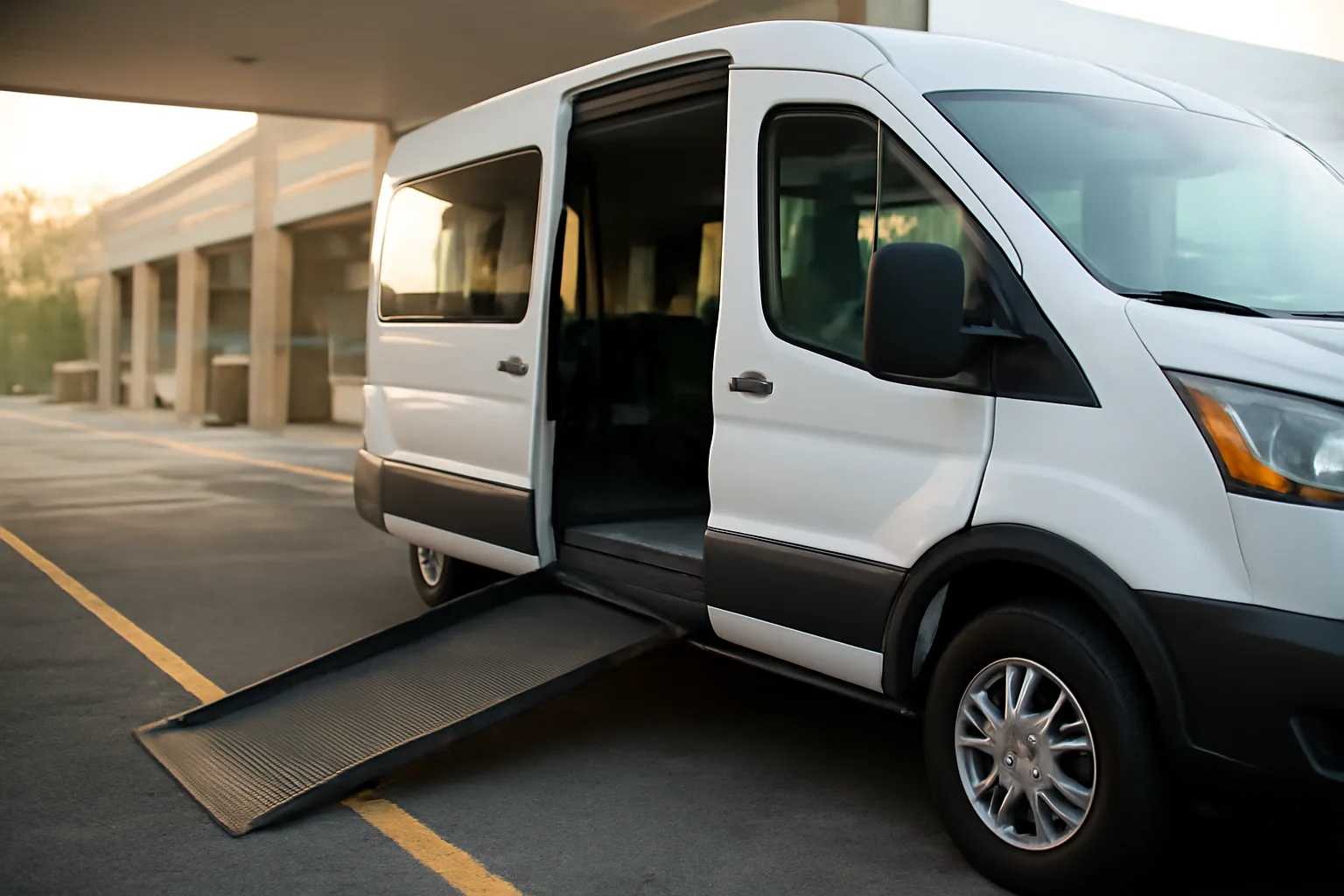
Wheelchair-van NEMT vehicles typically need a working lift or ramp, secured wheelchair tie-down anchors (often to a recognized standard like SAE J2249 for wheelchair tie-down systems), working seatbelts for all positions, and passing an annual or semi-annual state inspection. Some states also require a specific vehicle age limit or mileage cap for Medicaid NEMT vehicles. Drivers commonly need a valid driver's license appropriate to the vehicle class (a large van sometimes triggers different licensing than a passenger car), a clean-enough driving record by the state or broker's standard, a background check that screens for disqualifying criminal history, and sometimes CPR/first aid or passenger assistance technique training. A handful of states require drivers to complete a state-approved NEMT driver training course before they can be listed on a Medicaid provider's roster. None of these specifics are universal, and they genuinely change year to year as states update their transportation manuals. Confirm current vehicle and driver requirements with your state Medicaid transportation unit and with each broker before you finalize a vehicle purchase or hire a driver, since a van that qualifies in one state can fail another state's tie-down spec.
What does it cost to get licensed and credentialed, and how long does it take?
Costs vary by state and are rarely published as one bundled number, but the real cost buckets are: business formation and licensing fees (often $50 to a few hundred dollars), commercial insurance (wheelchair-van commercial auto and general liability policies commonly run into the thousands per year, varying heavily by state and driving record), vehicle purchase or ADA conversion (a converted wheelchair van typically costs noticeably more than a standard used van, often adding five figures for the conversion alone), and any state or broker application fees. Timeline is the bigger practical constraint for most new operators. Business and vehicle setup can take a few weeks if insurance and inspection go smoothly. Medicaid provider enrollment commonly takes several weeks to a couple of months depending on the state's backlog and whether your first submission is complete. Broker credentialing on top of that can add more weeks, especially if a vehicle inspection or ride-along has to be scheduled. Because none of this is standardized nationally, and because guessing wrong here is expensive, treat every number above as a planning range, not a quote, and verify current fees and timelines with your state Medicaid agency and target broker before committing money.
Where should you actually go for the current rules?
Two places matter more than anything a blog (including this one) can tell you: your state Medicaid agency's transportation unit, and the specific broker or brokers operating your service area. State Medicaid transportation pages typically publish the current provider enrollment packet, vehicle standards, and sometimes a list of active brokers by region. CMS's Medicaid.gov NEMT guidance lays out the federal floor, including the requirement that state plans describe how they'll assure transportation, but the operational detail always sits at the state level [2]. If your state's page is thin or outdated, call the transportation unit directly and ask for the current NEMT provider packet by name. If you'd rather not assemble every state form and broker checklist yourself from scratch, that's the gap our $199 one-time State + Broker NEMT Launch Kit is built to close: it organizes the state Medicaid enrollment paperwork and broker credentialing checklists into one place so you're not hunting across a dozen .gov pages and broker portals. It doesn't replace confirming specifics with your state and broker, and it doesn't guarantee approval, since no one legitimately can guarantee that outcome for you.
Frequently asked questions
What is NEMT?
NEMT stands for non-emergency medical transportation: rides to and from medical appointments for people who don't need an ambulance but can't get there themselves due to disability, mobility limits, or lack of transportation. Medicaid is required to ensure this transportation is available to eligible beneficiaries under 42 CFR 431.53, usually delivered through state-contracted brokers.
How do I start a NEMT business from scratch?
Form your business entity, secure commercial insurance, buy or convert a vehicle to your state's accessibility standard, get any required state operating permit, enroll as a Medicaid provider with your state Medicaid agency, and then apply for credentialing with the broker(s) operating your service area. Confirm the exact order and requirements with your state Medicaid transportation unit.
Do I need a special license to drive a wheelchair van for NEMT?
Requirements vary by state. Many states just require a standard valid driver's license plus a clean driving record and background check, but some require specific NEMT driver training or a different license class depending on vehicle size. Confirm with your state Medicaid agency and the credentialing broker, since both may set requirements.
Can I start a NEMT business with just one van?
Yes. A single-vehicle wheelchair van operation is a common way owner-operators start. The licensing steps are the same regardless of fleet size; you'll just handle one vehicle inspection, one insurance policy, and one driver file instead of several, which usually makes the first credentialing cycle faster.
Does Medicaid cover ambulance rides?
Yes, Medicaid covers ambulance transportation when it's medically necessary, meaning the patient's condition requires the equipment or trained staff an ambulance provides. This is a separate benefit from NEMT with its own licensing track (EMS certification), not something a wheelchair-van NEMT provider credential covers.
Does Medicare cover non-emergency medical transportation?
Original Medicare's non-emergency transportation coverage is narrow: generally limited to non-emergency ambulance transport certified as medically necessary by a physician, often requiring a written order. It does not have a broad routine wheelchair-van NEMT benefit like Medicaid does, though some Medicare Advantage plans add supplemental transportation benefits.
What's the difference between Medicaid enrollment and broker credentialing?
Medicaid provider enrollment is your application directly to the state Medicaid agency to be recognized as a transportation provider under the state plan. Broker credentialing is a separate private-company application (with Modivcare, MTM, Access2Care, SafeRide, etc.) required to actually receive dispatched trips in states using the broker model. Most operators need both.
How long does NEMT licensing and credentialing take?
There's no single national timeline. Business setup and vehicle inspection can take a few weeks. Medicaid provider enrollment commonly takes several weeks to a couple of months depending on the state's backlog. Broker credentialing can add more weeks on top of that. Confirm current processing times with your state Medicaid agency and target broker.
How much does it cost to get licensed for NEMT?
Costs vary widely by state and aren't published as one bundled figure. Expect business/license fees, commercial auto and general liability insurance (often thousands per year), and vehicle purchase or wheelchair-accessible conversion costs, which typically add a substantial amount to a standard van's price. Confirm current fees with your state and target broker before buying a vehicle.
Is a certificate of need required to start a NEMT business?
Some states require a certificate of need or separate operator certification for NEMT businesses; many don't. This varies enough state to state that you should check directly with your state Medicaid transportation unit or department of transportation rather than assume either way.
Do I need to work with a broker, or can I contract directly with Medicaid?
It depends on your state's model. Most states route Medicaid NEMT trips through contracted brokers like Modivcare or MTM, so state enrollment alone usually won't produce trip assignments. A smaller number of states manage NEMT directly without a broker. Confirm which model applies in your state before assuming you need broker credentialing.
What vehicle standards does a wheelchair van need to meet for Medicaid NEMT?
Common requirements include a functioning wheelchair lift or ramp, secured tie-down anchors, working seatbelts, and passing a state safety inspection, sometimes on a more frequent schedule than standard vehicles. Specific standards, including any wheelchair tie-down system spec, vary by state, so confirm with your state Medicaid transportation unit before purchasing or converting a vehicle.
Sources
- eCFR, 42 CFR 431.53 - Assurance of transportation: States must ensure necessary transportation for Medicaid beneficiaries to and from providers and describe this in the state plan.
- Medicaid.gov, Non-Emergency Medical Transportation: CMS federal guidance describing the NEMT benefit requirement and state implementation flexibility.
- Medicaid.gov, Ambulance page (Medicaid benefits): Medicaid covers ambulance services when medically necessary, with states given flexibility in defining necessity.
- Medicare.gov, Ambulance Services coverage: Medicare covers non-emergency ambulance transportation only when medically necessary and typically requires physician certification/written order.
- eCFR, 42 CFR Part 455 - Program Integrity: Medicaid: States must screen enrolling Medicaid providers, including NEMT providers, under federal program integrity requirements.
- SAE International, J2249 Wheelchair Tiedown and Occupant Restraint Systems standard: Wheelchair tie-down and occupant restraint systems used in NEMT vehicles commonly reference the SAE J2249 standard.