Last updated 2026-07-25
TL;DR
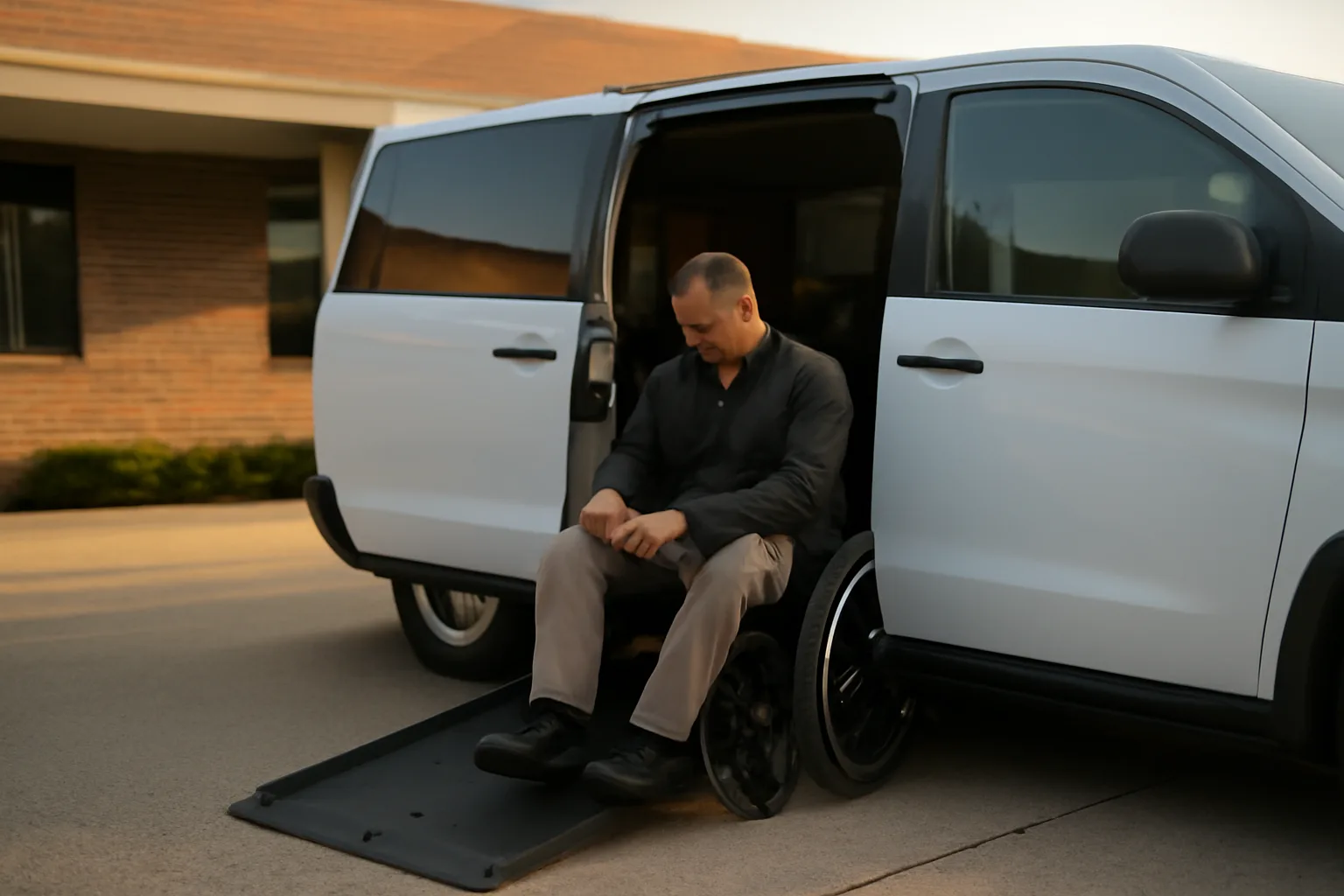
Georgia Medicaid NEMT runs through the Department of Community Health, which contracts a statewide broker (Modivcare handles most regions) to schedule rides and credential transport providers. To operate, you need a business entity, DOT-compliant wheelchair van, Georgia Medicaid enrollment, and broker approval, a process that commonly takes 60 to 120 days depending on how fast paperwork clears.
What is non-emergency medical transportation (NEMT)?
Non-emergency medical transportation is scheduled transport for people who need a ride to a medical appointment but don't need an ambulance. Think dialysis three times a week, chemo infusions, physical therapy, or a routine OB visit for someone without a car or a working wheelchair lift at home. Federal Medicaid rules require states to make sure eligible people can get to and from covered services, and NEMT is how that promise gets kept for people without other transportation. The Centers for Medicare & Medicaid Services describes this as an assurance states must provide: "assurance of transportation," codified in NEMT program guidance tied to 42 CFR 431.53 [1]. In Georgia, that assurance is delivered mostly through a broker model. The state doesn't pay individual drivers directly for most trips. Instead, Georgia's Department of Community Health (DCH) contracts with a transportation broker, and that broker signs up transportation providers, wheelchair van companies included, and dispatches trips to them. If you're picturing an ambulance, stop. NEMT vehicles are typically sedans, minivans, or wheelchair-accessible vans, not units with lights and sirens. For a broader look at how NEMT programs work across states, see nemt and non emergency medical transportation.
Does Medicaid cover ambulance rides, and how is that different from NEMT?
Yes, Medicaid covers ambulance transportation, but it's a separate benefit from NEMT and it runs through a different set of rules and providers. Ambulance transport is for emergencies or situations where a person's medical condition requires monitoring or equipment during the ride, and it's billed as a medical service, not scheduled through a broker call center. CMS lists "transportation" as an optional versus mandatory benefit depending on category: ambulance services fall under the medical assistance categories states must cover for many populations, while non-emergency transport to appointments is required as an administrative assurance rather than a straight benefit category [1]. Practically, that means an ambulance company bills Medicaid (or a Medicaid managed care plan) directly for a transport that involved a clinical need, while an NEMT wheelchair van bills through the broker for a scheduled, non-urgent ride. If you're building a business around wheelchair vans and stretcher vans for scheduled appointments, you're in the NEMT lane, not the ambulance lane. Ambulance licensure in Georgia runs through the Department of Public Health's EMS Section, a completely different regulatory track with EMT/paramedic staffing requirements. Don't confuse the two when you're calling around for information, because you'll get sent in circles.
Does Medicare cover medical transportation the same way?
No. Medicare's coverage of non-emergency transportation is much narrower than Medicaid's. Original Medicare Part B covers ambulance services when other transportation "could endanger your health" and generally does not pay for routine rides to a doctor's office or dialysis in a wheelchair van [2]. Some Medicare Advantage plans have added supplemental non-emergency transportation benefits in recent years, but that's plan-specific, not a guaranteed federal benefit, and coverage varies by county and insurer. If a caller tells you "Medicare will pay for my van ride," the honest answer is: only if it's ambulance-level medical necessity under Part B, or if they happen to have a Medicare Advantage plan with a transportation rider, and even then the plan (not Medicare directly) sets its own network and rules. This matters for owner-operators because it means your real customer base in Georgia is Medicaid members through the DCH broker contract, plus occasional private-pay or Medicare Advantage referrals, not traditional Medicare fee-for-service.
How does Georgia's Medicaid NEMT program actually work?
Georgia Medicaid enrollees who need a ride to a covered medical service and don't have other transportation available can request NEMT, and the state uses a broker to manage scheduling and provider networks statewide. Georgia's DCH administers Medicaid and oversees the transportation benefit as part of its overall Medicaid State Plan obligations under federal law [3]. The broker relationship is the part new owner-operators often misunderstand. You don't enroll only with Georgia Medicaid and start getting ride requests. You typically need two separate approvals stacked on top of each other: Medicaid provider enrollment with the state (or its fiscal agent), and a separate credentialing/contracting process with whichever broker holds the current NEMT contract for your region. As of this writing, Modivcare has held major state NEMT broker contracts across the country, including in Georgia at various points, but broker contracts are rebid periodically, so confirm the current broker with DCH's transportation unit before you assume who you'll be applying to. Because contracts change hands, the single most important early step is calling Georgia Medicaid's member/provider transportation contacts directly to get the current broker name, the current provider application packet, and the current service-area map. Anything you read online, this article included, can be a step behind a fresh contract award.
How do you start a medical transportation business in Georgia, step by step?
Starting an NEMT business is a sequencing problem more than a mystery. Get the order wrong and you'll pay for insurance or a vehicle inspection before you actually know what the broker requires. Here's the rough order that avoids wasted money: 1. Form your business entity (LLC is common) and get an EIN from the IRS. 2. Get commercial auto insurance quoted for a wheelchair-accessible or non-emergency transport vehicle; livery/NEMT insurance is a distinct category from personal auto and costs more, so get real quotes early, not after you've bought a van. 3. Buy or convert a wheelchair van that meets ADA-style accessibility standards and passes state vehicle inspection where required. 4. Apply for Georgia Medicaid provider enrollment, which for transportation providers is typically handled through the state's Medicaid Management Information System (MMIS) provider portal; confirm the current portal and provider type code with DCH's transportation unit. 5. Apply separately with the current NEMT broker for network credentialing (vehicle inspection, driver background checks, insurance certificates, W-9, and often a facility or safety inspection). 6. Complete driver requirements: background checks, drug screening, defensive driving or passenger assistance training, and any broker-specific onboarding modules. 7. Get dispatch/scheduling software or a broker-provided app set up before your first live trip. None of these steps is optional if you want broker-paid Medicaid trips, and skipping ahead (buying the van before confirming insurance cost and broker vehicle-age limits, for example) is the most common way owner-operators overspend in month one.
How do you start an NEMT business with just one van?
Plenty of Georgia NEMT owner-operators start with exactly one wheelchair van, and it's a completely reasonable way to enter, as long as you treat it like a real business from day one, not a side hustle with a magnetic sign. With one vehicle, your biggest constraints are driver coverage (if you're the only driver, sick days and vehicle maintenance stop all your revenue) and broker minimum requirements. Some broker contracts specify a minimum fleet size or service-area coverage expectation, so confirm with your broker whether a single-vehicle provider is even eligible in your target county before you buy anything. Realistic one-van startup costs include: entity formation and licensing fees (usually a few hundred dollars in Georgia for LLC filing), commercial NEMT insurance (varies widely by driving record, vehicle, and county, so get multiple quotes), a wheelchair-accessible van (used conversion vans commonly run in the tens of thousands of dollars depending on age, mileage, and lift condition), and driver background check and training fees. There's no honest single number to give you here; costs swing hard based on your state minimum insurance requirements and the vehicle you buy, so treat any online "NEMT startup cost" figure that isn't sourced to your own quotes as a guess. One practical tip: get your Medicaid provider enrollment and broker application moving in parallel with your insurance shopping, since both processes commonly take weeks, and running them sequentially can add a month or more to your launch timeline.
What does Georgia broker credentialing actually require?
Broker credentialing is the gatekeeping step that determines whether you actually get ride assignments, separate from your Medicaid provider number. Requirements vary by broker and change with contract cycles, but the categories are consistent across states. Expect to submit: proof of business entity and EIN, commercial auto/livery insurance certificates naming the broker as certificate holder or additional insured (confirm exact language required), vehicle registration and current inspection showing the van meets accessibility equipment standards (working wheelchair lift or ramp, secured tie-downs), driver's license and MVR (motor vehicle record) checks for every driver, criminal background checks often run through a specific vendor the broker designates, drug testing policy documentation, and sometimes a physical vehicle inspection by broker staff or a third party. Modivcare, one of the largest national NEMT brokers, publishes provider network information and credentialing contact channels for the states where it holds contracts, and its published network materials describe on-site or virtual vehicle inspections and ongoing compliance monitoring as part of network participation. Because Georgia's specific broker and exact document list can change when contracts are rebid, the only reliable source is calling the broker's provider network line directly and asking for the current provider application packet in writing. If you want a structured way to track every document across state and broker paperwork instead of juggling folders, that's exactly the gap a flat, one-time $199 State + Broker NEMT Launch Kit is built to close: a checklist-style build tool rather than a guessing game. See the launch-kit-builder for the current version.
What vehicle and driver requirements apply to Georgia NEMT wheelchair vans?
Georgia NEMT wheelchair vans need functioning ADA-style accessibility equipment (ramp or lift, wheelchair securement points, and passenger restraints) and must pass whatever vehicle inspection your broker or the state requires before you can carry passengers for pay. Age and mileage limits on vehicles are common broker requirements (some brokers cap vehicle age at 5 to 10 years), so confirm the current limit before buying a used conversion van. Drivers commonly need a valid driver's license (a standard Class C is typical for vans under a certain weight; a CDL is generally not required for standard wheelchair vans, but confirm based on your specific vehicle's gross weight rating), a clean or explainable MVR, a passed background check, and completion of passenger assistance or sensitivity training, sometimes required annually. Some brokers also require CPR/first aid certification for drivers, particularly for stretcher-capable vehicles. None of this is uniform nationally, and it's not uniform within Georgia either if the broker changes. Confirm current vehicle age limits, inspection frequency, and driver certification requirements directly with your broker and with DCH's transportation unit before finalizing a vehicle purchase, because a van that qualified under a prior broker contract may not automatically qualify under a new one.
How long does it take to get approved and start running Medicaid trips in Georgia?
Realistically, budget 60 to 120 days from a standing start (no entity, no insurance, no vehicle) to your first broker-assigned Medicaid trip in Georgia, though it can run faster or slower depending on how quickly documents clear and whether you're waiting on a vehicle build-out. The timeline breaks down roughly like this: entity formation and EIN (days, sometimes same-day online through the IRS), insurance quoting and binding (1 to 3 weeks, longer if your driving history needs underwriting review), vehicle purchase or conversion (immediate if buying a ready conversion, 4 to 12 weeks if ordering a custom build), Medicaid provider enrollment processing (this varies significantly by state MMIS backlog; some states process in 30 days, others take 60-plus), and broker credentialing (2 to 6 weeks once your documents are complete, longer if a vehicle inspection has to be scheduled). The single biggest controllable delay is submitting incomplete paperwork. Missing insurance endorsements, expired background checks, or unclear vehicle documentation are the most common reasons applications bounce back for corrections, adding weeks each time. Get a checklist together before you submit anything, and confirm exact required documents with DCH's Medicaid transportation unit and your broker's provider relations team rather than assuming last year's list still applies.
What does it cost to enroll and get credentialed?
Georgia Medicaid provider enrollment itself typically has modest or no state application fee for most transportation provider types, though some provider categories are subject to federal application fee requirements under 42 CFR 455.460, which as of recent years has required certain provider types to pay a revalidation/enrollment fee (confirm the current amount, as CMS adjusts this fee periodically) [4]. Broker credentialing fees vary; some brokers charge no direct application fee but require you to absorb the cost of background checks, vehicle inspections, and any required training modules. Your real costs are mostly indirect: commercial NEMT insurance (the largest recurring cost, varying heavily by county, driving record, and vehicle count), the vehicle itself, background check and drug screen fees per driver (commonly in the range of $30 to $100 per check depending on vendor, though this is not government-set and shops around), and any required training certification fees. There's no honest way to give a single all-in startup number here, because insurance alone can differ by thousands of dollars a year based on your location and record. Get at least three insurance quotes specifically for NEMT/livery coverage before you commit to a vehicle purchase, since some insurers won't write policies for certain vehicle types or driver profiles at all.
Georgia NEMT compared to running as an out-of-network private-pay provider
| Payer | State Medicaid via broker | Individual clients, nursing homes, hospitals | |
|---|---|---|---|
| Rate setting | Broker-set reimbursement rates | You negotiate your own rate | |
| Volume source | Broker dispatch/algorithm assigns trips | You build relationships directly | |
| Paperwork | State + broker credentialing, ongoing compliance audits | Contract-by-contract, lighter regulatory layer | |
| Payment timing | Broker payment cycles, often net 15-30 days | Often faster, sometimes same-day for private pay | |
| Startup barrier | Higher (dual credentialing, vehicle/driver standards) | Lower, but no guaranteed trip stream | Many owner-operators eventually do both: broker trips for a steady base, private-pay or facility contracts to fill gaps and improve margins. Neither path guarantees any particular trip volume or income, and broker-assigned trip counts can fluctuate month to month based on regional demand and how many providers are already in network in your county. |
Some owner-operators choose to run private-pay or facility-contract NEMT instead of, or alongside, Medicaid broker work, and it's worth understanding the tradeoff before you commit fully to one model. | Factor | Medicaid broker network | Private-pay / facility contracts |
Common mistakes new Georgia NEMT owner-operators make
The most expensive mistake is buying the van before confirming broker vehicle-age limits and insurance costs. A perfectly good used conversion van can turn out to be two years too old for your broker's standard, or insurance on it can run high enough to erase your margin before you've driven a single trip. The second mistake is assuming Medicaid enrollment alone gets you trips. It doesn't. You need the separate broker credentialing step, and skipping ahead to buy equipment or hire drivers before that credentialing is confirmed leaves you holding costs with no trip stream. Third, underestimating driver documentation churn. Background checks, MVRs, and certifications often need periodic renewal, and letting one lapse can pull a driver (or your whole fleet) out of the active roster until it's fixed. Fourth, not reading the actual current broker contract requirements and instead relying on old forum posts or outdated blog articles (like ones that don't tell you to confirm details, frankly). Broker contracts get rebid, provider manuals get updated, and vehicle standards shift. Confirm with your state Medicaid transportation unit and current broker directly before finalizing any purchase or hire.
Frequently asked questions
What is non-emergency medical transportation (NEMT)?
NEMT is scheduled transportation to and from covered medical services for people who don't need ambulance-level care but lack another way to get there. It typically uses wheelchair vans, sedans, or stretcher vans, dispatched through a state Medicaid broker rather than billed like an ambulance run.
Does Medicaid cover ambulance rides?
Yes, Medicaid covers ambulance transportation when a person's medical condition requires it, billed as a medical service separate from the NEMT benefit. NEMT covers scheduled, non-emergency rides to appointments and is administered through a state's transportation assurance obligations under federal Medicaid rules.
Does Medicare cover medical transportation?
Original Medicare Part B covers ambulance transport when other transportation would endanger your health, but it generally does not cover routine rides to appointments in a wheelchair van. Some Medicare Advantage plans add limited non-emergency transportation as a supplemental benefit, but that varies by plan and county.
How do I start a medical transportation business in Georgia?
Form a business entity, get commercial NEMT insurance quotes, buy a wheelchair-accessible van meeting accessibility standards, apply for Georgia Medicaid provider enrollment, and separately apply for credentialing with the current state NEMT broker. Confirm the current broker and requirements with Georgia DCH's transportation unit before purchasing equipment.
How do I start an NEMT business with just one van?
One-van operations are common and legitimate, but confirm your broker allows single-vehicle providers in your county before buying anything. Budget for entity formation, commercial livery insurance, the van itself, and driver background checks, and run Medicaid enrollment and broker credentialing in parallel to avoid stacking delays.
What is the difference between NEMT and an ambulance company in Georgia?
NEMT provides scheduled, non-urgent rides using vans or sedans and is credentialed through Georgia Medicaid and its transportation broker. Ambulance service requires emergency medical staffing and licensure through the Georgia Department of Public Health's EMS Section, a completely separate regulatory track.
How long does Georgia NEMT provider enrollment and broker credentialing take?
Realistically 60 to 120 days from starting with nothing to your first broker-assigned trip, depending on insurance underwriting speed, vehicle readiness, and how quickly your paperwork clears without corrections. Incomplete documentation is the most common cause of delay at both the state and broker stages.
Who is the NEMT broker in Georgia?
Georgia's Department of Community Health contracts with a statewide broker to manage Medicaid NEMT scheduling and provider credentialing, and that contract is periodically rebid, so the broker can change. Confirm the current broker name and contact information directly with DCH's Medicaid transportation unit before applying.
Do I need a CDL to drive a wheelchair van in Georgia?
Generally no, standard wheelchair vans fall under a regular driver's license class, not a commercial driver's license, but this depends on the specific vehicle's gross weight rating. Confirm licensing requirements for your exact vehicle with the Georgia Department of Driver Services and your broker.
How much does it cost to start a wheelchair van NEMT business?
There's no single reliable number; costs depend heavily on your insurance underwriting, county, vehicle age and condition, and driver count. Major cost categories are entity formation, commercial NEMT/livery insurance, the vehicle itself, and per-driver background check and training fees, and getting multiple real insurance quotes early is the best way to know your actual number.
Can I do NEMT without Medicaid, as a private-pay business?
Yes, private-pay and facility-contract NEMT (nursing homes, hospitals, dialysis centers) is a real path that skips broker credentialing entirely, though it also means you build trip volume yourself with no assigned dispatch stream. Many owner-operators eventually run both broker and private-pay work side by side.
What insurance does a Georgia NEMT provider need?
You need commercial auto insurance specifically rated for livery or non-emergency medical transportation, not a personal auto policy, and your broker will typically specify minimum liability limits and require the broker be named on the certificate. Get quotes from insurers experienced with NEMT specifically, since not all commercial auto insurers write this coverage.
Does Georgia Medicaid require a separate application from the broker credentialing process?
Yes. Georgia Medicaid provider enrollment (through DCH or its fiscal agent's MMIS portal) and broker network credentialing are two distinct processes with separate paperwork, and you generally need both before you can receive broker-dispatched Medicaid trips.
Sources
- Medicaid.gov, Non-Emergency Medical Transportation guidance: States must assure transportation to and from Medicaid-covered services under 42 CFR 431.53
- Medicare.gov, Ambulance Services coverage: Medicare Part B covers ambulance transport when other transportation would endanger health, and does not generally cover routine non-emergency rides
- Georgia Department of Community Health, Medicaid program overview: Georgia DCH administers the state's Medicaid program including transportation benefit obligations
- eCFR, 42 CFR 455.460 Provider screening and enrollment fees: Certain Medicaid provider types are subject to a federal application fee under 42 CFR 455.460
- eCFR, 42 CFR 431.53 Assurance of transportation: Federal regulation requiring states to ensure necessary transportation for Medicaid beneficiaries to and from providers