Last updated 2026-07-25
TL;DR
To start a non-emergency medical transportation (NEMT) business, you need a compliant wheelchair van or sedan, a business entity and insurance, state Medicaid transportation provider enrollment, and broker credentialing with companies like Modivcare or MTM. Most owner-operators spend 60 to 120 days from paperwork to first trip, and requirements vary by state, so confirm specifics with your state Medicaid agency before you buy a vehicle.
What is non-emergency medical transportation (NEMT)?
NEMT is transportation for Medicaid (and sometimes Medicare Advantage) members who need to get to a medical appointment, dialysis, or therapy but don't need an ambulance. Think wheelchair vans, ambulatory sedans, and stretcher vans, not lights-and-sirens. Federal Medicaid rules actually require this. States must "ensure necessary transportation for beneficiaries to and from providers" under 42 CFR 431.53, and CMS has confirmed this NEMT assurance is a longstanding part of the Medicaid state plan requirements [1]. Most states don't run this in-house anymore. They hire a transportation broker (Modivcare, MTM, Access2Care, SafeRide Health are the big four nationally) to manage trip dispatch, credential the transportation providers, and pay claims. So when people ask "what is non emergency medical transportation," the short answer is: it's the Medicaid-funded ride to and from care, run through a broker network, and it's the business you're trying to get into. For a broader definition and how states structure it, see our NEMT overview and non-emergency medical transportation guide.
Does Medicaid cover ambulance rides, and how is that different from NEMT?
Yes. Medicaid covers ambulance transportation when it's medically necessary, but that's a separate benefit from NEMT and it's billed differently. Ambulance transport (emergency or emergency-level non-emergency, like an ALS/BLS transfer) is billed under Medicaid's ambulance fee schedule, usually through the ambulance provider directly, not through a NEMT broker [2]. NEMT, by contrast, covers the member who's stable and mobile enough to ride in a van or sedan to a scheduled appointment. Medicaid.gov describes NEMT specifically as the "non-emergency transportation (NET) assurance" that states must meet to help beneficiaries get to and from Medicaid-covered services [3]. If you're picturing an ambulance business, you're in a different regulatory lane entirely (state EMS licensure, more than a broker contract). This article is about the van and sedan business, not ambulance operations. For general context on where the line falls, see emergency medical transport.
Does Medicare cover medical transportation?
Original Medicare covers ambulance transportation under Medicare Part B when it's medically necessary and other transportation would endanger the person's health, per CMS guidance on ambulance services [4]. Original Medicare generally does not cover routine non-emergency van or wheelchair transportation to a regular doctor's appointment. Where it gets more interesting for NEMT operators is Medicare Advantage. Many Medicare Advantage plans now offer NEMT as a supplemental benefit, under CMS's expanded definition of "primarily health related" supplemental benefits [5]. That means some of your future contracts may come through Medicare Advantage plans or the brokers they use, more than state Medicaid. Worth asking about when you're credentialing with a broker, since some broker networks handle both Medicaid and Medicare Advantage trips under one contract.
How do you start a medical transportation business? The real order of operations
Most people get this backwards. They buy the van first, then find out their state requires a different wheelchair lift certification, or that the broker won't credential a vehicle over a certain age. Do it in this order instead: 1. Confirm your state's NEMT provider enrollment requirements with your state Medicaid agency's transportation unit (every state has one, usually inside the Medicaid or Health and Human Services department). 2. Form your business entity (LLC is standard) and get your EIN. 3. Get commercial auto insurance with the liability limits your state and broker require, often $1 million combined single limit for wheelchair-accessible vehicles, though this varies by state and broker (confirm with your broker and state Medicaid agency). 4. Buy or convert a vehicle that meets your state's specific NEMT vehicle standards (wheelchair lift or ramp specs, tie-downs, signage rules). 5. Enroll as a Medicaid transportation provider with your state. 6. Apply for credentialing with the broker(s) operating in your service area (Modivcare, MTM, Access2Care, SafeRide, or a state-specific broker). 7. Pass any required vehicle inspection and driver background checks. 8. Get your NPI number if your state requires it for billing. The state enrollment and broker credentialing steps run in parallel in some states and sequentially in others. This is exactly the kind of state-by-state variance that trips people up, so budget extra time rather than assuming a fixed timeline.
How to start a NEMT business with just one van
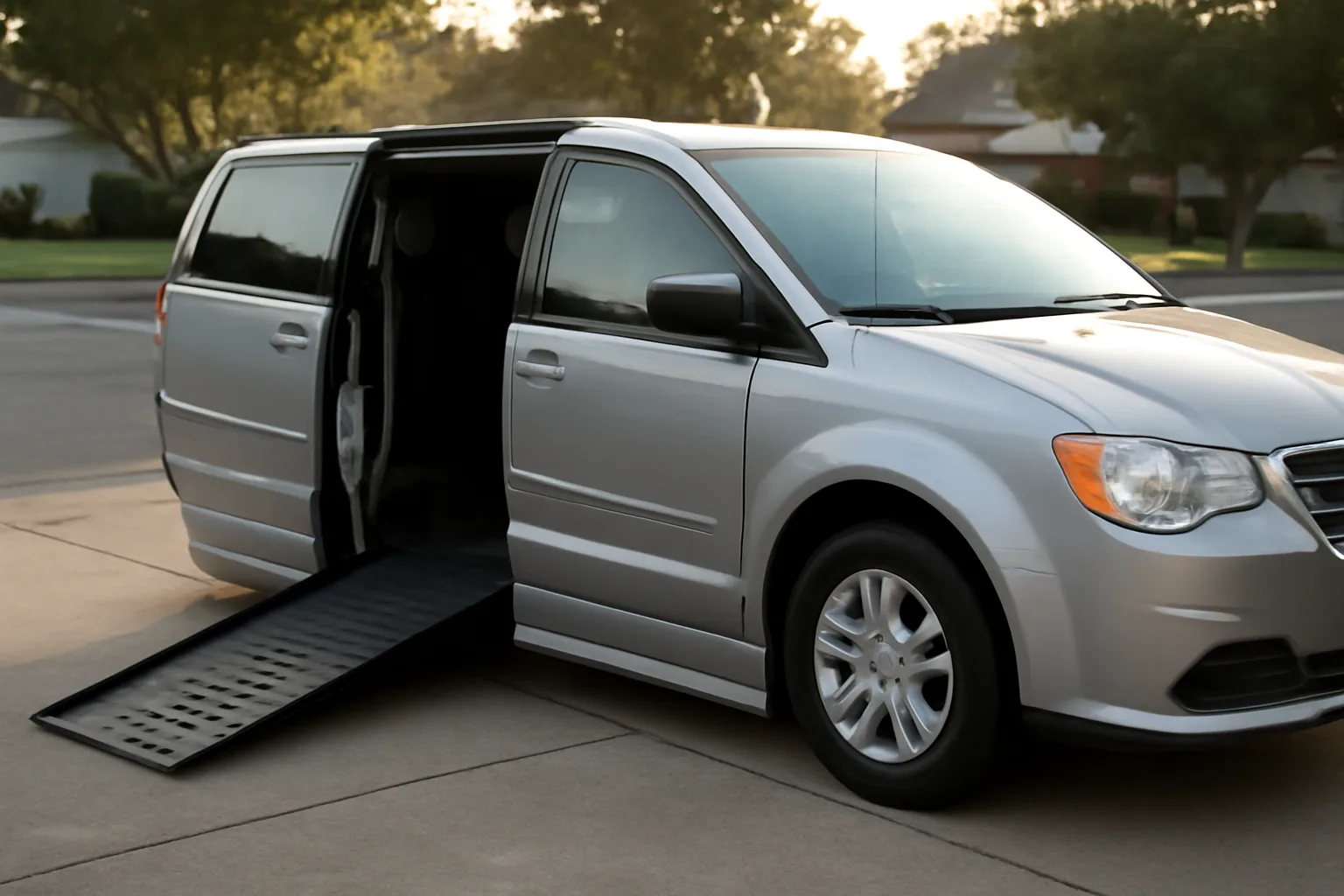
Plenty of owner-operators start with a single wheelchair van, and it's a completely legitimate way to enter the business. Brokers do credential single-vehicle, single-driver operations in most states, though some states or broker regions require a minimum fleet size or a backup vehicle plan for redundancy (confirm this with your broker and state Medicaid agency, since it varies). With one van, you are the driver, the dispatcher, and the biller, at least at first. That's fine operationally, but plan for what happens when the van is in the shop or you're sick. Some brokers require you to show a contingency plan (a backup vehicle arrangement or a subcontractor relationship) before they'll fully activate your contract. One practical note: buy or convert the van to your state's actual spec sheet, not a generic "wheelchair van" build. States differ on ramp angle limits, tie-down anchor points (often based on SAE J2249 wheelchair securement standards), and interior clearance. A vehicle that passes inspection in one state may not pass in the state next door.
What does state Medicaid provider enrollment actually involve?
Every state Medicaid agency has its own NEMT provider enrollment process, usually run out of the same portal used for all Medicaid provider types (physicians, DME suppliers, transportation providers). Expect to submit: business licensing documents, proof of insurance, vehicle registration and inspection records, driver qualifications (background check, driving record, sometimes drug testing), and a completed provider enrollment application specific to transportation. Some states require a surety bond. Some require a separate "NEMT provider" designation distinct from general Medicaid enrollment. Some route all of this through the broker instead of the state directly, which confuses a lot of new operators, because it looks like you're skipping the state step when really the broker is doing the state's screening on its behalf under contract. There is no single fee or timeline that applies nationally. Enrollment fees, background check costs, and processing times vary by state, so the only reliable answer is to check your specific state Medicaid transportation unit's page and your target broker's provider enrollment page before you spend money on a vehicle.
How does broker credentialing work with Modivcare, MTM, Access2Care, and SafeRide?
Brokers manage the actual trip dispatch and payment for most state Medicaid NEMT programs. Modivcare and MTM together cover NEMT brokerage in a large share of states, with Access2Care and SafeRide Health operating in others, and some states running smaller regional or state-specific brokers instead. Credentialing with a broker usually means: submitting a provider application through their portal, showing proof of your state Medicaid enrollment (or being in-process), passing a vehicle inspection to their standard, submitting driver files, and signing a network provider agreement that sets your trip rates. Rates, trip assignment methods, and credentialing timelines differ by broker and by state contract, and brokers renegotiate state contracts periodically, so a state's broker can change. Don't assume the broker running your state today will still hold that contract in three years. Build your business plan around the credentialing process, not around any one broker staying in place forever. A note on paperwork fatigue: state enrollment and broker credentialing ask for a lot of overlapping documents (insurance certificates, vehicle inspection reports, driver background checks) but in slightly different formats for each. This is the exact gap a resource like our $199 State + Broker NEMT Launch Kit is built for, organizing the document set once so you're not rebuilding it from scratch for every broker application.
What licenses and insurance do you actually need before you drive?
At minimum, expect to need: a business license, a commercial auto insurance policy (personal auto policies won't cover paid passenger transport), a state-specific NEMT or passenger transport permit in some states, and driver qualifications that typically include a clean motor vehicle record and a background check. Some states require a Certificate of Public Convenience and Necessity (CPCN) or similar operating authority for passenger-for-hire vehicles, separate from Medicaid enrollment entirely, since it's a transportation regulatory requirement, not a health program requirement. Check with your state's Department of Transportation or Public Utilities Commission, more than Medicaid, on this point. Insurance minimums vary widely by state and by broker contract. Some broker agreements specify combined single limits (commonly cited in the $1 million range for wheelchair-accessible vehicles in several state contracts), but treat that as a starting reference point, not a rule, and confirm actual limits with your broker and state Medicaid agency before binding a policy.
What kind of vehicle do you need, and does it have to be new?
It does not have to be new. Most brokers and states care about condition, safety equipment, and age limits, not whether the van rolled off the lot last year. Common requirements include a working wheelchair lift or ramp, four-point tie-down restraints meeting recognized securement standards, working interior lighting, and a documented preventive maintenance schedule. Many states or brokers set a maximum vehicle age or mileage threshold for network vehicles (commonly somewhere in the 5 to 10 year range, though this is genuinely inconsistent state to state and broker to broker, so confirm the actual number for your area). Buying a used, well-maintained wheelchair van from a dealer that specializes in mobility conversions is usually more cost-effective than a new conversion, as long as the lift and securement system pass your state's inspection standard. For detail on lift specs, tie-down standards, and inspection prep, our vehicles and equipment resources cover the mechanical side in depth; this article focuses on the business and credentialing path.
How long does it actually take to get from paperwork to your first paid trip?
Realistically, budget 60 to 120 days from the day you start state Medicaid enrollment paperwork to your first broker-assigned trip. That range covers state processing time (which can run anywhere from a few weeks to a couple of months depending on the state's backlog), broker credentialing review, vehicle inspection scheduling, and driver background check turnaround. The biggest variable isn't the paperwork itself, it's how many round trips happen because something was submitted incomplete or in the wrong format. States and brokers both reject applications for mismatched documents (insurance certificate doesn't list the right entity name, vehicle inspection is expired by the time credentialing catches up, that kind of thing). If you're trying to compress the timeline, the lever that actually works is having your insurance, vehicle documentation, and driver files complete and consistent before you submit anywhere, not rushing the state or broker to move faster on their end.
One van or a small fleet: what changes about the process?
| State enrollment | Same process, one vehicle to document | Same process, more vehicle records to submit | |
|---|---|---|---|
| Broker credentialing | Usually accepted in most states/regions | Same, plus you may qualify for higher trip volume allocation | |
| Insurance | Commercial auto policy for one vehicle | Fleet policy, often better per-vehicle rate | |
| Driver files | Just you (plus backup driver plan) | Multiple driver background checks and MVRs | |
| Backup vehicle requirement | Sometimes required by broker | Usually satisfied by fleet redundancy | Nothing about starting small locks you out of growing later. Most owner-operators who expand do it by adding a second van once the first is generating consistent broker-assigned trips, not by starting with a fleet on day one. |
The core steps (entity formation, insurance, state enrollment, broker credentialing) are the same whether you have one van or five. What changes is scale of paperwork and, in some states, minimum fleet requirements for certain broker contract tiers. | Factor | One van, owner-operator | Small fleet (3-5 vehicles) |
What's the realistic cost to get started (without projecting revenue)?
This article won't project income or trip volume, because those numbers depend entirely on your state, your broker's trip allocation method, and local demand, and nobody selling you a course actually knows your market. What's fair to talk about is cost categories. Expect real cash outlay in these buckets: the vehicle itself (used wheelchair vans commonly range widely in price depending on age, mileage, and lift type), commercial auto insurance premiums (vary heavily by state and driving record), state enrollment fees or surety bonds where required, background check and drug testing fees per driver, and vehicle inspection fees. Some states also charge a Medicaid provider enrollment application fee for institutional provider types, though transportation provider fee requirements vary by state, so check your specific state Medicaid transportation unit's fee schedule directly rather than assuming a number. The cheapest mistake to avoid is buying the vehicle before confirming your state's exact spec and your target broker's inspection checklist. A van that doesn't pass inspection on day one is money sitting in a driveway.
Frequently asked questions
How to start a non-emergency medical transportation business from scratch?
Form a business entity, get commercial auto insurance, buy a vehicle that meets your state's NEMT spec, enroll as a Medicaid transportation provider with your state, and get credentialed with the broker(s) operating in your area (Modivcare, MTM, Access2Care, SafeRide, or a state-specific broker). Confirm exact requirements and fees with your state Medicaid agency, since they vary significantly by state.
What is NEMT and who pays for it?
NEMT stands for non-emergency medical transportation, rides to and from Medicaid-covered medical services for members who don't need an ambulance. State Medicaid programs pay for it, usually through a contracted transportation broker, under a federal requirement (42 CFR 431.53) that states ensure necessary transportation to covered care.
Does Medicaid cover ambulance rides?
Yes, Medicaid covers medically necessary ambulance transportation, billed separately from NEMT under the state's ambulance fee schedule. NEMT covers stable, mobile members riding in a van or sedan to a scheduled appointment; ambulance transport covers emergency or higher-acuity medical transfers and requires EMS licensure, more than broker credentialing.
Does Medicare cover medical transportation?
Original Medicare Part B covers ambulance transportation when medically necessary, but generally does not cover routine non-emergency van rides to regular appointments. Many Medicare Advantage plans now offer NEMT as a supplemental benefit, so some NEMT contracts may come through Medicare Advantage plans or their brokers, more than state Medicaid.
How to start a NEMT business with one van?
Single-vehicle owner-operators are commonly credentialed by brokers, though some states or broker regions require a backup vehicle plan. Follow the same steps as any NEMT startup: entity formation, insurance, state-spec vehicle, state Medicaid enrollment, and broker credentialing. Confirm minimum fleet or backup requirements with your specific broker and state Medicaid agency before applying.
How much does it cost to start a NEMT business?
Costs vary by state and include the vehicle (used wheelchair vans vary widely by age and lift type), commercial insurance premiums, possible state enrollment fees or surety bonds, driver background checks, and inspection fees. There's no single national number; check your state Medicaid transportation unit's fee schedule for exact figures.
Do I need a special license to drive NEMT vehicles?
Most states don't require a CDL for standard wheelchair vans and sedans, but many require passenger-for-hire operating authority (sometimes called a CPCN) separate from Medicaid enrollment, plus a clean driving record and background check. Requirements differ by state and vehicle type, so confirm with your state DOT or Public Utilities Commission.
How long does NEMT broker credentialing take?
Budget roughly 60 to 120 days total from starting state Medicaid enrollment to your first broker-assigned trip, though this varies by state processing speed and how complete your submitted documents are. Incomplete or mismatched paperwork (insurance certificates, vehicle inspections, driver files) is the most common cause of delay.
What's the difference between state Medicaid enrollment and broker credentialing?
State Medicaid enrollment registers you as an approved Medicaid provider type under state rules. Broker credentialing is a separate process with the private company (Modivcare, MTM, Access2Care, SafeRide, etc.) that dispatches trips and pays claims on the state's behalf. Most operators need both, though the order and overlap vary by state.
Can I start a NEMT business without owning a wheelchair van?
Some NEMT trips are ambulatory (sedan-level, no wheelchair needed), so it's possible to start with an ambulatory vehicle in some broker networks. But wheelchair-accessible capacity is often in higher demand and required for certain contract tiers, so check what vehicle types your target broker and state actually need before choosing.
Does Medicaid cover ambulance rides for non-emergencies?
Sometimes, for non-emergency ambulance-level transfers (like a stretcher-bound patient needing medical monitoring en route), Medicaid may cover it under ambulance billing rather than standard NEMT. This is different from routine wheelchair van NEMT and typically requires EMS-licensed providers, not standard NEMT credentialing.
What vehicle age or mileage limits do brokers enforce?
Many states or brokers set maximum vehicle age thresholds, commonly somewhere in the 5 to 10 year range, though this is inconsistent across states and broker contracts. Confirm the specific age, mileage, and inspection standard for your state and target broker before purchasing a vehicle.
Sources
- 42 CFR 431.53, Assurance of transportation: States must ensure necessary transportation for Medicaid beneficiaries to and from providers
- Medicaid.gov, Non-Emergency Medical Transportation Toolkit: NEMT and ambulance transportation are covered under separate Medicaid billing and provider frameworks
- Medicaid.gov, Non-Emergency Medical Transportation: Medicaid.gov defines the non-emergency transportation (NET) assurance states must meet
- CMS, Medicare National Coverage Determination for Ambulance Services (NCD 10.4): Original Medicare Part B covers ambulance transportation when medically necessary and other transport would endanger health
- Federal Register, Medicare Program; Contract Year 2019 Policy and Technical Changes to the Medicare Advantage, Medicare Cost Plan, Medicare Fee-for-Service, and Medicare Prescription Drug Benefit Programs (83 FR 16440): CMS expanded supplemental benefit rules allowing Medicare Advantage plans to cover services like non-emergency transportation