Last updated 2026-07-25
TL;DR
Opening a NEMT business means forming a legal entity, buying or converting a wheelchair van that meets your state's ADA and safety specs, getting commercial insurance, and enrolling as a Medicaid transportation provider before applying to brokers like Modivcare or MTM. Most owner-operators spend several months on paperwork before their first paid trip.
what is non-emergency medical transportation (NEMT)?
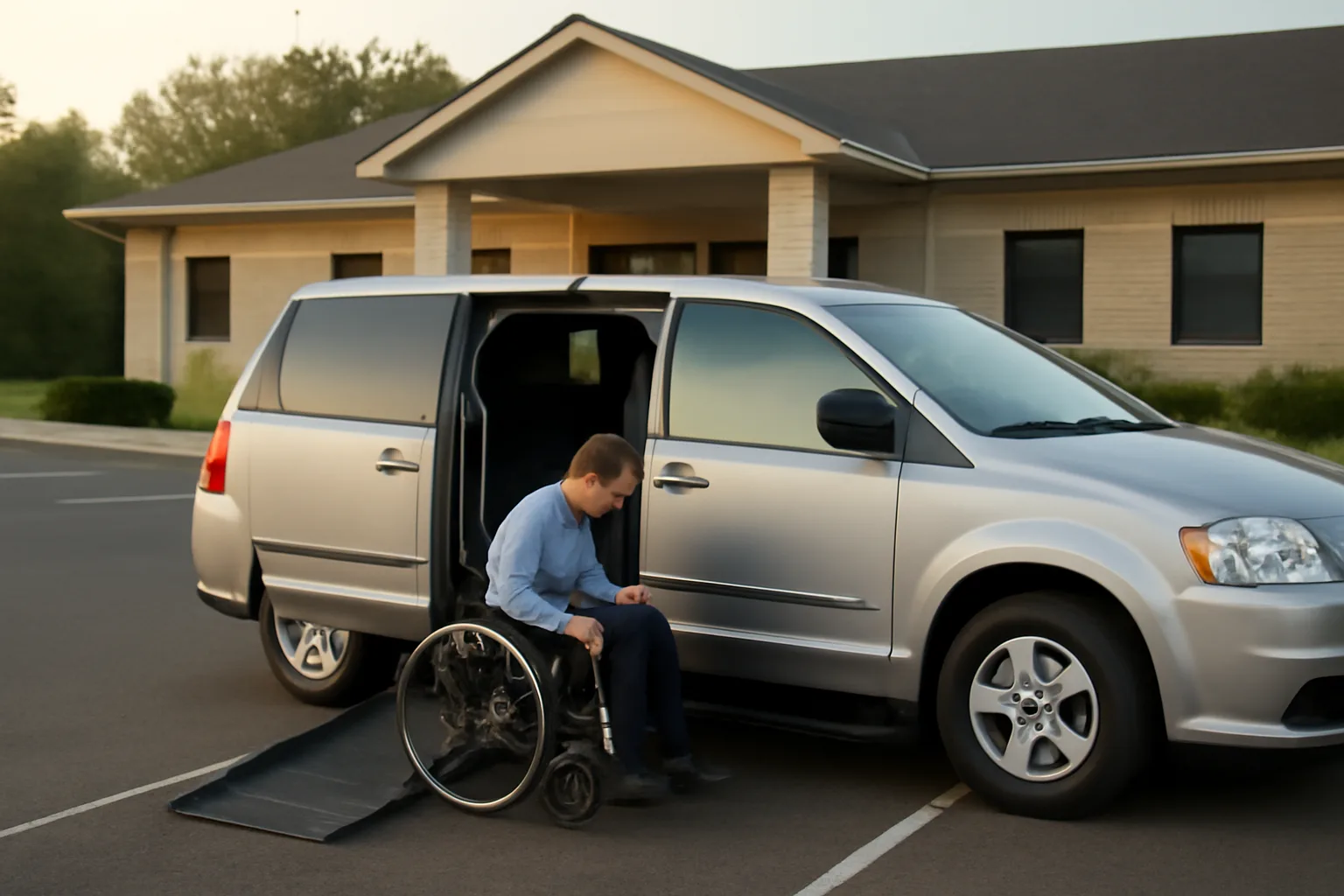
Non-emergency medical transportation is scheduled transport for people who need to get to a medical appointment, dialysis, or pharmacy but don't need an ambulance. Federal law requires state Medicaid programs to make sure eligible members have a ride to and from covered services when they have no other way to get there. That requirement comes straight from federal regulation: state Medicaid plans must "ensure necessary transportation for beneficiaries to and from providers" [1]. NEMT is not an ambulance. It covers ambulatory vehicles (basically a sedan or minivan for someone who can walk and sit), wheelchair vans, and in some states stretcher vans for people who must stay lying down but don't need medical monitoring. The vehicle you choose determines which trips you can bid on and how much your van itself costs. Most NEMT rides in a given state are booked through a broker, not billed directly to Medicaid. States contract with a small number of transportation brokers (Modivcare, MTM, Access2Care, SafeRide Health are the big national names) who take the ride requests, dispatch trips to a network of contracted transportation companies, and pay those companies per completed trip. You, as an owner-operator, typically need both a state Medicaid provider enrollment and a broker credentialing approval to get any work. Confirm with your broker and state Medicaid agency which model your state uses, because a handful of states still let Medicaid members arrange and bill trips without a broker in between.
how do you start a medical transportation business, step by step?
The order matters more than people expect. Skipping ahead (buying a van before you know your state's vehicle spec, for example) is the single most common expensive mistake. 1. Pick your entity type and register it with your state (LLC is the most common choice for a one-van operation). 2. Get an EIN from the IRS, and a state Employer ID if you'll have any employees. 3. Get your state and any local business licenses, plus a for-hire or livery/passenger transport permit if your state DOT or Public Utilities Commission requires one. 4. Buy commercial auto insurance with the liability limits your state Medicaid transportation unit and broker require (often $1,000,000 combined single limit, sometimes higher for wheelchair-accessible vehicles). 5. Buy or convert your vehicle to meet ADA and state wheelchair-securement specs. 6. Get drivers background-checked, drug tested, and trained (many states require a specific NEMT driver training course or CPR/First Aid certification). 7. Enroll as a Medicaid transportation provider with your state Medicaid agency. 8. Apply for credentialing with each broker operating in your region. 9. Pass the broker's vehicle inspection and driver file audit. 10. Start taking dispatched trips. Each of those steps has its own paperwork trail. A few of them (background checks, vehicle inspection, broker credentialing) can each take two to eight weeks depending on the state and broker workload. Budget three to six months from a standing start to your first trip if you're doing every step yourself.
how much does it cost to start a non-emergency medical transportation business with one van?
There's no single number, and anyone who gives you one flat figure is guessing. Your biggest cost is almost always the vehicle. A new wheelchair-accessible minivan conversion typically runs $45,000 to $65,000 out the door; a used one with a working lift or ramp and reasonable mileage can run $18,000 to $35,000 depending on age and condition. Commercial auto insurance for a single wheelchair van commonly runs $6,000 to $15,000 a year, with wide variation by state, driving record, and coverage limits. On top of the van and insurance, plan for entity formation and licensing fees (usually a few hundred dollars total), driver background checks and drug testing (roughly $50 to $150 per driver), any state-required driver training course, GPS/dispatch software or a tablet for broker trip assignments, and working capital to cover fuel and payroll before your first broker payments arrive. Brokers commonly pay on a two to four week cycle after a completed trip, but confirm that with your specific broker. Many owner-operators underestimate the soft costs: printing and organizing the provider enrollment packet, driving to notarize documents, and the hours spent tracking down a broker credentialing coordinator by phone. None of that shows up on a vehicle invoice, but it's real time and real money.
how do you enroll as a Medicaid transportation provider?
You apply directly to your state Medicaid agency's transportation unit (sometimes called the Non-Emergency Medical Transportation program office), not to CMS. Every state runs its own enrollment process, its own provider number system, and its own vehicle and driver requirements, so there is no national NEMT license. A typical state enrollment packet asks for your business entity documents, EIN, proof of commercial insurance naming the state or broker as a certificate holder, vehicle registration and inspection records, a copy of each driver's license and background check clearance, and sometimes a surety bond. Many states also require you to enroll in the state's Medicaid Management Information System (MMIS) as a billing provider even if a broker will actually route your trips and pay you, because the state still needs a provider ID on file for oversight and audits. CMS requires state Medicaid programs to screen providers according to a risk level (limited, moderate, or high), which can include fingerprint-based criminal background checks for higher-risk provider types [2]. The federal rule states that categorical risk levels apply "for the purpose of screening," and CMS or the state can raise a provider's risk level based on prior conduct. Transportation providers are frequently placed in the moderate or high screening category in individual state provider manuals, so budget time for fingerprinting and a state or FBI background check response, which can take several weeks. Confirm your exact screening category, application fee (some states charge a Medicaid provider application fee, others waive it for transportation), and required documents with your state Medicaid agency before you submit anything. A missing signature page is the most common reason enrollment gets bounced back.
how do you get credentialed with a broker like Modivcare or MTM?
Broker credentialing is a separate approval on top of, not instead of, your state Medicaid enrollment. Each broker runs its own network application, vehicle inspection, and driver file audit, and each one has its own portal, forms, and reviewer timeline. Expect the broker application to ask for the same core documents as your state enrollment (insurance certificate, vehicle registration, driver licenses and background checks) plus broker-specific items: a completed vendor/subcontractor agreement, W-9, direct deposit or payment setup form, and proof of your state Medicaid provider number. Some brokers require a physical vehicle inspection at a broker facility or by an approved third party before they'll activate your account in their dispatch system. Because states often contract with only one or two brokers for a given region, and because those contracts get rebid every few years, the broker you need to apply to can change. Confirm with your broker which company currently holds the state contract for your county, since applying to the wrong or outdated broker wastes weeks. If your state uses more than one broker across different regions or plan types, you may need separate credentialing files with each one to maximize the trips you can accept.
does Medicaid cover ambulance rides?
Yes, but ambulance service is billed and regulated separately from NEMT. Medicaid covers emergency and medically necessary non-emergency ambulance transportation when a beneficiary's condition requires medical monitoring or a stretcher-level ambulance crew during transport, more than a ride to an appointment [1]. Ambulance providers bill Medicaid (or the responsible party) directly using ambulance-specific procedure codes; they are licensed as emergency medical services agencies, not NEMT transportation companies. If you're planning to run wheelchair vans or ambulatory sedans, you generally do not need an ambulance license, EMT-certified staff, or ambulance-level equipment. That's a different business model, with its own state EMS licensing agency, its own vehicle equipment standards (oxygen, monitoring gear, licensed EMTs or paramedics on board), and its own billing pathway. Confirm with your state EMS office if you're unsure which category your planned service falls into, since some states draw the line differently for stretcher van service versus basic life support ambulance transport.
does Medicare cover medical transportation?
Medicare's coverage of transportation is much narrower than Medicaid's. Original Medicare Part B covers ground ambulance transportation only when other transportation would endanger the patient's health, and it generally does not cover routine non-emergency rides to a doctor's office or dialysis by wheelchair van or sedan [3]. Some Medicare Advantage plans do offer NEMT as a supplemental benefit, but that coverage varies plan by plan and is not guaranteed the way Medicaid NEMT coverage is. This distinction matters for your business plan. If you're building your company around Medicaid brokers, you're serving Medicaid beneficiaries, and your provider enrollment and broker credentialing will run through Medicaid channels, not Medicare. If you also want to serve Medicare Advantage members, you'd separately need to contract with each Medicare Advantage plan or its transportation vendor, which is a distinct credentialing process from state Medicaid enrollment. Don't assume a Medicaid broker contract automatically lets you bill or accept Medicare Advantage trips. Confirm with each plan directly.
what vehicle do you need to buy first?
For a one-van start, the honest answer is: buy the vehicle type your state and target broker actually need the most, not the one you personally find most comfortable to drive. Ambulatory sedan and minivan trips are usually the highest volume category in any broker network, but they're also the most crowded with competing owner-operators. Wheelchair-accessible vans face less competition in most markets and often pay a higher per-trip rate, but they cost significantly more upfront and require ADA-compliant securement systems. Minimum specs you should expect a state or broker to check: a working wheelchair lift or ramp rated for the weight capacity you'll actually carry, four-point wheelchair securement (tie-downs plus an occupant lap and shoulder belt), a functioning interior/exterior lighting and backup camera, and a current state vehicle inspection or DOT annual inspection sticker where applicable. Some states also require a specific decal, permit number displayed on the vehicle, or a two-way communication device. Buying used doesn't disqualify you, but a broker's vehicle inspector will check the lift cycle count, tie-down wear, and overall mechanical condition just as closely as they would a new vehicle. A cheap used conversion that fails inspection twice costs you more in lost weeks than paying more upfront for one that's ready to pass the first time.
what insurance and driver requirements should you expect?
Commercial auto liability is non-negotiable, and the limit is usually set by your state or the broker, not by you. $1,000,000 combined single limit is common; some states or brokers require higher limits for wheelchair-accessible vehicles carrying multiple passengers. You'll also typically need the broker or state named as a certificate holder on your policy, which your insurance agent can add for you. Driver requirements commonly include a valid driver's license (commercial license is sometimes required depending on vehicle size and state), a clean or acceptable moving violation record, a state and/or FBI background check, drug and alcohol testing, and a defensive driving or NEMT-specific passenger assistance training course. Some states require drivers to complete wheelchair securement training and demonstrate it during the vehicle inspection. CPR and First Aid certification is required in some states and preferred by most brokers even where it's not mandatory. Don't treat these as one-time boxes to check. Most states and brokers require annual insurance renewal proof, periodic re-screening of drivers, and periodic re-inspection of the vehicle, so build a calendar reminder system before you're three trips deep and forget a renewal deadline.
how long does the whole process actually take?
| Entity formation, EIN, licenses | 1 to 3 weeks | |
|---|---|---|
| Vehicle purchase or conversion | 2 to 8 weeks (longer for a custom conversion order) | |
| Insurance binding | 1 to 2 weeks | |
| Driver background checks | 2 to 6 weeks | |
| State Medicaid provider enrollment | 4 to 12 weeks | |
| Broker credentialing and vehicle inspection | 2 to 8 weeks | Some of these run in parallel (you can start your background check while your insurance is binding), which is where most of the time savings come from. The Medicaid enrollment step is usually the longest single wait, especially if your state requires fingerprint-based screening or a paper application reviewed manually. Confirm current processing times with your state Medicaid agency directly, since they shift with staffing and application volume and published estimates go stale fast. |
Plan on three to six months from the day you form your entity to the day you take a dispatched trip, assuming you're doing this yourself without prior industry experience. Here's roughly where the time goes: | Step | Typical timeframe |
what documents do you need before you apply anywhere?
Gather these before you start any application, state or broker, so you're not scrambling mid-process: - Articles of organization/incorporation and EIN letter
- Business license and any required for-hire/passenger carrier permit
- Commercial auto insurance certificate (with the required liability limit and certificate holder listed)
- Vehicle title, registration, and current inspection certificate
- Photos of the vehicle interior and exterior, including the securement system
- Each driver's license, background check clearance, drug test result, and training certificates
- Bank account and voided check or direct deposit form for broker payments
- W-9 and any state tax registration numbers Having a clean, organized folder (physical or digital) with all of this ready before you start the state Medicaid application saves real weeks. Incomplete applications go to the back of the review queue at most agencies rather than getting a quick follow-up request. If you'd rather work from a structured checklist than build one from scratch, the Launch Kit Builder organizes the state and broker document list into one $199 one-time packet, though the free document list above covers the same core items if you'd rather assemble it yourself.
should you start with one van or plan for a fleet from day one?
Start with one van. Almost every experienced operator in this space says the same thing: your first vehicle is where you learn every mistake in your state's enrollment and broker credentialing process, and it's much cheaper to make those mistakes once than to make them three times simultaneously across a small fleet. A single wheelchair van also lets you learn the broker's dispatch software, trip-assignment patterns, and payment cycle before you're managing driver schedules across multiple vehicles. Once you've completed a few months of trips, passed a re-inspection cycle, and understand your actual weekly trip volume from the broker, you'll have real data (not guesses) to decide whether a second van makes sense in your market. This isn't a guarantee that broker trip volume will be steady or sufficient. Trip assignment depends on broker demand in your specific region, which we can't predict and won't project. Treat your first van as a test of the operating and paperwork system, not as a revenue forecast.
Frequently asked questions
How to start a medical transportation business?
Form a legal business entity, get an EIN, secure required state and local licenses, buy commercial auto insurance, purchase a vehicle that meets your state's spec, get drivers background-checked and trained, enroll as a state Medicaid transportation provider, then apply for credentialing with the broker(s) operating in your area before accepting dispatched trips.
What is non-emergency medical transportation (NEMT)?
NEMT is scheduled transportation for people who need to get to medical appointments, dialysis, or the pharmacy but don't require an ambulance. Federal Medicaid rules require states to ensure beneficiaries have transportation to covered services, and most states use contracted brokers to dispatch these trips to local transportation providers [1].
Does Medicaid cover ambulance rides?
Yes. Medicaid covers medically necessary ambulance transportation, both emergency and non-emergency, when a beneficiary's condition requires medical monitoring or stretcher-level care during the ride [1]. This is billed separately from NEMT wheelchair van or sedan service and requires a licensed EMS ambulance provider, not a standard NEMT vehicle.
Does Medicare cover medical transportation?
Original Medicare Part B covers ground ambulance transportation only when other transport would endanger your health, and it generally does not cover routine non-emergency rides by wheelchair van or sedan [3]. Some Medicare Advantage plans offer NEMT as a supplemental benefit, but coverage varies by plan and isn't guaranteed.
How do you start a NEMT business with just one van?
Treat the single van as your learning vehicle: get it insured and inspected to your state's spec, enroll it and yourself as a Medicaid provider, then apply for broker credentialing. Most owner-operators start this way because it's cheaper to fix mistakes on one vehicle than across a fleet.
How much does NEMT provider enrollment cost with the state Medicaid agency?
It varies by state; some charge a Medicaid provider application fee (often in the low hundreds of dollars) while others waive fees for transportation providers. Confirm the exact fee, if any, along with required documents and screening level, directly with your state Medicaid transportation unit before applying.
How long does broker credentialing take with Modivcare, MTM, or SafeRide?
Timelines vary by broker, region, and application completeness, but two to eight weeks is a common range once you submit a complete file with insurance, vehicle documents, and driver background checks. Vehicle inspection scheduling can add time. Confirm current timelines directly with the broker holding your state's contract.
Do you need a commercial driver's license (CDL) to drive a wheelchair van?
Usually not for a standard wheelchair-accessible minivan, since it typically falls under the weight and passenger thresholds that trigger CDL requirements. Larger cutaway or multi-passenger vehicles may require one. Confirm your state's specific licensing threshold with your state DMV or transportation licensing agency before hiring drivers.
What's the difference between NEMT and ambulance transport?
NEMT moves people who can travel safely without medical monitoring, using sedans, wheelchair vans, or stretcher vans without EMT staff. Ambulance transport is for patients whose condition requires medical monitoring or emergency-level care during the ride, staffed by licensed EMTs or paramedics under separate EMS licensing rules.
Can you enroll with a state Medicaid program without going through a broker?
In most states, no. Most state Medicaid programs contract with a broker (Modivcare, MTM, Access2Care, SafeRide, or others) that manages trip dispatch and provider networks. A handful of states still allow some direct-billing arrangements. Confirm your state's model with its Medicaid transportation unit before assuming either path.
What happens if your broker credentialing gets denied?
Brokers typically send a written reason for denial, often tied to an insurance gap, a failed vehicle inspection item, or an incomplete driver file. Most allow you to correct the issue and resubmit. Ask the broker's credentialing contact directly for the specific denial reason and reapplication process.
Do you need a business license in addition to Medicaid enrollment?
Yes, typically. Medicaid provider enrollment and broker credentialing don't replace your state's standard business licensing or any required for-hire/passenger carrier permit from your state DOT or Public Utilities Commission. Confirm exactly which local, state, and transportation-specific licenses apply in your operating area.
How often do you have to renew NEMT credentials?
Most states and brokers require annual renewal of your insurance certificate, periodic driver re-screening (often annually), and periodic vehicle re-inspection, sometimes annually or at set mileage intervals. Requirements vary, so track your specific state and broker renewal calendar rather than assuming a single annual cycle covers everything.
Sources
- 42 CFR § 431.53, Assurance of transportation: states must ensure necessary transportation for Medicaid beneficiaries to and from providers
- 42 CFR § 455.450, Screening levels for Medicaid providers: CMS requires state Medicaid programs to screen providers at limited, moderate, or high risk levels, including fingerprint-based background checks for some categories
- Medicare.gov, Ambulance Services coverage: Medicare Part B covers ground ambulance transportation only when other transportation would endanger health, and generally does not cover routine non-emergency rides
- 42 CFR § 440.170, Transportation: federal Medicaid regulation defines transportation as a coverable service including expenses for transportation and other related travel expenses necessary to secure medical examinations and treatment
- 42 CFR § 455.412, Fingerprint-based criminal background check requirement: high-risk Medicaid provider categories can be required to submit fingerprints for a criminal background check as part of enrollment screening
- 42 CFR § 455.410, Screening of provider types: state Medicaid agencies must screen all initial applications for enrollment as a provider based on the assigned categorical risk level
- GAO-16-238, Medicaid Nonemergency Medical Transportation: Updated Medicaid Guidance Could Help States: states use varying delivery models for NEMT, including broker arrangements, and federal guidance on oversight of these brokers has been limited
- Social Security Act § 1902(a)(4), State plan for medical assistance: state Medicaid plans must provide for methods of administration found necessary by the Secretary for proper and efficient operation of the plan, the statutory basis underlying the transportation assurance requirement