Last updated 2026-07-25
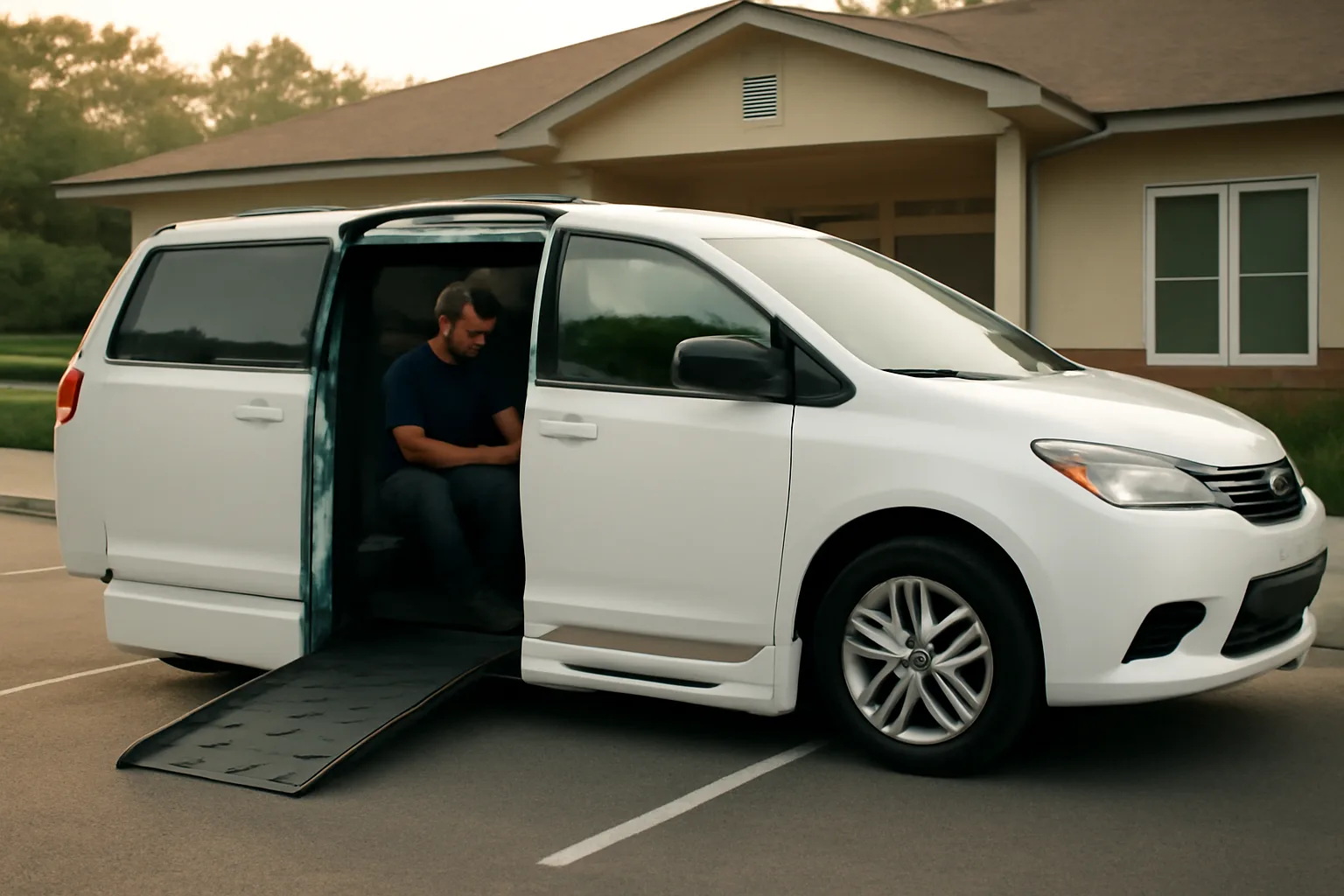
TL;DR
Opening a medical transportation business means forming a legal entity, getting the right vehicle and insurance, enrolling as a Medicaid transportation provider in your state, and credentialing with the broker (Modivcare, MTM, Access2Care, or SafeRide) that manages rides in your area. Most owner-operators can start with one wheelchair van, but state enrollment and broker approval each take weeks, not days.
how do you start a medical transportation business
You start by separating two things people usually mix together: becoming a business (legal, tax, insurance) and becoming a Medicaid transportation provider (state enrollment plus broker credentialing). Skipping the second part is the most common reason new owner-operators sit on an empty van for two months. The rough order that works: form your entity (LLC is standard for one-vehicle operators), get a federal EIN, get commercial auto insurance quoted for the specific vehicle class, apply for any state or local operating authority your state requires (some states call this a Certificate of Public Convenience and Necessity, others just need a permit), then apply for Medicaid enrollment as a transportation provider, and finally credential with whichever broker manages non-emergency medical transportation (NEMT) in your state's Medicaid program. Most states use a managed transportation broker instead of paying drivers directly. That means your customer is really the broker, not the state Medicaid agency. CMS describes NEMT brokerage as a standard state option: states can use "transportation brokers" to arrange and pay for non-emergency medical transportation for Medicaid enrollees, a model authorized under 42 CFR 440.170(a) [1]. In practice this means you don't bill Medicaid directly in most states; you bill the broker under a contracted rate, and the broker bills the state or a managed care plan. Budget real time for this. Provider enrollment revalidation and background checks alone can take 30 to 90 days depending on the state's Medicaid Management Information System backlog, and broker credentialing (insurance verification, vehicle inspection, driver background checks) usually runs another 2 to 6 weeks. Confirm current processing times with your broker and state Medicaid agency before you quit your day job.
what is nemt
NEMT stands for non-emergency medical transportation. It's transportation to and from covered medical services for people who have no other way to get there, and who don't need an ambulance or emergency response. CMS's own guidance frames it plainly: NEMT is transportation for Medicaid beneficiaries to "non-emergency medical care" when other transportation is not available [2]. Think dialysis three times a week, chemotherapy, physical therapy, and routine specialist visits. The vehicle can be a sedan, a wheelchair-accessible van, or a stretcher van, depending on the rider's needs. This is the category almost every new owner-operator with one wheelchair van is entering. NEMT is different from ambulance transport in both regulation and payment. Ambulance services generally require EMT or paramedic licensure and are billed under a different Medicaid benefit category. NEMT vehicles usually need a driver with a valid license, a background check, and CPR/first aid training, not clinical certification. For more on how this fits into the broader transportation landscape, see non emergency medical transportation and nemt.
does medicaid cover ambulance rides
Yes. Medicaid covers ambulance transportation as a distinct benefit from NEMT, but coverage rules and prior authorization requirements vary by state. Federal Medicaid regulations at 42 CFR 440.170 authorize states to cover "transportation and related travel expenses" necessary for a beneficiary to obtain covered medical care [1], and ambulance services specifically are billed under their own provider type, separate from the NEMT broker network. The practical difference for a new owner-operator: if you're running a wheelchair van or ambulatory sedan business, you are almost never in the ambulance business unless you also operate BLS or ALS ambulance units staffed with EMTs or paramedics. Don't confuse ambulance provider enrollment (which typically routes through a state's EMS office and involves clinical licensure) with NEMT broker credentialing (which routes through Modivcare, MTM, Access2Care, SafeRide, or a state-run broker and does not require clinical staff).
does medicare cover medical transportation
Medicare covers ambulance transportation in emergencies and in limited non-emergency situations where a doctor certifies it's medically necessary, but Medicare generally does not cover routine non-emergency rides like a wheelchair van to a dialysis appointment. Medicare.gov states that Medicare Part B covers ground ambulance transportation when other transportation "could endanger your health" and lists specific non-emergency ambulance coverage conditions requiring physician certification [3]. This matters for your business plan because it tells you who your real payer base is. If you're building a wheelchair-van NEMT company, your revenue is coming from state Medicaid programs (through a broker) and, in some markets, Medicaid managed care plans, private pay, and some Medicare Advantage plans that have added supplemental transportation benefits. Traditional fee-for-service Medicare is not going to be a meaningful payer for routine NEMT trips. Some Medicare Advantage plans do offer transportation as a supplemental benefit, and those contracts run through the plan or its own broker relationship, so ask specifically about that when you're credentialing. Don't build a financial model assuming broad Medicare NEMT reimbursement. It mostly isn't there.
how to start a nemt business (the licensing and setup checklist)
Here's the sequence, roughly in order, though some steps run in parallel depending on your state. 1. Entity and tax setup. Form an LLC or corporation, get an EIN from the IRS, open a business bank account. 2. Vehicle and insurance. Buy or lease a wheelchair-accessible van that meets ADA accessibility standards and your state's vehicle inspection requirements. Get commercial auto insurance with livery or NEMT-specific coverage; personal auto policies typically exclude paid passenger transport. 3. State and local operating authority. Some states require a Certificate of Public Convenience and Necessity or a for-hire vehicle permit before you can operate at all, separate from Medicaid enrollment. Confirm this with your state's Department of Transportation or Public Utilities Commission. 4. Driver requirements. Background checks (often including fingerprinting), a valid driver's license (CDL is not usually required for a standard wheelchair van under a certain gross vehicle weight, but confirm with your state), CPR/first aid certification, and drug testing are common requirements. State specifics vary. 5. Medicaid provider enrollment. Apply through your state Medicaid agency's provider enrollment portal. This typically requires your NPI (National Provider Identifier), proof of insurance, vehicle registration and inspection records, and driver credentials on file. 6. Broker credentialing. Apply separately with the broker (or brokers) operating in your service area. Modivcare, MTM, Access2Care, and SafeRide are the largest national NEMT brokers, but your state may use a different one or run its own brokerage. Each broker has its own credentialing packet, insurance minimums, and vehicle inspection standard, and these are not identical to the state's requirements. 7. Ongoing compliance. Annual vehicle inspections, insurance renewals, driver re-checks, and Medicaid revalidation (often every 3 to 5 years depending on the state) keep you active. Start to finish, most owner-operators report the entity and vehicle steps take days to a few weeks, while state Medicaid enrollment and broker credentialing combined often take 6 to 12 weeks. Confirm current timelines with your broker and state Medicaid agency, since staffing and backlog vary a lot by state and by year. For a state-by-state look at how enrollment portals and requirements differ, see nemt transportation and non emergency medical transportation services.
how to start a medical transportation business with one van
One van is a completely normal way to start, and plenty of NEMT companies begin exactly there. The math and the paperwork don't really change based on fleet size, though; you still need the same insurance minimums, the same Medicaid enrollment, and the same broker credentialing packet whether you have one van or ten. What's different with one vehicle is capacity risk. You're limited to however many trips a single driver and van can run per day, and you have zero backup if the van breaks down or the driver is out sick. Brokers do sometimes ask, informally or formally, about your capacity to handle assigned trip volume; a one-van operation may get a smaller initial trip allocation from a broker than a five-van fleet, though this varies by broker and by how tight the local driver market is. A few things matter more when you're a single-vehicle operator: get the wheelchair lift or ramp inspected and documented properly (brokers often require an annual inspection certificate, and some states specify who can perform it), keep careful, complete maintenance records from day one since a breakdown with no backup vehicle can knock you out of rotation, and don't over-promise availability windows to the broker that one van can't realistically cover. One van is enough to get credentialed. It's not necessarily enough to be assigned a lot of trips right away, and that's a business decision, not a licensing one.
what does state medicaid enrollment actually involve
Enrolling as a Medicaid transportation provider means applying directly through your state Medicaid agency, separate from any broker application, and it typically requires an NPI, proof of business registration, insurance documentation, and vehicle and driver records on file with the state. Every state runs its own Medicaid Management Information System (MMIS) provider portal, and every state has its own transportation unit or division that sets NEMT-specific rules within the federal framework. Federal law requires state Medicaid plans to "specify that the Medicaid agency will ensure necessary transportation for recipients to and from providers," per 42 CFR 431.53 [4], but each state decides how to implement that: broker model, direct provider enrollment, or a hybrid. Because of this, there's no single national NEMT license. Confirm the exact enrollment portal, required documents, and fee (if any) with your state Medicaid agency's transportation unit before applying; some states charge an application fee, some don't, and fee amounts and revalidation cycles are set at the state level and change periodically. Some states require you to enroll with Medicaid first and only then apply to the broker; others let you credential with the broker while your Medicaid application is pending. Ask the broker directly which order they expect, because doing it backward can add weeks to your timeline.
how does broker credentialing work (modivcare, mtm, access2care, saferide)
Broker credentialing is a separate approval process from state Medicaid enrollment, run by whichever private company manages ride dispatch and payment for your state or region. You'll submit insurance certificates, vehicle inspection records, driver background checks, and often go through a vehicle site visit before the broker activates you in its dispatch system. Modivcare, MTM, Access2Care, and SafeRide are the largest national NEMT brokers operating across multiple state Medicaid programs and Medicaid managed care plans, but which broker (if any) operates in your state, and under what contract terms, changes over time as states rebid their transportation contracts. Some states run brokerage in-house instead of contracting it out. None of these companies are affiliated with RideCredential, and none guarantee approval; each sets its own credentialing standards and can decline or delay an application for reasons specific to your market's capacity needs. A typical broker credentialing packet asks for: commercial auto insurance meeting the broker's minimum liability limits (often higher than your state's legal minimum), a current vehicle inspection or DOT-style safety check, driver background checks and MVR (motor vehicle record) pulls, drug testing policy documentation, and a signed provider agreement or subcontractor agreement. Rates paid per trip, per mile, or per wait-time increment are set in that provider agreement and vary widely by broker, region, and vehicle type (ambulatory sedan versus wheelchair van versus stretcher van). Because these contracts and rates are negotiated and non-public in most cases, don't rely on secondhand numbers from social media. Ask the broker directly for current rate sheets during credentialing. This is the step where a lot of new owner-operators lose the most time, mostly from paperwork mismatches (an insurance certificate that doesn't list the broker as certificate holder, a vehicle inspection form that's the wrong version, a background check that's expired by the time the packet is reviewed). Building your document packet correctly the first time is worth more than almost anything else you can do to speed this up. Some owner-operators use a prebuilt document kit for exactly this reason; RideCredential's $199 one-time State + Broker NEMT Launch Kit is built around organizing the state enrollment and broker credentialing paperwork so you're not guessing at formats broker by broker. You can also just build this checklist yourself directly from your state Medicaid transportation unit's published provider manual.
how much does it cost to open a medical transportation business
| Wheelchair-accessible van (used) | $20,000 to $45,000 | Price depends on conversion type, mileage, ramp vs. lift | |
|---|---|---|---|
| Wheelchair-accessible van (new conversion) | $50,000 to $70,000+ | Varies by manufacturer and conversion company | |
| Commercial auto/livery insurance (annual) | $4,000 to $12,000+ per vehicle | Varies hugely by state, driving record, and coverage limits | |
| LLC formation and EIN | $50 to $500 | State filing fee varies; EIN itself is free from the IRS | |
| State operating permit/CPCN (if required) | $0 to a few hundred dollars | Not all states require this for NEMT specifically | |
| Medicaid provider enrollment | Often no fee, some states charge one | Confirm with your state Medicaid agency | |
| Broker credentialing | Usually no direct fee, but requires paid insurance/inspection docs | Confirm with each broker | |
| Driver background checks/drug testing | $50 to $150 per driver | Recurring cost as drivers are added | The single biggest swing factor is the vehicle. A used, high-mileage conversion van and a new one with a factory-installed ramp can differ by $40,000 or more. Insurance is the second-biggest and most underestimated cost; commercial NEMT policies with wheelchair-lift coverage cost meaningfully more than standard commercial auto, and quotes should come from carriers who explicitly write NEMT or livery risk, not a generic personal-auto agent. No legitimate source, including this one, can tell you exactly what you'll earn once you're credentialed. Per-trip and per-mile rates are set broker by broker and state by state, change over time, and aren't reliably public. Get actual rate sheets from the broker during credentialing before you finalize any financial plan. |
Costs vary enormously by state and by whether you buy new or used, but a few categories are consistent across almost every owner-operator's startup budget. | Cost category | Typical range | Notes |
what vehicle and driver requirements should you expect
Vehicle requirements typically include a functioning wheelchair lift or ramp inspected on a set schedule (often annually), working securement straps and anchor points meeting ADA and manufacturer specifications, current registration and safety inspection, and commercial insurance naming the broker where required. Driver requirements commonly include a valid driver's license (a CDL is usually not required for standard wheelchair vans under the typical gross vehicle weight threshold, though this depends on your state and the specific vehicle), a clean or explainable motor vehicle record, a criminal background check often including fingerprinting, current CPR and first aid certification, and passage of a drug and alcohol screening. Some states or brokers add passenger assistance training (how to safely load, secure, and transport a wheelchair user) as a separate certification beyond basic CPR/first aid. Ask specifically whether this is required in writing, since "we usually ask for it" and "it's a hard requirement" are treated very differently at credentialing review. Requirements differ enough state to state and broker to broker that giving one universal checklist risks being wrong somewhere. Confirm the exact current list with your state Medicaid transportation unit and with each broker you plan to work with. For general vehicle standards context, see emergency medical transport and medical transportation.
what mistakes slow down new nemt owner-operators the most
The most common time-killer is applying to the broker before confirming what the state Medicaid agency requires first, or vice versa, when the state actually has a required order. Ask directly instead of guessing. The second most common mistake is an insurance certificate that doesn't match what the broker asked for: wrong certificate holder name, missing endorsement, or liability limits below the broker's stated minimum (which is often higher than your state's bare legal minimum for commercial auto). Insurance rejections are probably the single largest cause of credentialing delay industry-wide, though no public dataset tracks this precisely; it's a pattern owner-operators and brokers both describe consistently. Third is treating vehicle inspection as a formality. Brokers and states both may require inspection documentation in a specific format, sometimes from a specific type of inspector, and a generic mechanic's receipt often gets bounced back. Fourth is underestimating driver-side paperwork. Background checks expire or age out; if your packet sits in a queue for six weeks and the background check was done at the start, some brokers will ask you to redo it. None of these are unusual or unfair requirements. They're just easy to get wrong the first time through, especially juggling one state agency and one or more brokers with different forms.
Frequently asked questions
How do I start a medical transportation business from scratch?
Form a legal entity, get commercial auto insurance for your vehicle type, secure any required state operating permit, then enroll as a Medicaid provider with your state agency and separately credential with the NEMT broker (Modivcare, MTM, Access2Care, SafeRide, or your state's broker) operating in your area. Confirm exact order and requirements with both, since they differ by state.
Does Medicaid cover ambulance rides?
Yes, Medicaid covers ambulance transportation as its own benefit category under 42 CFR 440.170, separate from non-emergency medical transportation (NEMT). Coverage details, prior authorization rules, and reimbursement vary by state, so confirm specifics with your state Medicaid agency; ambulance enrollment typically requires clinical (EMT/paramedic) licensure, unlike NEMT.
What is NEMT?
NEMT means non-emergency medical transportation: rides to and from covered medical appointments (dialysis, therapy, specialist visits) for Medicaid enrollees who have no other transportation and don't need emergency care. It covers sedans, wheelchair-accessible vans, and stretcher vans, and is usually managed through a state-contracted broker rather than billed directly to Medicaid.
Does Medicare cover medical transportation?
Medicare Part B covers ambulance transportation in emergencies and in limited non-emergency cases with physician certification, but it generally does not cover routine non-emergency rides like wheelchair-van trips to a dialysis appointment. Some Medicare Advantage plans add supplemental transportation benefits through their own broker arrangements; ask the specific plan about that.
How much does it cost to start a wheelchair van NEMT business?
Expect roughly $20,000 to $70,000+ for one wheelchair-accessible van depending on age and conversion type, plus $4,000 to $12,000+ a year for commercial insurance per vehicle, entity filing fees, and driver background check costs. Medicaid enrollment and broker credentialing themselves often have no direct fee, but confirm with your state and broker.
Can I start a NEMT business with just one van?
Yes. One vehicle is enough to complete Medicaid enrollment and broker credentialing in most states. The tradeoff is capacity: you have no backup vehicle or driver, and some brokers may limit initial trip assignments for single-vehicle operators, though this varies.
Do I need a CDL to drive a wheelchair van for NEMT?
Usually not, if the van is under the gross vehicle weight threshold that triggers CDL requirements in your state, which is common for standard wheelchair-accessible vans. Requirements vary by state and by exact vehicle weight class, so confirm with your state's DMV or transportation department before assuming.
How long does Medicaid provider enrollment take for NEMT?
It commonly takes 30 to 90 days depending on the state Medicaid Management Information System's processing backlog, application completeness, and background check turnaround. Broker credentialing is typically a separate 2 to 6 week process on top of that. Confirm current timelines directly with your state Medicaid agency and broker.
What's the difference between NEMT and ambulance transportation?
NEMT serves people who don't need emergency or clinical care during transport, using sedans or wheelchair/stretcher vans with drivers who need background checks and CPR training, not medical licensure. Ambulance transportation requires EMT or paramedic staffing and is billed and regulated separately, typically through a state EMS office rather than an NEMT broker.
Do all states use brokers like Modivcare, MTM, Access2Care, or SafeRide?
No. Many states contract with one or more of these national brokers, but some states run NEMT brokerage in-house or use regional brokers instead. Which broker operates in your area, and under what contract, changes when states rebid transportation contracts, so confirm current arrangements with your state Medicaid agency.
What insurance do I need to open a medical transportation business?
You need commercial auto insurance specifically covering paid passenger transport (personal auto policies exclude this), often called livery or NEMT coverage, with liability limits meeting both your state's legal minimum and the broker's stated minimum, which is frequently higher. Confirm exact limits with the broker before buying a policy.
Is a CPCN (Certificate of Public Convenience and Necessity) required for NEMT?
Some states require a CPCN or similar for-hire vehicle permit before you can legally operate passenger transport at all, separate from Medicaid enrollment; others don't require this for NEMT specifically. Confirm with your state's Department of Transportation or Public Utilities Commission, since this requirement is state-specific.
Sources
- eCFR, 42 CFR 440.170: Federal Medicaid regulation authorizing states to cover transportation, including via brokers, as a Medicaid benefit
- Medicaid.gov, Non-Emergency Medical Transportation: CMS description of NEMT as transportation to non-emergency medical care for beneficiaries lacking other transportation
- Medicare.gov, Ambulance Services coverage: Medicare Part B ambulance coverage conditions for emergency and certified non-emergency transport
- eCFR, 42 CFR 431.53: Federal requirement that state Medicaid plans ensure necessary transportation for beneficiaries to and from providers
- 42 U.S.C. 1396a(a)(70) via Social Security Act Section 1902: Statutory basis allowing states to establish an NEMT brokerage program under the Medicaid state plan
- Federal Motor Carrier Safety Administration, 49 CFR 383.3: Federal commercial driver's license applicability rules referenced when confirming whether a CDL is required for a given vehicle class
- IRS, Apply for an Employer Identification Number (EIN) Online: EIN application is free and done directly through the IRS as part of business entity setup