Last updated 2026-07-25
TL;DR
There's no single national 'list' of NEMT companies because Medicaid transportation is run state by state, often through brokers like Modivcare, MTM, Access2Care, and SafeRide who then contract independent owner-operators. To find companies (or become one), start with your state Medicaid transportation unit and the broker holding that state's contract, not a generic directory.
What is non-emergency medical transportation (NEMT)?
NEMT is transportation to and from medical appointments for people who don't need an ambulance but can't get there on their own, whether because of a wheelchair, a vision impairment, a rural address with no bus line, or a temporary condition after surgery. It covers everything from a sedan ride to dialysis three times a week to a wheelchair van trip to a specialist two counties over. Federal Medicaid rules require states to make sure eligible people can actually get to covered care. The regulation at 42 CFR 431.53 says states must "ensure necessary transportation for beneficiaries to and from providers" and may do this directly, through contracts, or through a broker [1]. That single sentence is why NEMT in the US looks the way it does: a patchwork of state-run systems, broker-managed networks, and independent van operators who actually show up at the door. NEMT is different from ambulance service. Ambulances are for emergencies or medical necessity requiring monitoring en route. NEMT is scheduled, non-emergency, and usually billed through a broker rather than straight fee-for-service, though some states still do it that way. If you're researching this space at all, it helps to also read up on medical transportation broadly, since the terminology overlaps a lot in job postings and state manuals.
Is there an actual list of NEMT companies I can hire or contract with?
Not one master list, no. NEMT is organized by state and often by broker region within a state, so "the list" is really several lists depending on what you need. If you're a Medicaid member needing a ride: your state's Medicaid transportation unit or your broker (Modivcare, MTM, Access2Care, SafeRide Health, or a state-run call center) has the list of approved local providers in your area. You call the broker's trip line, not a nationwide directory. If you're an owner-operator looking for work: the "companies" you'd apply to are the brokers themselves (as a contracted transportation provider) plus any local NEMT companies in your area that subcontract overflow trips. Some states also let providers enroll directly as Medicaid transportation providers without going through a broker at all, depending on the state's model. If you're comparing the big national brokers: Modivcare (formerly LogistiCare) and MTM are the two largest, holding contracts across dozens of states combined, with Access2Care and SafeRide Health holding smaller regional footprints. None of these companies operate every vehicle themselves; almost all of them contract out to local fleets, which is the entire business opportunity for a new owner-operator. For background on how broker credentialing works generally, see nemt transportation and non emergency medical transportation services.
Does Medicaid cover ambulance rides?
Yes, Medicaid covers medically necessary ambulance transportation in every state, though the specific rules on what counts as "medically necessary" and how much is paid vary by state [2]. This is separate from NEMT. Ambulance transport under Medicaid generally requires that the beneficiary's condition needs medical monitoring or equipment during the ride, or that other transportation would endanger the person's health. A scheduled trip to a dialysis appointment for a stable patient does not qualify as ambulance transport; that's an NEMT trip, usually in a wheelchair van or ambulatory sedan instead. States set their own ambulance payment rates and prior authorization rules within the federal Medicaid framework. So "does Medicaid cover ambulance" always needs the follow-up question: covered by which state's plan, and under what medical necessity documentation. Check your state Medicaid agency's ambulance transportation policy manual for the specifics, since a state's fee schedule and prior-auth thresholds change over time.
Does Medicare cover medical transportation?
Medicare Part B covers ambulance transportation when it's medically necessary and other transportation would endanger your health, per CMS guidance on ambulance services [3]. Medicare does not generally cover routine non-emergency rides to a doctor's office the way Medicaid NEMT does. There are narrow exceptions. Some Medicare Advantage plans now offer non-emergency transportation as a supplemental benefit, and CMS finalized rule changes in 2019 that expanded what counts as a permissible supplemental benefit for MA plans, including transportation for health-related services [4]. But that benefit exists at the plan level, not as a guarantee under traditional Medicare, and coverage amounts (often a set number of one-way trips per year) vary plan by plan. So the honest answer: Medicare covers ambulance transport under specific medical necessity rules, and covers non-emergency rides only if you're on a Medicare Advantage plan that specifically offers it as a supplemental benefit. Traditional Medicare (Parts A and B) does not pay for a wheelchair van ride to a routine checkup.
How do you start a medical transportation business?
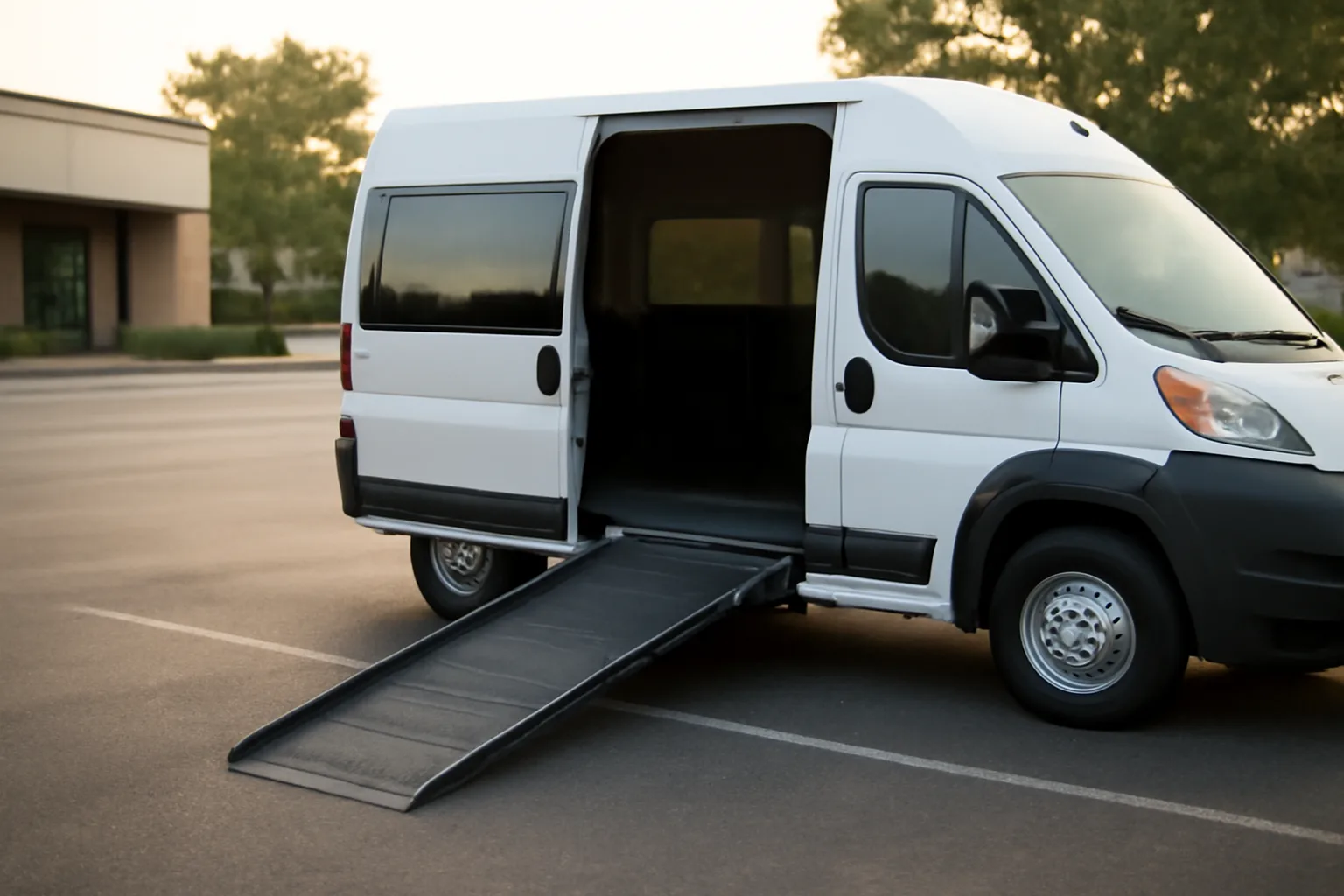
Starting a medical transportation business means building three things in parallel: a legal business entity, a vehicle that meets your state's ADA and safety standards, and credentials with whichever payers you plan to bill (Medicaid, brokers, private pay, or all three). Most new owner-operators do it roughly in this order: 1. Form your business entity (LLC is common) and get an EIN from the IRS. 2. Get commercial auto insurance quotes early, because NEMT insurance for wheelchair vans is a specialty line and pricing surprises people. Confirm minimum coverage limits with your state and any broker you plan to work with. 3. Buy or convert a wheelchair-accessible van that meets your state's vehicle inspection standards, including ramp or lift specs and wheelchair securement points. 4. Apply for state Medicaid provider enrollment as an NEMT transportation provider. This is a separate step from broker credentialing. 5. Apply for credentialing with the broker(s) operating in your state's Medicaid managed transportation contract, since in most states you can't just show up and bill Medicaid directly for NEMT trips; the broker controls dispatch and payment. 6. Get your drivers trained and background-checked per state requirements (often includes a state-specific defensive driving course, CPR/first aid, and passenger assistance training). Do not skip step 2 in favor of step 3. A lot of new operators buy the van first and then discover the insurance costs or the broker's vehicle age limits (many brokers won't credential vehicles older than 7 to 10 years) make the purchase a bad fit.
How to start a NEMT business with one van?
One van is a completely normal way to start, and plenty of successful NEMT operators began exactly there. The economics work differently than a fleet, but the compliance steps are identical. With a single wheelchair van, focus on these specifics: get the van properly certified for wheelchair securement (most states require compliance with vehicle equipment standards that reference SAE or ADA guidelines for lifts and tie-downs), get your own chauffeur's license or equivalent if you're driving, and understand that broker credentialing is done per vehicle and per driver, more than per company. That means if you add a second van or driver later, you'll go through parts of the credentialing process again. A one-van operation also means you should be realistic about scheduling. Brokers assign trips based on real-time availability, and a single vehicle can only be in one place at a time; some brokers set minimum on-time performance and trip acceptance rate standards that can be harder to hit with no backup vehicle when yours is in the shop. Ask your broker directly what their minimum fleet size or vehicle backup policy is before you commit, since this varies by state and broker.
How to start a NEMT business: state Medicaid enrollment step by step
Every state Medicaid agency has its own provider enrollment application for transportation providers, usually run through the same portal used for other Medicaid provider types. You'll typically need: - A National Provider Identifier (NPI), free through the National Plan and Provider Enumeration System
- Business licensing documents (articles of organization, EIN letter)
- Proof of vehicle insurance meeting state minimums
- Vehicle registration and inspection records
- Driver background check clearances (often state police and a federal exclusion list check)
- A completed state Medicaid provider enrollment application, sometimes called a transportation provider agreement States vary a lot on timelines and fees. Some charge an application fee tied to the federal Medicaid provider screening fee, which CMS updates annually and which has run roughly in the $700-900 range in recent years, though this is federal and changes yearly, so confirm the current amount directly with CMS and your state agency [5]. Some states waive this fee for NEMT-only providers; others don't. Confirm with your state Medicaid agency's transportation unit rather than assuming. This enrollment step is what makes you a recognized Medicaid transportation provider in the state's system. It is not the same as being credentialed to accept broker-dispatched trips, which is a separate application most states require in addition. For a broader look at how this fits into overall program structure, see non emergency medical transportation and nemt.
How does broker credentialing work once you're Medicaid-enrolled?
Once you're enrolled with the state, you apply separately to whichever broker holds the NEMT contract in your service area. This is where Modivcare, MTM, Access2Care, and SafeRide Health come in; each runs its own credentialing process, its own vehicle inspection checklist, and its own driver qualification file requirements. Expect to submit, again, proof of insurance, vehicle inspection documentation, driver files (license, background check, drug screen results, defensive driving certificate), and often a signed provider agreement specific to that broker's rates and service standards. Brokers also typically require ongoing compliance: annual vehicle re-inspections, updated insurance certificates, and re-credentialing on a schedule they set. Rates paid per trip differ by broker and by state contract, and brokers do not publish these rate sheets publicly, so don't trust a generic number you see online; get the current rate card directly from the broker during credentialing. This is also the point where a lot of new operators get tripped up on paperwork completeness, since a single missing insurance rider or an expired background check can bounce your whole file back.
What licenses, insurance, and vehicle standards do NEMT companies need?
Requirements differ by state, but a few things show up almost everywhere: commercial auto insurance with limits well above personal auto minimums (often $1 million combined single limit for passenger vehicles carrying the public, though states and brokers set their own floors), a state-issued for-hire or livery vehicle permit in some states, ADA-compliant wheelchair securement systems, and driver background checks that include both criminal history and a federal healthcare exclusion list check. Vehicle age and mileage limits are set by brokers more often than by states; it's common to see a broker cap vehicles at 7 to 10 model years or a set mileage ceiling before requiring extra inspection or replacement. Wheelchair vans specifically need ramp or lift systems that meet accessibility standards and tie-down points rated for the weight of an occupied wheelchair. If you plan to operate across state lines at all (rare for Medicaid NEMT, more common for private-pay long-distance transport), you may also run into federal motor carrier registration requirements, which is a different regulatory track entirely and worth confirming with an actual transportation attorney or your state DOT before assuming you need it.
How much does it cost to launch, and what's actually worth paying for?
Real costs vary enormously by state, vehicle choice, and whether you're buying new or converting a used van, so treat any flat number online with suspicion. What's consistent is the category list: vehicle acquisition or conversion, commercial insurance premiums, business formation and licensing fees, driver training and background check costs, and the time cost of the credentialing paperwork itself. The paperwork is where a lot of new operators lose weeks, not because any single form is hard, but because state Medicaid enrollment and broker credentialing each want slightly different versions of the same documents, and a rejected application often means starting that document's approval clock over. This is genuinely the part worth paying to get right the first time; a $199 flat-fee packet like the Launch Kit that organizes state Medicaid and broker paperwork into one build isn't going to get you approved by itself (no one can guarantee approval, and you shouldn't trust anyone who says otherwise), but it can save you from the single most common failure mode, which is submitting an incomplete or mismatched file to two different agencies at once. What's not worth paying for: generic "NEMT business in a box" courses that don't name your specific state's Medicaid agency or your local broker by name. If a resource can't tell you to confirm with your state Medicaid transportation unit and your specific broker, it's guessing, same as you would be.
What's the difference between a broker, a Medicaid transportation unit, and an NEMT company?
These three things get confused constantly, so here's the actual breakdown. The state Medicaid transportation unit (sometimes called the Non-Emergency Medical Transportation program office) is the government office that sets policy, holds the broker contract, and enforces federal Medicaid transportation rules under 42 CFR 431.53 [1]. It's a state agency, not a company. The broker (Modivcare, MTM, Access2Care, SafeRide Health, or in some states a state-run call center) is the private company or unit contracted by the state to manage trip scheduling, dispatch, and network credentialing. Brokers don't drive most trips themselves; they coordinate a network of contracted transportation providers. The NEMT company is you, or the local business (sometimes one van, sometimes a fleet) that actually shows up, drives the trip, and gets paid per the broker's or state's rate. Understanding which of these three you're dealing with at any given moment (policy question versus trip dispatch question versus payment question) saves an enormous amount of frustrated phone calls.
Where do I find my state's specific NEMT rules and broker contract?
Start with your state Medicaid agency's website and search for "non-emergency medical transportation" or "NEMT transportation unit," which most states maintain as a distinct page from general Medicaid provider enrollment. That page typically names the current broker contract holder for your region, links the provider enrollment application, and often posts a transportation provider manual with vehicle and driver standards spelled out. Don't rely on secondhand blog posts (including parts of this one) for the exact current broker in your state, because these contracts get rebid every few years and brokers do change. Modivcare, MTM, Access2Care, and SafeRide Health have all won and lost state contracts over the years, sometimes with an overlapping transition period where the old and new broker are both credentialing providers at once. The safest move: call your state Medicaid transportation unit directly, ask who holds the current broker contract for your county or region, and ask for the current provider enrollment and broker credentialing packet by name. This is the one piece of information genuinely worth getting from a live person rather than a search result.
Frequently asked questions
What is non-emergency medical transportation?
Non-emergency medical transportation (NEMT) is scheduled transportation for people who need help getting to medical appointments but don't need an ambulance. It includes wheelchair van rides, ambulatory sedan trips, and stretcher van service, usually arranged through a Medicaid broker under the federal requirement in 42 CFR 431.53 that states ensure necessary transportation to covered care.
How to start a NEMT business?
Form a business entity, secure commercial auto insurance, buy or convert a compliant wheelchair van, enroll as a Medicaid transportation provider with your state, and get credentialed separately with the broker managing NEMT in your area (Modivcare, MTM, Access2Care, or SafeRide Health, depending on the state). Driver background checks and training round out the requirements.
How to start a medical transportation business with one van?
One van is enough to start. Get it properly equipped with wheelchair securement systems, insured commercially, and inspected to your state's standard, then complete Medicaid provider enrollment and broker credentialing just as a larger fleet would. Ask your broker about minimum fleet or backup vehicle expectations before committing, since some brokers set on-time performance standards that are harder with no spare vehicle.
Does Medicaid cover ambulance rides?
Yes, Medicaid covers medically necessary ambulance transportation in every state, though coverage details and payment rates are set state by state. This is separate from NEMT: ambulance transport requires medical monitoring needs, while NEMT covers scheduled non-emergency rides for stable patients, typically in a wheelchair van or sedan.
Does Medicare cover medical transportation?
Traditional Medicare Part B covers ambulance transportation only when medically necessary, per CMS ambulance services guidance. It generally does not cover routine non-emergency rides to a doctor's appointment. Some Medicare Advantage plans offer non-emergency transportation as a supplemental benefit since 2019 CMS rule changes, but this varies by plan and isn't guaranteed under original Medicare.
What is NEMT?
NEMT stands for non-emergency medical transportation. It's transportation for Medicaid (and sometimes Medicare Advantage) members to get to and from medical appointments when they can't use regular transportation, usually managed through a state-contracted broker network of independent wheelchair van and sedan providers.
Is there a master list of NEMT companies nationwide?
No single national list exists because NEMT is organized state by state and often broker by broker. To find companies serving your area, contact your state Medicaid transportation unit or the regional broker (Modivcare, MTM, Access2Care, SafeRide Health) for their current approved provider network.
How do you start a medical transportation business step by step?
Form your LLC and get an EIN, secure commercial NEMT insurance, buy or convert a wheelchair-accessible van meeting your state's equipment standards, complete state Medicaid provider enrollment, get credentialed with the relevant broker, and complete state-required driver training and background checks before accepting trips.
What's the difference between a broker and the state Medicaid transportation unit?
The state Medicaid transportation unit is a government office that sets policy and holds the contract. The broker (like Modivcare or MTM) is the private company or unit hired to run trip dispatch and credential local transportation providers day to day. Owner-operators typically deal with the broker far more than with the state office directly.
Do I need a special license to drive a wheelchair van for Medicaid trips?
Requirements vary by state; many require a standard driver's license plus completion of passenger assistance and defensive driving training, while some states require a chauffeur's license or for-hire vehicle permit for anyone transporting the public for pay. Confirm exact licensing rules with your state DMV and Medicaid transportation unit.
How long does NEMT provider enrollment and broker credentialing take?
Timelines vary widely by state and broker, and there's no universal number to quote honestly, since processing depends on application completeness, background check turnaround, and each agency's current backlog. Missing documents are the most common cause of delay, so confirm the current expected timeline directly with your state Medicaid agency and broker.
Can I bill Medicaid directly without going through a broker?
In some states yes, in most states no. States that use a full broker model require all NEMT trips to be dispatched and billed through the broker, while a handful of states still run fee-for-service NEMT programs where providers bill Medicaid directly. Confirm your specific state's model with its Medicaid transportation unit.
Sources
- eCFR, 42 CFR 431.53 Assurance of Transportation: Federal requirement that states ensure necessary transportation to and from providers, directly, by contract, or through a broker
- Medicaid.gov, Non-Emergency Medical Transportation: Medicaid NEMT benefit overview and state administration of transportation coverage
- Medicare.gov, Ambulance Services: Medicare Part B covers ambulance transportation only when medically necessary and other transportation would endanger health
- Federal Register, Medicare and Medicaid Programs; Policy and Technical Changes to the Medicare Advantage, Medicare Prescription Drug Benefit, PACE, Medicaid Fee-For-Service, and Medicaid Managed Care Programs for Years 2020 and 2021 (84 FR 15680): CMS expanded permissible Medicare Advantage supplemental benefits, allowing some plans to cover non-emergency transportation
- 42 CFR 424.514, Application fee: Federal Medicaid/Medicare provider application fee amount is set and updated annually by CMS